
Reading analog clocks Time Worksheets for Ages 3-7
3 filtered results
Difficulty Level
Grade
Age
-
From - To
Subject
Activity
Standards
Explore our engaging "Reading Analog Clocks Time Worksheets" designed for children ages 3-7. These interactive materials help young learners develop essential time-telling skills with various activities focusing on reading analog clocks. Featuring colorful visuals and easy-to-follow instructions, our worksheets make learning to tell time fun and accessible for early learners. Ideal for teachers and parents, these resources cater to different skill levels, ensuring that every child can master the clock. Build a strong foundation in time management with our specially crafted worksheets that encourage consistent practice and understanding of this crucial life skill. Start your child's journey towards clock mastery today!
Favorites
With answer key
Interactive
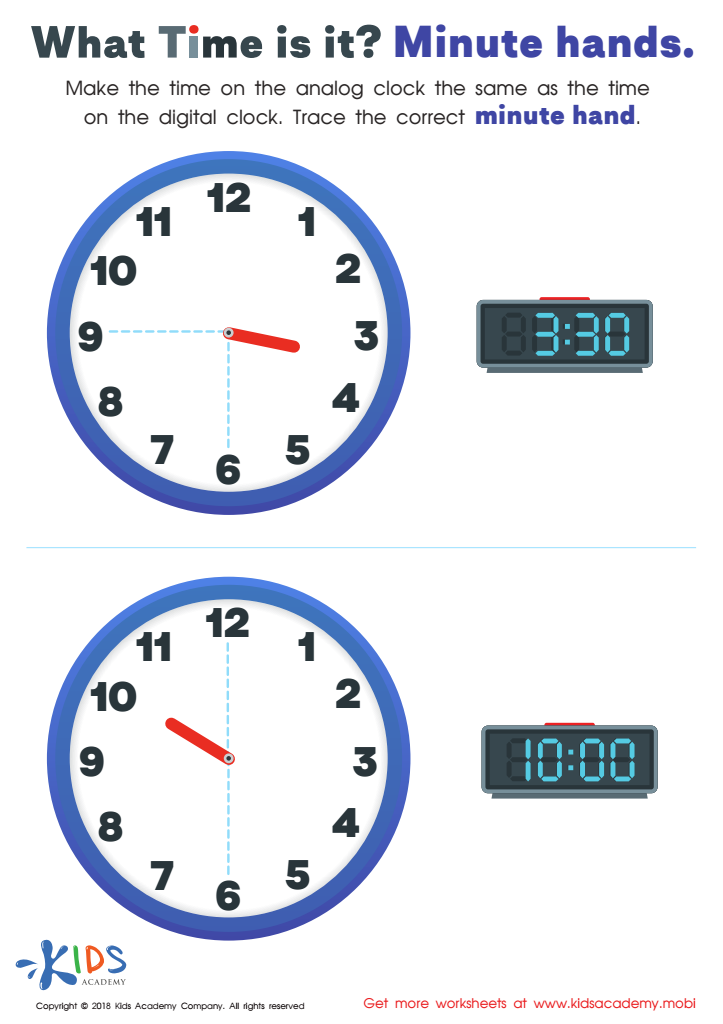
What Time Is it? Minute Hands Worksheet
Help your kids telling time with the minute hand correctly with this tracing sheet. Trace the correct minute hand to make the time on the analog clock the same as the time on the digital clock. Give them a pictured demonstration of how to do it and you'll be all set!
 Assign to My Students
What Time Is it? Minute Hands Worksheet
Worksheet
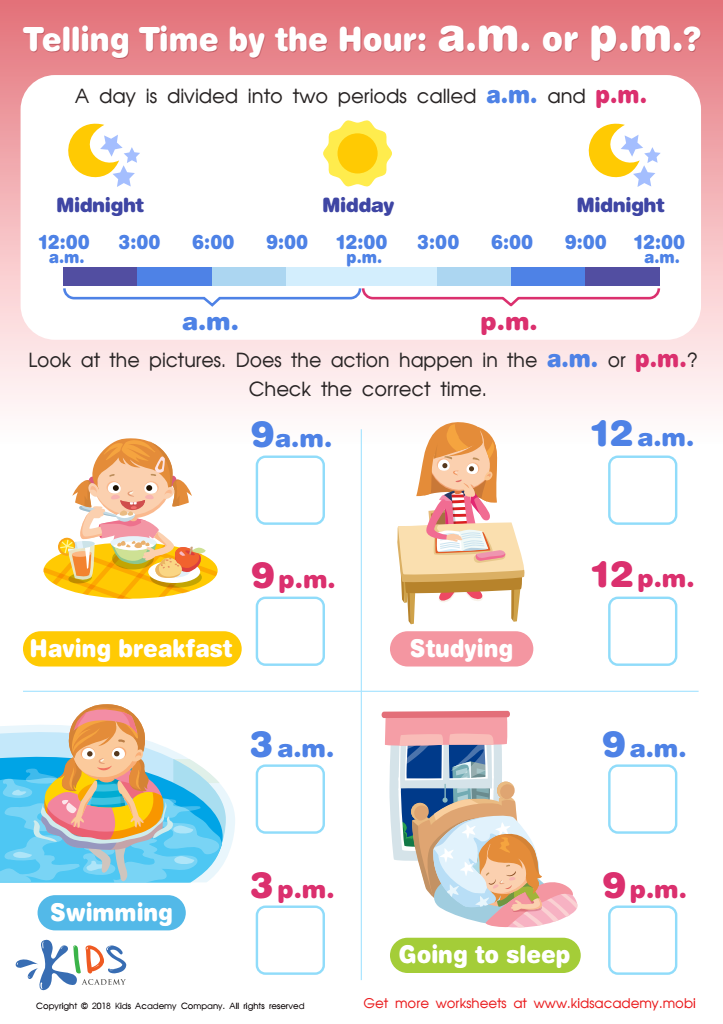
Tilling Time by the Hour: a.m. or p.m.? Worksheet
Can your child tell the time? This worksheet will help them learn. Explain a.m and p.m. and look at the pictures together. Ask your child if the activities happen in the a.m or p.m and help them check the correct time.
Tilling Time by the Hour: a.m. or p.m.? Worksheet
Worksheet
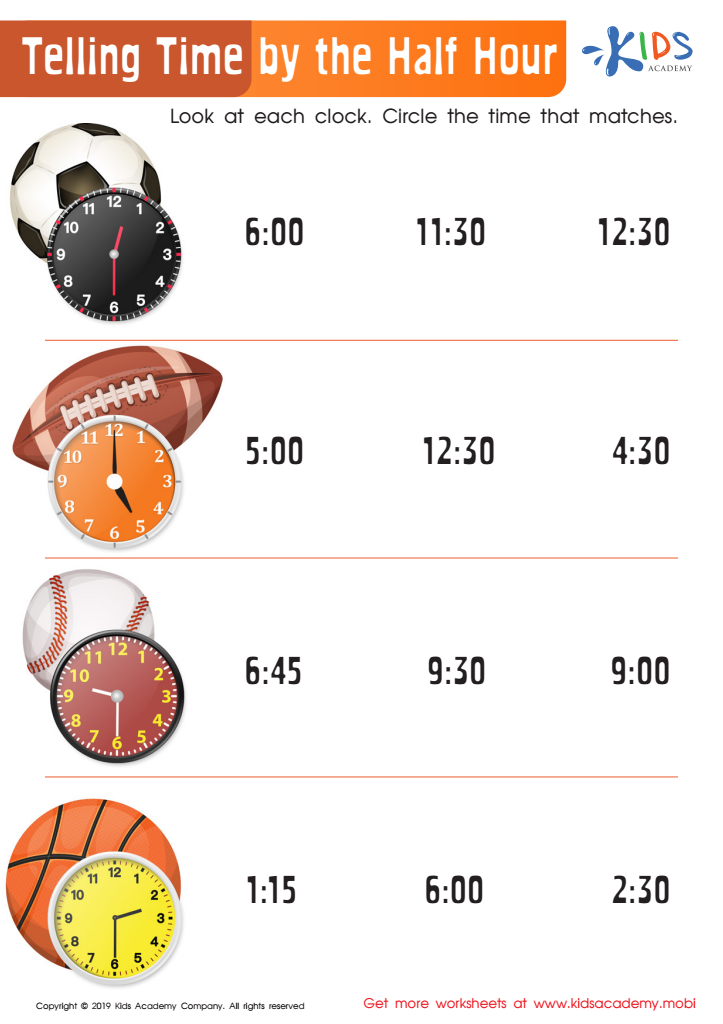
Telling Time by the Half Hour Worksheet
Teach kids to tell time with this worksheet! Four clocks are labeled with different times; help your child circle the right one. It's a great way to teach them to read analog and digital clocks, watches, and written times. Easy and fun learning!
Telling Time by the Half Hour Worksheet
Worksheet
Join Kids Academy for Free
Who is primarily going to use this learning content?







.jpg)
Teaching young children to read analog clocks is an essential skill that goes beyond simply telling time. For children aged 3-7, understanding analog clocks fosters developmental growth in several key areas. Firstly, it enhances their numeracy skills; recognizing numbers on a clockface supports foundational math concepts, such as counting and number recognition.
Secondly, learning to read analog clocks promotes cognitive development. Children engage in problem-solving as they discern the positions of the hour and minute hands, fostering critical thinking. This skill encourages patience and perseverance, as they learn that reading time requires careful observation and practice.
Additionally, reading analog clocks helps children develop an awareness of time management. They start to understand daily routines and the concept of time passage, such as the duration of activities, which can enhance their organizational skills. As they grow older, these skills will become increasingly relevant in academic and social settings.
Finally, teaching children to read an analog clock builds iconic literacy. In a world largely dominated by digital displays, understanding analog clocks connects children to cultural and historical contexts. This well-rounded understanding of time will empower children in their personal, academic, and social lives, making it a valuable educational pursuit for parents and teachers alike.








