Visual interpretation Building Vocabulary Worksheets for Ages 3-7
3 filtered results
-
From - To
Discover our engaging "Visual Interpretation Building Vocabulary Worksheets" designed specifically for children ages 3-7. These worksheets incorporate visual aids to enhance vocabulary development, helping young learners connect words with images. Each activity encourages critical thinking and comprehension skills, promoting an interactive approach to language learning. Perfect for classroom use or at-home practice, these resources ensure children not only expand their vocabulary but also reinforce visual literacy. With a variety of fun and educational exercises, your child will enjoy learning while building essential language skills. Start fostering a love for words and imagery today with our vibrant worksheets!
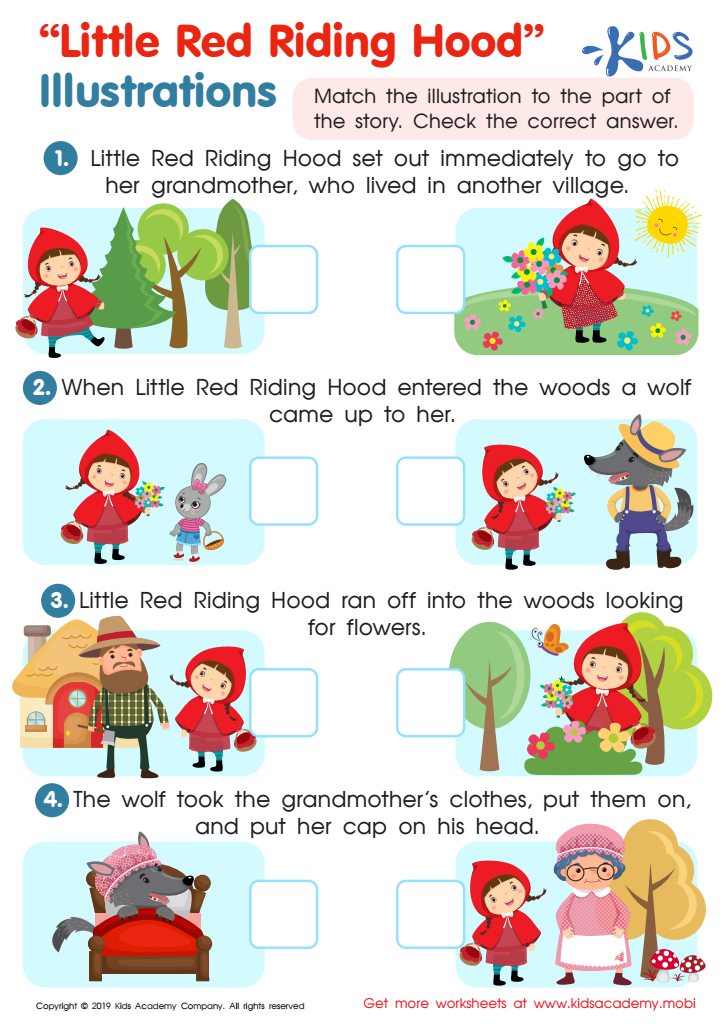
Little Red Riding Hood: Illustrations Worksheet
 Assign to My Students











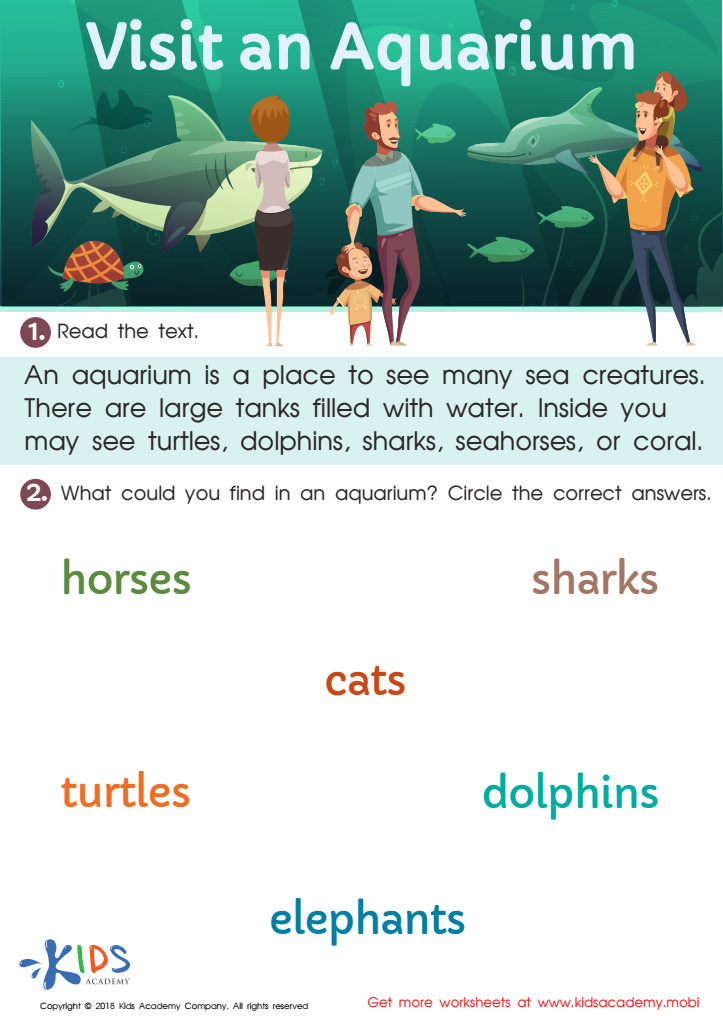
Visit an Aquarium Worksheet
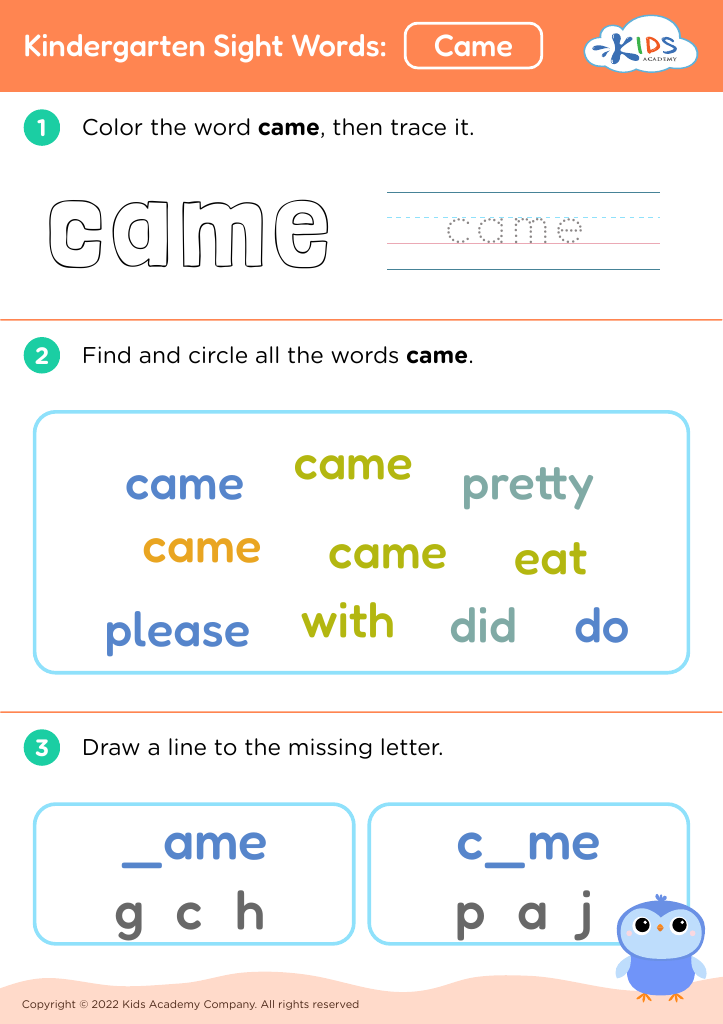








Visual interpretation and vocabulary building are fundamental skills for young children aged 3-7, as they play a crucial role in cognitive development and early literacy. Parents and teachers should prioritize these skills for several reasons.
Firstly, visual interpretation enhances a child’s ability to understand and engage with their surroundings. When children learn to interpret images, drawings, and other visual stimuli, they develop critical thinking and analytical skills. This lays a solid foundation for problem-solving and creativity.
Building vocabulary at this stage is equally important. A rich vocabulary expands a child’s ability to express thoughts, emotions, and ideas, facilitating better communication and social interactions. Children who can articulate their experiences and feelings are more likely to form meaningful relationships and demonstrate emotional intelligence.
Moreover, strong vocabulary skills are directly linked to reading comprehension. As children progress in their literacy journey, a well-rounded vocabulary significantly aids in understanding texts and stories, making the learning process more enjoyable.
Incorporating activities that promote visual interpretation and vocabulary growth—such as storytelling, interactive reading, and art—makes learning engaging and stimulating. By supporting these skills, parents and teachers lay the groundwork for academic success and lifelong learning.








