Character recognition Reading Worksheets for Ages 3-7
3 filtered results
-
From - To
Discover our engaging Character Recognition Reading Worksheets designed specifically for children ages 3 to 7! These printable resources help young learners identify and recognize various characters from stories and everyday life, enhancing their reading skills while having fun. Our worksheets feature vibrant illustrations and interactive activities that capture children's attention and spark their imagination. As kids practice recognizing characters, they'll develop essential literacy skills and build a foundation for future reading success. Perfect for home or classroom use, these character recognition worksheets are an excellent tool for nurturing a love of reading in early learners. Start your child’s reading journey today!
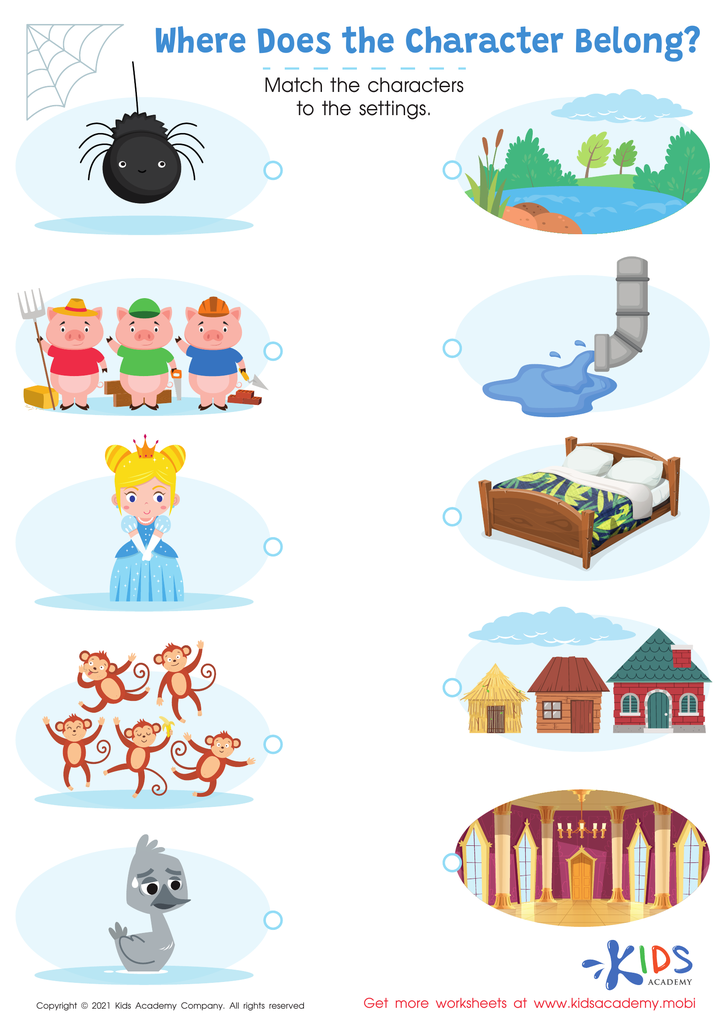
Where Does the Character Belong? Worksheet
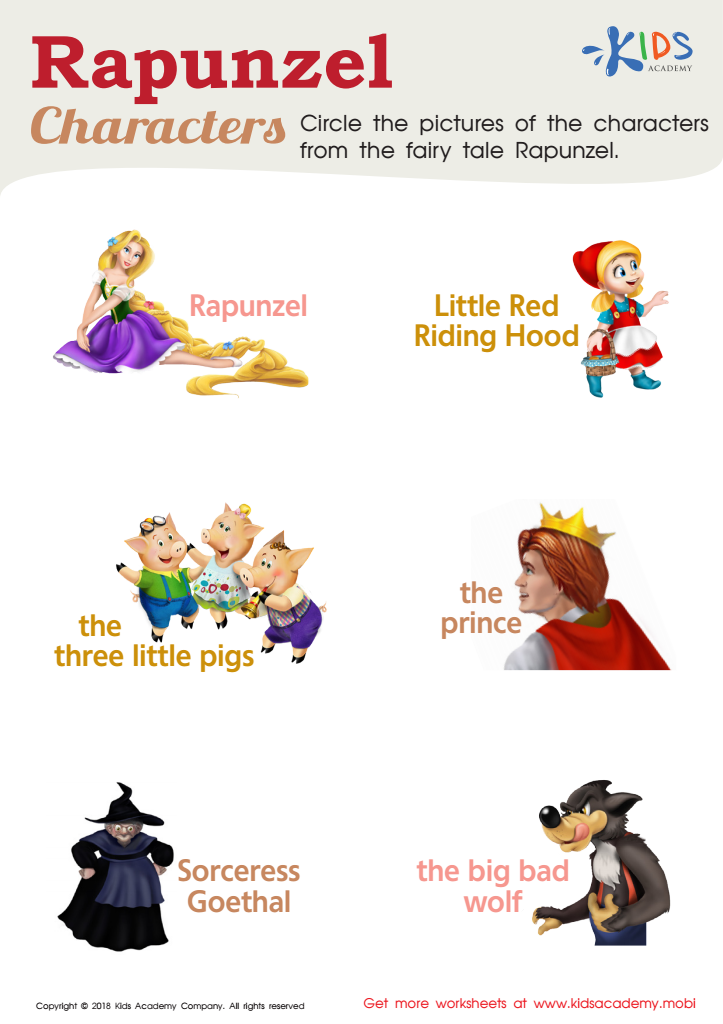
Rapunzel Characters Worksheet
 Assign to My Students
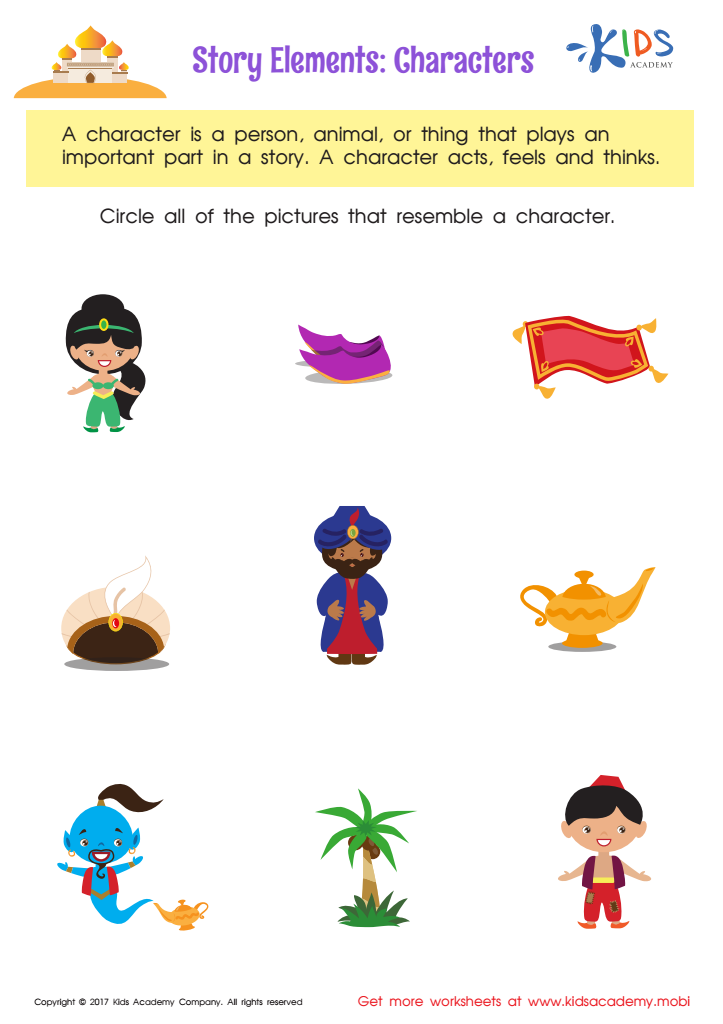
Story Elements Printable







Character recognition is a crucial component of early literacy for children aged 3 to 7. Parents and teachers should care about this skill for several important reasons.
Firstly, character recognition serves as the foundation for reading. By identifying letters and their corresponding sounds, children develop the necessary skills to decode words, leading to the ability to read fluently. Early mastery of these skills fosters confidence and a love for reading, encouraging lifelong learning.
Secondly, character recognition supports cognitive development. As children learn to recognize letters and words, they enhance their memory and critical thinking skills. This cognitive engagement boosts their overall academic performance across subjects.
Additionally, familiarizing young learners with print lays the groundwork for effective communication. Recognizing characters helps children understand how to express themselves through writing, further contributing to their literacy journey.
Moreover, exposure to diverse texts promotes an appreciation for different cultures and narratives. This breadth of understanding is essential for fostering empathy and social awareness.
Finally, investing in character recognition promotes a successful transition into more advanced literacy skills. By equipping children with these fundamental capabilities, parents and teachers directly contribute to their future educational success and personal growth.








