Critical thinking development Reading Worksheets for Ages 3-7
4 filtered results
-
From - To
Discover our engaging Critical Thinking Development Reading Worksheets tailored for children aged 3-7. These worksheets are designed to enhance young learners' analytical skills through fun and interactive activities. Each worksheet promotes critical thinking by encouraging children to ask questions, make connections, and solve problems as they explore various reading topics. Perfect for early education settings or at-home learning, these resources nurture curiosity and support cognitive growth. Foster a love for learning and equip your child with essential skills that lay the foundation for lifelong academic success. Explore our collection and empower your child's reading journey today!
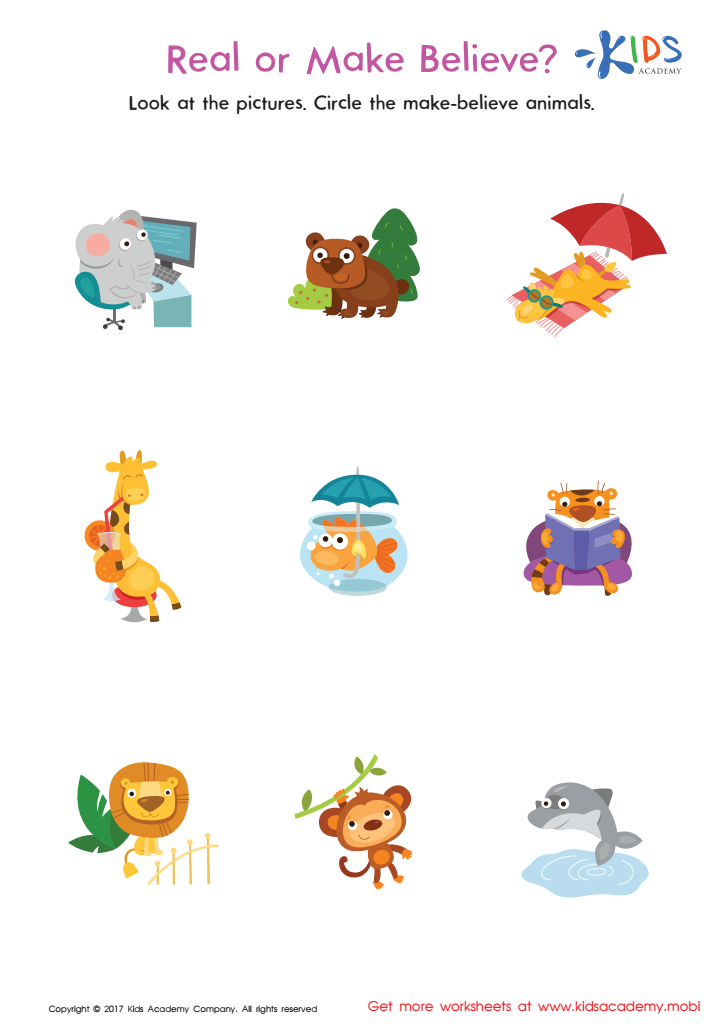
Fact or Make Believe Worksheet
 Assign to My Students
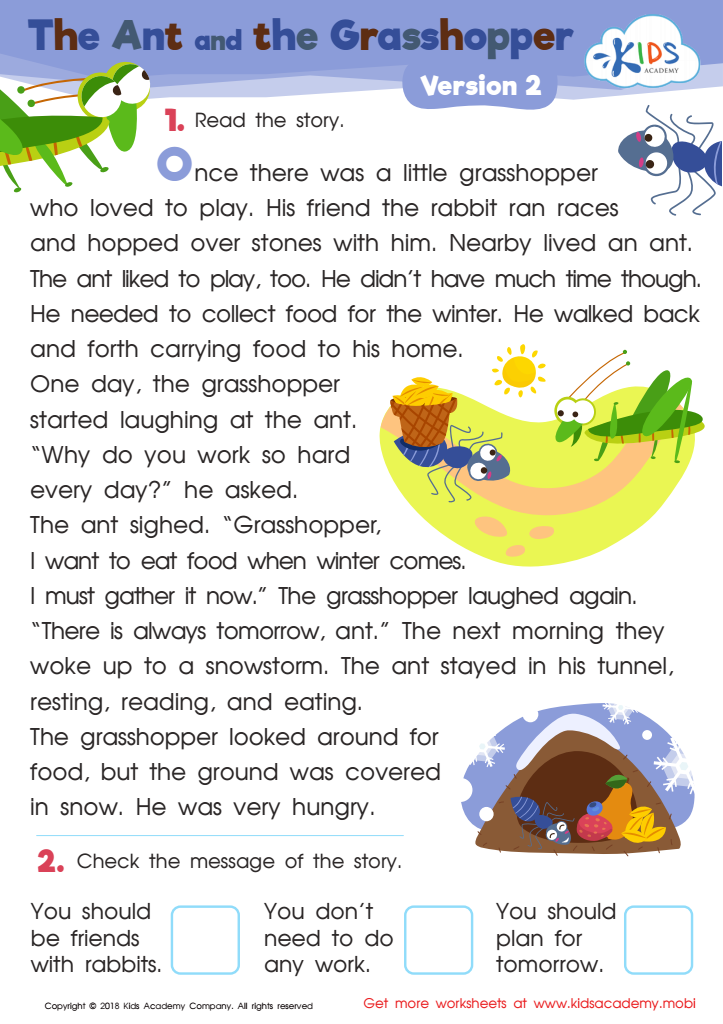
The Ant and The Grasshopper Version 2 Worksheet
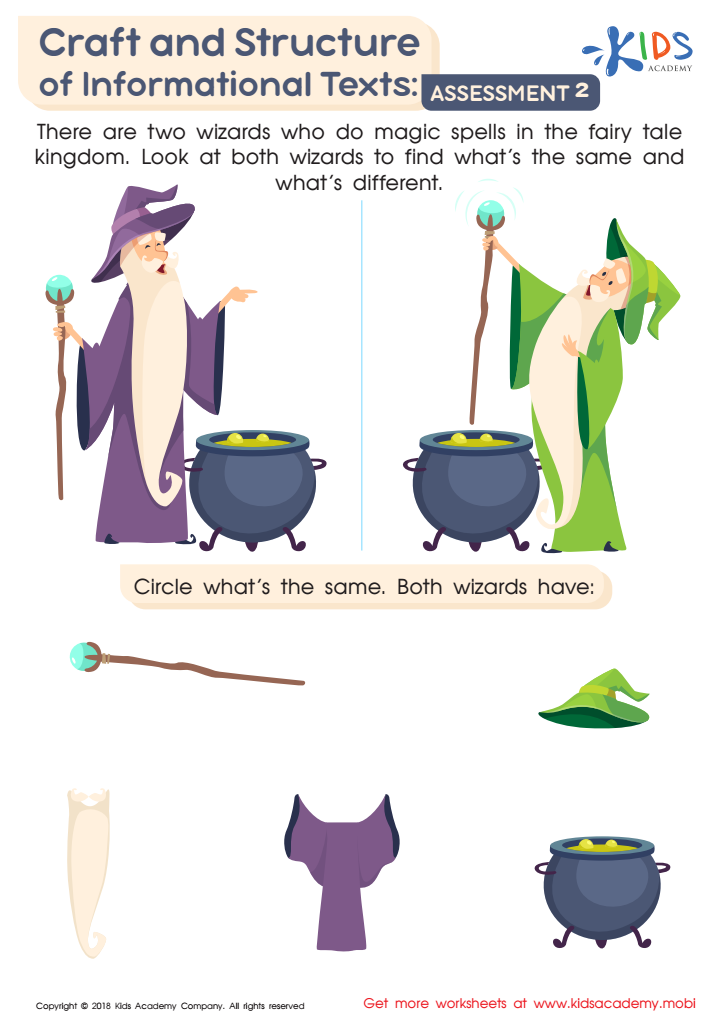
Craft and Structure of Informational Texts: Assessment 2 Worksheet
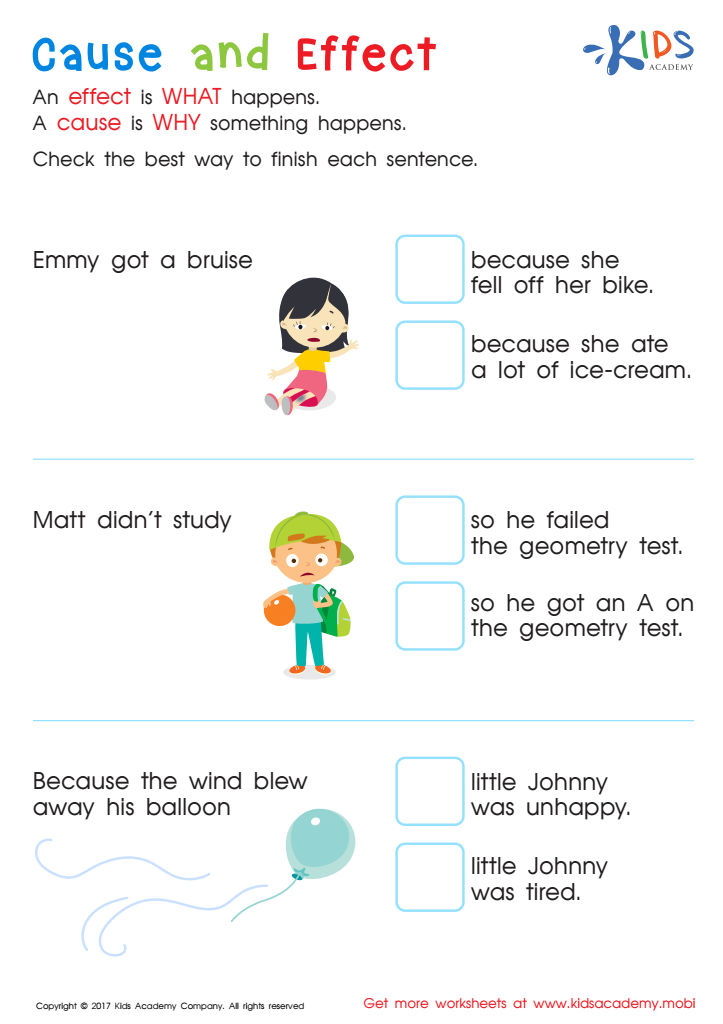
Cause and Effect Worksheet








Critical thinking development through reading for children ages 3-7 lays the foundation for lifelong learning and problem-solving skills. At this age, children are naturally curious and eager to explore the world around them. Engaging them with diverse reading materials fosters imagination and helps them to analyze and synthesize information. When parents and teachers prioritize reading, they encourage children to ask questions, make connections, and express their thoughts, crucial components of critical thinking.
Moreover, critical thinking empowers young learners by teaching them to evaluate situations, discern patterns, and consider multiple perspectives—skills that are essential in our rapidly changing world. Through interactive storytelling and discussions about characters, plots, and themes, children learn to observe details, infer meanings, and draw conclusions based on evidence.
Additionally, fostering critical thinking skills early on helps in developing emotional intelligence, including empathy and understanding others' viewpoints. This ability to engage with complexity builds resilience and adaptability, enabling children to face challenges with confidence.
For teachers and parents, nurturing these skills through reading not only enhances a child's cognitive development but also prepares them for academic success and responsible citizenship. Investing in critical thinking during these formative years sets the stage for a brighter future.








