Improve vocabulary Reading Worksheets for Ages 3-7
3 filtered results
-
From - To
Enhance your child’s vocabulary with our specialized Reading Worksheets, expertly crafted for ages 3-7. At Kids Academy, we offer engaging and educational printable worksheets designed to expand young learners' vocabularies through fun activities and exercises. These resources cater to various learning abilities, incorporating vibrant images, familiar themes, and interactive tasks that grab children's attention and foster language development. With our worksheets, children can confidently explore new words, improve their reading skills, and build a strong vocabulary foundation crucial for future academic success. Explore our extensive collection and start unlocking your child's linguistic potential today!
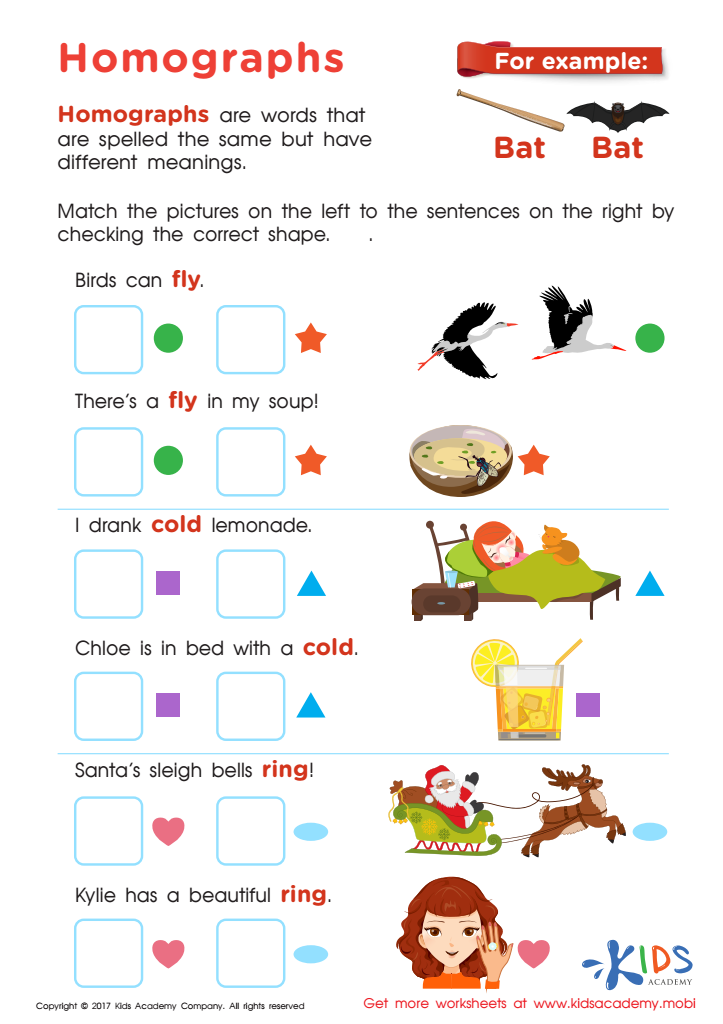
Homographs Free Printable Worksheet
 Assign to My Students
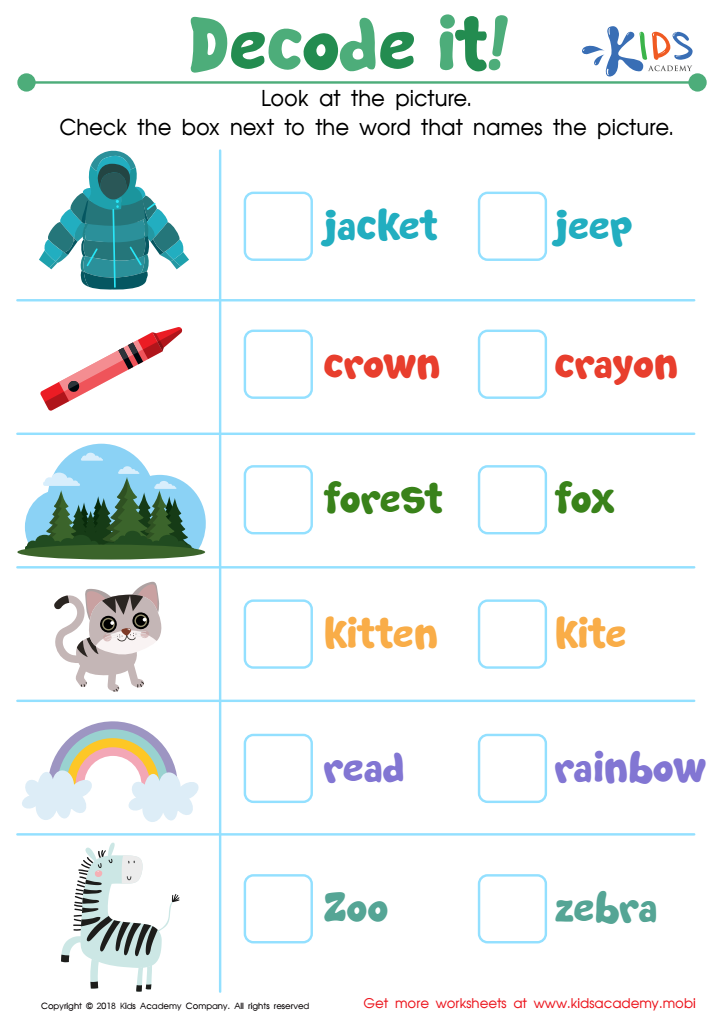
Reading: Decode It Worksheet
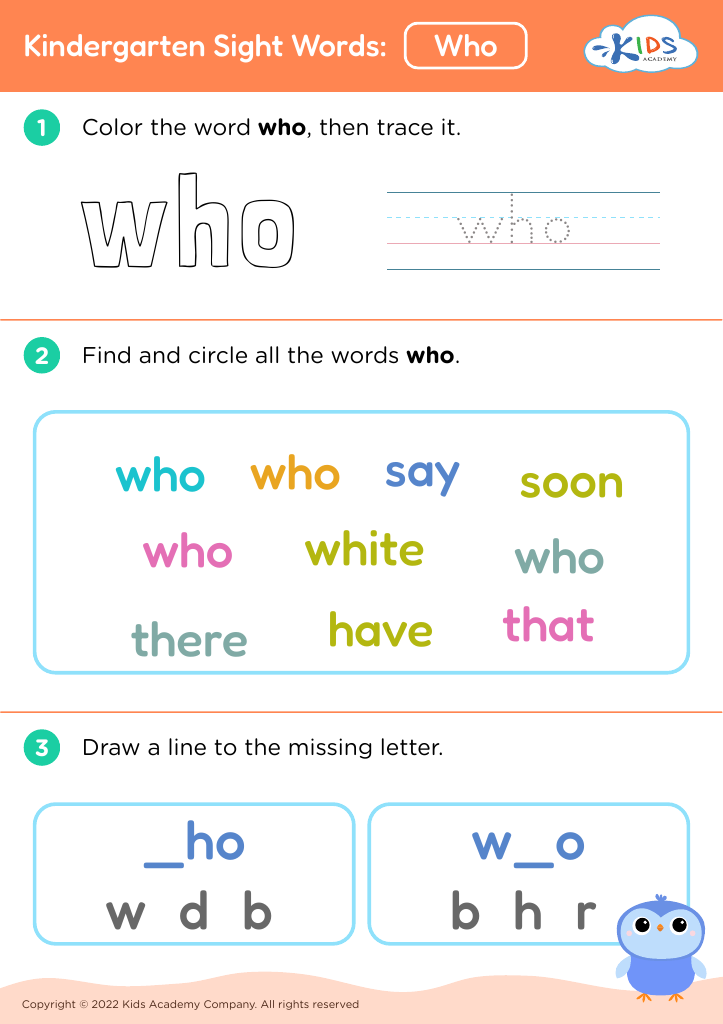







Parents and teachers should prioritize improving vocabulary and reading skills for children aged 3-7 because these early years are critical for cognitive and social development. At this age, children's brains are highly receptive to language acquisition, making it an ideal period for enriching vocabulary. A strong vocabulary sets the foundation for effective communication, as it enables children to express their thoughts, emotions, and needs more clearly. This can lead to better interactions with peers and adults, fostering healthy social skills.
Additionally, improved vocabulary and reading skills are directly linked to academic success. Children who start school with a robust vocabulary tend to find it easier to grasp new concepts and follow instructions, which enhances their overall learning experience. Reading, in particular, ignites imagination, expands knowledge, and nurtures curiosity. It helps children develop critical thinking skills and promotes a lifelong love for learning.
Moreover, as children become more adept in reading, they gain confidence and self-esteem, which are crucial for both personal and academic growth. Therefore, parents and teachers investing time and resources in vocabulary improvement and reading activities aren't just preparing children for school; they are also setting them up for long-term success and well-being.








