
Shape identification Reading Worksheets for Ages 3-7
5 filtered results
Difficulty Level
Grade
Age
-
From - To
Subject
Activity
Standards
Enhance your child's early reading skills and shape recognition with our Shape Identification Reading Worksheets for ages 3-7! These engaging, printable worksheets are designed to blend foundational literacy development with shape identification practice. Through fun, interactive activities, children will learn to recognize various shapes, understand their attributes, and improve their vocabulary and reading comprehension. Ideal for preschool to first grade, our worksheets make learning enjoyable and effective, laying a strong educational foundation. Explore today and give your child the tools they need for academic success in reading and math while having a blast!
Favorites
With answer key
Interactive
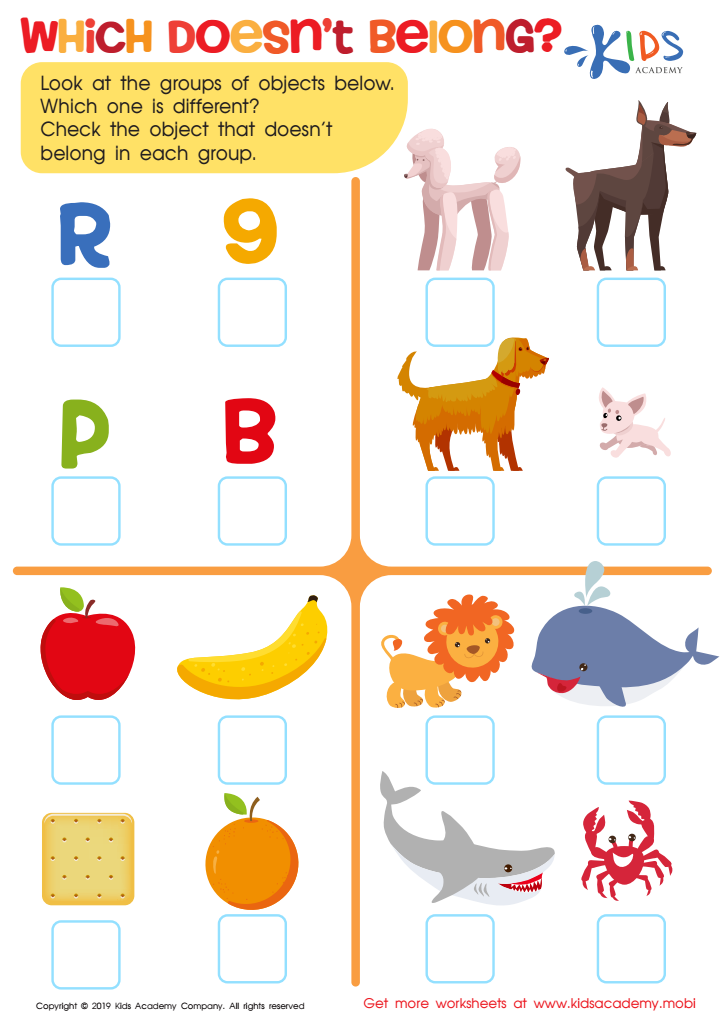
Which Doesn't Belong? Worksheet
This engaging worksheet helps preschoolers recognize similar and different attributes of common words, using brightly-colored pictures. They analyze the items in each category and check off what is different. For extra practice, have them explain their reasoning verbally! Sorting and classifying are important skills to learn.
 Assign to My Students
Which Doesn't Belong? Worksheet
Worksheet
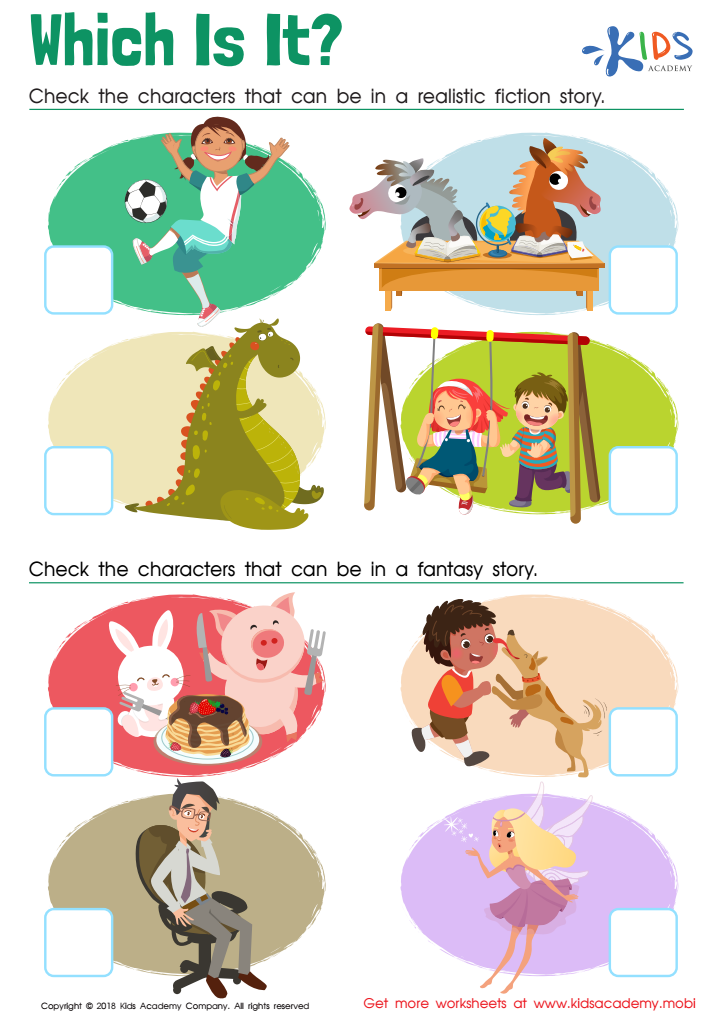
Which Is It? Worksheet
This colorful worksheet helps young readers identify elements of fact and fiction using fun picture clues. They can check off characters who exist in realistic fiction stories, which makes learning the difference between the two genres fun and engaging.
Which Is It? Worksheet
Worksheet
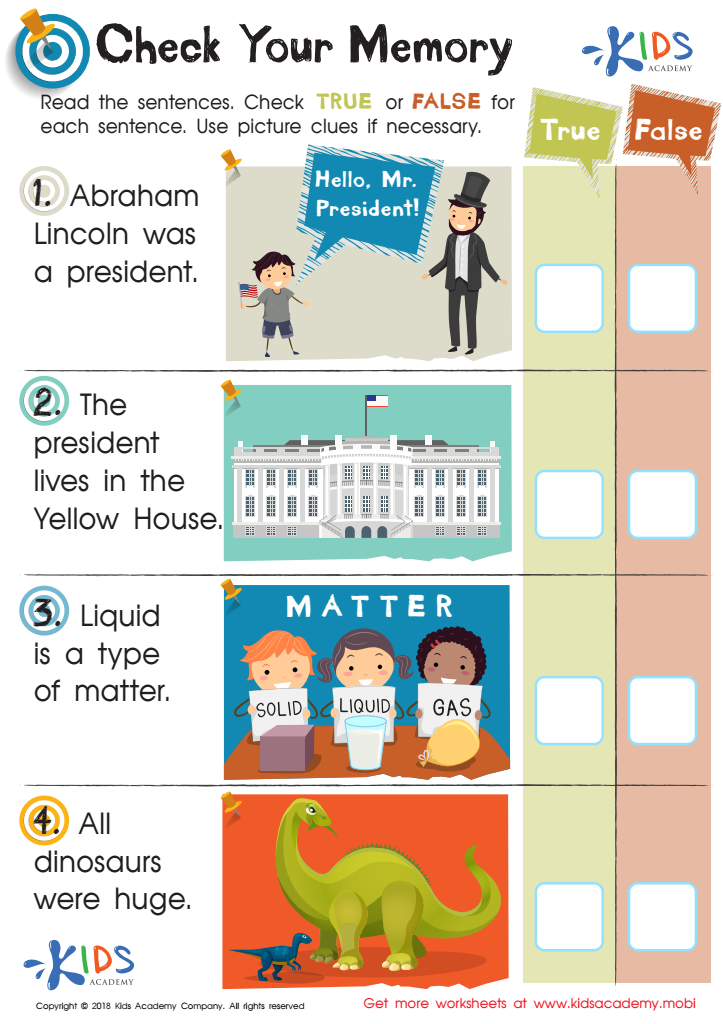
Check Memory Worksheet
Assisting your kids with their homework and using worksheets is a great way for them to learn. The vibrant visuals in this printout can help stimulate the mind and motivate your child. Have them read the sentences and then point to the associated images. Afterwards, ask them to state True or False for each sentence. If they are still uncertain, offer them the picture clues to assist further.
Check Memory Worksheet
Worksheet
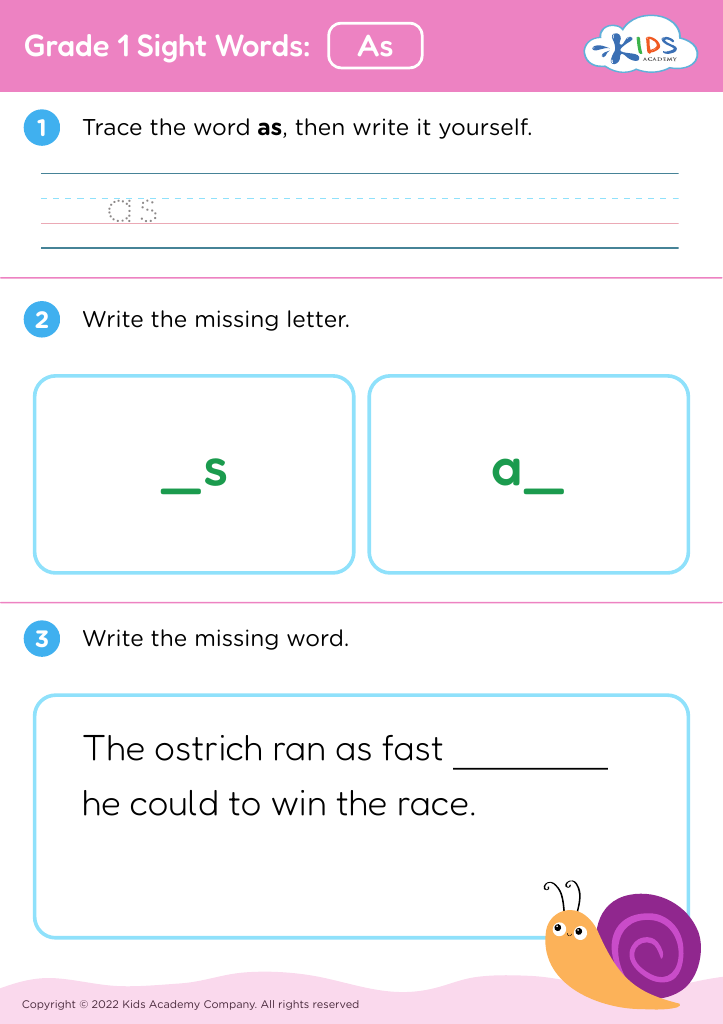
Join Kids Academy for Free
Who is primarily going to use this learning content?








Shape identification reading is crucial for children ages 3-7 because it forms the foundation for cognitive and academic development. Recognizing and naming shapes helps young children build visual discrimination skills, which are essential for reading and writing. Shapes are prevalent in letters and numbers, so an understanding of geometric forms aids in distinguishing different characters. For example, recognizing circles in the letters "b" and "d" helps to avoid confusion between them, aiding in early literacy.
Furthermore, shape identification enhances problem-solving and critical thinking abilities. Children learn to sort and categorize objects based on their properties, foster spatial awareness, and understand relationships between different items, all of which are foundational math skills. This spatial awareness extends to real-world applications, from navigating environments to understanding maps and diagrams.
Teachers and parents should care because engaging children in activities involving shape identification promotes curiosity, observation, and exploration. It's also an excellent opportunity to improve fine motor skills through drawing and manipulating objects, and language skills by describing shapes and their characteristics. Prioritizing shape identification ensures that children are better prepared for more complex concepts in both mathematics and literacy, setting them up for long-term academic success.








