Spelling practice Reading Worksheets for Ages 3-7 - Page 3
50 filtered results
-
From - To
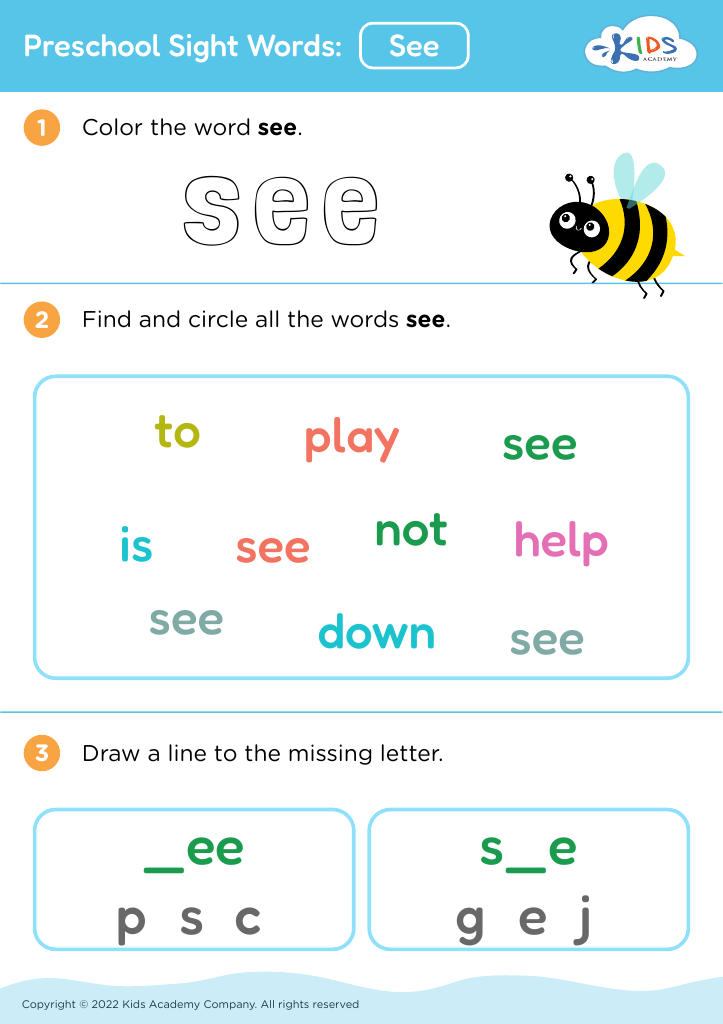
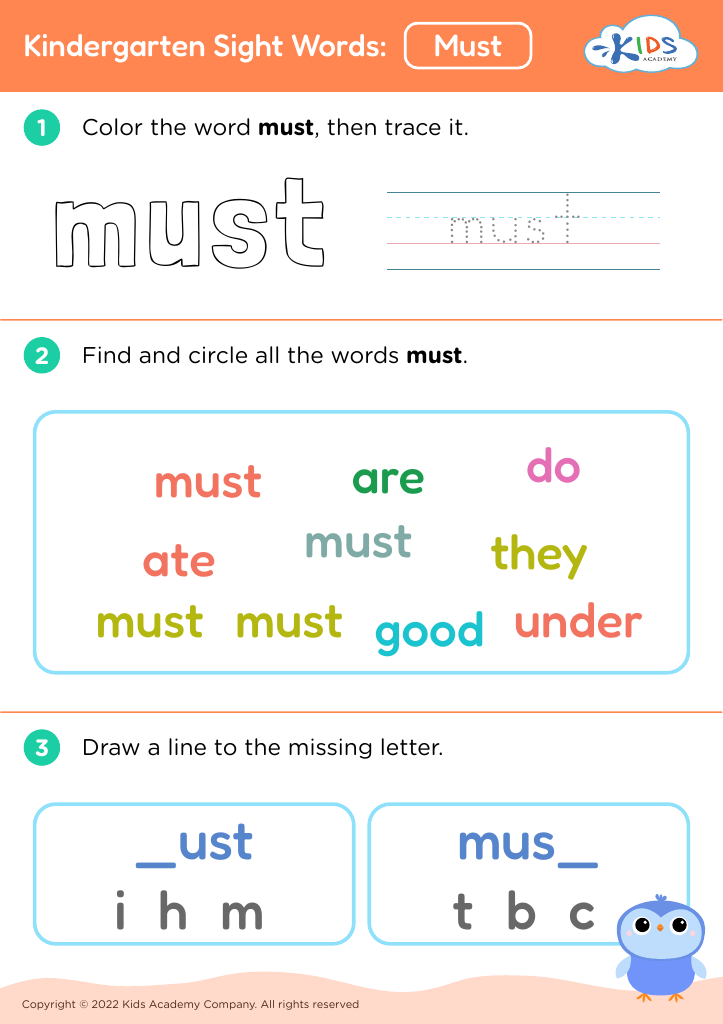






Ensuring that children aged 3-7 engage in spelling practice and reading is crucial for their cognitive development and academic success. At this early stage of life, children's brains are highly adaptable and geared towards language acquisition. Introducing them to structured spelling practice helps in the recognition of patterns in words, which is essential for literacy skills. This foundation improves their ability to decode new words, enhancing their reading abilities.
Reading not only enriches vocabulary but also stimulates imagination and creativity. Spelling practice strengthens the relationship between phonemes (sounds) and graphemes (letters), directly impacting their reading and writing proficiency. Children who develop strong reading and spelling skills early are often more confident and competent in their overall academic pursuits.
Additionally, early reading experiences contribute to a lifelong love for literature, promoting continuous learning and curiosity. Reading together with parents or in a classroom setting fosters bonding, listening skills, and positive attitudes towards learning. It's instrumental for social and emotional growth, providing children with endless stories and characters that help them navigate their own emotional journeys.
Thus, prioritizing spelling practice and reading from ages 3-7 sets a critical groundwork for a child's educational path, laying the bricks for future learning, communication, and social skills.








