Understanding context Reading Worksheets for Ages 3-7
6 filtered results
-
From - To
At Kids Academy, our "Understanding Context" reading worksheets for ages 3-7 are designed to enhance young learners' reading comprehension skills. Through engaging activities, children will practice identifying clues and making logical connections within texts, fostering a deeper understanding of stories and information. These worksheets are tailored to suit early reading levels, encouraging critical thinking and vocabulary development. By integrating these fun and educational exercises into their routine, kids build a strong foundation for future reading success. Explore Kids Academy's printables to support your child's journey towards becoming a confident reader.
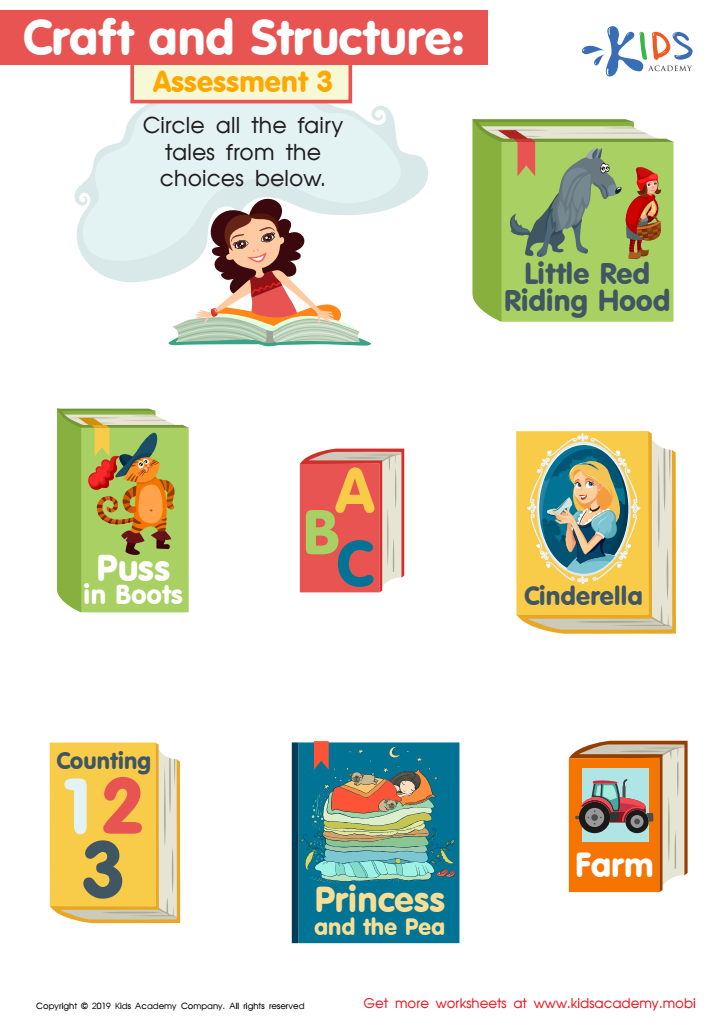
Craft and Structure: Assessment 3 Worksheet
 Assign to My Students
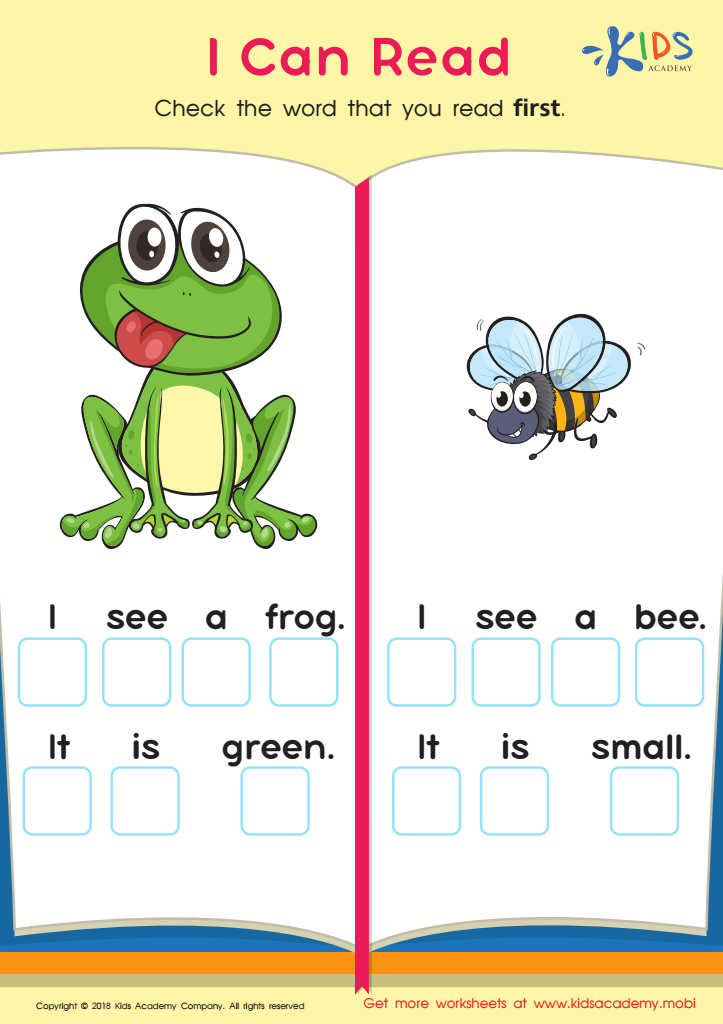
I Can Read Worksheet
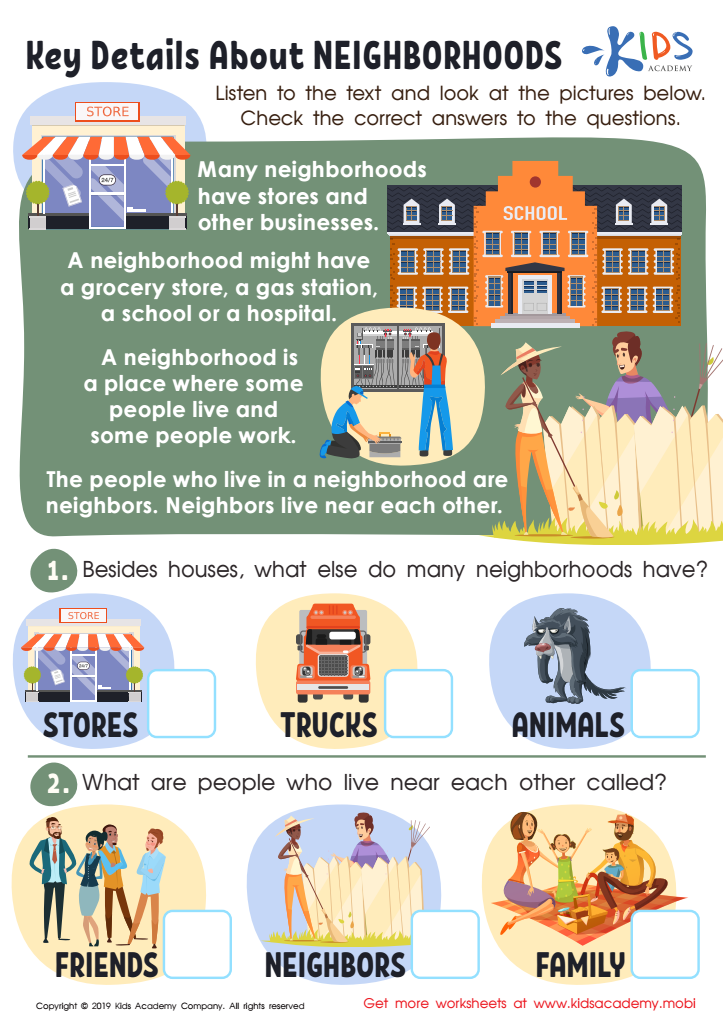
Key Details Neighborhoods Worksheet
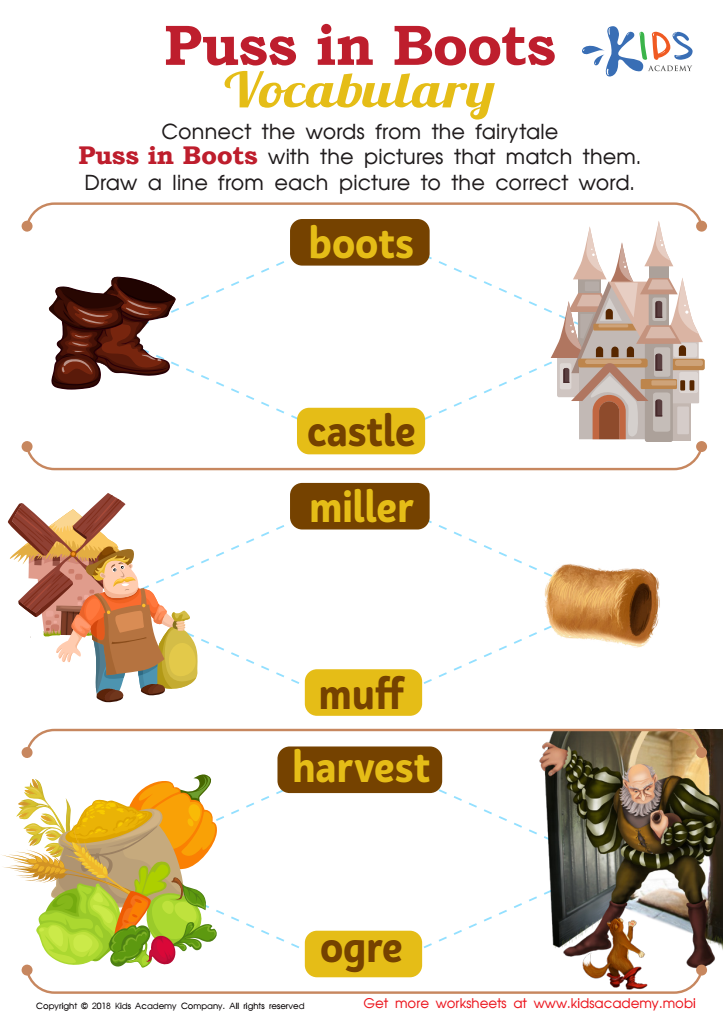
Puss in Boots Vocabulary Worksheet
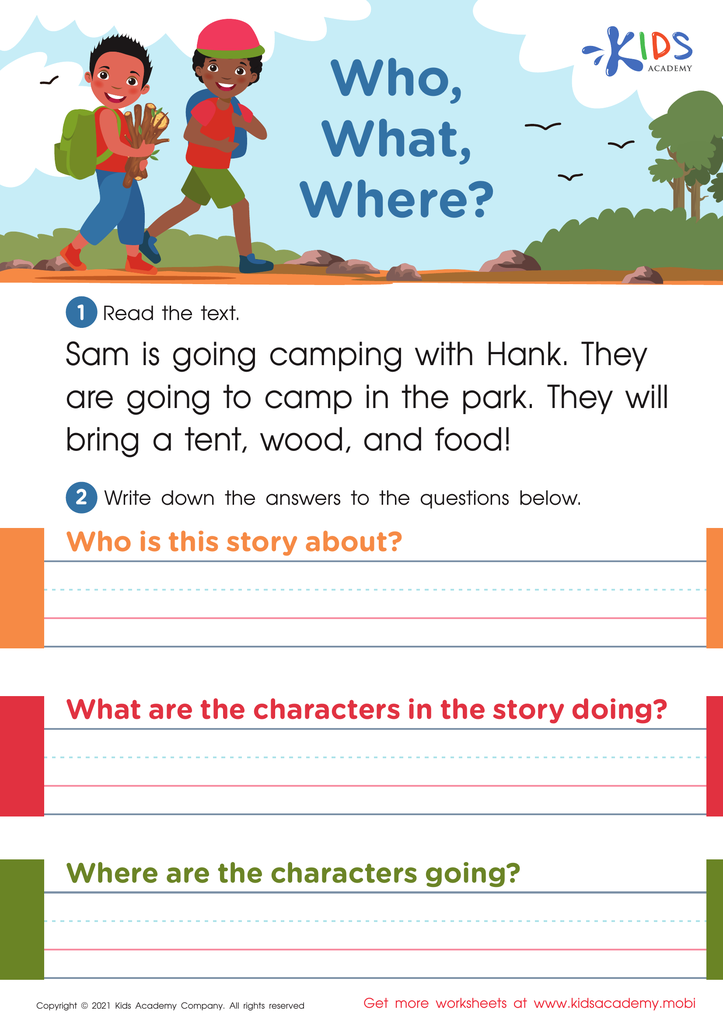
Who, What, Where? Worksheet


.jpg)




Understanding context when teaching reading to children ages 3-7 is essential for several reasons. First, it helps children comprehend stories and texts more deeply. Young readers are learning to make sense of words, and understanding context improves their ability to infer meaning from new vocabulary and unfamiliar sentence structures. This foundational skill boosts both language development and cognitive skills.
Second, context helps children relate what they're reading to their own experiences, making reading more engaging and enjoyable. When children see parallels between a story and their own life, they are more likely to be interested and motivated to read more, fostering a lifelong love for reading.
Third, developing skills to understand context supports better academic outcomes. As children progress through school, their ability to infer meaning from context contributes significantly to their performance in all subjects, not just language arts.
Furthermore, context-aware reading teaches critical thinking skills. Children learn to make connections, anticipate plot developments, and guess outcomes, thereby strengthening their analytical abilities.
Finally, this understanding bolsters confidence and independence in reading. When children can so autonomously decipher meanings, they rely less on adult intervention, which empowers them with the independence necessary for later educational success.
In summary, fostering an understanding of context in early readers isn’t just about learning to read—it's about creating confident, engaged learners who see the value and joy in reading.








