Understanding life cycles Reading Worksheets for Ages 3-7
3 filtered results
-
From - To
Explore our engaging "Understanding Life Cycles Reading Worksheets" designed for children ages 3-7. These printable resources from Kids Academy offer vibrant illustrations and simple texts to help young learners grasp the concept of life cycles in plants, animals, and insects. Perfect for early readers, each worksheet supports the development of reading skills while teaching essential science knowledge. Through fun and interactive activities, children will enhance their vocabulary, comprehension, and observational skills. Discover a seamless blend of education and excitement as your child uncovers the wonders of nature’s life processes, tailored specifically for their growing minds.
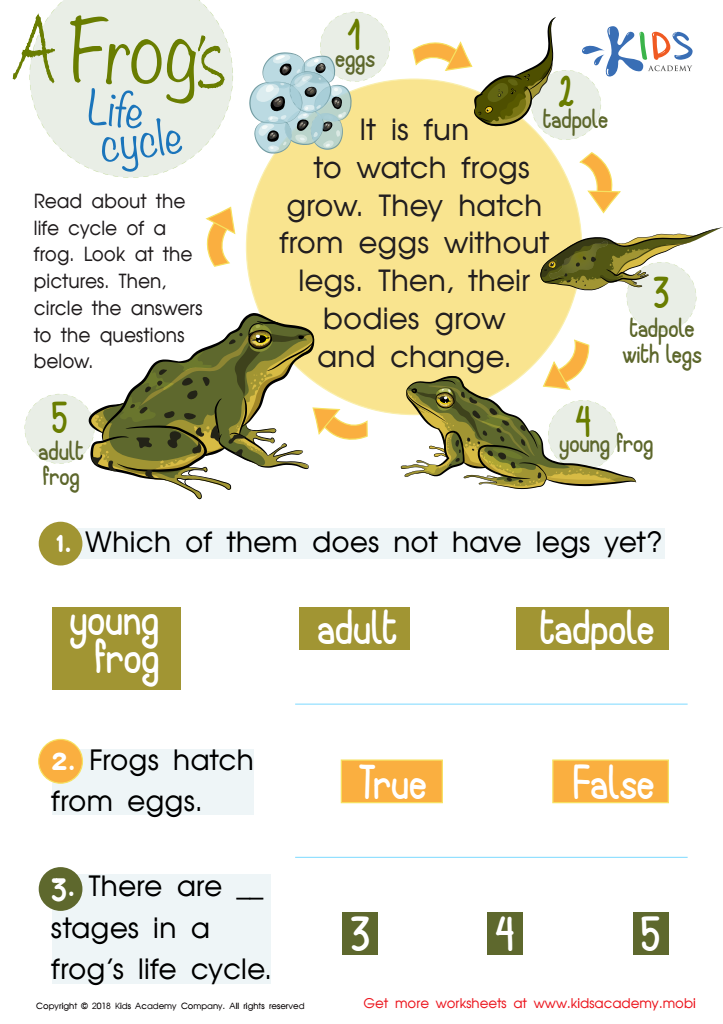
A Frog’s Life Cycle Worksheet
 Assign to My Students
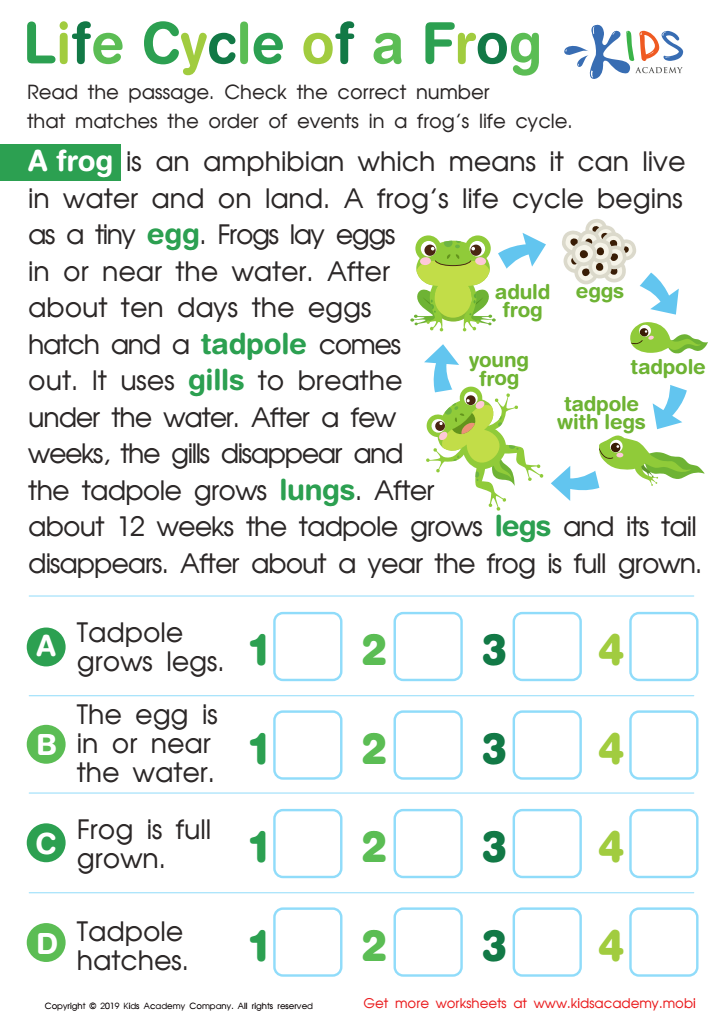
Life Cycle of a Frog Worksheet
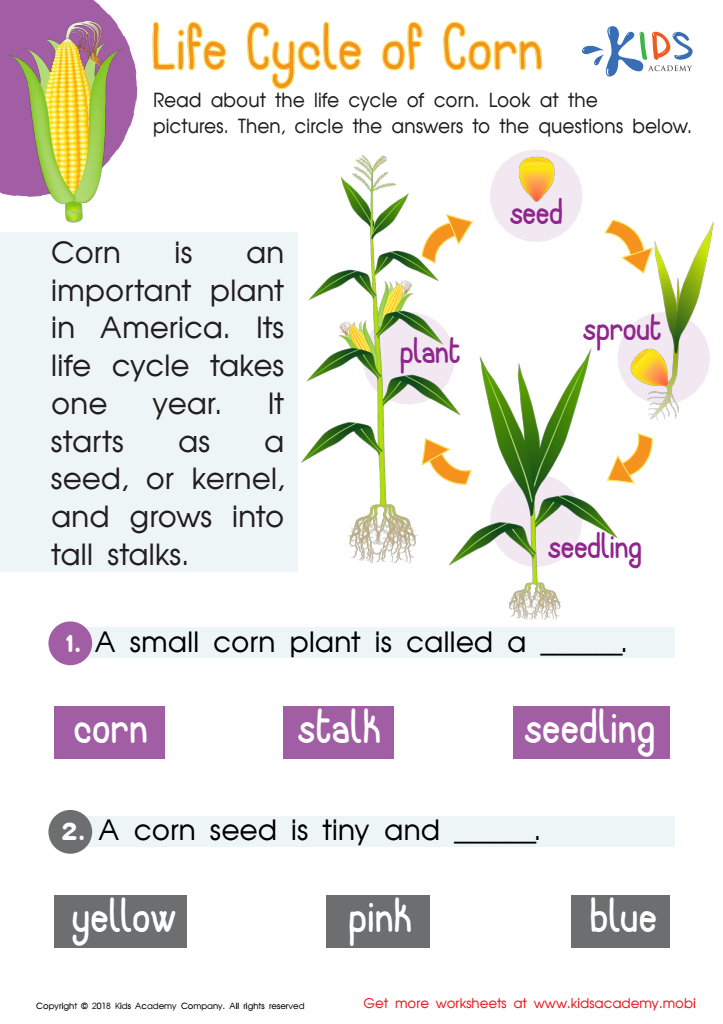
Life Cycle of Corn Worksheet







Understanding life cycles is pivotal for young children's intellectual and emotional development, especially between the ages of 3 and 7. At this formative stage, children experience rapid cognitive and emotional growth, and learning about life cycles fosters curiosity about the natural world. When parents and teachers engage children with books and activities that explain the life processes of plants, animals, and humans, they lay the groundwork for foundational scientific knowledge.
Understanding life cycles enhances observational skills, critical thinking, and sequencing abilities, as children learn to identify and comprehend stages like birth, growth, reproduction, and death. This foundational knowledge helps children make sense of the world and promotes a respectful and empathetic attitude towards living organisms. Emotional development is also supported as children learn about change and continuity, preparing them for the concepts of growth and loss in a supportive and graspable manner.
Engaging with life cycle materials along with Reading fosters literacy as well. Exposure to vocabulary, sentence structures, and the language used to describe natural processes builds reading competence and enthusiasm. Therefore, incorporating life cycles into early education not only prepares children for more complex scientific topics but nurtures a natural curiosity and love for learning that benefits their overall development.








