Understanding Rhymes Reading Worksheets for Ages 3-7
3 filtered results
-
From - To
Explore our "Understanding Rhymes" reading worksheets designed specifically for children ages 3 to 7. These engaging printable activities focus on enhancing early literacy skills through fun and interactive exercises that promote rhyme recognition. Our worksheets help young learners identify rhyming words, improve their phonetic awareness, and expand their vocabulary, all while enjoying colorful illustrations and playful themes. Ideal for at-home learning or classroom activities, these resources make exploring the world of rhymes enjoyable and educational. Foster a love for reading in your child as they develop essential skills through our meticulously crafted worksheets, sparking creativity and imaginative thinking along the way!
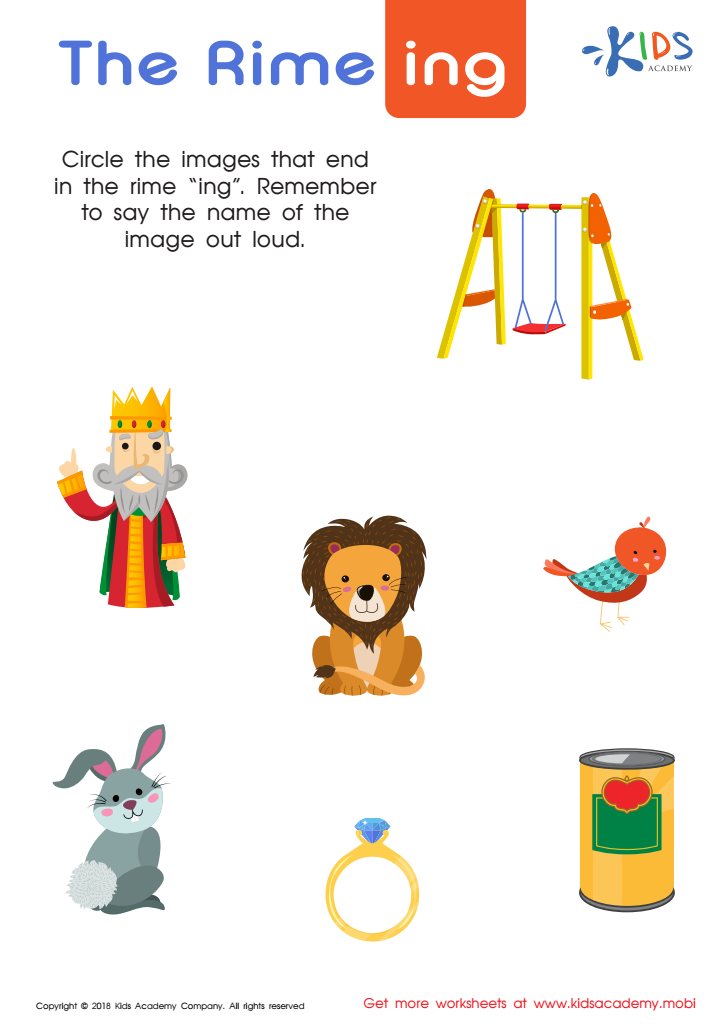
The Rime "ing" Worksheet
 Assign to My Students
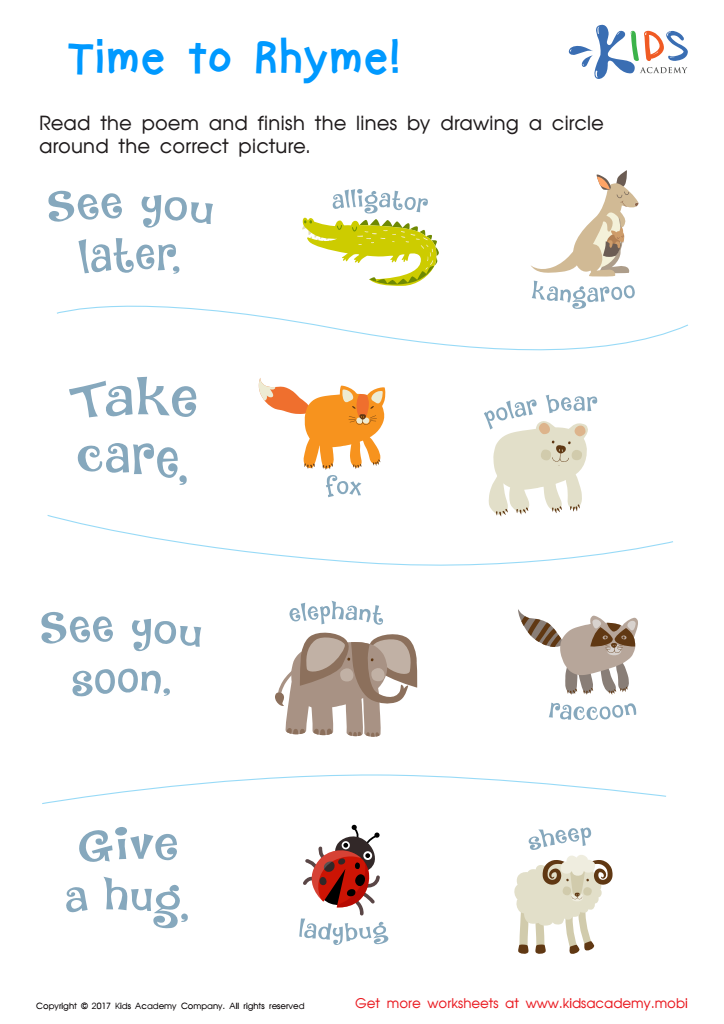
Time to Rhyme Rhyming Worksheet
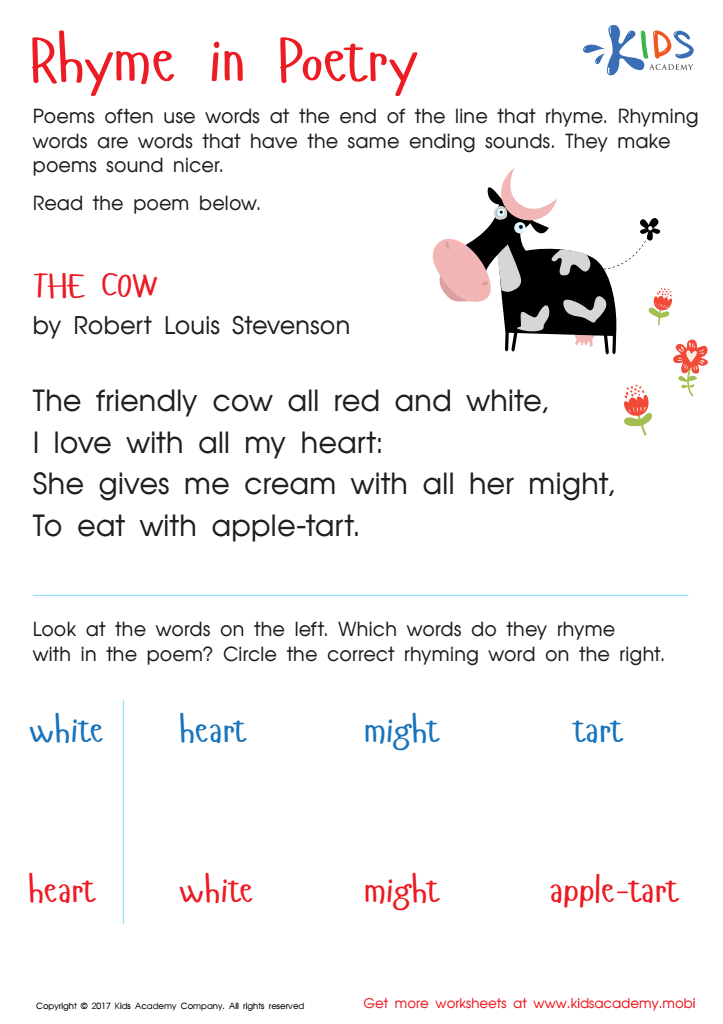
Rhyme In Poetry Worksheet








Understanding rhymes is crucial for young children's language development, particularly for ages 3-7. During this formative period, children are naturally drawn to the rhythmic and melodic nature of rhymes, which enhances their phonemic awareness—the ability to hear and manipulate sounds. This foundational skill is essential for learning to read, as it helps children decode words and improves their spelling abilities.
Additionally, engaging with rhyming texts fosters vocabulary growth and comprehension. Rhymes introduce children to new concepts, themes, and vocabulary in a playful context, making them more memorable. Furthermore, the enjoyment of rhymes encourages a love for reading, promoting lifelong literacy habits.
Teachers and parents should also recognize that rhyming activities develop crucial social-emotional skills. Sharing rhymes can strengthen the bond between caregivers and children through shared experiences and repetition, providing comfort and predictability.
Incorporating rhyme into early education nurtures critical cognitive skills, encourages curiosity, and enhances overall literacy readiness. By prioritizing rhyme-focused reading, parents and teachers lay the groundwork for children's reading abilities, supporting their academic success and fostering a lasting interest in literature. This holistic approach significantly benefits children's expressive and receptive language skills, paving the way for enthusiastic lifelong learners.








