Detail identification Reading Comprehension Worksheets for Ages 3-7
3 filtered results
-
From - To
Enhance your child's reading skills with our Detail Identification Reading Comprehension Worksheets, designed specifically for ages 3-7. These engaging and age-appropriate worksheets help young learners develop the crucial ability to identify and understand specific details within a text. Promoting critical thinking and attention to detail, our worksheets include a variety of fun, interactive activities that captivate young minds. Perfect for home or classroom use, they encourage discussion and improve vocabulary. Boost your child's confidence in reading comprehension while making learning enjoyable. Explore an array of colorful worksheets that make reading a delightful adventure for children in their early learning journey!
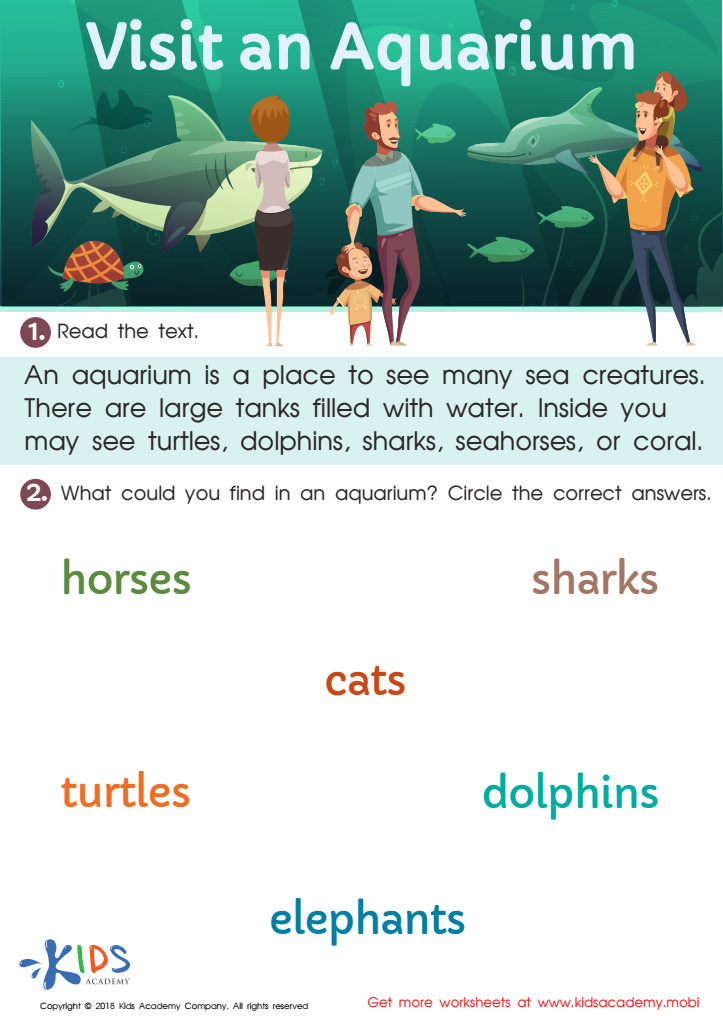
Visit an Aquarium Worksheet
 Assign to My Students
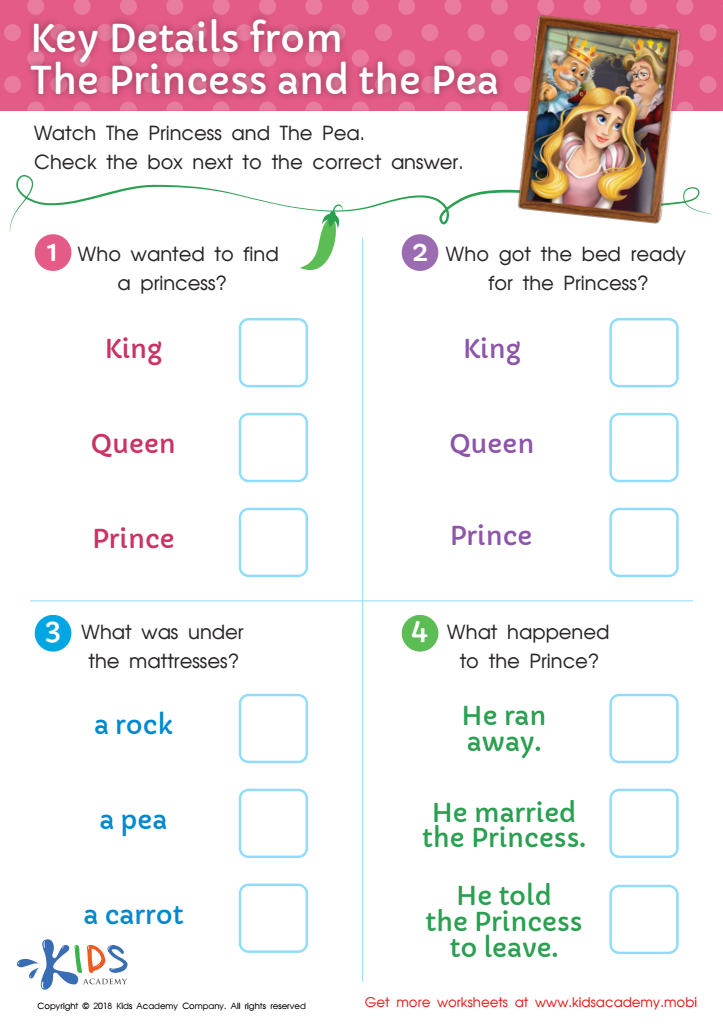
Key Details from the Princess and the Pea Worksheet
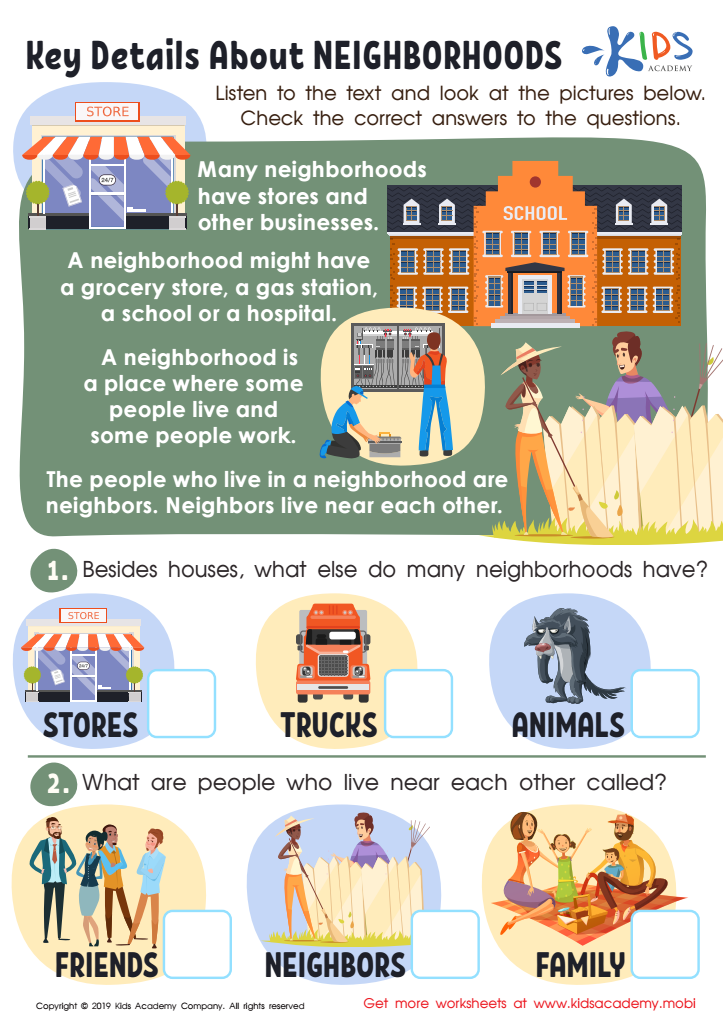
Key Details Neighborhoods Worksheet








Detail identification reading comprehension is crucial for children aged 3-7 as it lays the groundwork for deeper understanding and analytical skills. At this stage, children are beginning to grasp the connection between spoken and written language, making it an ideal time for parents and teachers to emphasize the importance of identifying specific details in texts.
Understanding details helps children retrieve information, make inferences, and draw conclusions, skills that are applicable far beyond reading. It encourages curiosity and engagement with stories, sharpening their ability to remember facts and sequences. Additionally, practicing detail identification fosters vocabulary development and cognitive reasoning, as it challenges young learners to think critically about what they read.
Parents and teachers should also acknowledge that reading comprehension is a foundational element of academic success. As competency in reading blooms at this early age, it sets children on a path of greater learning abilities, enhancing performance in future educational settings. Moreover, fostering a love for reading and exploration can promote a lifelong habit of learning, curiosity, and creativity. Engaging with details helps children feel more connected to texts, and contributes positively to their emotional and intellectual development, making it a vital focus for educators and families alike.








