Historical Knowledge Reading Comprehension Worksheets for Ages 3-7
5 filtered results
-
From - To
Discover our engaging Historical Knowledge Reading Comprehension Worksheets designed specifically for children ages 3-7. These worksheets provide young learners with captivating stories and activities that introduce them to significant historical figures, events, and concepts. Each worksheet enhances reading skills while fostering curiosity about the past. With age-appropriate language and colorful illustrations, children will enjoy learning about history in a fun, interactive way. Perfect for classrooms or at-home learning, our resources help build comprehension skills, critical thinking, and a basic understanding of historical timelines. Start your child’s journey into history today and watch their love for stories and learning blossom!
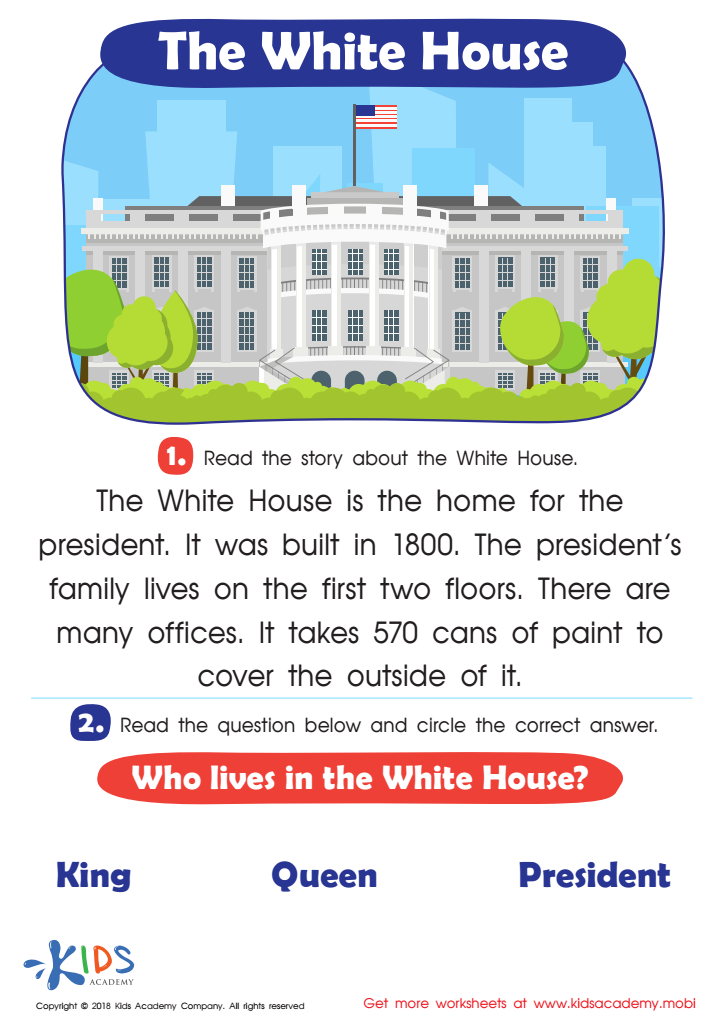
White House Worksheet
 Assign to My Students
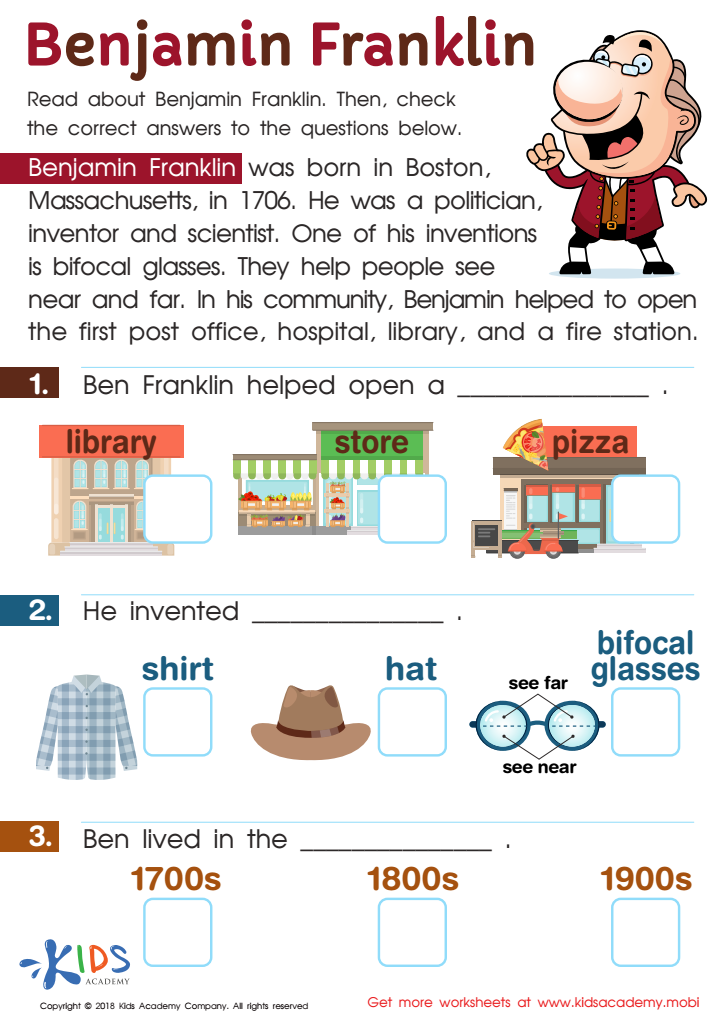
Benjamin Franklin Worksheet
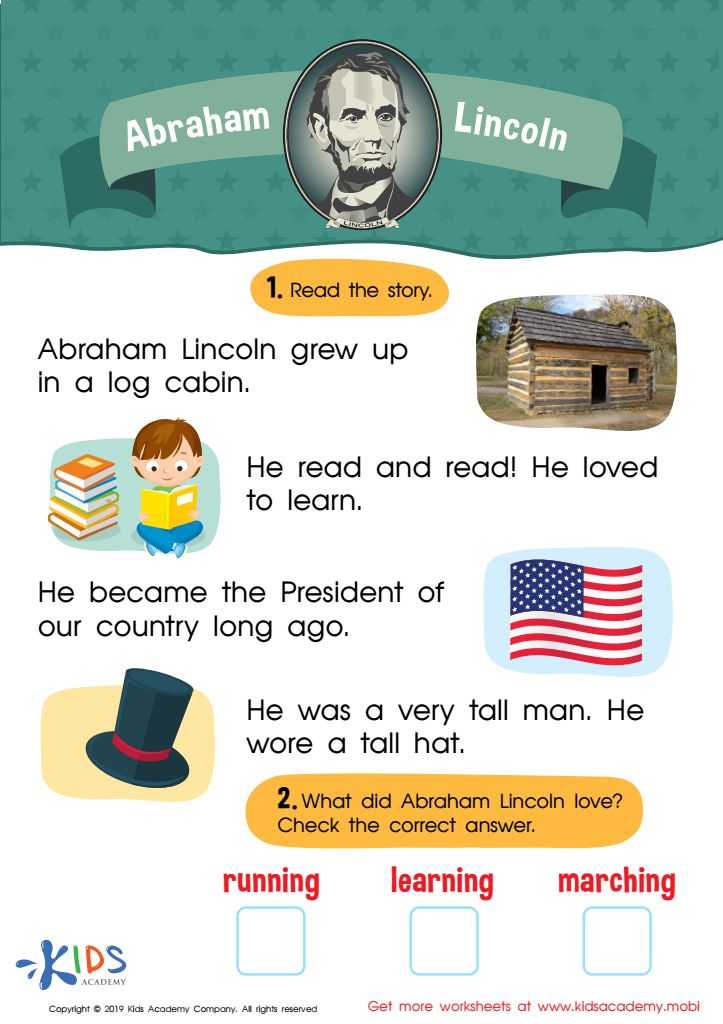
Abraham Lincoln Worksheet
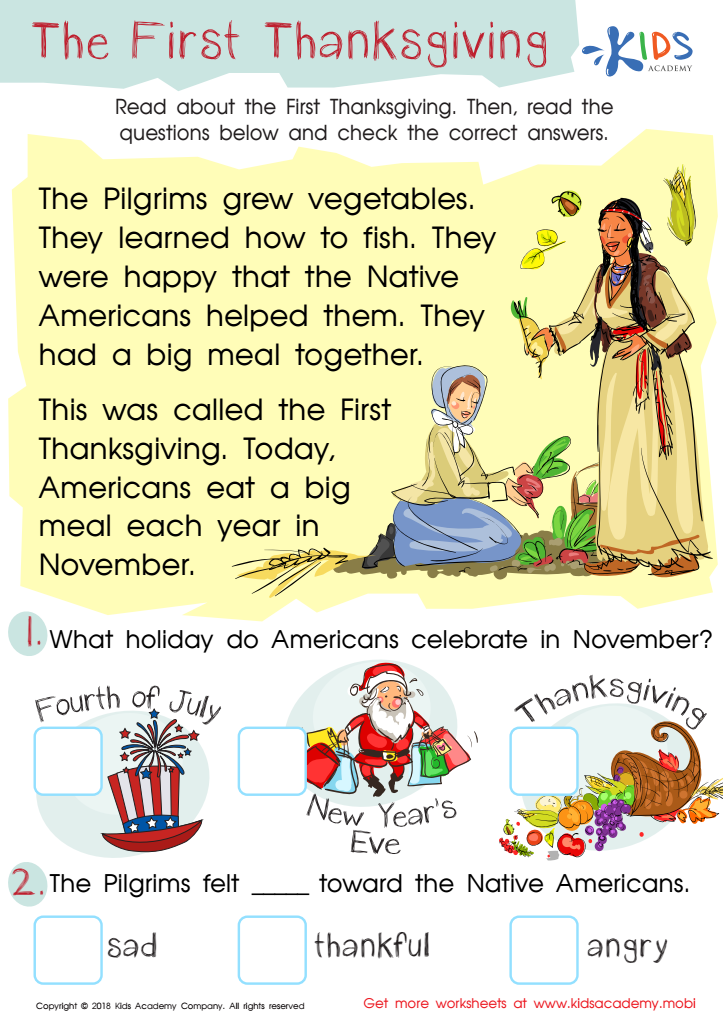
Assessment: First Thanksgiving Worksheet
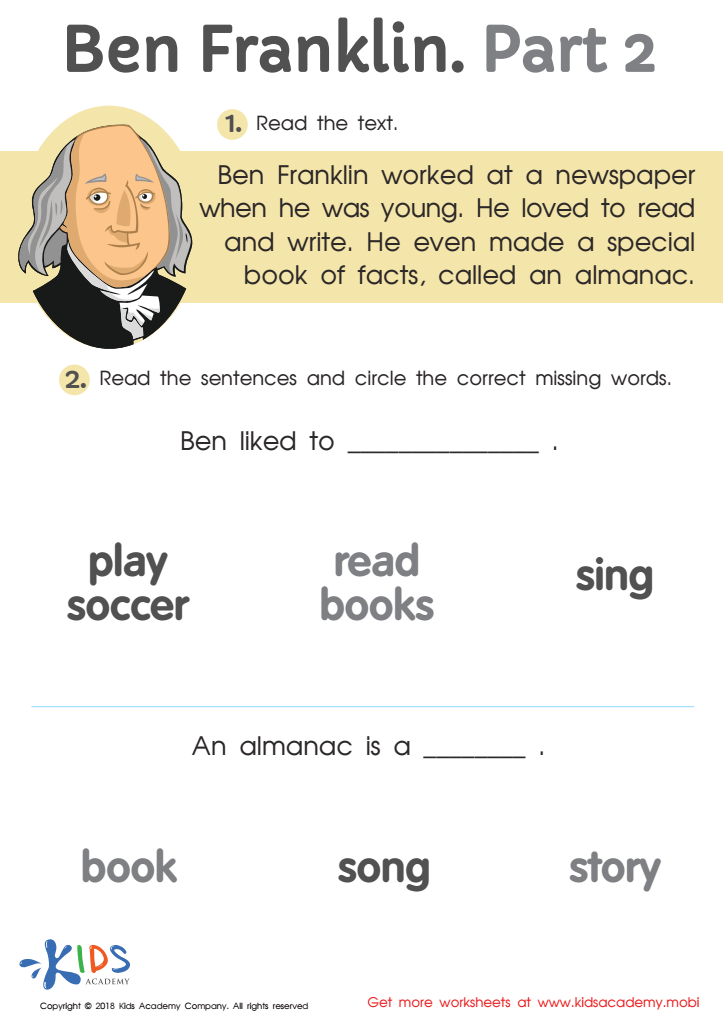
Ben Franklin Part 2 Worksheet







Understanding historical knowledge is crucial for young learners aged 3-7, as it lays the groundwork for their critical thinking and comprehension skills. Historical knowledge offers children context about the world around them, helping them understand how past events shape present realities. When parents and teachers prioritize historical reading comprehension, they foster a sense of identity and belonging, connecting children to their cultural backgrounds and communities.
At this age, children are naturally curious about narratives and storytelling. Historical stories can stimulate their imagination, encouraging empathy by presenting diverse perspectives. By grasping basic historical concepts, such as time, cause and effect, and significant figures, children develop vital cognitive skills that enhance their overall reading comprehension.
Additionally, introducing historical knowledge fosters discussions about values, morals, and social responsibility, equipping children with the tools to make sense of differences and appreciate diversity. Engaging in conversations about history encourages vocabulary development and critical thinking, which are essential for successful communication. Ultimately, prioritizing historical reading comprehension cultivates informed, compassionate citizens who are better prepared for social interactions and academic pursuits in the future. Therefore, parents and teachers play a pivotal role in nurturing these foundational skills.








