Moral understanding Reading Comprehension Worksheets for Ages 3-7
4 filtered results
-
From - To
Our "Moral Understanding Reading Comprehension Worksheets" for ages 3-7 are designed to develop young readers' literacy skills while teaching essential moral values. Each worksheet includes engaging stories and relatable scenarios that emphasize kindness, honesty, empathy, and cooperation. With colorful illustrations and interactive activities, children can practice reading comprehension and apply moral lessons to real-life situations. Ideal for both classroom and home use, these resources nurture a sense of ethics and empathy in early learners, fostering their development into thoughtful, considerate individuals. Give your child the tools to excel academically and morally with our carefully crafted worksheets.
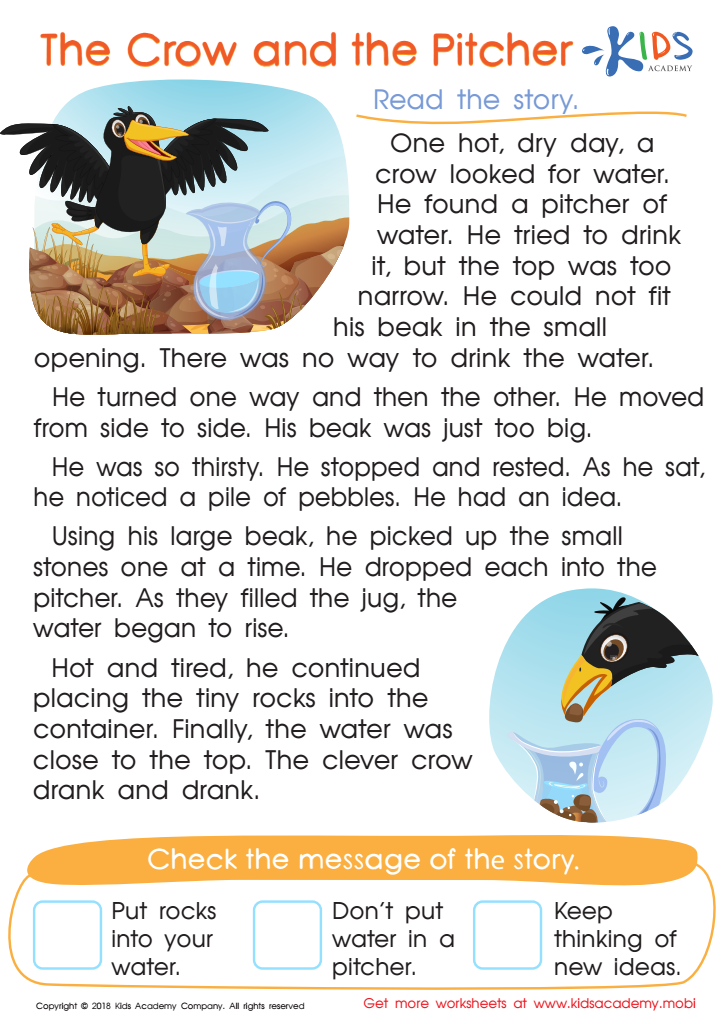
The Crow and the Pitcher Worksheet
 Assign to My Students
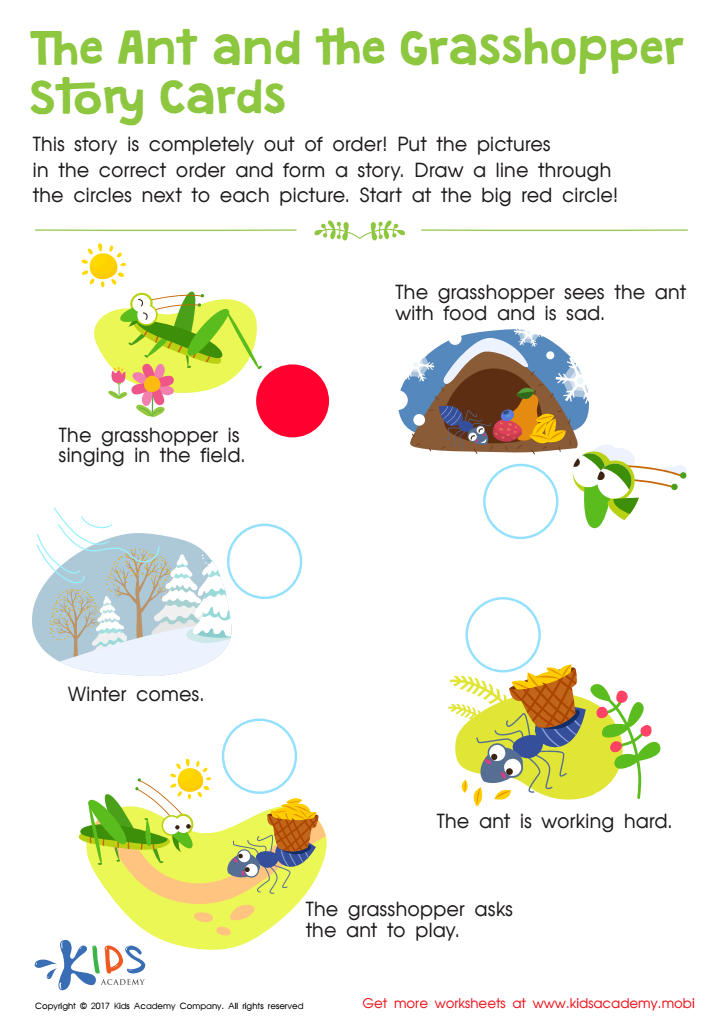
The Ant and The Grasshopper Worksheet
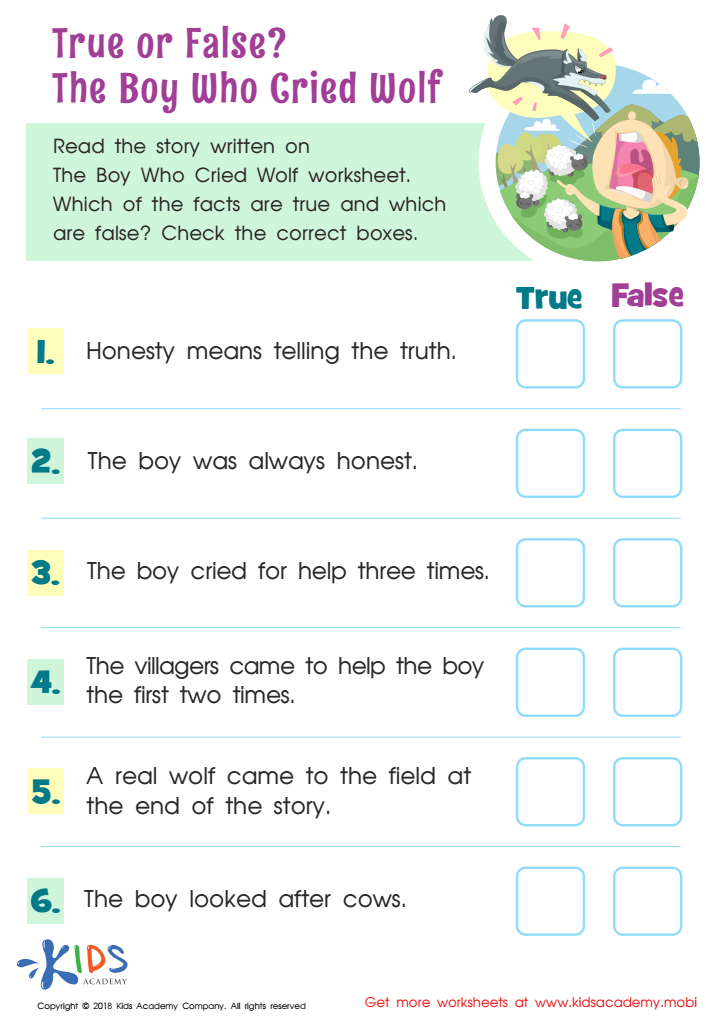
True or False? The Boy Who Cried Wolf Worksheet
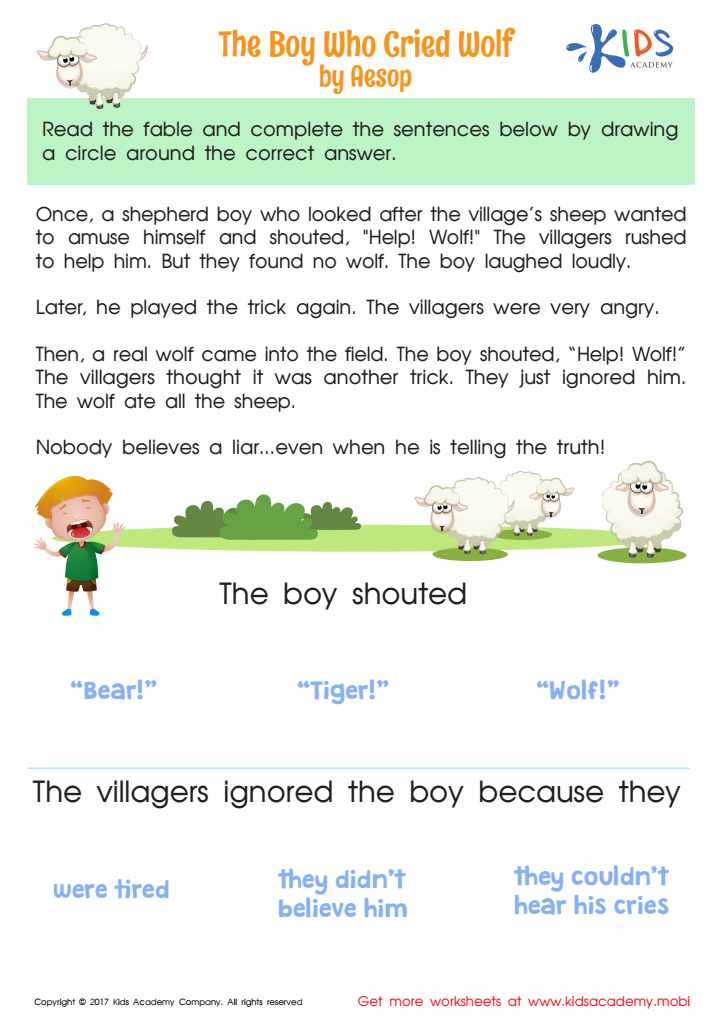
The Boy Who Cried Wolf Worksheet








Moral understanding and reading comprehension are pivotal during the formative years of ages 3-7 as they form the foundation for lifelong learning and character development. Parents and teachers should diligently nurture these skills to promote well-rounded growth in children. Instilling moral values at an early age, such as kindness, empathy, honesty, and responsibility, helps shape a child's ethical framework and guides their behavior and interactions with others. Moreover, these years are critical for developing literacy skills. Reading comprehension paves the way for academic success, as it helps children understand, interpret, and engage with texts effectively.
By integrating moral stories and discussions into reading activities, children not only gain the requisite cognitive skills but also learn to internalize vital life lessons. This dual focus fosters both intellectual and emotional intelligence. Encouraging discussions about characters and their choices in stories helps kids relate to and reflect on similar situations in their own lives, fostering critical thinking and moral reasoning.
Parental and teacher involvement is crucial in motivating children and addressing their questions or concerns, ensuring they apprehend the subtleties of morality and literacy. This holistic approach prepares children to become thoughtful, compassionate individuals and successful, insightful readers. Hence, moral understanding and reading comprehension should be ongoing priorities in early education.








