
Number Recognition Reading Comprehension Worksheets for Ages 3-7
3 filtered results
Difficulty Level
Grade
Age
-
From - To
Subject
Activity
Standards
Explore our collection of Number Recognition Reading Comprehension Worksheets designed for ages 3-7. These engaging worksheets enhance early learning by combining number recognition with reading comprehension skills. Perfect for preschoolers, kindergartners, and early elementary students, our exercises foster critical thinking, improve literacy, and build a solid math foundation. Fun activities include identifying numbers within stories, matching numbers to concepts, and answering simple comprehension questions. Ideal for both classroom and home use, these worksheets make learning enjoyable and effective, setting young learners on a path to academic success. Free and easily accessible, give your child a head start today!
Favorites
With answer key
Interactive
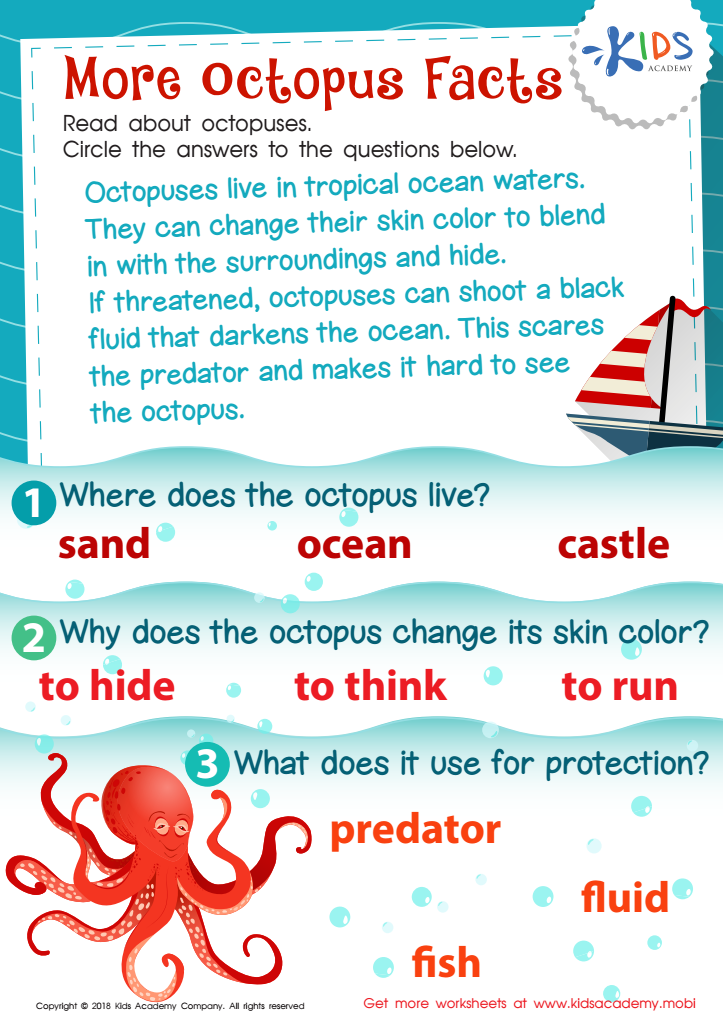
More Octopus Facts Worksheet
This worksheet will help your kids learn about the Octopus. Read the text carefully and have kids read with you. Now, ask them questions based on it and help them answer them by circling the right choices. Teaching your kids facts about animals will help them in the long run.
 Assign to My Students
More Octopus Facts Worksheet
Worksheet
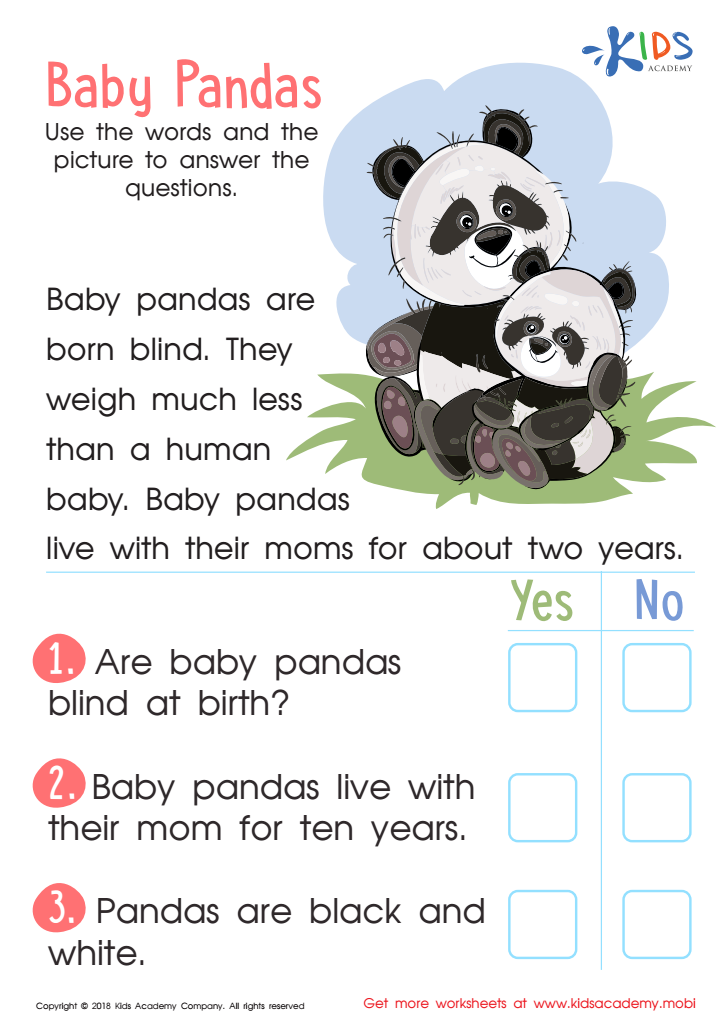
Baby Pandas Worksheet
Kids can't usually see pandas in person, but they can learn more about them with this fun worksheet! It includes a passage and picture, plus questions at the end to check kids' reading comprehension. Just ask them to read the text, check the "yes" and "no" boxes, and enjoy the fascinating facts about baby pandas!
Baby Pandas Worksheet
Worksheet
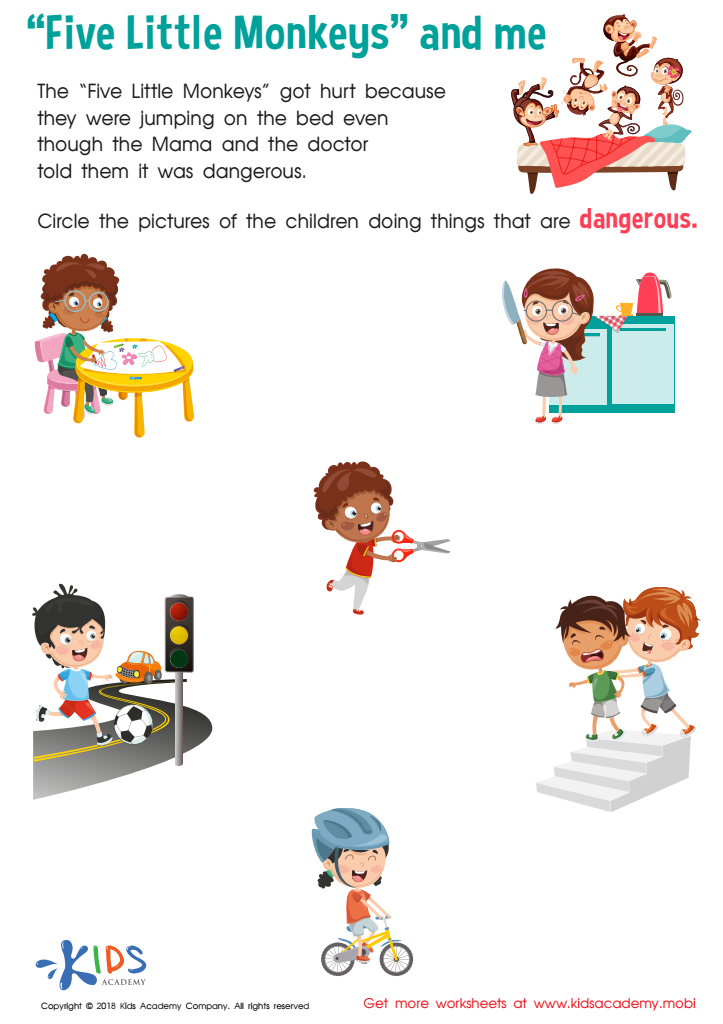
Five Little Monkeys and Me Worksheet
This free PDF worksheet provides preschoolers an understanding of danger and appropriate play. It allows them to recognize dangerous situations and why they can be risky, granting kids perspective from both parents and teachers. It's a fun, safe way to help them internalize what's dangerous and what's not.
Five Little Monkeys and Me Worksheet
Worksheet
Join Kids Academy for Free
Who is primarily going to use this learning content?







Number recognition and reading comprehension are foundational skills that significantly influence a child's educational journey, especially between the ages of 3-7. During this formative period, children experience rapid cognitive development, positioning it as the ideal time to introduce essential skills.
Number recognition is critical as it lays the groundwork for future mathematical learning. Recognizing numbers helps children understand sequencing, counting, and basic arithmetic, which are fundamental for more complex mathematical concepts encountered later in their education. Developing number recognition early also builds confidence and reduces apprehension towards math, a subject many students struggle with.
Reading comprehension, on the other hand, is pivotal for overall academic success. When children understand what they read, they can better follow instructions, grasp new ideas, and develop critical thinking skills. Early proficiency in reading comprehension fosters a love for reading, which is crucial for lifelong learning and intellectual growth.
Care from parents and teachers ensures children receive appropriate, engaging activities that suit their developmental stages. Encouraging number recognition and reading comprehension not only boosts academic skills but also enhances self-esteem, social interaction, and independent learning. In summary, these competencies form the cornerstone of a well-rounded education, influencing a child's ability to thrive in all subjects and fostering skills that last a lifetime.








