Rhyme recognition Reading Comprehension Worksheets for Ages 3-7
3 filtered results
-
From - To
Introduce your young learners to the enchanting world of words with our Rhyme Recognition Reading Comprehension Worksheets for Ages 3-7. These engaging and educational worksheets are designed to develop your child's phonemic awareness and reading skills through fun and interactive rhyming activities. Perfectly tailored for early grade students, these resources make learning delightful by combining colorful illustrations with captivating exercises. Help your child recognize patterns, enhance vocabulary, and build a strong foundation in reading comprehension. Make learning fun and effective with our expertly crafted rhyme worksheets, ensuring your child's reading success from the start.
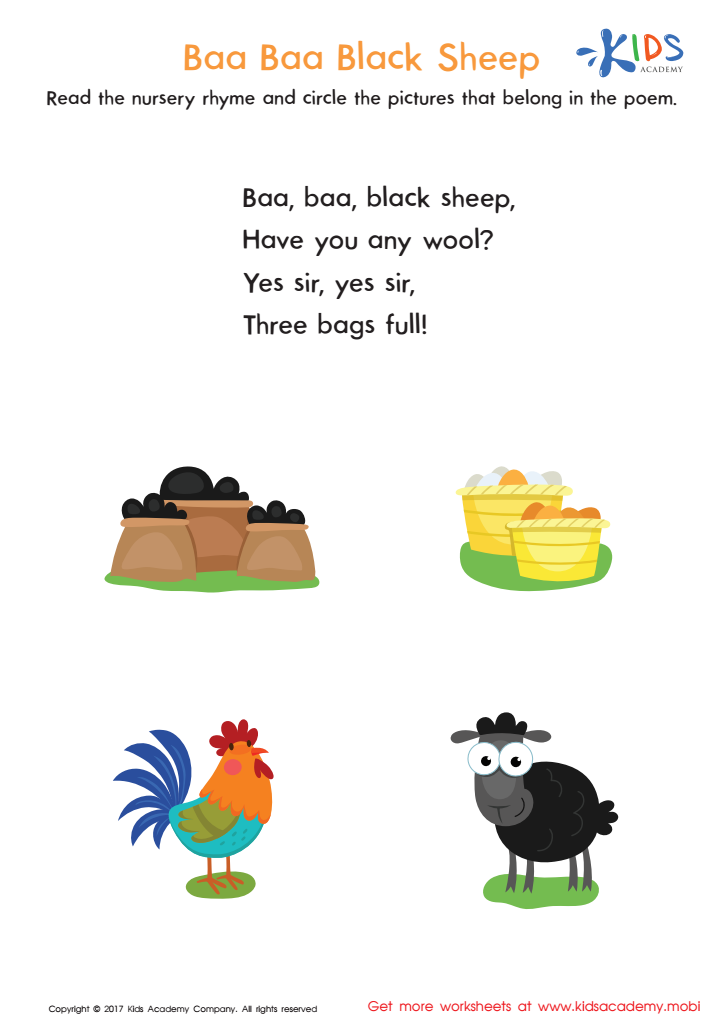
Baa Baa Black Sheep Printable
 Assign to My Students
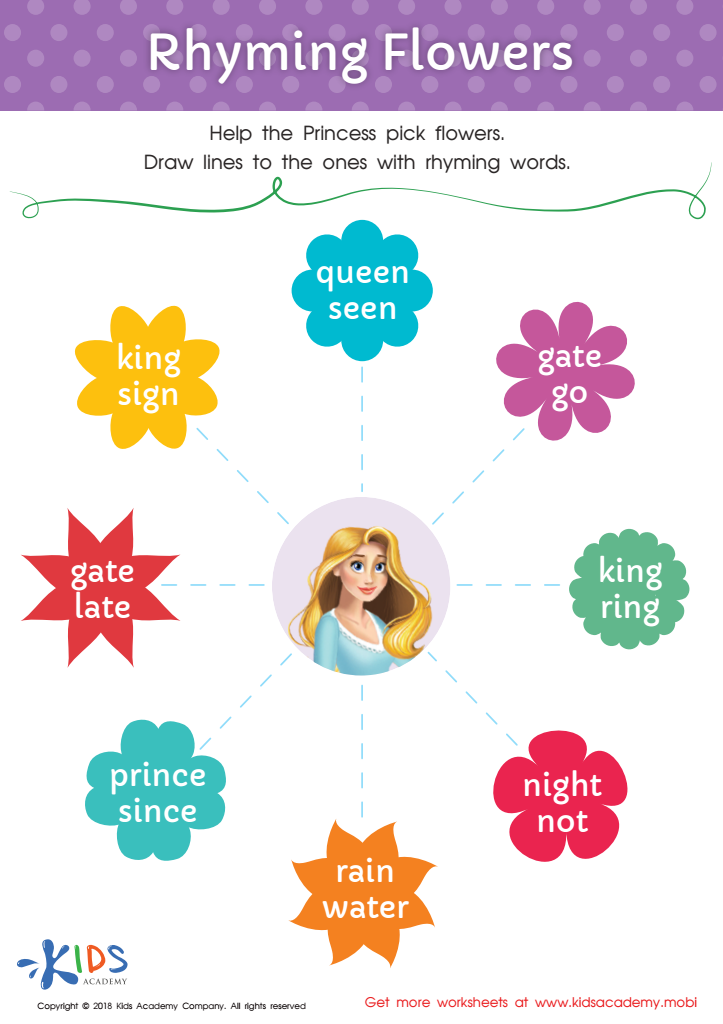
Rhyming Flowers Worksheet
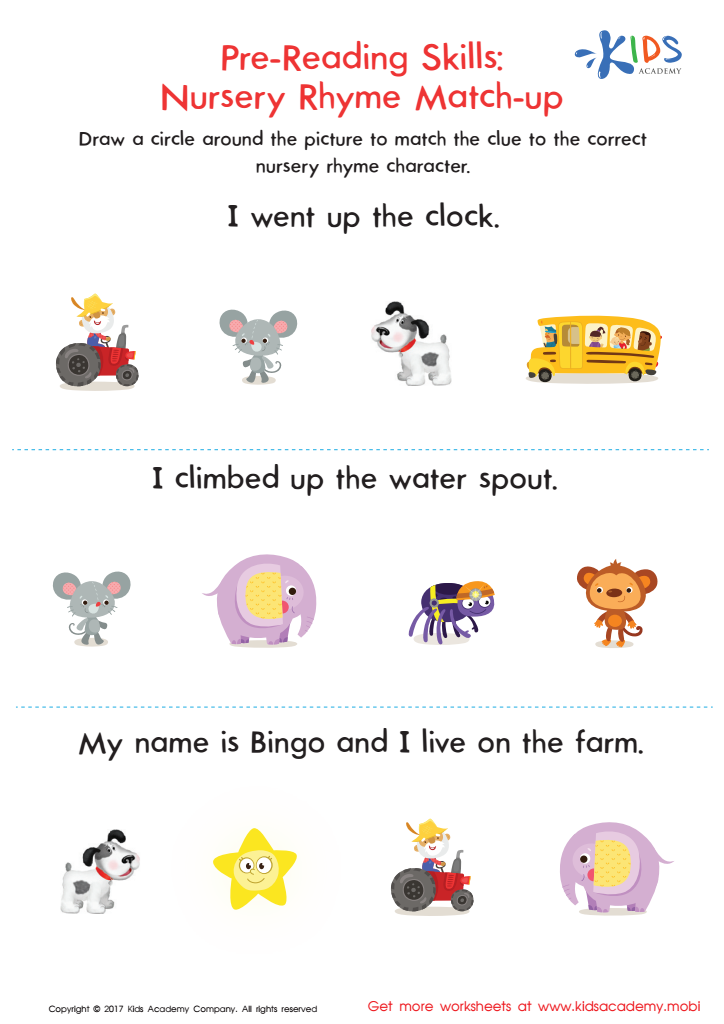
Nursery Rhyme Match–Up Worksheet








Rhyme recognition and reading comprehension are crucial developmental milestones for children ages 3-7, forming the foundation for literacy and cognitive skills. Parents and teachers should care deeply about these areas due to their long-term educational impact.
Rhyme recognition enhances phonological awareness, which is the ability to hear and manipulate the sounds in words. This awareness is fundamental for learning to read and spell. By recognizing rhymes, children develop an understanding of patterns in language, aiding memory and recall. Fun activities like singing nursery rhymes or reading rhyming books can make learning enjoyable and engaging, fostering a positive attitude toward reading.
Reading comprehension, the ability to understand and interpret text, is equally vital. In early years, it starts with understanding simple stories and answering basic questions about them. This skill is crucial for children's academic success as it allows them to grasp complex concepts, follow directions, and engage in critical thinking. Good comprehension helps children understand the world around them and contributes to effective communication skills.
Thus, focusing on rhyme recognition and reading comprehension equips children with essential tools for academic achievement, enhances their cognitive development, and instills a lifelong love for learning. Parents and teachers play a pivotal role in nurturing these skills through interactive, joyful, and educational experiences.








