Understanding life cycles Reading Comprehension Worksheets for Ages 3-7
3 filtered results
-
From - To
Introduce your young learners to the fascinating world of nature with our "Understanding Life Cycles Reading Comprehension Worksheets for Ages 3-7." These engaging and educational worksheets are designed specifically for early readers, helping children explore and understand the life cycles of various plants and animals. Through age-appropriate stories and vibrant illustrations, kids can improve their reading comprehension and critical thinking skills while learning about the growth and development stages in nature. Ideal for both classroom and home use, these worksheets foster curiosity and a love for learning, making science accessible and fun for the youngest students.
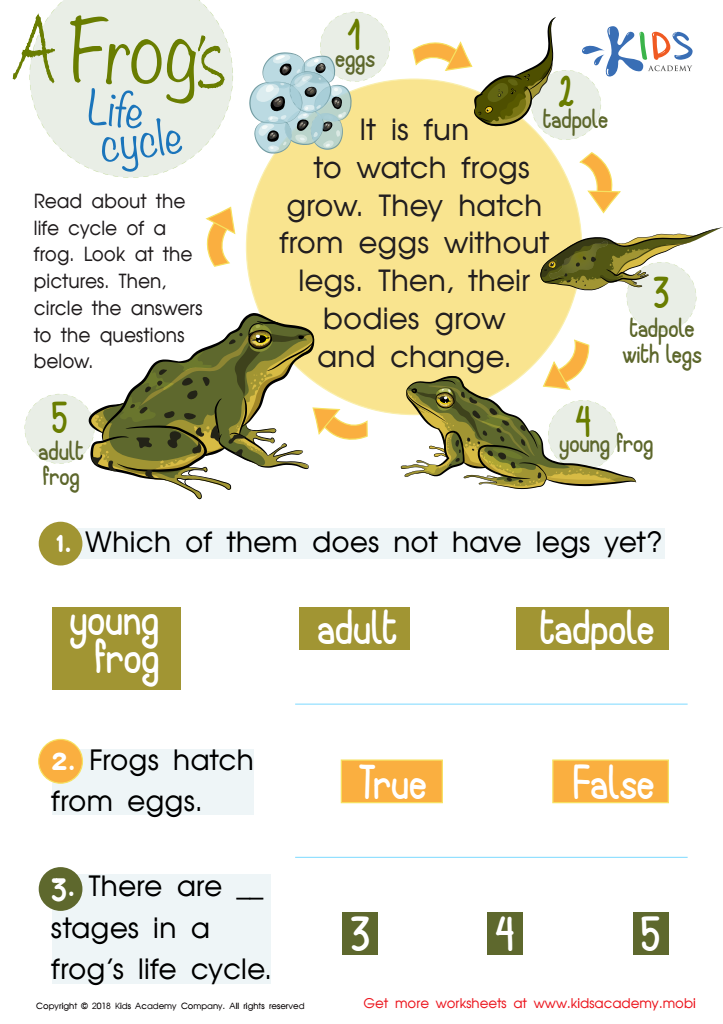
A Frog’s Life Cycle Worksheet
 Assign to My Students
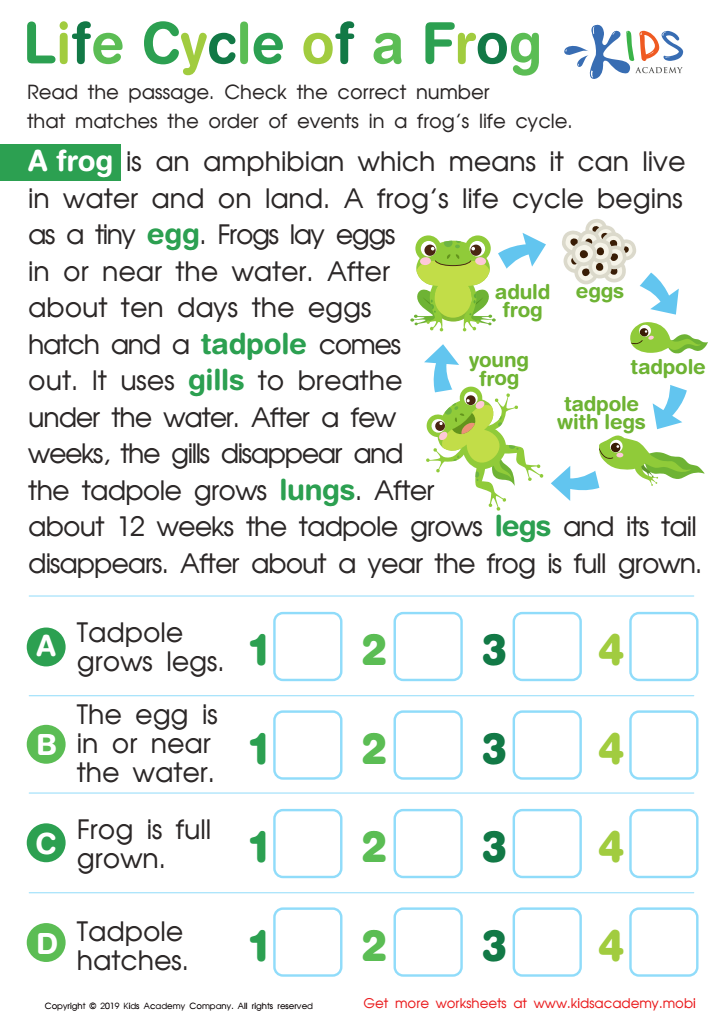
Life Cycle of a Frog Worksheet
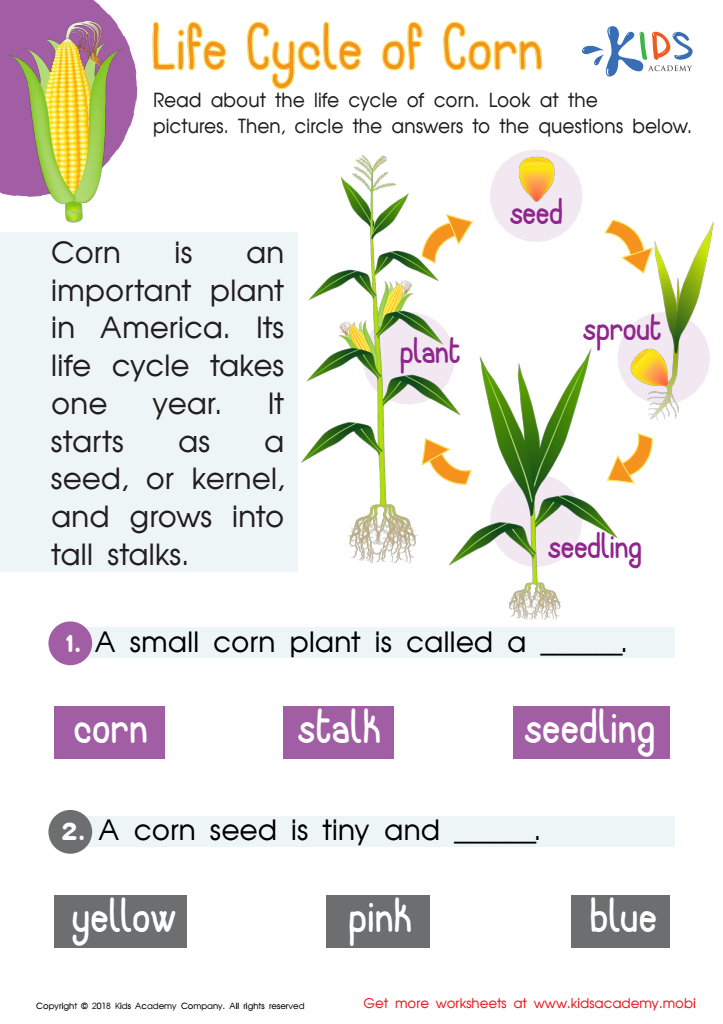
Life Cycle of Corn Worksheet


.jpg)



Understanding life cycles is fundamental for young learners aged 3-7 because it provides the groundwork for their comprehension of nature and biology, fostering curiosity and respect for living organisms. This early education kickstarts scientific thinking and observational skills by helping children recognize the stages through which plants, animals, and humans develop.
At this impressionable age, comprehending life cycles also introduces basic concepts of time and change, facilitating an awareness that growth, change, and decay are natural processes. For instance, following the metamorphosis of a butterfly from an egg to a caterpillar, then to a chrysalis, and finally into a butterfly captivates children and shows the wonder of nature.
Moreover, early exposure to life cycles aids in vocabulary development. Words such as "seedling," "chrysalis," and "tadpole" become a part of their language, enhancing their communication skills. These concepts also extend to literacy activities, where children practicing reading comprehension by making connections, predicting outcomes, and sequencing events.
In short, understanding life cycles for young kids serves not only as an educational tool that aligns with core early learning goals but also instills a lifelong fascination with science and the living world around them. Parents and teachers facilitating this can play a pivotal role in nurturing informed, thoughtful, and curious individuals.








