
Visual Perception Skills Reading Comprehension Worksheets for Ages 3-7
3 filtered results
Difficulty Level
Grade
Age
-
From - To
Subject
Activity
Standards
Discover our Visual Perception Skills Reading Comprehension Worksheets designed for ages 3-7! These fun, engaging worksheets are created to enhance early learning by combining vibrant visuals with reading comprehension exercises. Children will build essential visual perception skills, aiding their ability to recognize patterns, differentiate shapes, and improve overall literacy. Perfect for preschool to early elementary students, each worksheet is tailored to support cognitive development while making learning enjoyable. Empower your child's reading journey with our expertly crafted resources, helping them excel and build a strong educational foundation. Explore our collection today!
Favorites
With answer key
Interactive
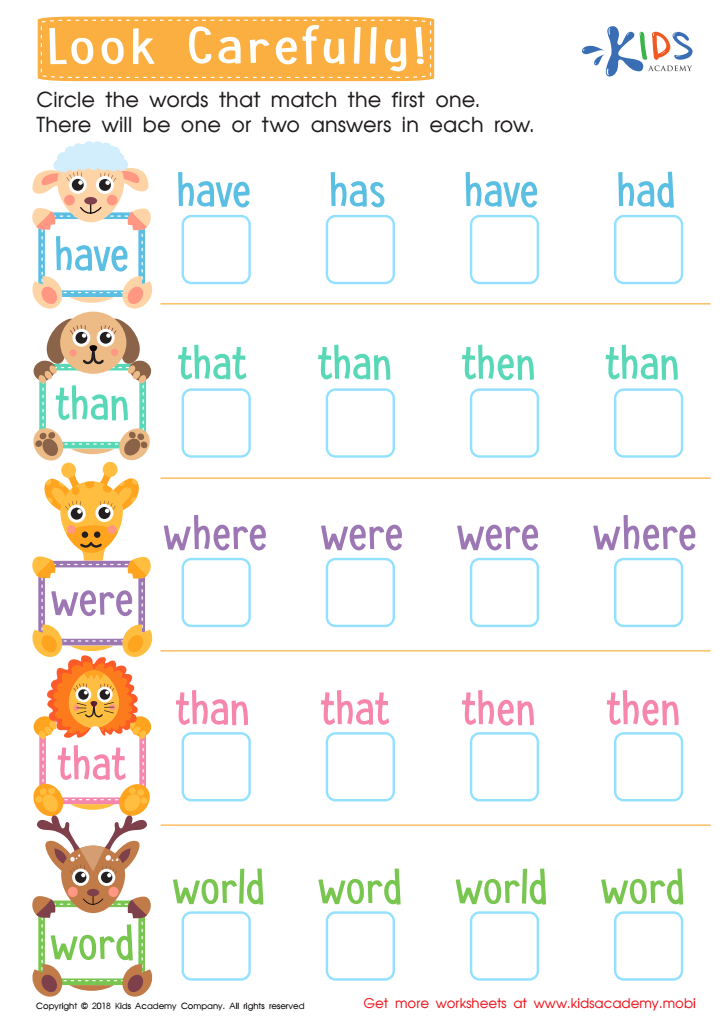
Look Carefully Worksheet
It's crucial to teach kids to identify sight words and become fluent readers. This free worksheet helps make it simpler for kids to learn the similarities and differences between similar words. They'll get practice by looking at the box word and selecting the one that matches from the row.
 Assign to My Students
Look Carefully Worksheet
Worksheet
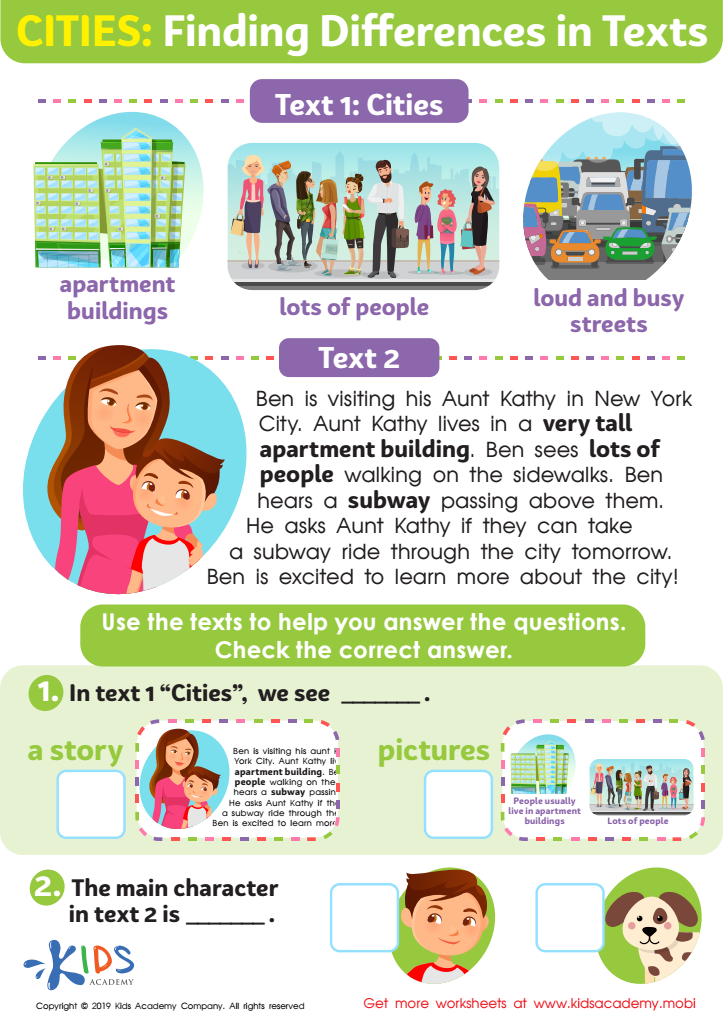
Cities: Finding Differences Worksheet
Critical thinking is essential for reading comprehension. New readers must be able to identify the key information in different text formats. This worksheet helps children learn what they might find in cities and how to differentiate between stories and pictures.
Cities: Finding Differences Worksheet
Worksheet
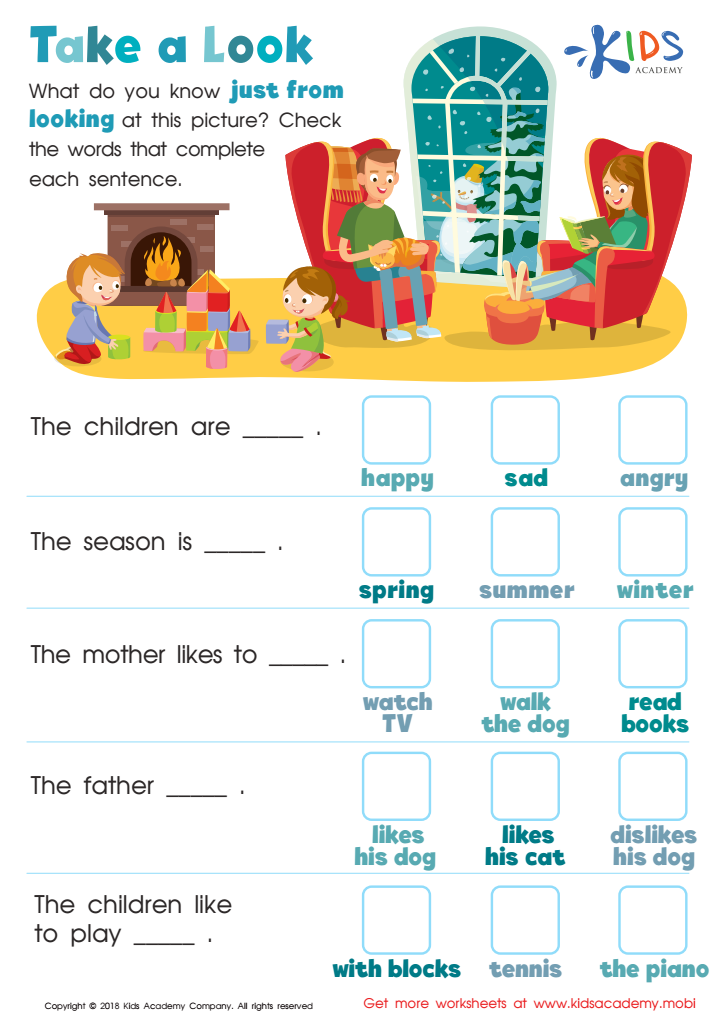
Take a Look - Part 1 Worksheet
Young learners gain understanding when using picture clues when reading. Looking at illustrations can help students learn the meaning of key vocabulary when reading fiction or informational text. Ask your students to look at the worksheet and observe what they can learn from the picture. It's a great comprehension strategy for early readers.
Take a Look - Part 1 Worksheet
Worksheet
Join Kids Academy for Free
Who is primarily going to use this learning content?








Parents and teachers should care about visual perception skills in young children, particularly for ages 3-7, because these skills form the foundation for reading comprehension and overall academic success. Visual perception involves the brain's ability to interpret and make sense of visual information, crucial for recognizing letters, numbers, patterns, and spatial relationships. For example, differentiating between similar-looking letters like "b" and "d" or "p" and "q" requires strong visual perception skills.
During the ages of 3-7, children are in a critical period of development where early intervention and support can substantially impact later learning abilities. When these skills are nurtured, children are better equipped to decode words quickly and accurately, leading to more fluent reading. Furthermore, strong visual perception skills help with other essential tasks like writing, copying from the board, solving puzzles, and following instructions, all of which are integral components of classroom learning.
Moreover, children who struggle with visual perception may experience frustration, decreased confidence, and a reluctance to engage in reading activities, which can have a long-term negative effect on their educational journey. Therefore, by prioritizing the development of visual perception skills, parents and teachers can create a supportive learning environment that fosters confidence, enjoyment, and proficiency in reading and other academic skills.








