Identifying story elements Reading Fiction Worksheets for Ages 3-7
4 filtered results
-
From - To
Explore the "Identifying Story Elements Reading Fiction Worksheets" designed for children ages 3-7! These engaging worksheets help young learners recognize essential components of storytelling, such as characters, settings, plots, and events. Our activity sheets feature vibrant illustrations and simple, age-appropriate prompts, making it easy for kids to connect with their favorite stories while developing early literacy skills. As children work through the exercises, they enhance comprehension and analytical thinking, laying a firm foundation for future reading success. Perfect for home or classroom use, our worksheets make learning fun and interactive! Start your child's storytelling journey today with these imaginative resources!
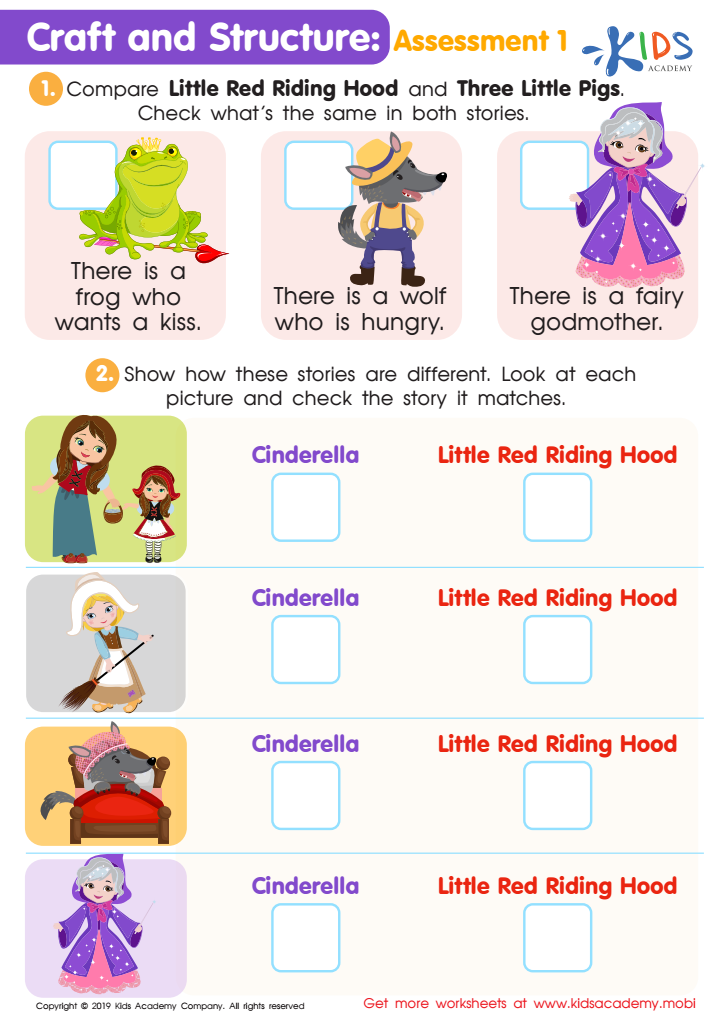
Craft and Structure: Assessment 1 Worksheet
 Assign to My Students
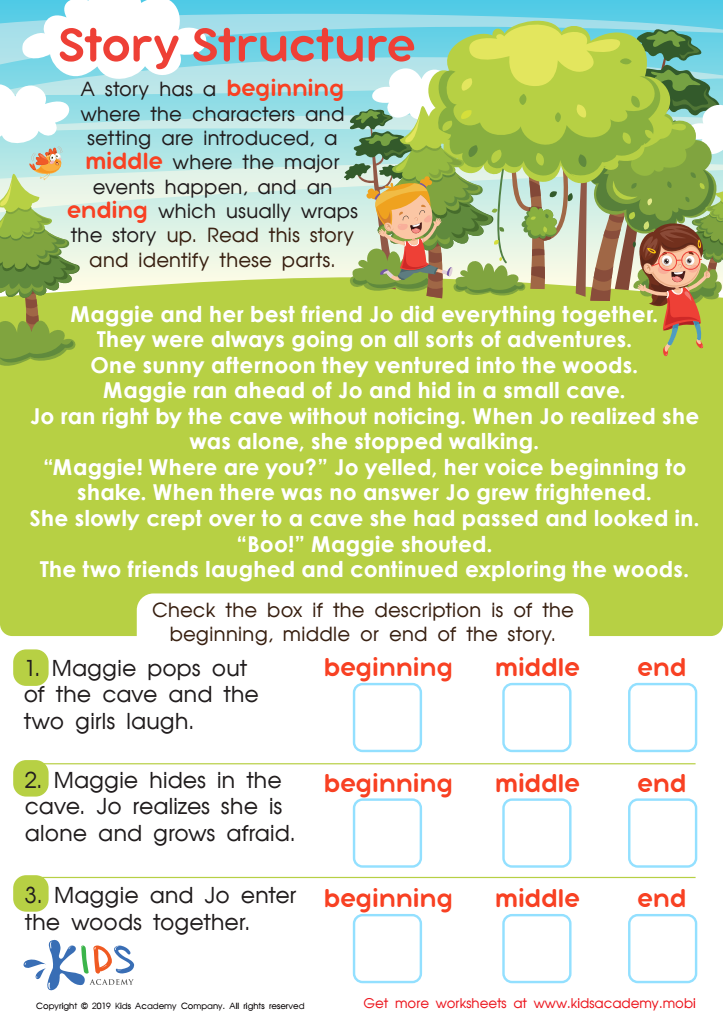
Story Structure Worksheet
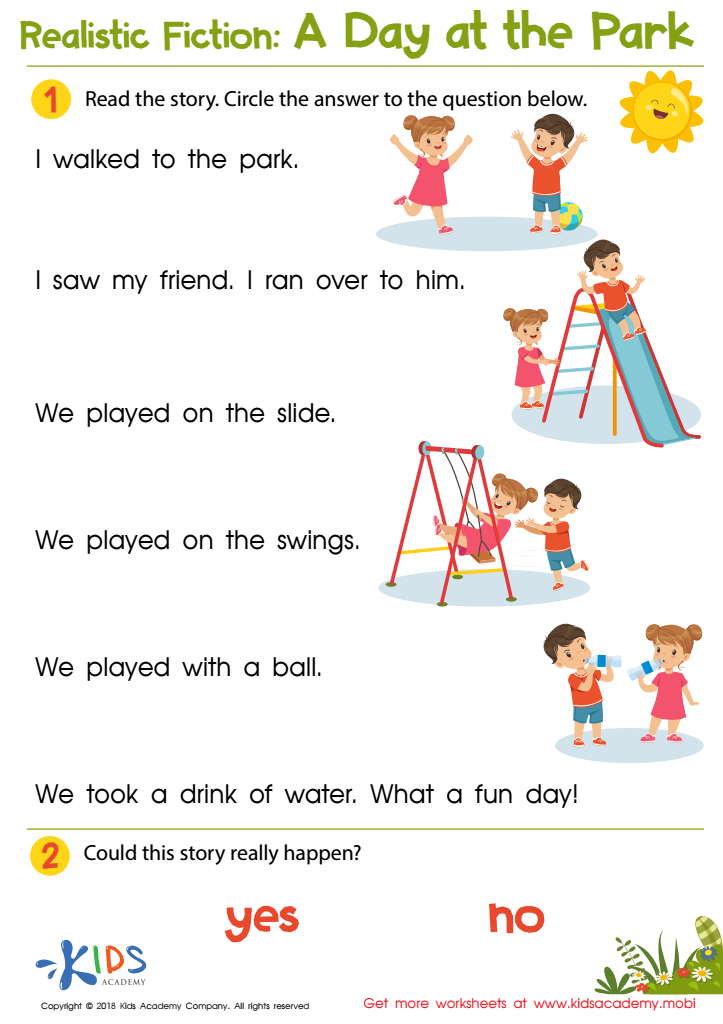
A Day at the Park Worksheet
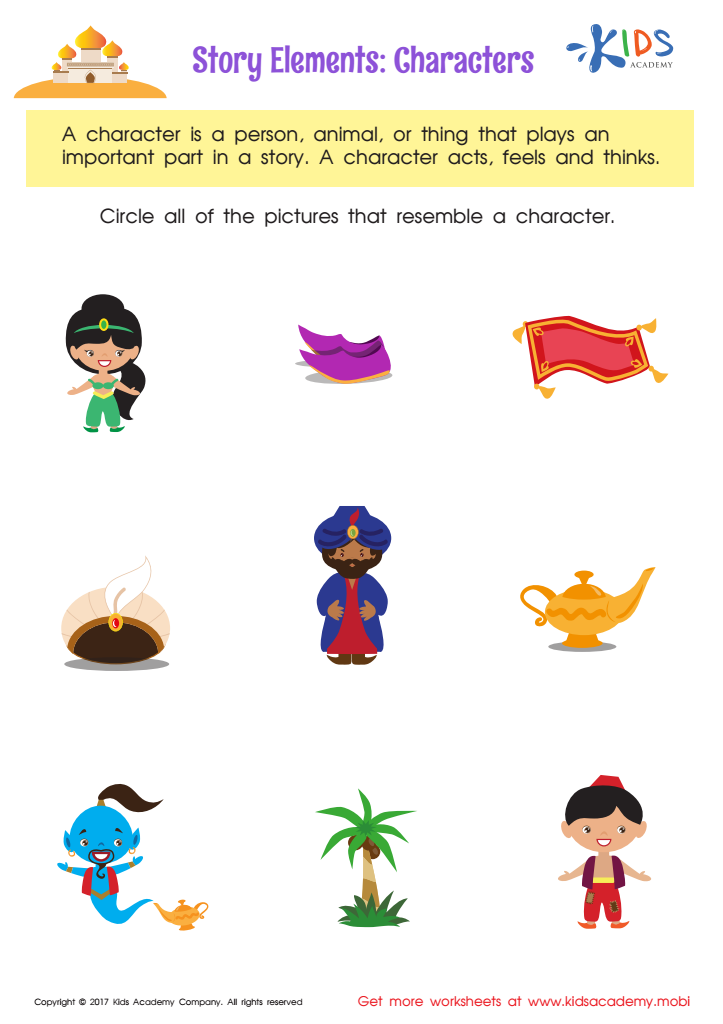
Story Elements Printable


.jpg)





Identifying story elements in fiction is crucial for children aged 3-7, as it lays the foundation for essential literacy skills and cognitive development. Understanding basic components—such as characters, setting, plot, and conflict—enhances a child's ability to comprehend and engage with texts. When parents and teachers actively introduce these elements, they foster critical thinking and analytical skills, enabling children to interpret and discuss stories more deeply.
Moreover, learning to identify and articulate story elements boosts vocabulary and language development. As children explore narratives, they encounter new words and phrases, enhancing their overall linguistic abilities. This proficiency not only supports reading skills but also strengthens communication skills vital for social interactions.
Introducing story elements encourages creativity as children begin to craft their own narratives. This imaginative play develops problem-solving skills and emotional intelligence, as they learn to empathize with characters and understand multiple perspectives.
Ultimately, parents and teachers should actively guide children in recognizing story elements, as it enriches their reading experience, fosters a love for literature, and builds a strong framework for lifelong learning. Engaging with stories becomes a powerful tool for education and emotional development during these formative years.








