
Sentence construction Reading Fiction Worksheets for Ages 3-7
6 filtered results
Difficulty Level
Grade
Age
-
From - To
Subject
Activity
Standards
Discover our engaging Sentence Construction Reading Fiction Worksheets, designed specifically for children ages 3-7. These worksheets promote essential language skills by integrating fun stories with interactive learning activities. Young readers will explore sentence formation through vibrant illustrations and relatable themes, enhancing both their comprehension and creativity. Perfect for enhancing vocabulary, understanding sentence structure, and fostering a love for reading, our resources make learning enjoyable and effective. Parents and educators can easily incorporate these worksheets into any lesson plan, ensuring that every child develops key literacy skills. Encourage your little learners to express their ideas confidently with our thoughtfully crafted materials!
Favorites
With answer key
Interactive
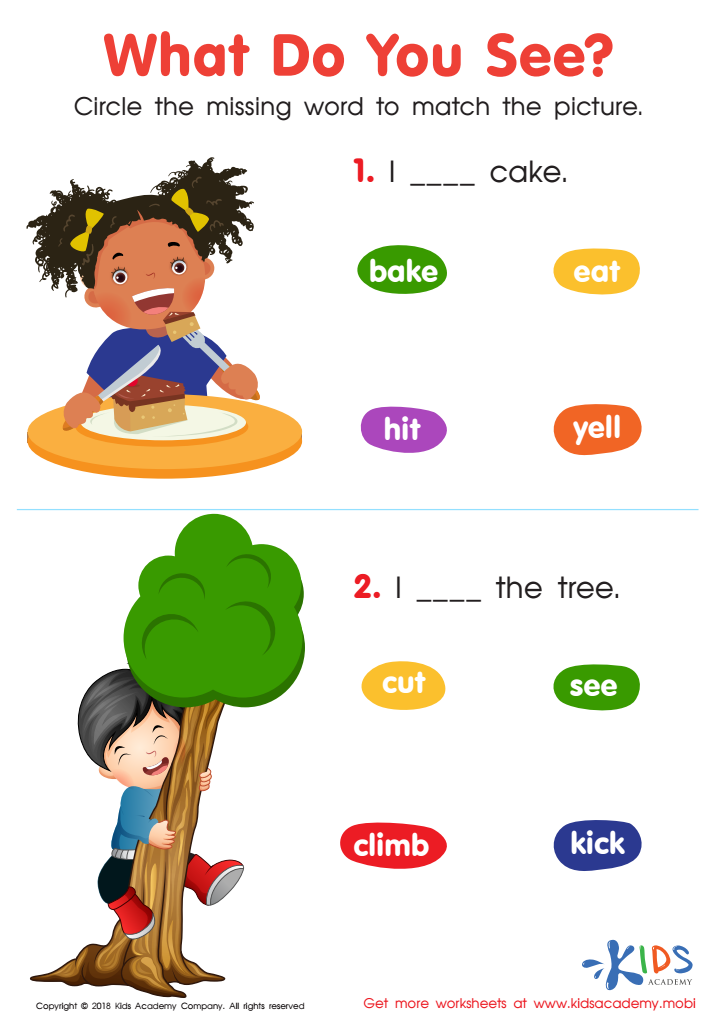
What Do You See? Reading Worksheet
New readers can use the attractive pictures and high-frequency words on this worksheet to practice expressive language skills and decode as they fill in the blanks. As they circle the correct words, they'll feel like reading superstars!
 Assign to My Students
What Do You See? Reading Worksheet
Worksheet
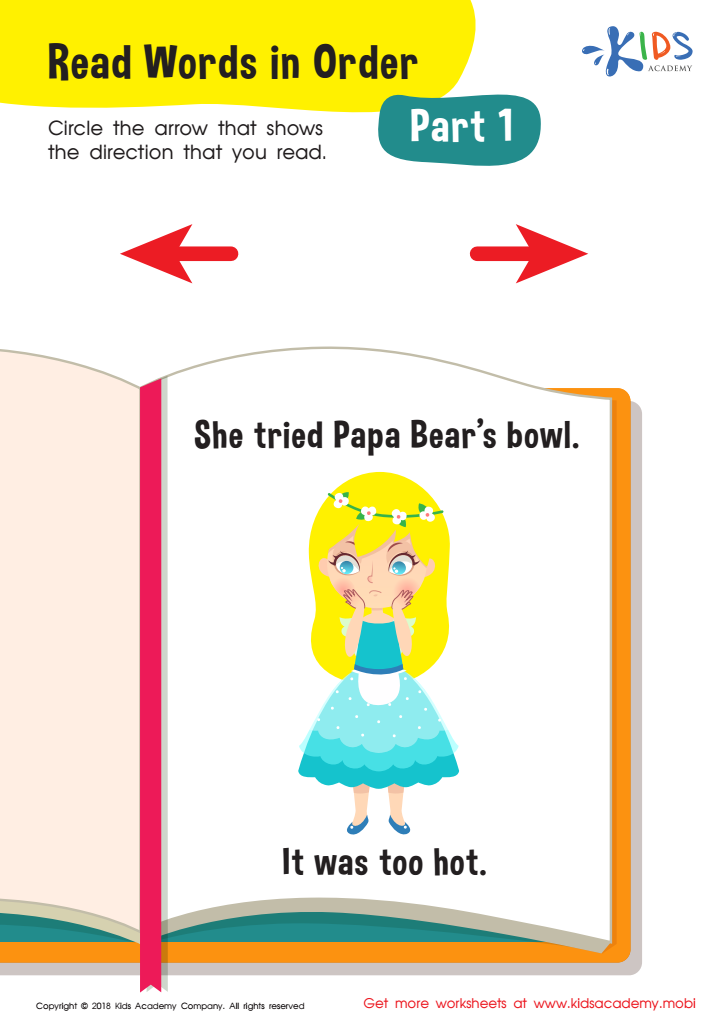
Read Words Order Part 1 Worksheet
Is your child just starting out with reading or having trouble? This worksheet is perfect! It'll help them learn the right way to read. Ask them to circle the arrow that shows the right direction to read. With this exercise, your child can overcome some of their reading challenges.
Read Words Order Part 1 Worksheet
Worksheet
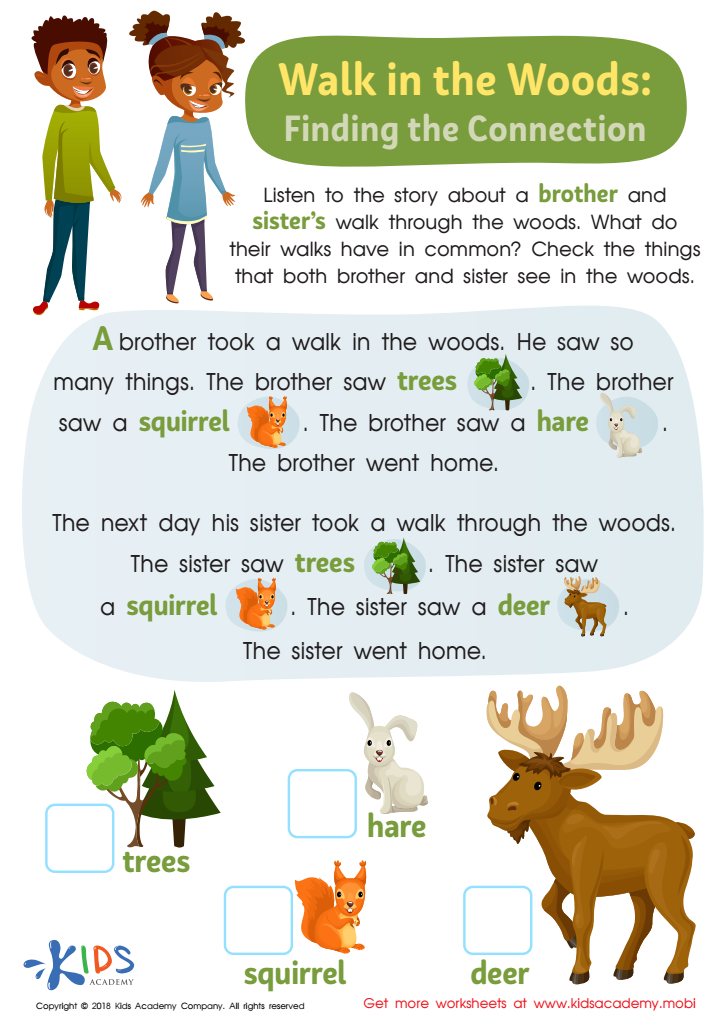
Walk In the Woods: Finding Connections Worksheet
Brother and sister took a walk in the woods to connect with nature and get some exercise. As they went, they noted different things like birds and plants, which they share in this story. Read it to your little ones, and help them check off the items the two saw. It's a great way to learn about nature and enjoy the outdoors.
Walk In the Woods: Finding Connections Worksheet
Worksheet
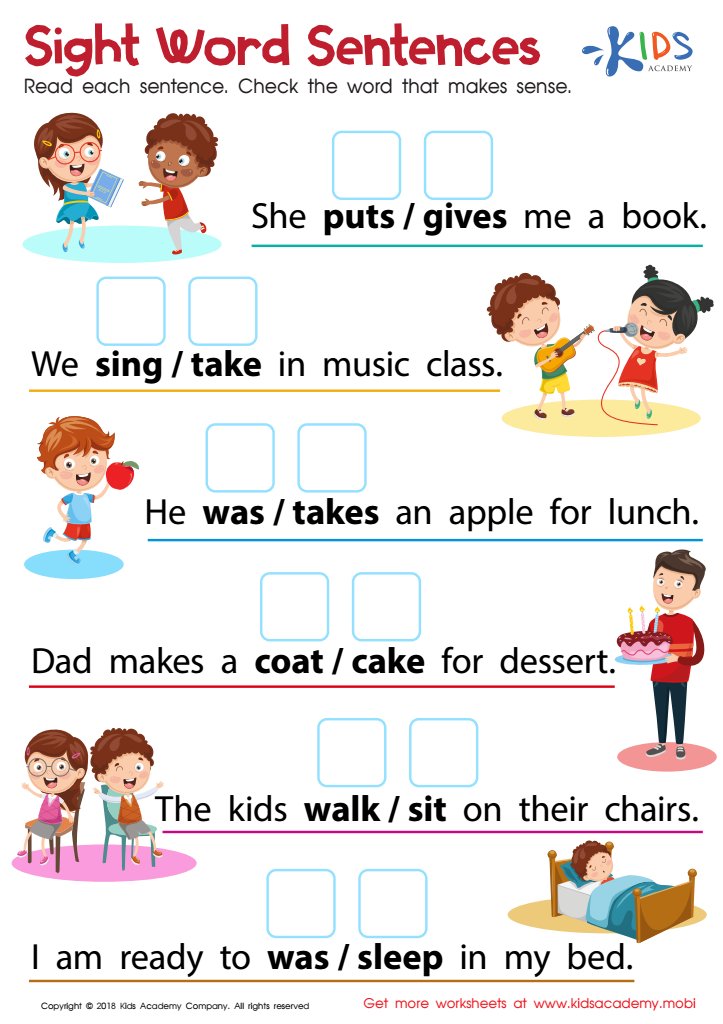
Sight Words Sentences Worksheet
It's important for kids to practice recognizing sight words in print. This PDF provides fun practice with sentences and engaging picture clues. As they work with sight words, they'll become more familiar and automatic. Help your kids build literacy skills!
Sight Words Sentences Worksheet
Worksheet
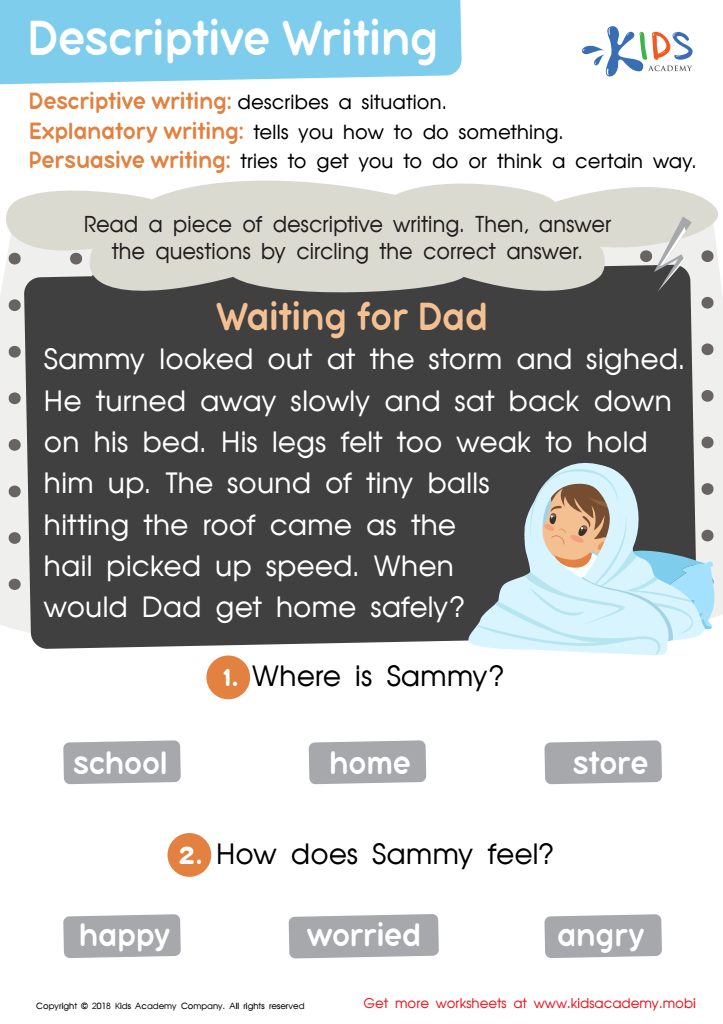
Descriptive Writing Worksheet: Part 2
In this worksheet, your kids will explore writing styles like descriptive, explanatory and persuasive. Read them the descriptive text, then have them answer the questions. Writing is an art – it's a way to express emotions, tell stories and share information.
Descriptive Writing Worksheet: Part 2
Worksheet
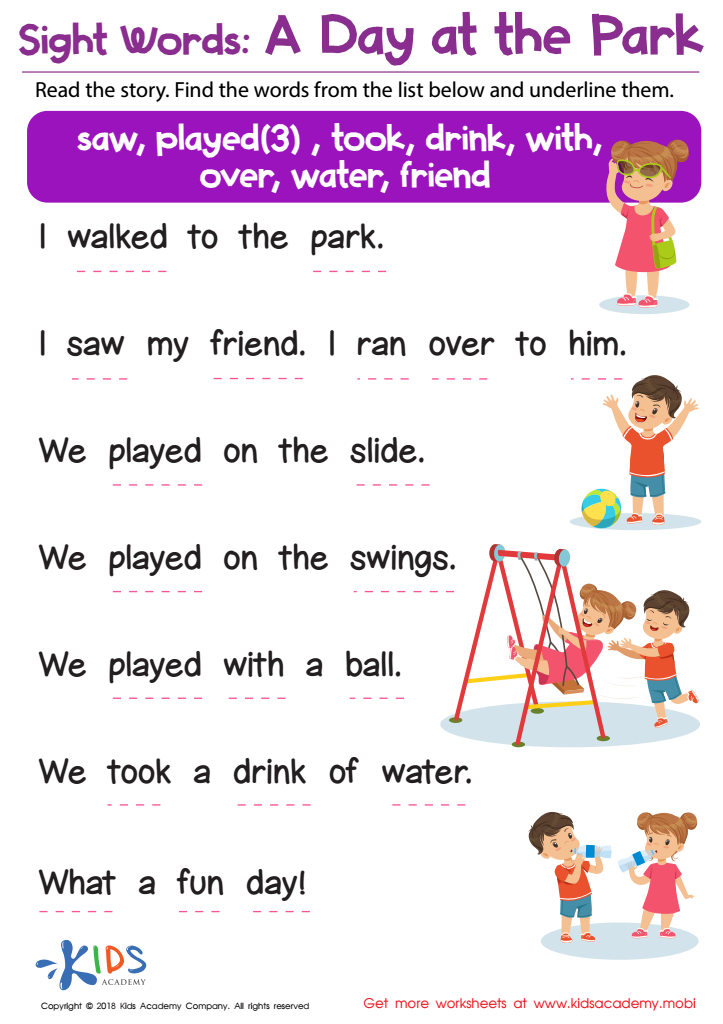
Sight Words: A Day at the Park Worksheet
This worksheet offers kids practice reading sight words in a story. With picture clues and repetitive wording, they'll work with words that can't be sounded out to reinforce their learning. This is an important step in the reading process that helps kids become more confident readers.
Sight Words: A Day at the Park Worksheet
Worksheet
Join Kids Academy for Free
Who is primarily going to use this learning content?





.jpg)


Sentence construction in reading fiction is crucial for children aged 3-7, and parents and teachers should prioritize this skill for several compelling reasons. Firstly, developing strong sentence construction skills enhances children's comprehension abilities. When children understand how sentences are formed, they are better able to grasp the meaning of stories, which fosters a deeper connection to the text.
Additionally, reading fiction introduces children to a diverse vocabulary and various sentence structures. This exposure helps them recognize different ways ideas can be expressed, enriching their language use in both speaking and writing. When children see how sentences are built in stories, they start to mimic these patterns in their own communication, promoting literacy development.
Furthermore, narrative structure in fiction encourages creativity and imagination. As children encounter varied sentence constructions, they learn to weave their thoughts into coherent sentences, nurturing their creative thinking skills.
Lastly, positive interactions around reading foster a love for books, making children more likely to engage with literature. Overall, emphasizing sentence construction during reading sessions shapes not only literacy skills but also cognitive and emotional development, laying a strong foundation for lifelong learning and communication.








