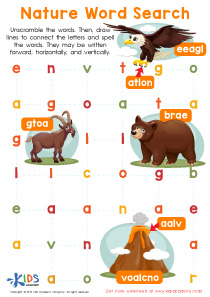
Counting practice Sight Words Worksheets for Ages 3-7
5 filtered results
Difficulty Level
Grade
Age
-
From - To
Subject
Activity
Standards
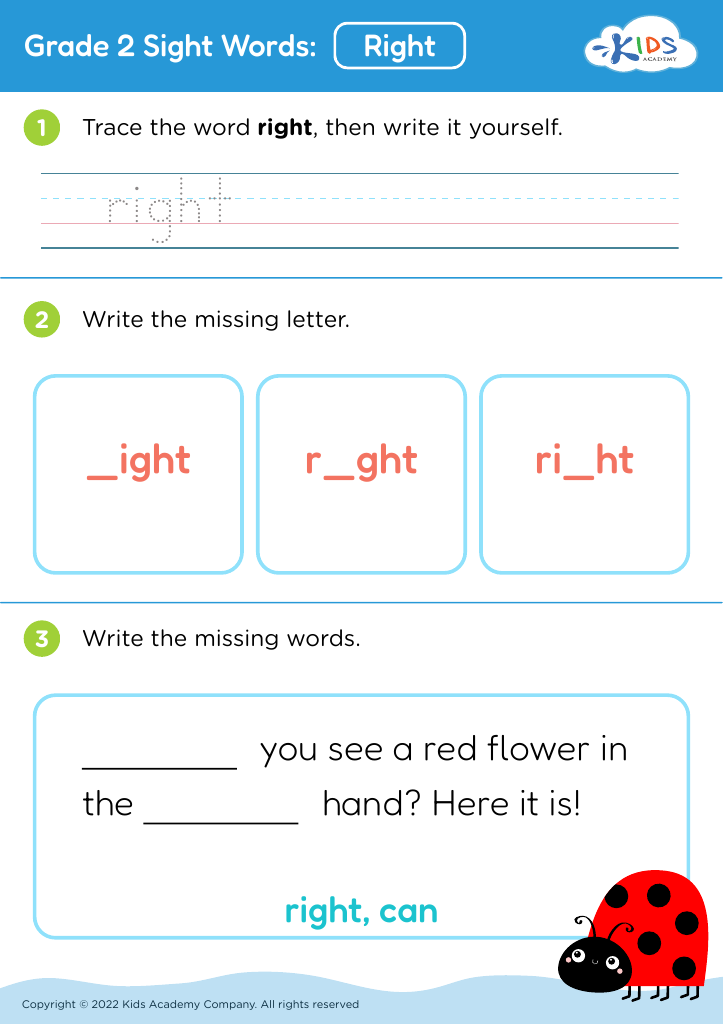
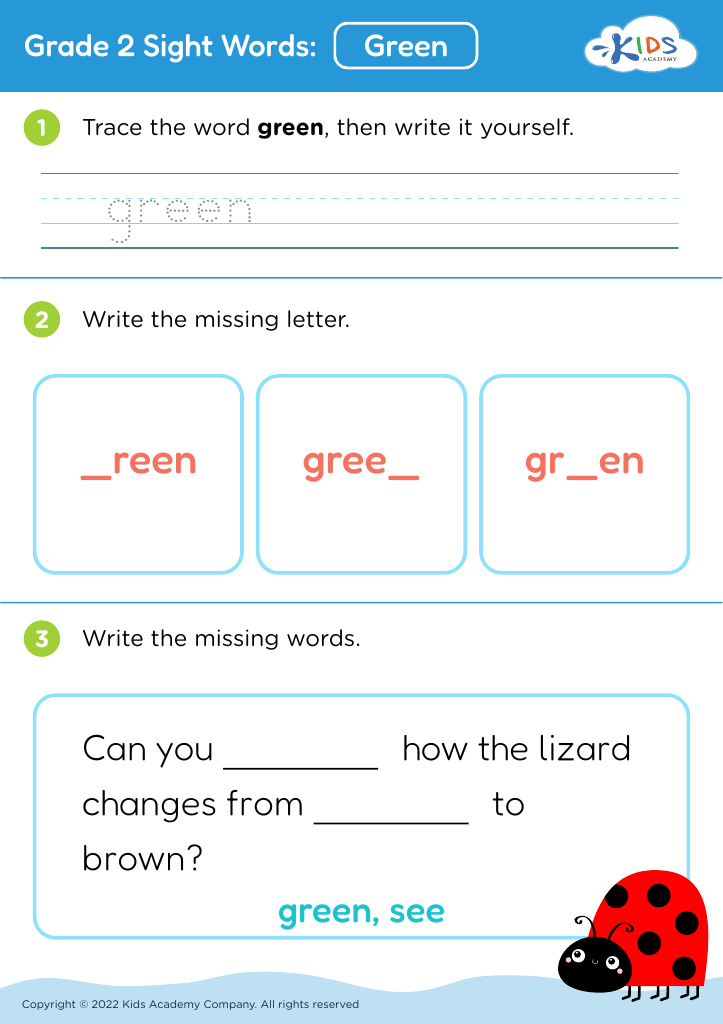
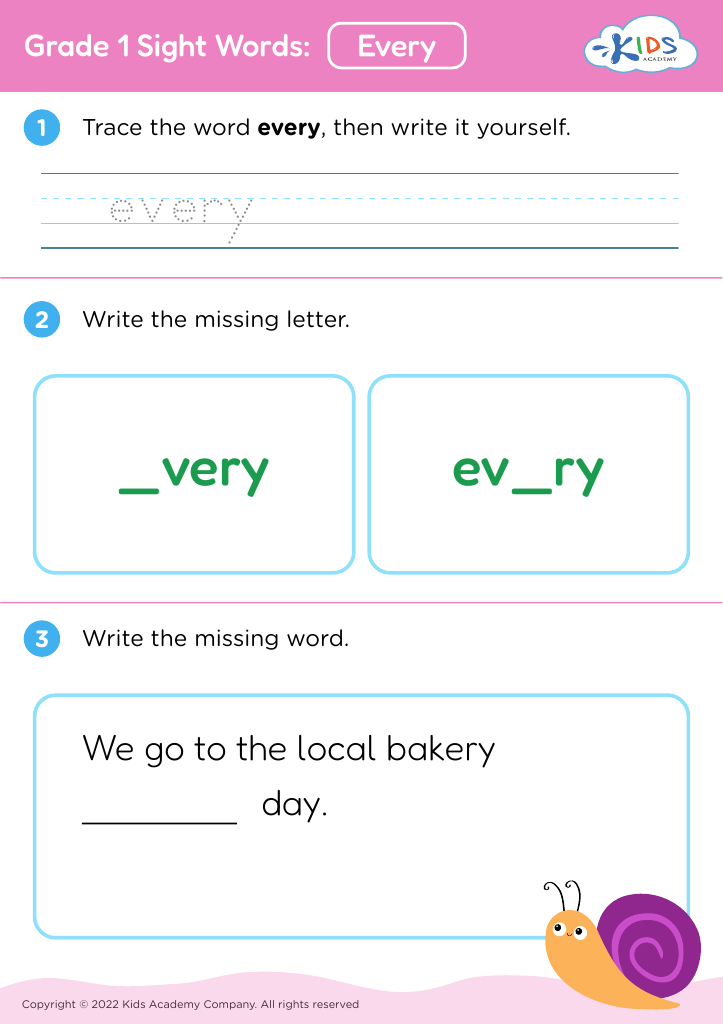
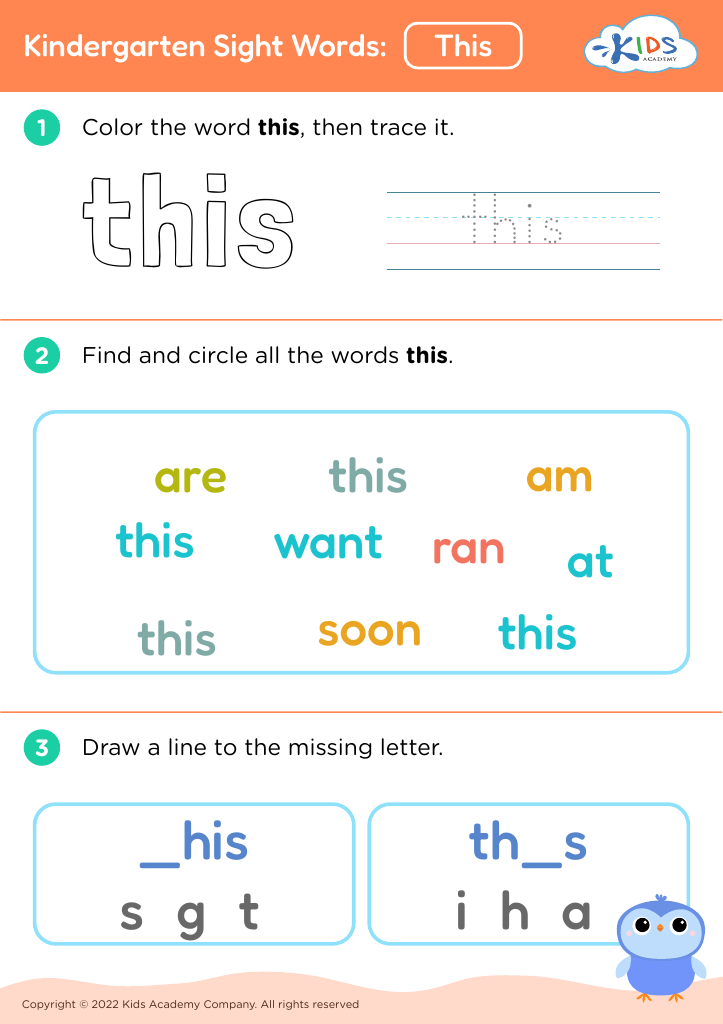
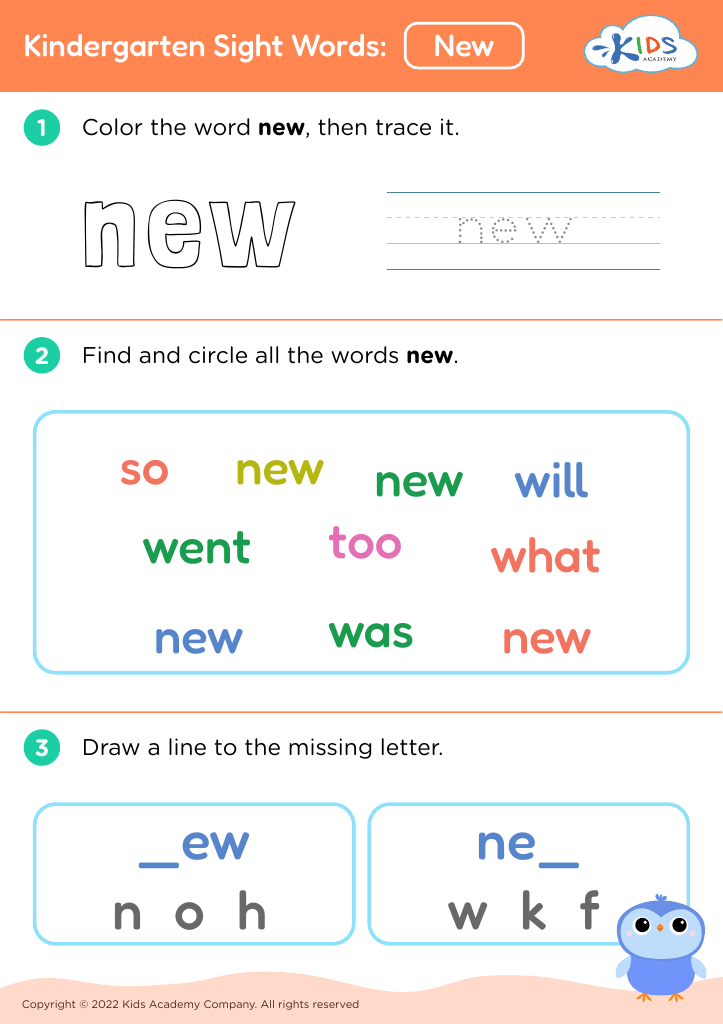
Our Counting Practice Sight Words Worksheets for ages 3-7 offer engaging and educational activities to boost your child's reading and math skills. Designed by experts, these worksheets combine sight words with fun counting exercises to strengthen early literacy and numeracy. Perfect for preschool and early elementary students, they help children recognize common words while practicing counting objects, enhancing both their reading comprehension and mathematical abilities. Easy to download and print, these worksheets are ideal for both classroom use and homeschooling. Unlock your child's learning potential with our interactive and enjoyable counting practice sight words worksheets today!
Favorites
With answer key
Interactive




Join Kids Academy for Free
Who is primarily going to use this learning content?








Counting practice and sight word recognition for ages 3-7 are foundational skills crucial for future academic success, playing pivotal roles in children’s cognitive and academic development.
Counting skills not only form the basis for more complex mathematical concepts but also enhance logical reasoning and problem-solving capabilities. Engaging in counting practice helps children grasp the concepts of number sequences, quantity, and basic arithmetic operations. These early mathematical experiences shape a child’s ability to understand and work with numbers, making math less intimidating and more engaging during their educational journey.
Sight word recognition, on the other hand, is fundamental for reading fluency. Sight words make up a large portion of the vocabulary in young readers’ books, yet many cannot be easily decoded using phonics alone. By recognizing sight words instantly, children can read more smoothly and confidently, which leads to better comprehension and a more enjoyable reading experience. This skill accelerates vocabulary development and supports literacy acquisition, which are crucial for overall language skills and success across other academic subjects.
In sum, early proficiency in counting and sight word recognition sets a robust academic foundation. These skills not only impact a child’s immediate learning experience but also ensure they are well-prepared for future educational challenges, providing them with the tools they need to thrive in all domains of learning.