Filters

8 filtered results

Clear all filters
Favorites
With answer key
Interactive

8 filtered results

Difficulty Level

Grade


Discover our engaging Vocabulary Expansion Animals Worksheets, designed specifically for children ages 3-7! These interactive and educational resources help young learners explore the fascinating world of animals while enhancing their vocabulary skills. Each worksheet features vibrant illustrations and fun activities that encourage creativity and critical thinking. From identifying animal names to associating words with images, children will develop essential language skills in a playful manner. Perfect for at-home learning or classroom use, our worksheets are tailored to support early literacy and spark a love for animals. Start your child’s vocabulary journey today and watch their confidence grow!

Check out this FREE Trial Lesson on Animals for age 3-7!

Animal Adaptations

Favorites
With answer key
Interactive
  • 3-7
  • Vocabulary expansion
  • Animals
Dogs, Dogs Worksheet

Dogs, Dogs Worksheet

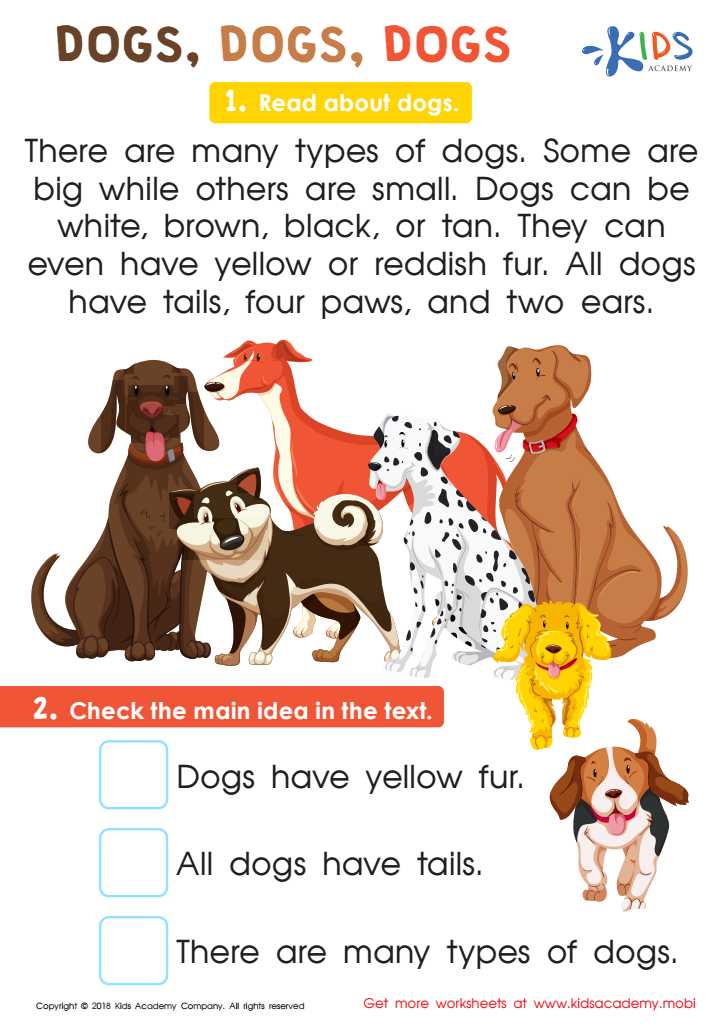
Help your child understand main ideas with this fun doggy worksheet from Kids Academy! Have them read the passage and then discuss the main idea. After that, have them read the answer choices and pick the right one. This will help your kiddo hone their critical reading comprehension skills!
Dogs, Dogs Worksheet
Worksheet
Big Cats and Their Cubs Worksheet

Big Cats and Their Cubs Worksheet

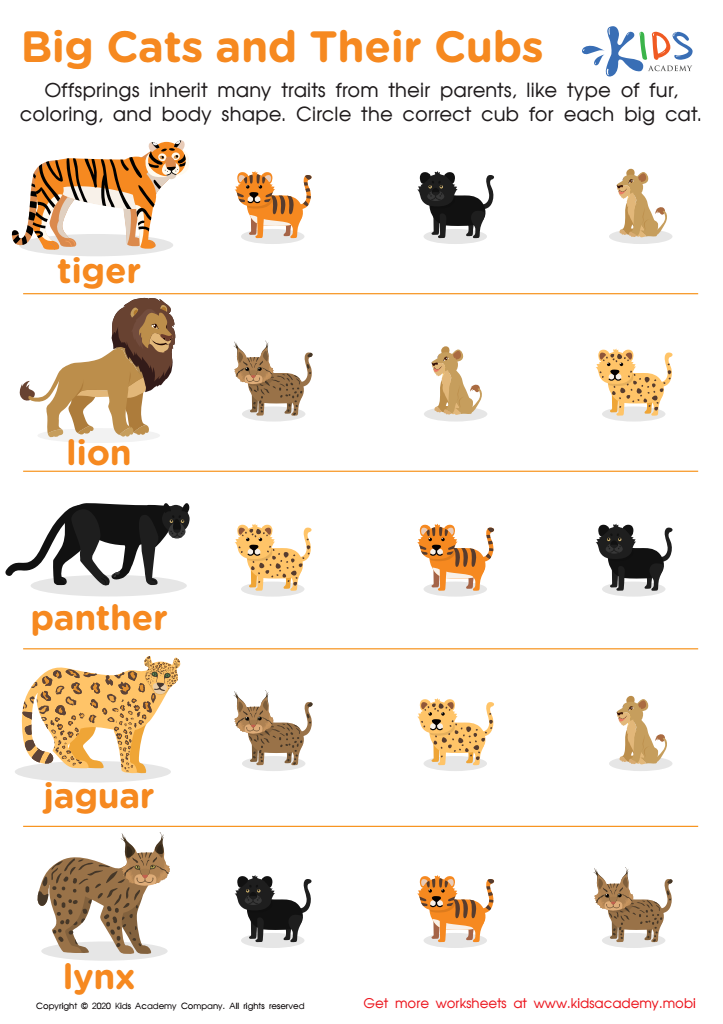
Kids are often like their parents, and the same is true for big cats and their cubs. Introduce your young scientists to genetics with this fun printable worksheet from Kids Academy! Observe the big cats and their cubs, then circle the right cub to complete! It's a great way to teach an early lesson in genetics.
Big Cats and Their Cubs Worksheet
Worksheet
Fish Body Parts Worksheet

Fish Body Parts Worksheet

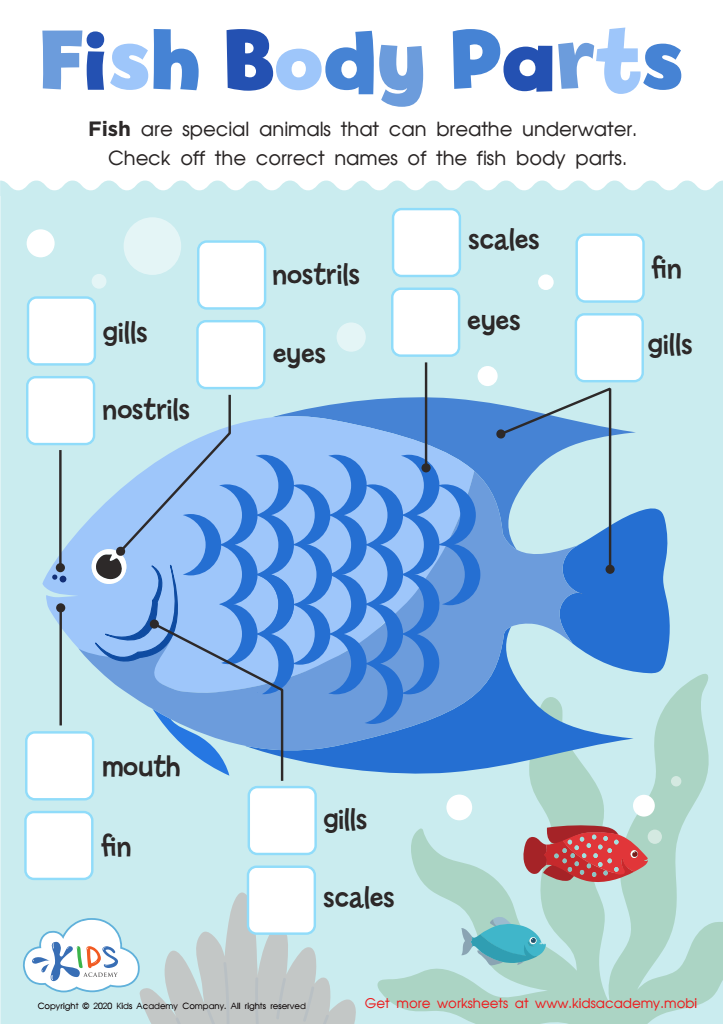
Fascinate kids with fish: teach them about these amazing creatures with this free Kids Academy printable worksheet. Let little learners study the vibrant blue fish, identify its different body parts, and discover why it can survive underwater. From gills to fins, your child will gain an early appreciation for life science!
Fish Body Parts Worksheet
Worksheet
Bald Eagle Parents Worksheet

Bald Eagle Parents Worksheet

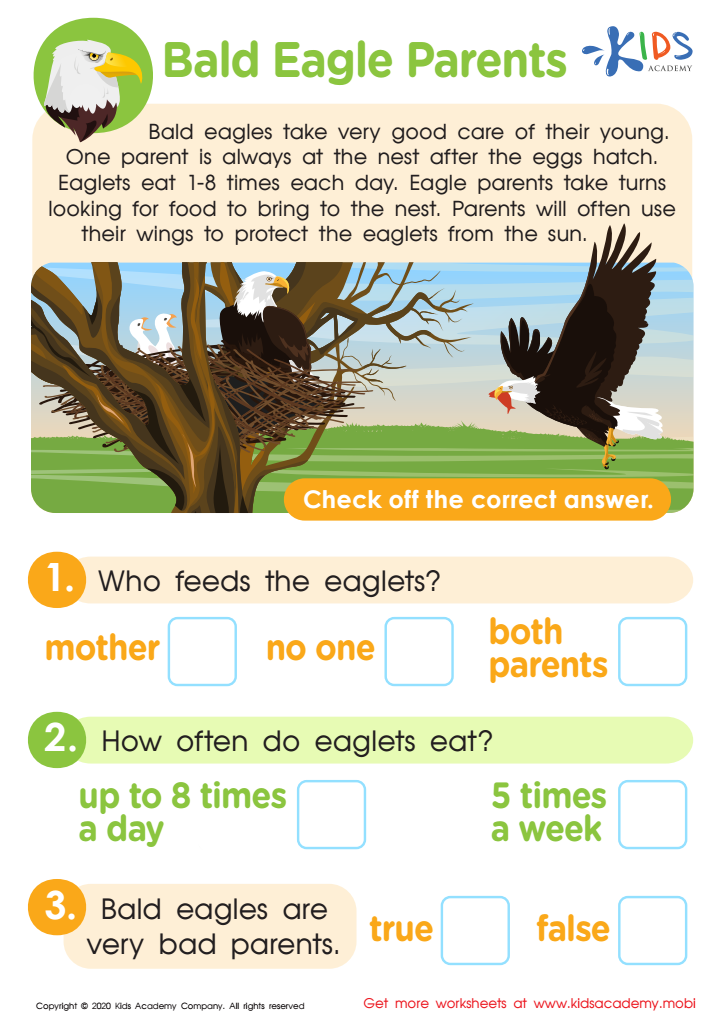
Teach your child about bald eagle parenting with this science worksheet! Read the passage and answer the questions to learn how these majestic birds protect their young from predators. Eaglets need protection, and the bald eagle parents are masters of providing it!
Bald Eagle Parents Worksheet
Worksheet
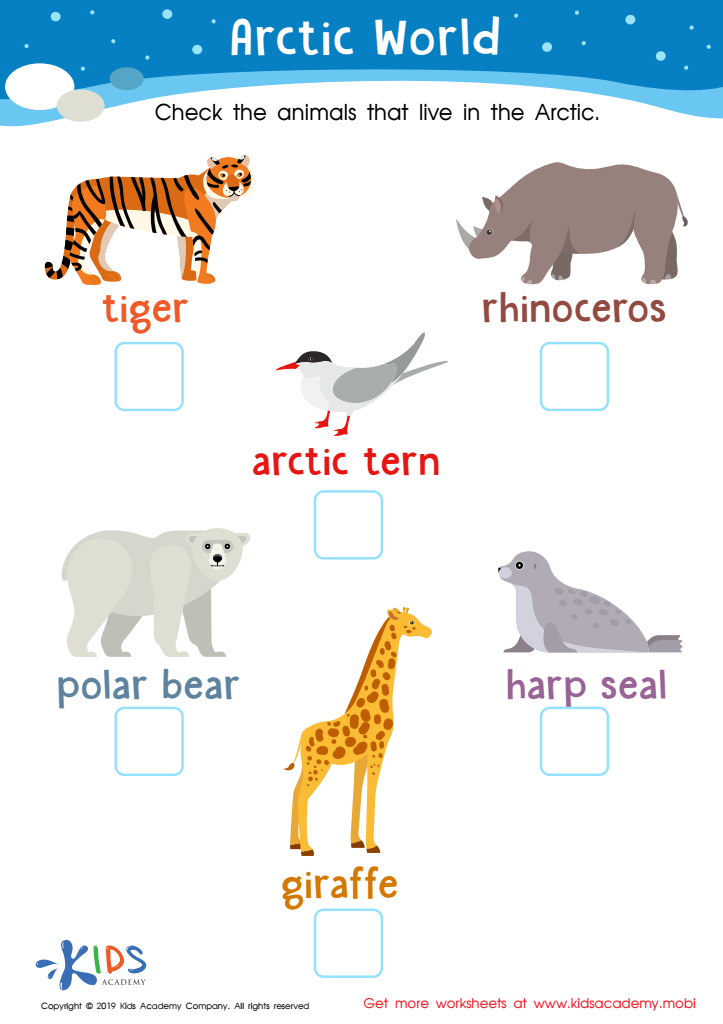
Arctic World Worksheet

Arctic World Worksheet

Ask your students if they know where the Arctic is located and what lives there. If not, use a world atlas to show them. The Arctic is very cold and snow-covered; native animals have adapted to survive the harsh conditions. Look at the animals in the worksheet and help your students decide which ones live in the Arctic.
Arctic World Worksheet
Worksheet
Classifying animals worksheet 2nd grade

Classifying Animals Worksheet

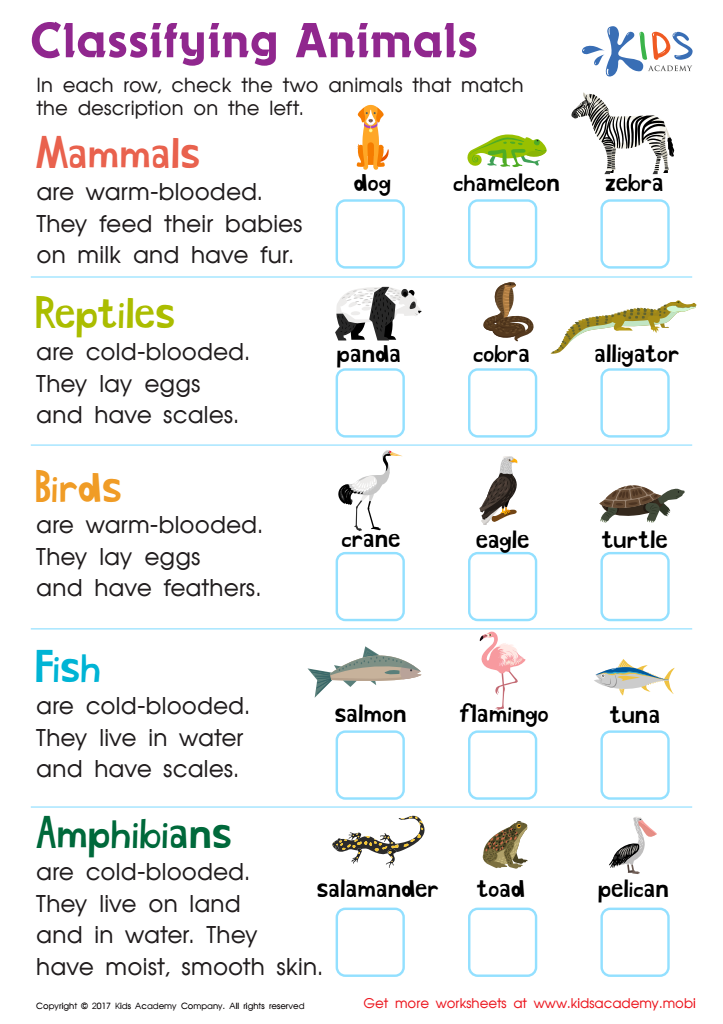
Print the 2nd grade animal classification worksheet and help kids study the differences between mammals, reptiles, birds, fish and amphibians. Let them pick two examples from the options given.
Classifying Animals Worksheet
Worksheet
Octopus facts worksheet for kids

Octopus Facts Worksheet For Kids

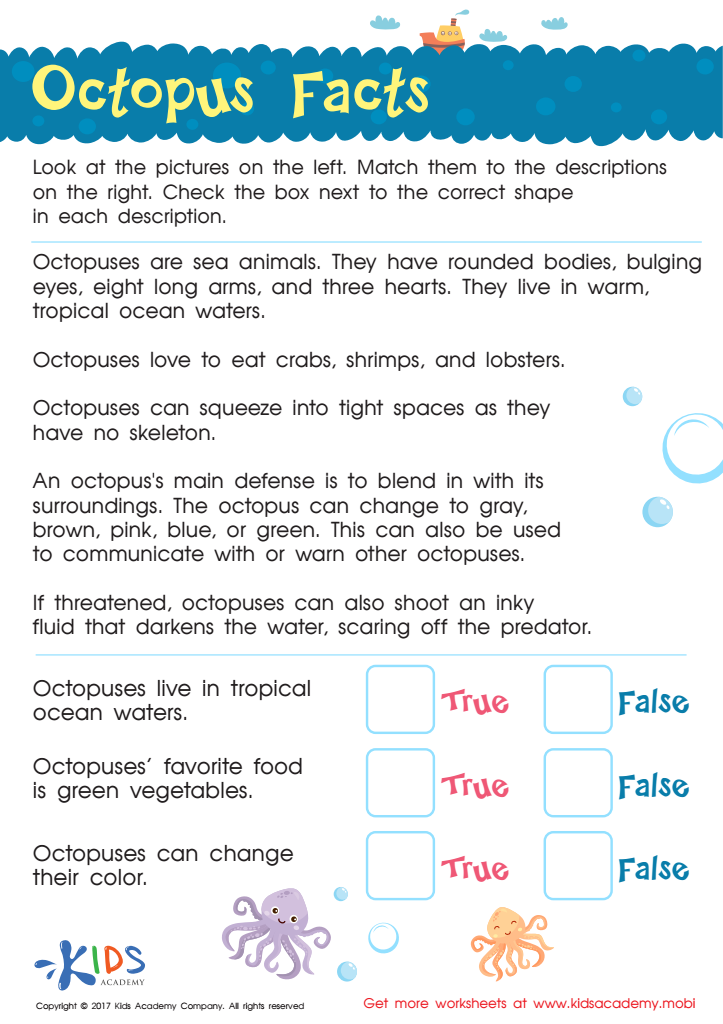
Let your child dive into the world of octopuses with this fun worksheet. It offers invaluable practice in reading non-fiction texts, while they learn interesting facts about these strange sea creatures. It's a great way to help them hone their skills in reading comprehension.
Octopus Facts Worksheet For Kids
Worksheet
What Does It Mean? Worksheet

What Does It Mean? Worksheet

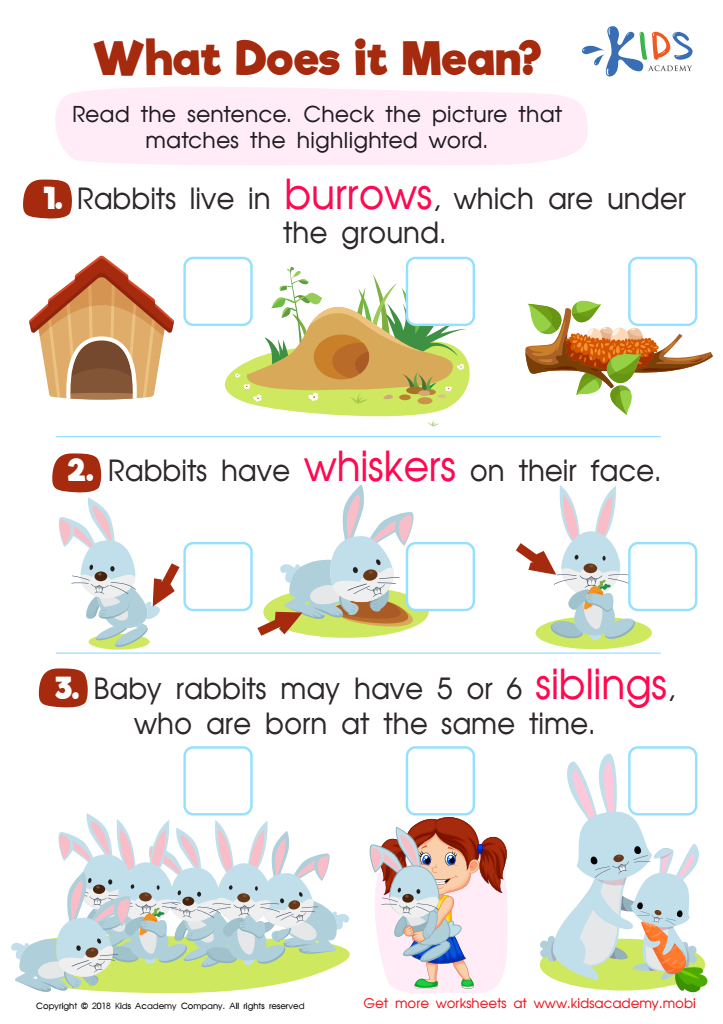
Teach your child to use context clues with this engaging Kids Academy worksheet. Read the sentences and find the pink-highlighted word. Use the other words in the sentence to figure out the meaning, then check the box next to the picture that represents it.
What Does It Mean? Worksheet
Worksheet


Vocabulary expansion, particularly around the topic of animals for children ages 3-7, is crucial for several reasons. At this stage of development, children are eager to explore the world around them, and learning about animals significantly enhances their understanding of nature, science, and literacy. Engaging vocabulary related to animals helps create a rich linguistic environment, promoting better communication skills and cognitive development.

Introducing animal names, habitats, behaviors, and sounds can stimulate curiosity and spark interest in the environment. This thematic vocabulary not only enriches a child's language but also fosters creativity and imagination through storytelling and role-playing activities. Furthermore, discussions about animals can cultivate empathy, as children learn to understand and respect living creatures, fostering a sense of responsibility towards the planet.

For teachers and parents, nurturing vocabulary around animals provides an opportunity for collaborative learning experiences, such as visits to zoos, nature walks, or reading animal-themed books. These experiences not only make learning enjoyable and relatable but also strengthen bonds with children. Ultimately, vocabulary expansion in this area lays a foundation for lifelong learning, supporting literacy development and encouraging children to articulate their thoughts and engage more confidently in conversations.