Recognizing Patterns Science Worksheets for Ages 3-7
3 filtered results
-
From - To
Unlock your child's curiosity with our "Recognizing Patterns Science Worksheets" designed for ages 3-7! These engaging worksheets foster essential early learning skills through fun and interactive activities. Children will explore patterns in nature, shapes, and everyday objects, enhancing their observational skills and critical thinking. Each worksheet encourages hands-on learning, promoting creativity and cognitive development while making science accessible and enjoyable. Perfect for classroom settings or at-home learning, our resources support young learners in recognizing and creating patterns, laying the groundwork for future scientific exploration. Download our printable worksheets today and embark on an exciting journey of discovery together!
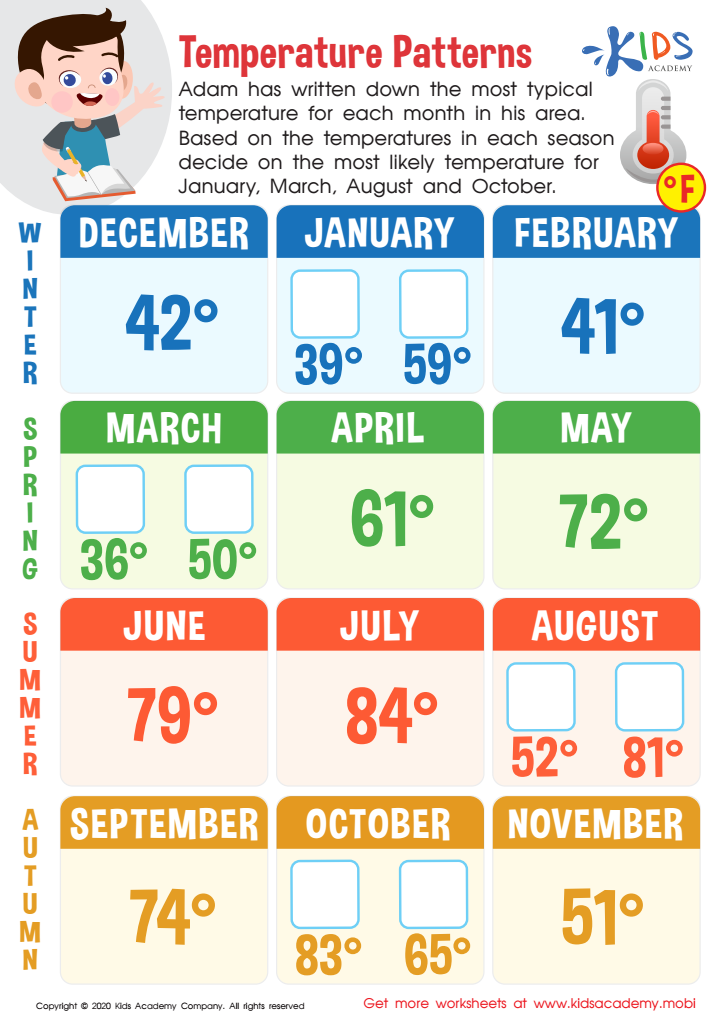
Temperature Patterns Worksheet
 Assign to My Students
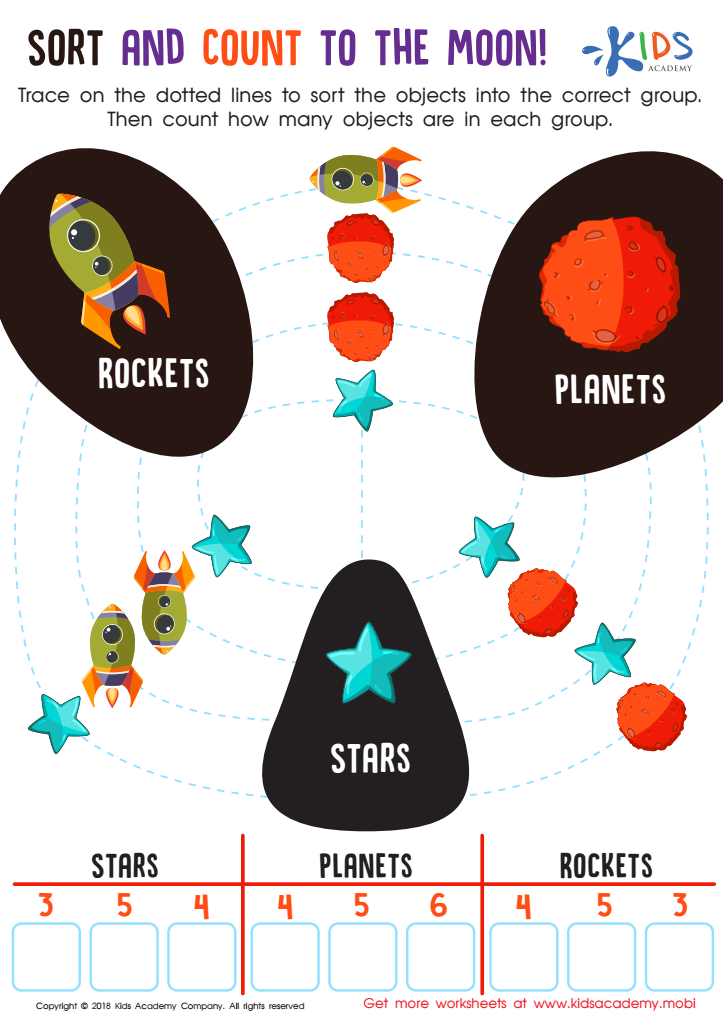
Sort and Count to the Moon Worksheet
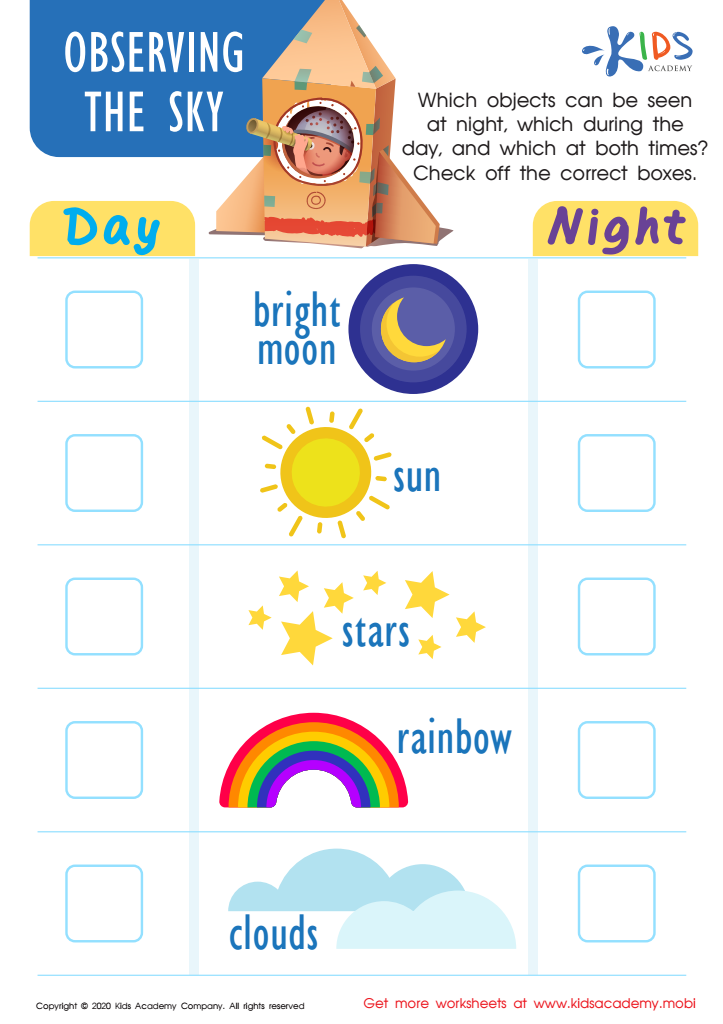
Observing the Sky Worksheet








Recognizing patterns is a fundamental cognitive skill that lays the groundwork for critical thinking and problem-solving. For children aged 3-7, engaging in pattern recognition through science enhances their observational abilities and encourages logical reasoning. Parents and teachers should care about this aspect of early science education because it helps children connect their learning to the world around them.
Incorporating pattern recognition activities, such as identifying sequences in nature, sorting objects by size or color, and recognizing rhythms in music, fosters an exploratory mindset. These experiences support language development, as children learn to describe and articulate their observations. Additionally, nurturing this skill promotes perseverance and resilience, as kids learn to notice discrepancies and make predictions based on existing patterns.
Furthermore, an understanding of patterns transcends science and feeds into mathematics, literacy, and art, providing a holistic learning experience. It encourages collaboration, as children often work in groups to identify patterns and share their ideas. Ultimately, teaching pattern recognition not only enriches scientific understanding but also aids in the overall cognitive, emotional, and social development of young learners, setting the stage for lifelong learning and curiosity.







