Knowledge application Physical Science Worksheets for Ages 3-7
3 filtered results
-
From - To
Introduce your little scientists to the wonders of physical science with these engaging "Knowledge Application Physical Science Worksheets" tailored for ages 3-7. At Kids Academy, our worksheets are thoughtfully designed to nurture curious minds, making learning fun and interactive. Through hands-on activities and real-world examples, children will explore fundamental concepts such as force, energy, and matter. Perfect for early learners, these worksheets not only enhance understanding but also develop critical thinking and problem-solving skills. Start your child's educational adventure today with our expertly crafted physical science resources that spark creativity and foster a love for discovery.
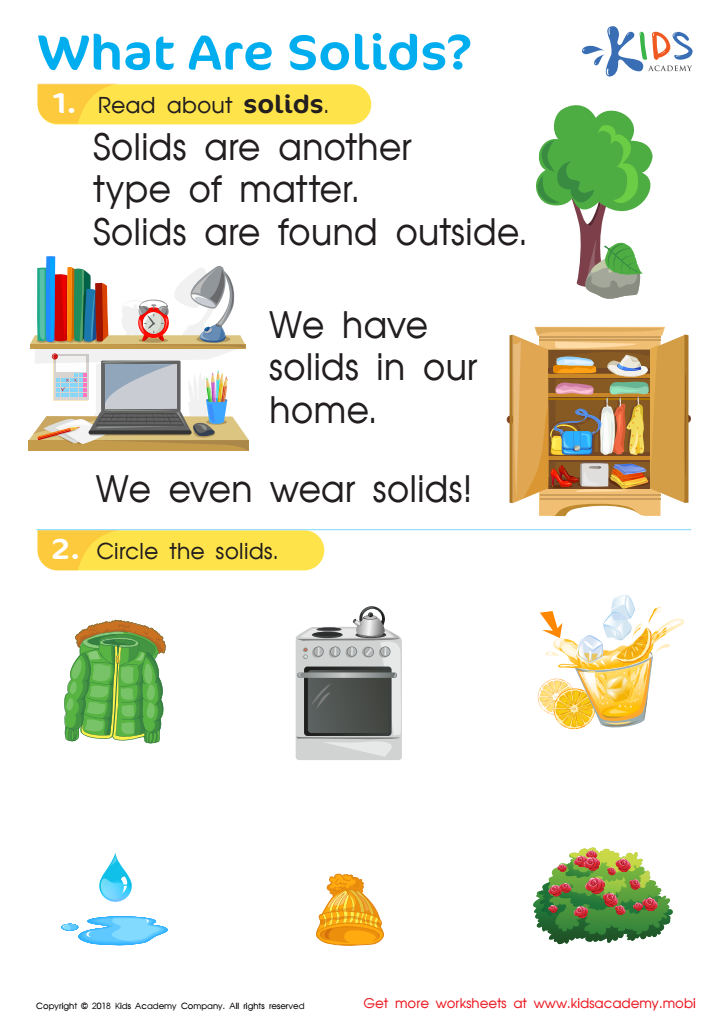
What Are Solids? Worksheet
 Assign to My Students
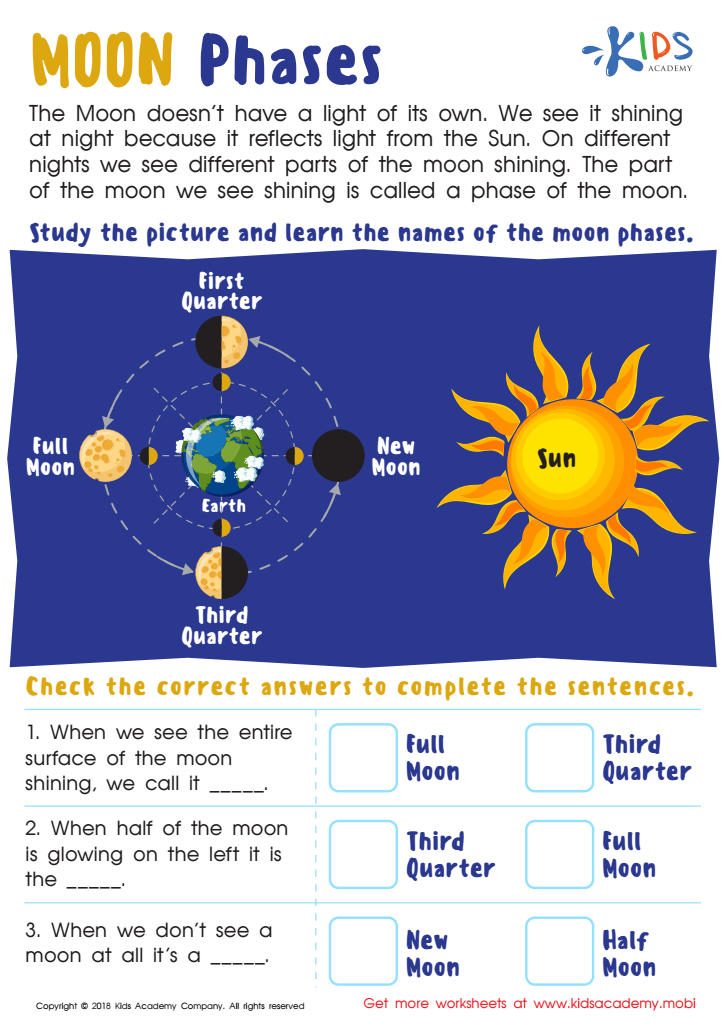
Moon Phases Worksheet
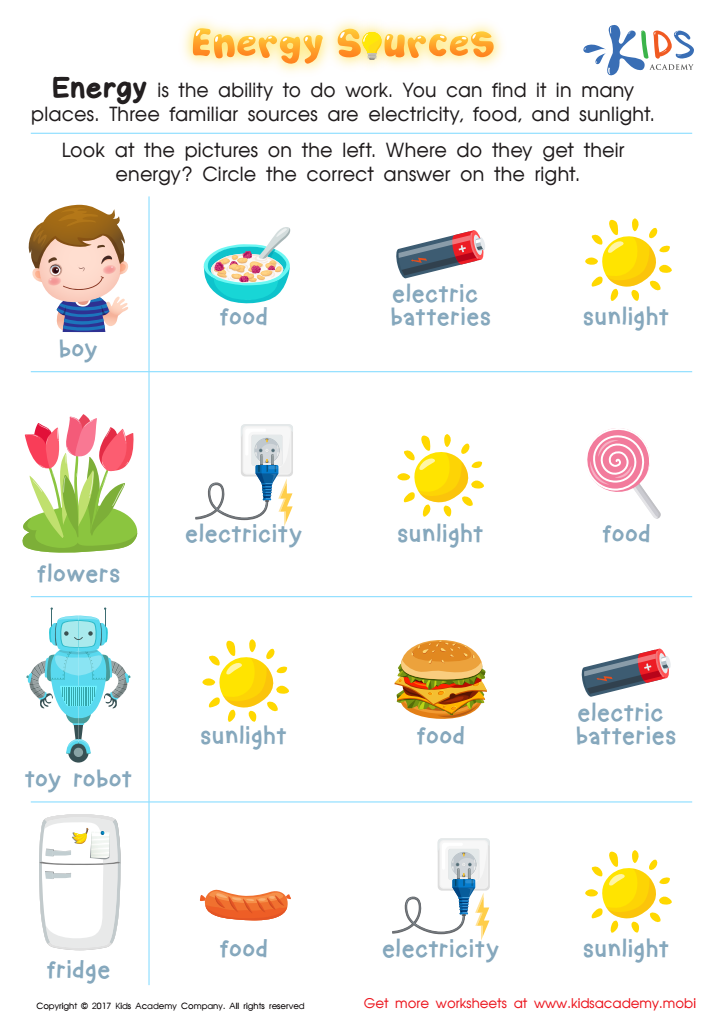
Energy Sources Printable


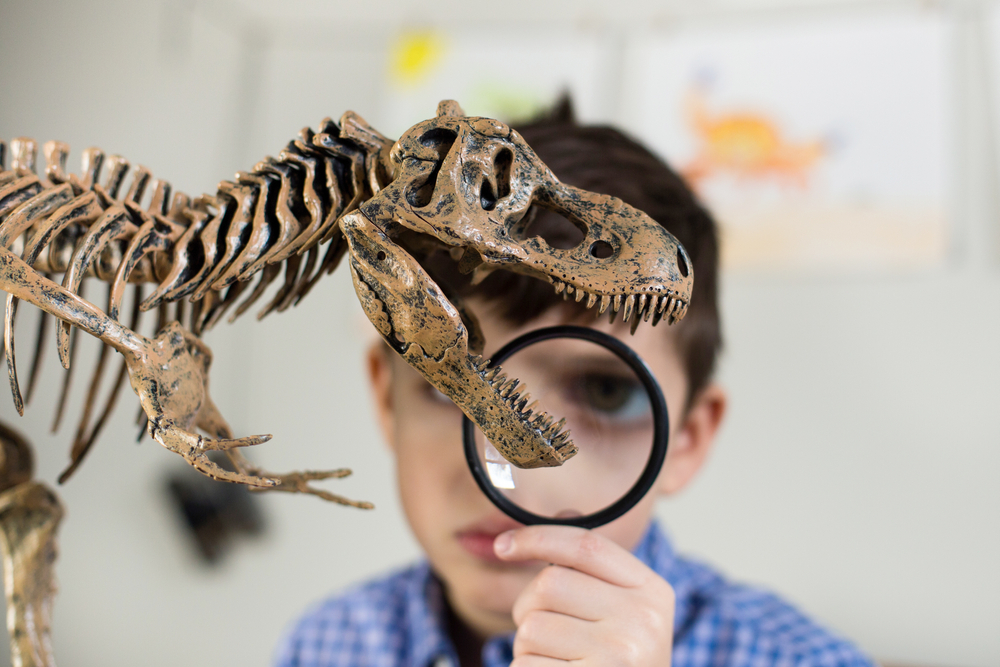




Ensuring that children ages 3-7 engage in knowledge application in physical science is crucial for their developmental and intellectual growth. At this tender age, children are naturally curious and eager explorers, qualities that physical science activities can nurture. Introducing them to basic concepts through playful, hands-on experiments helps solidify foundational knowledge that can scaffold future learning.
These early experiences with physical science enrich cognitive development. Children learn to observe, classify, predict, and infer – vital skills not only for science but for everyday problem-solving. For example, simple activities like mixing baking soda and vinegar can spark understanding of reactions, cause and effect, and change.
Moreover, engaging with physical science topics ignites a sense of wonder and nurtures a love for learning. This can yield long-term academic benefits, keeping children enthusiastic about discovering how the world works. It also serves as a platform for developing motor skills and coordination through interactive experiments and play.
Furthermore, fostering an early interest in science can be critical for bridging gender gaps and creating more inclusive attitudes towards STEM fields, from the get-go. For parents and teachers, facilitating these experiences sets up a positive and inquisitive mindset, cultivating confident, competent lifelong learners. Ultimately, knowledge application in physical science enriches early childhood education in ways that resonate throughout children's academic and personal lives.







