
Handwriting practice Community Worksheets for Ages 3-7
5 filtered results
Difficulty Level
Grade
Age
-
From - To
Subject
Activity
Standards
Nurture your child's handwriting skills with our Handwriting Practice Community Worksheets for Ages 3-7! Designed to make learning fun, these engaging worksheets help young learners master the art of penmanship while exploring community-themed content. Each sheet encourages practice through tracing and writing activities, enhancing fine motor skills and letter formation. Perfect for classroom or home use, our worksheets provide a solid foundation in the basics of handwriting, empowering children to write confidently. Unlock a world of creativity and learning for your child today by integrating these worksheets into their daily routine. Ideal for ages 3-7!
Favorites
With answer key
Interactive
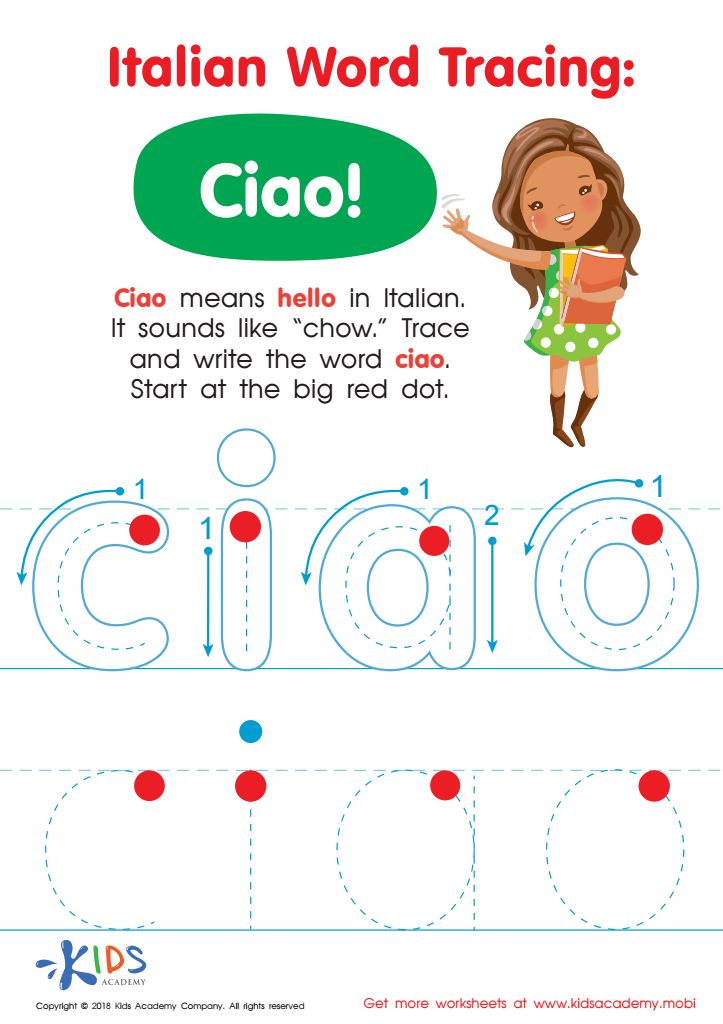
Italian Word Tracing: Ciao Worksheet
Help kids learn to greet people in different languages with this fun worksheet! Featuring the Italian word 'Ciao', it helps kids trace and learn the pronunciation. Plus, it teaches hand-eye coordination and fine-motor skills. Global connectivity can start with this activity!
 Assign to My Students
Italian Word Tracing: Ciao Worksheet
Worksheet
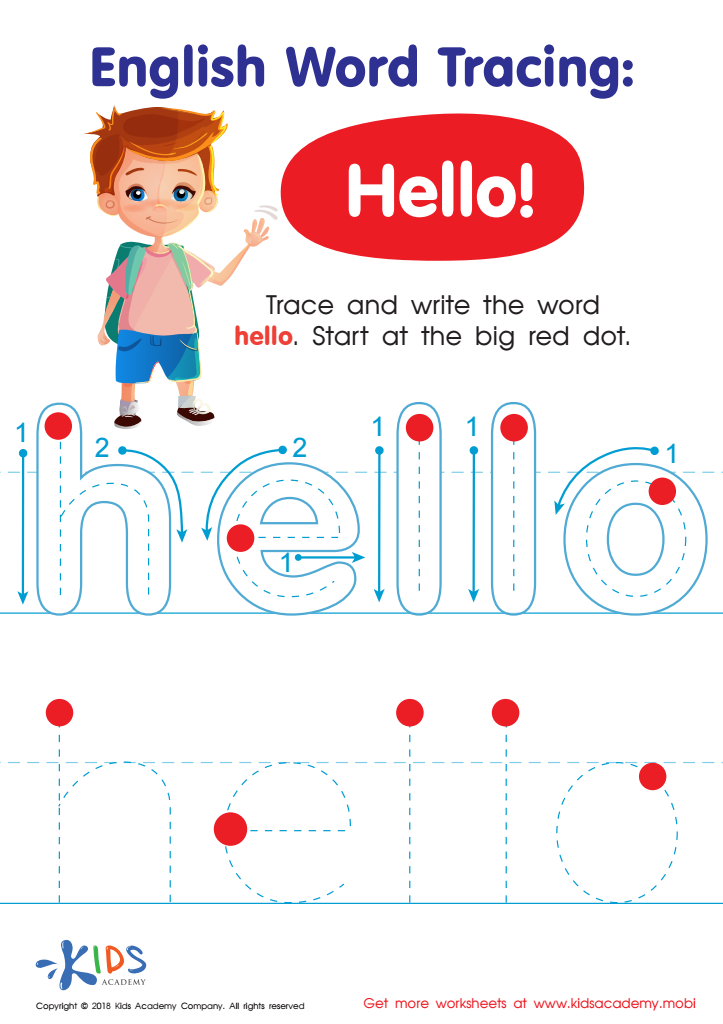
English Word Tracing: Hello Worksheet
Searching for free worksheets to help your kids refine their motor skills, handwriting and English word knowledge? Get this cheerful PDF! It offers your children the chance to practice tracing words like Hello, while following a top-to-bottom, left-to-right patterning.
English Word Tracing: Hello Worksheet
Worksheet
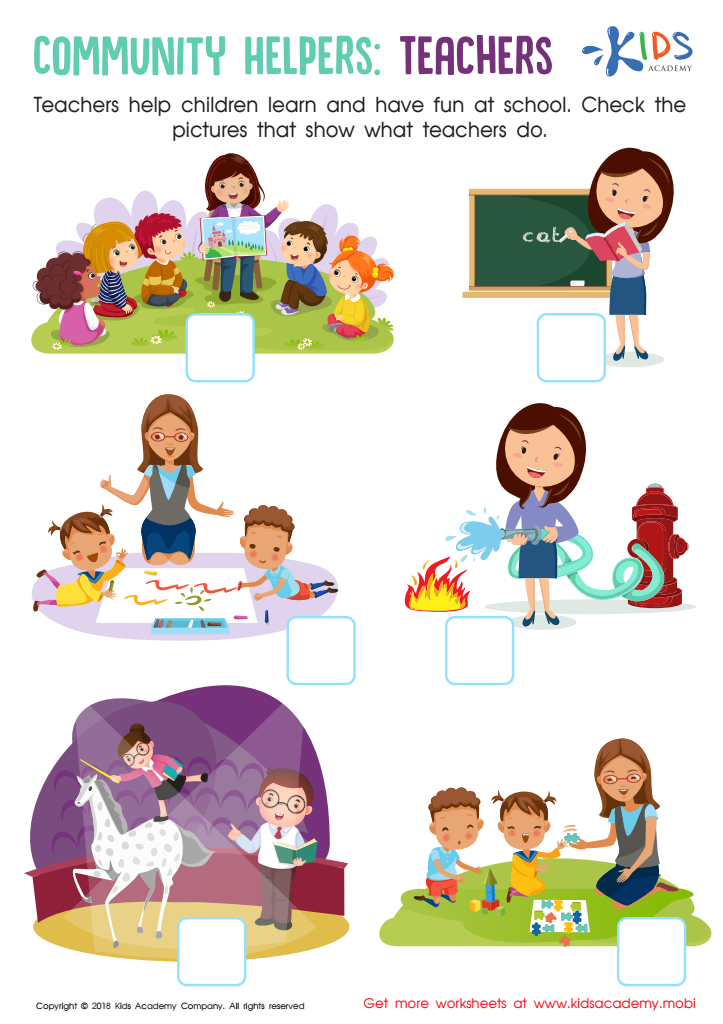
Teachers Community Helpers Worksheet
Ask your students to name some of the ways a teacher helps. Then, use this worksheet to show the right ways teachers can help. Have them check the boxes of the pictures that accurately depict what a teacher does. This is a great exercise to show your students how you help them learn and contribute to their community.
Teachers Community Helpers Worksheet
Worksheet
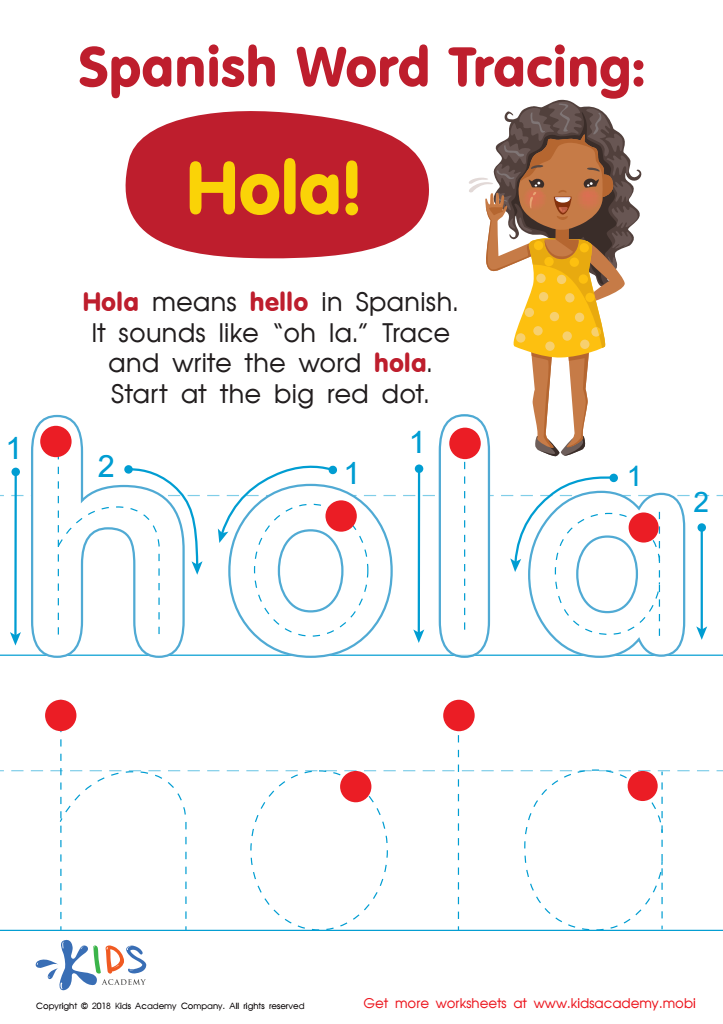
Spanish Word Tracing: Hola Worksheet
This PDF provides a fun way for students to learn "Hola" (Hello) in Spanish! Kids can practice fine motor and handwriting skills while they trace the letters. They'll get the hang of top-to-bottom, left-to-right patterning while they learn how to say and write in Spanish. With practice, they'll soon feel confident speaking and writing Spanish!
Spanish Word Tracing: Hola Worksheet
Worksheet
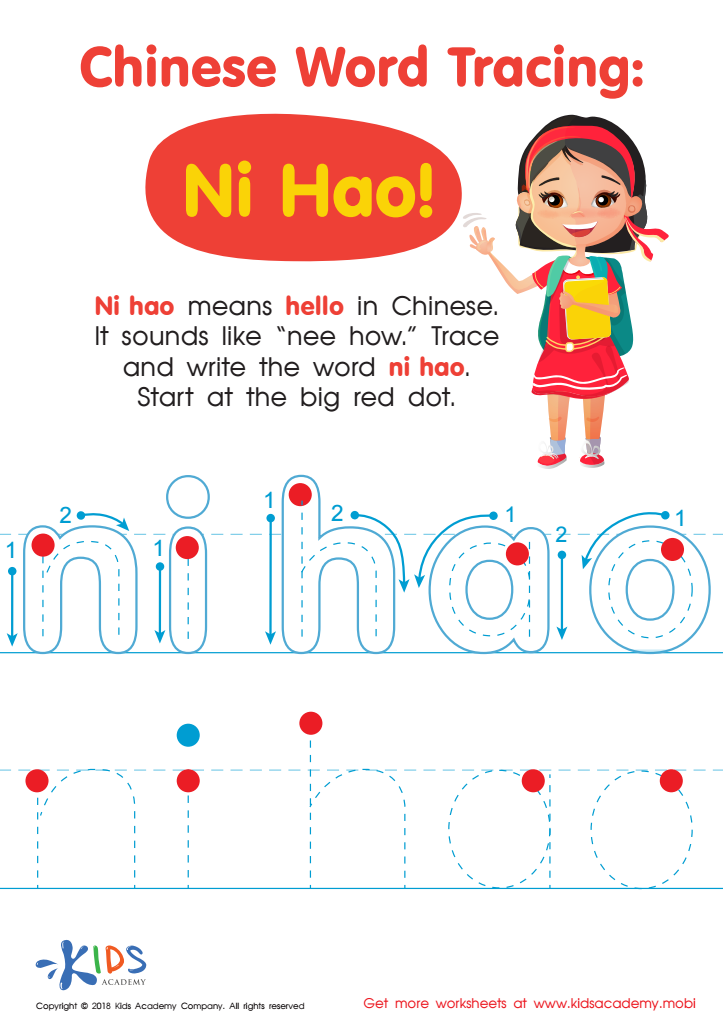
Chinese Word Tracing: Ni Hao Worksheet
Kids can learn to say "Ni hao" with this fun tracing worksheet. The free PDF helps kids write and say the Chinese greeting while also developing fine-motor, handwriting and reading skills. With red guide dots and traceable lines, kids will learn top-to-bottom and left-to-right patterning for fluent reading.
Chinese Word Tracing: Ni Hao Worksheet
Worksheet
Join Kids Academy for Free
Who is primarily going to use this learning content?








Parents and teachers should care about handwriting practice for children aged 3-7 because it fosters crucial developmental milestones. At this young age, children are honing their fine motor skills, which are essential for tasks far beyond just writing, such as tying shoes or buttoning clothes. Handwriting practice helps strengthen hand-eye coordination and dexterity. It also enhances cognitive development as children learn to recognize shapes, letters, and eventually form words, which contributes to their reading and spelling abilities.
Additionally, handwriting practice is closely tied to language development. As children write, they are more likely to internalize the connection between sounds and symbols. It promotes better memory retention and understanding compared to typing. Practicing handwriting can also improve attention and focus, as it requires sustained effort and concentration.
From a social-emotional perspective, handwriting practice can boost a child's confidence and self-esteem. Mastering the skill gives them a tangible sense of achievement and encourages a positive attitude toward learning. In an age dominated by technology, ensuring that young children develop strong handwriting skills also helps maintain a balanced approach to their education, blending traditional methods with modern resources. Thus, involvement in a handwriting practice community ensures that children receive comprehensive support and encouragement, laying a solid foundation for future academic and personal success.








