Understanding communities Community Worksheets for Ages 3-7
4 filtered results
-
From - To
Explore our engaging "Understanding Communities" worksheets designed for children ages 3-7. These interactive resources help young learners develop a foundational understanding of their community and the various roles within it. Through colorful illustrations and easy-to-follow activities, kids will discover the importance of different community helpers, local landmarks, and the meaningful relationships that shape their environment. Ideal for home or classroom use, our worksheets promote creativity, critical thinking, and essential social studies skills. Encourage your child to connect with their surroundings and foster a sense of belonging with these fun and educational materials! Perfect for little learners eager to explore their world.
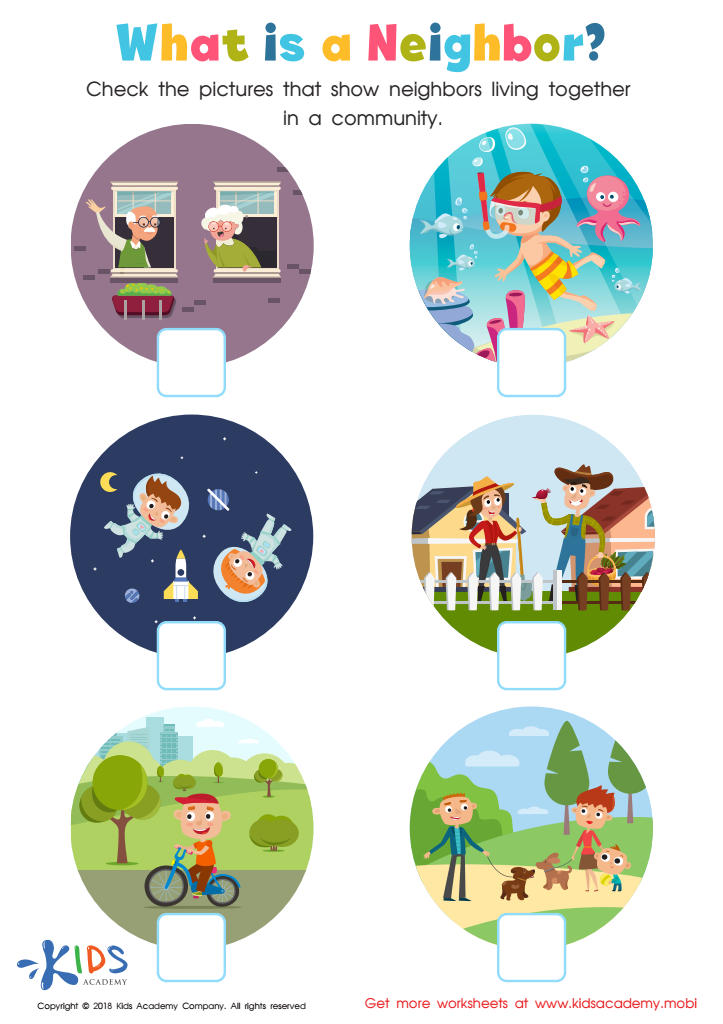
What is a neighbor Worksheet
 Assign to My Students
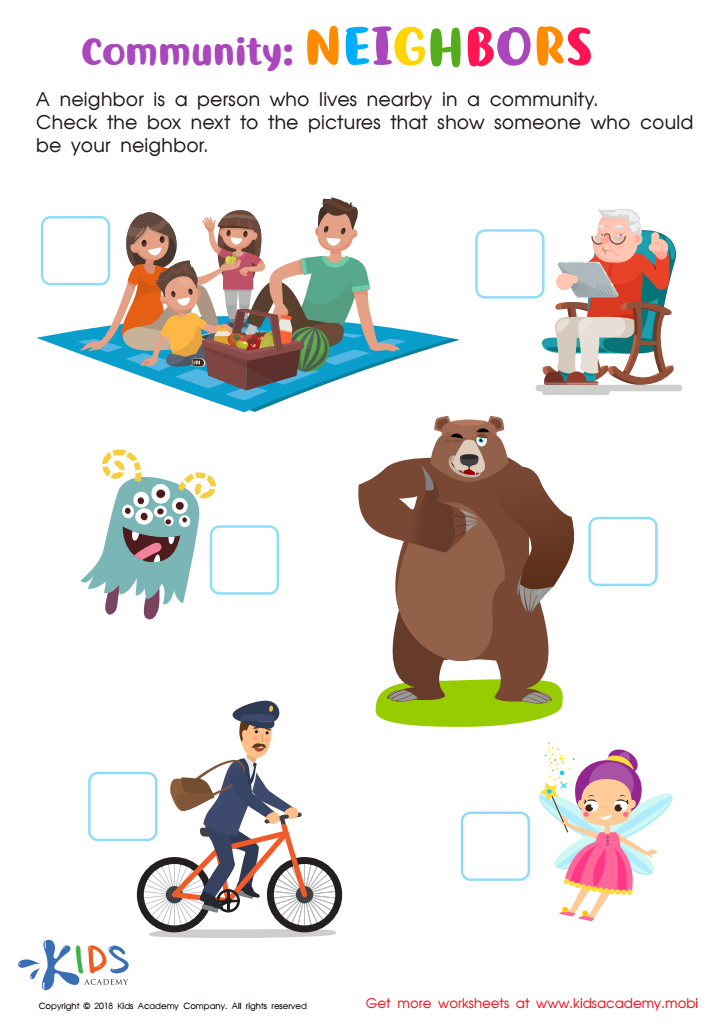
Community: Neighbors Worksheet
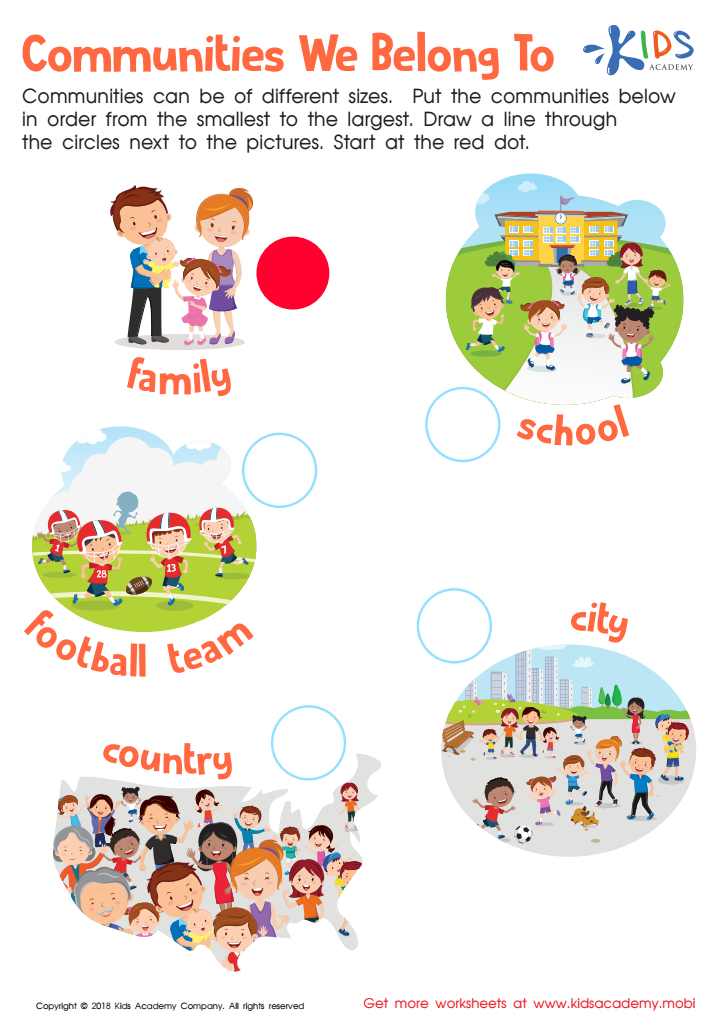
Communities We Belong to Worksheet
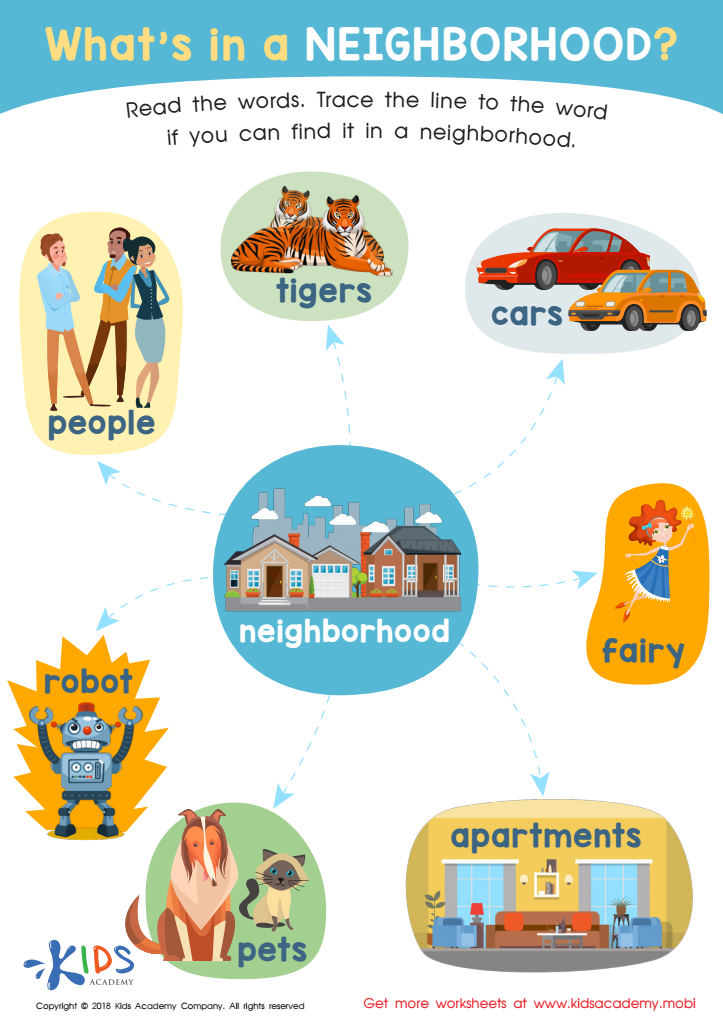
What's in a Neighborhood? Worksheet







Understanding communities is essential for children aged 3-7 as it plays a pivotal role in their social and emotional development. At this formative stage, children begin to build their identities and connect with the world around them. By learning about their own community, children foster a sense of belonging and cultivate relationships, which are critical for their self-esteem and confidence.
For parents and teachers, emphasizing community understanding helps create a rich learning environment where children gain awareness of diverse cultures, traditions, and perspectives. This exposure nurtures empathy and respect for differences, shaping them into compassionate individuals. Collaborative activities, such as community walks or projects, engage children in hands-on learning while reinforcing the idea that they are active members of something larger than themselves.
Moreover, understanding one's community prepares children for future civic engagement. As they grow, these foundational lessons foster a sense of responsibility, encouraging them to contribute positively to society. In essence, emphasizing community in early education equips children with the interpersonal skills, cultural awareness, and civic responsibility that are essential for their personal growth and societal participation. Ultimately, nurturing this understanding benefits not just the individual child but the community as a whole.