Vocabulary development Community Worksheets for Ages 3-7
7 filtered results
-
From - To
Discover a valuable resource for enhancing vocabulary skills in young learners with our Vocabulary Development Community Worksheets for Ages 3-7! These engaging printable worksheets are designed to introduce essential community-related terms, helping children build their language skills in a fun and interactive way. Ideal for preschool and early grade classrooms, our worksheets include activities like matching words with pictures, cutting and pasting, and simple sentence creation. By exploring familiar community concepts, children expand their vocabulary, comprehension, and confidence. Perfect for home or classroom use, these resources are essential for any early educator focused on fostering language development in young minds. Start today!
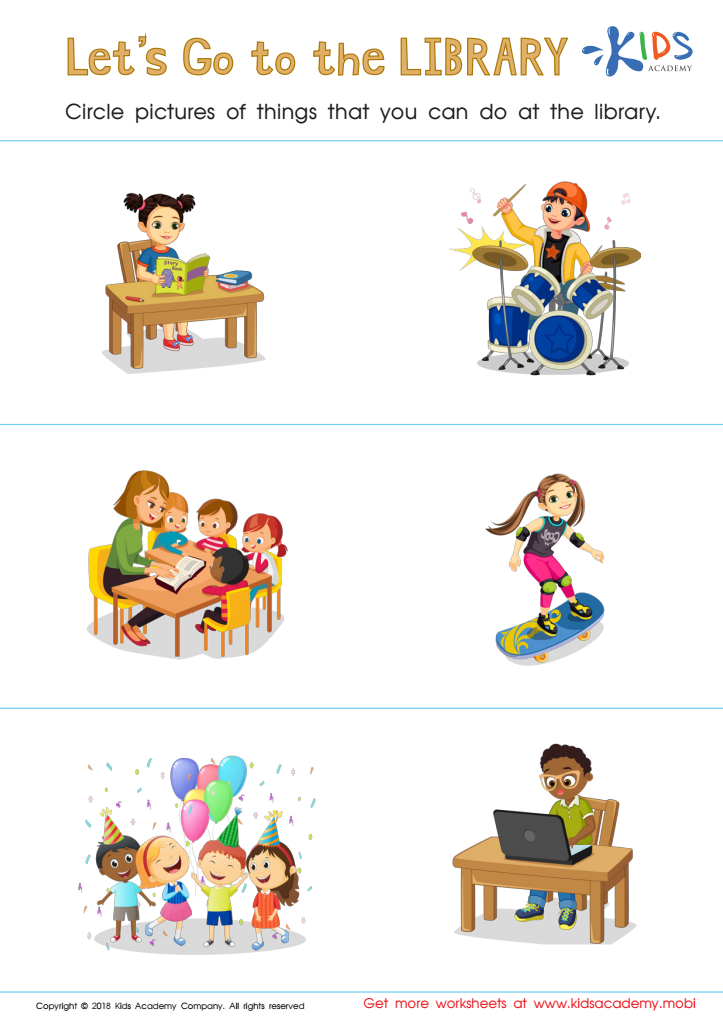
Let's Go to the Library! Worksheet
 Assign to My Students

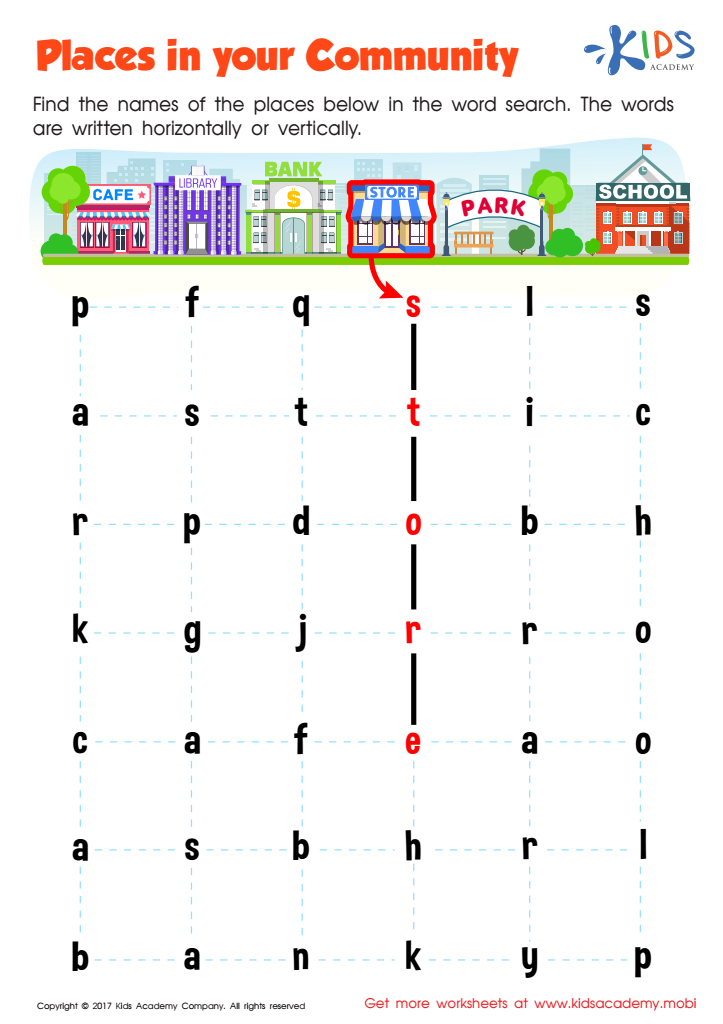
Places in Your Community Worksheet
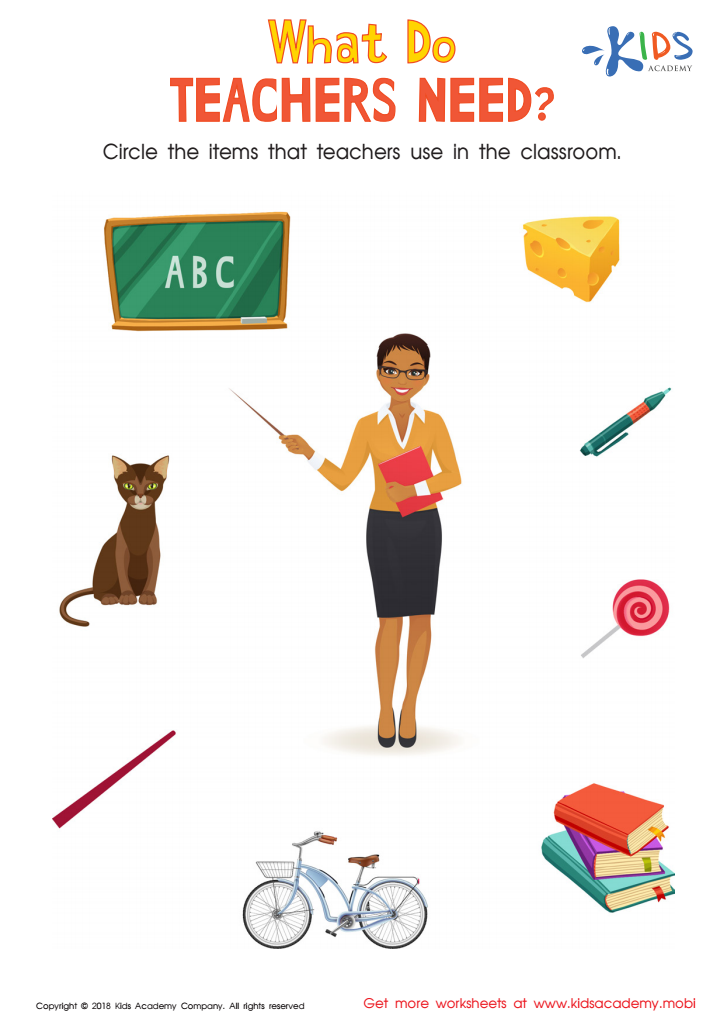
What Do Teachers Need Worksheet
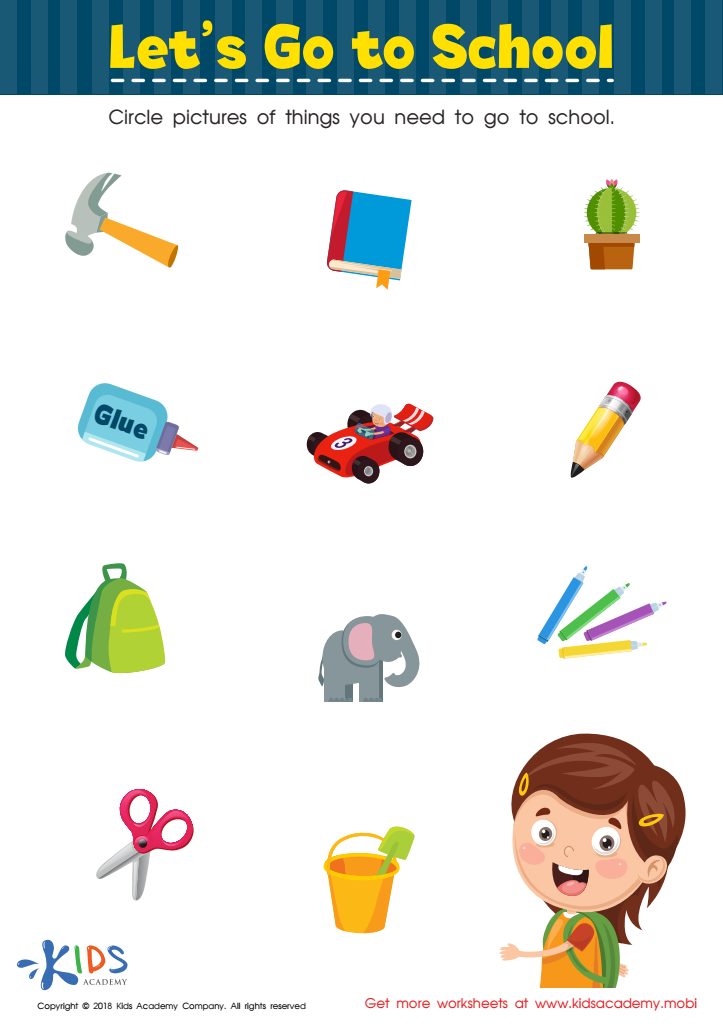
Let's Go to School! Worksheet
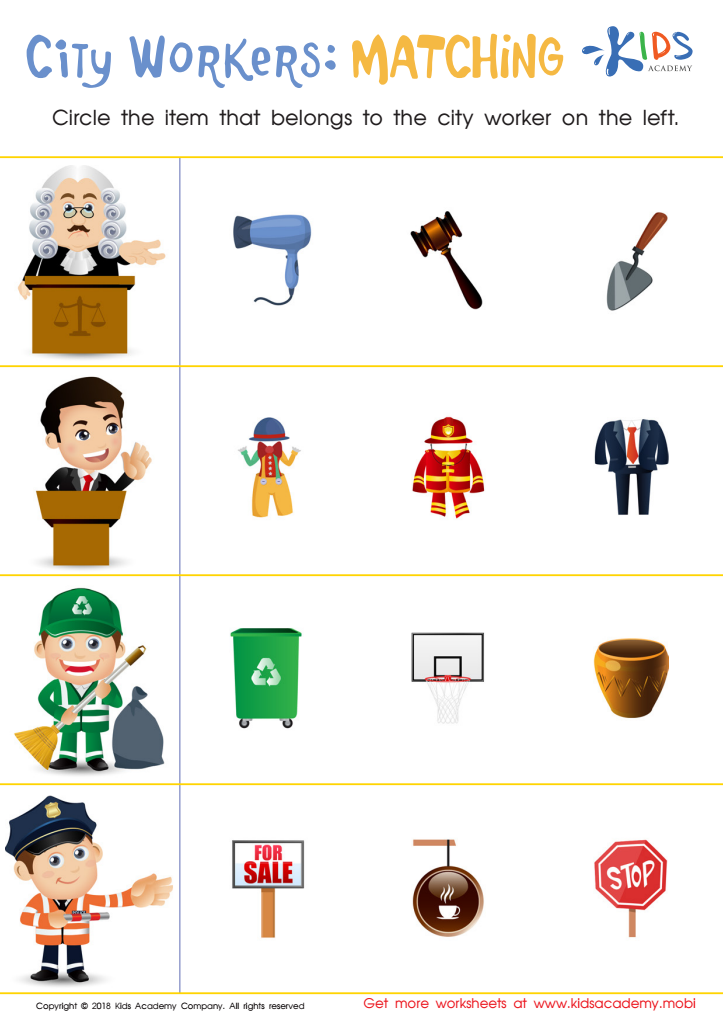
City Workers: Matching Worksheet
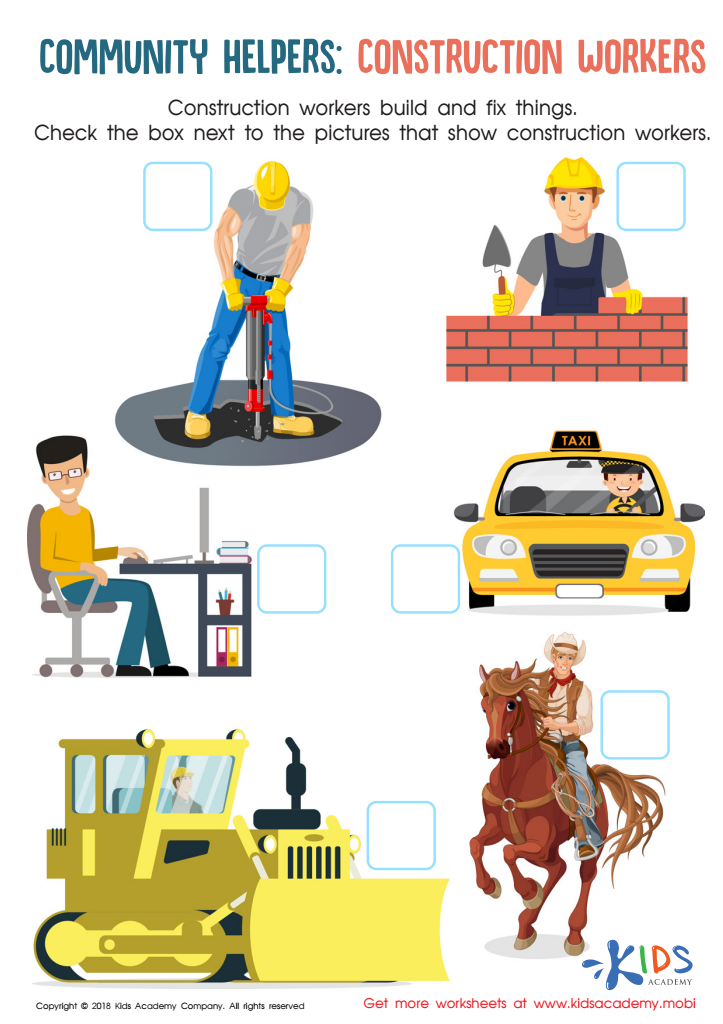
Construction Workers Community Helpers Worksheet








Vocabulary development is crucial for children aged 3 to 7, significantly impacting their cognitive, social, and academic growth. During this formative stage, children are like sponges, absorbing words and ideas from their environment. A strong vocabulary enhances their ability to express thoughts, understand instructions, and engage in conversations, which are foundational skills for effective communication.
Parents and teachers should care about vocabulary development because it lays the groundwork for reading and writing skills. Children with a rich vocabulary are more likely to comprehend text, connect ideas, and perform better academically. Language exposure during these years shapes their cognitive abilities and fosters critical thinking.
Moreover, vocabulary development promotes social skills. Children learn to navigate conversations, negotiate with peers, and build relationships, which enhances their emotional intelligence. In a community context, parents and teachers can collaboratively create enriching experiences, such as reading together, interactive storytelling, and engaging educational activities, to foster vocabulary growth.
Supporting vocabulary development helps create a loving and intellectually stimulating environment. Ultimately, investing in a child's vocabulary translates into greater confidence, better academic outcomes, and improved life skills, laying a foundation for lifelong learning and success.








