
Map reading skills Geography Worksheets for Ages 3-7
7 filtered results
Difficulty Level
Grade
Age
-
From - To
Subject
Activity
Standards
Develop your child’s map reading skills with our engaging geography worksheets for ages 3-7! These interactive resources are designed to introduce young learners to essential map concepts such as symbols, directions, and landmarks. Suitable for various learning styles, our worksheets include fun activities like tracing, matching, and coloring, ensuring your child enjoys every step of their geographical exploration. Perfect for homeschoolers, classrooms, or supplementary learning, these worksheets lay a solid foundation in geography while enhancing critical thinking and problem-solving skills. Encourage curiosity about the world around them and inspire a love for learning with these meticulously crafted map reading resources!
Favorites
With answer key
Interactive
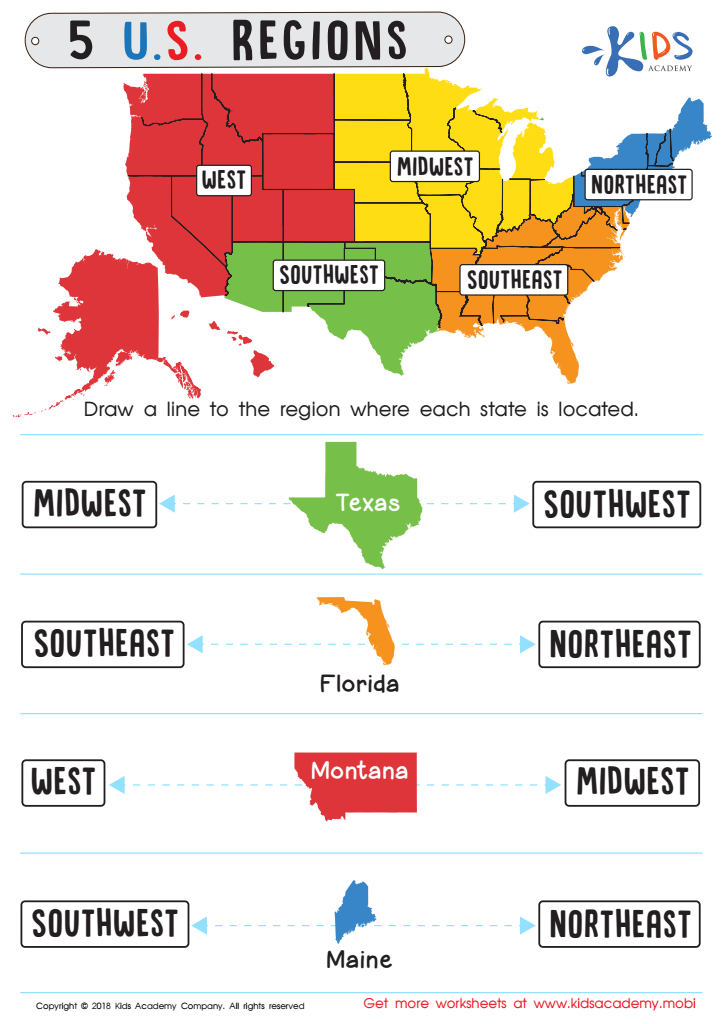
5 U.S. Regions Worksheet
Familiarize students with states & capitals in your country before starting. Look at the map and ask kids to name some states. Then have them draw a line to the region each state is located in. This'll help them recognize the different places and make the exercise easier.
5 U.S. Regions Worksheet
Worksheet
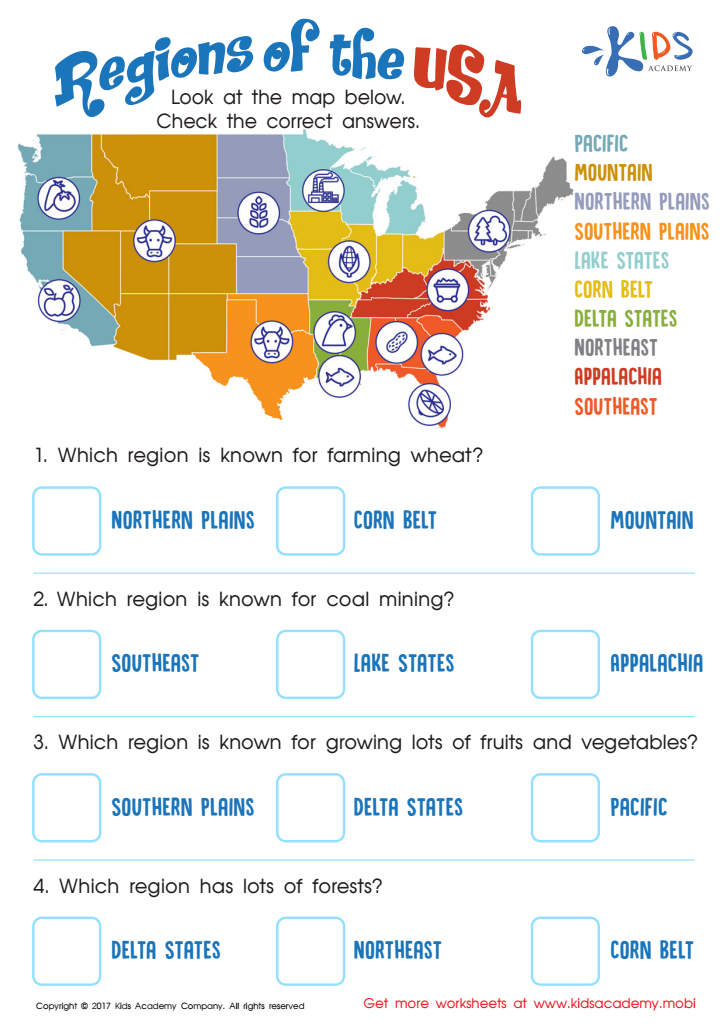
Regions of the USA Worksheet
Help your child explore the US with this regions of the United States worksheet! They'll learn about the diverse cultures, climates and purposes of each region. Make geography and US history fun with this educational exercise!
Regions of the USA Worksheet
Worksheet
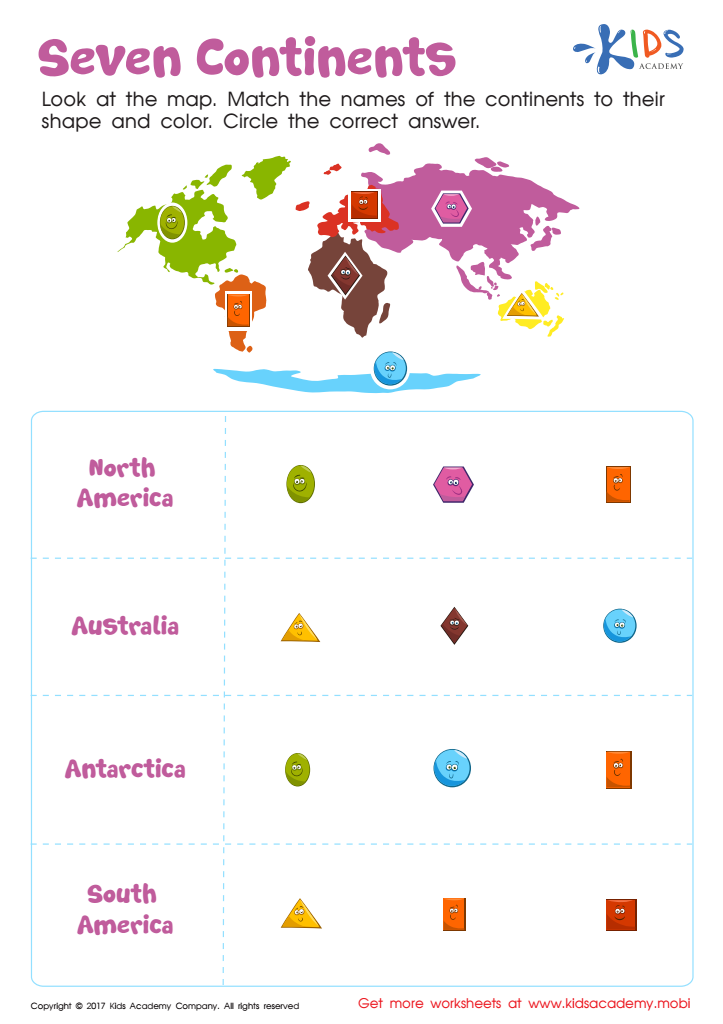
Seven Continents Worksheet
Geography teaches kids about the world! Encourage exploration with a seven continents worksheet - it'll help your child identify each continent using fun shapes.
Seven Continents Worksheet
Worksheet
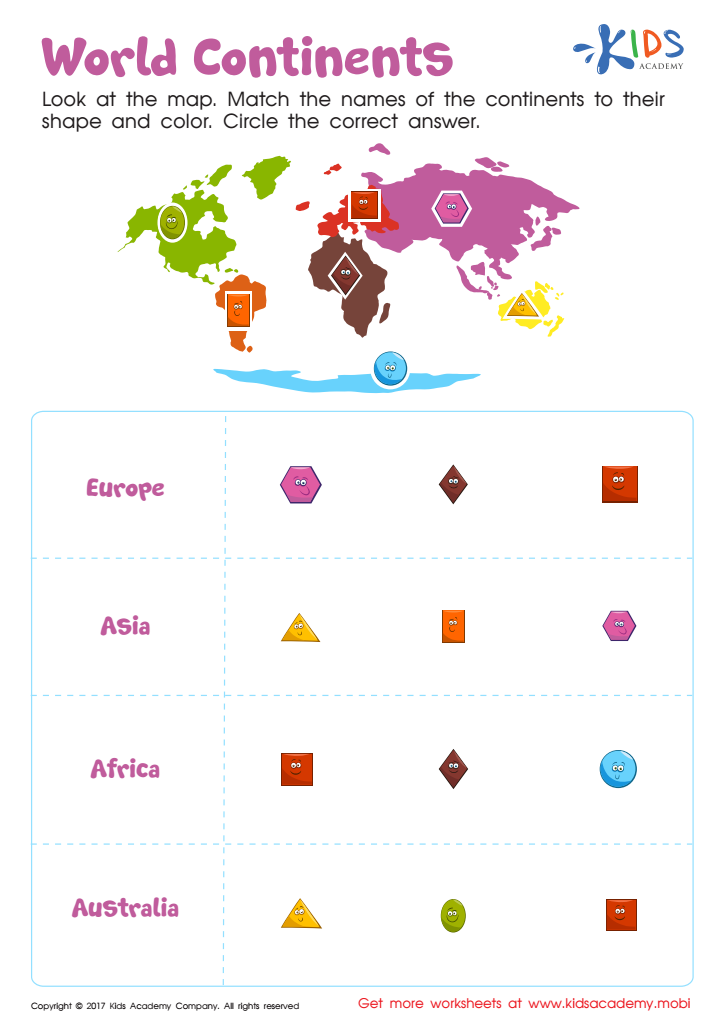
World Continents Worksheet
Help expand your child's knowledge of the world with this fun worksheet! It features goofy shapes to identify each continent, making learning the seven continents fun and memorable.
World Continents Worksheet
Worksheet
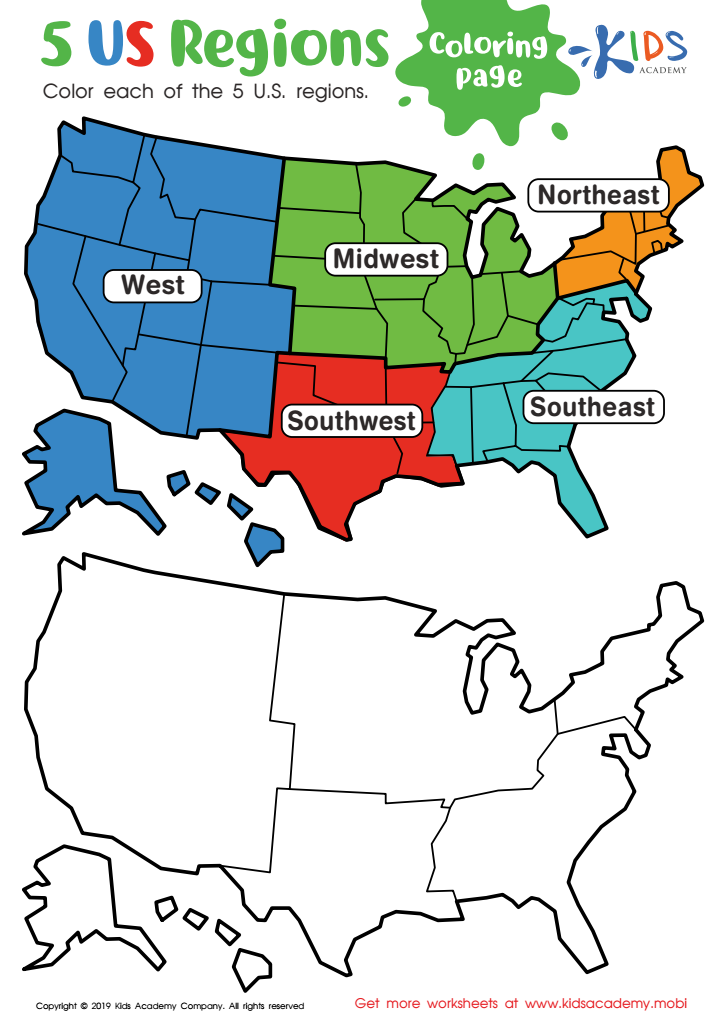
US Regions Coloring Page Worksheet
Our great nation is split into five distinct regions: Southeast, Southwest, West, Midwest, and Northeast. Each is known for its own special offerings and states. Let your kids have fun learning about the regions with a coloring activity! It's a great way for them to understand where each region stands on the map.
Download (PDF)
 Assign to My Students
Assign to My Students
US Regions Coloring Page Worksheet
Worksheet
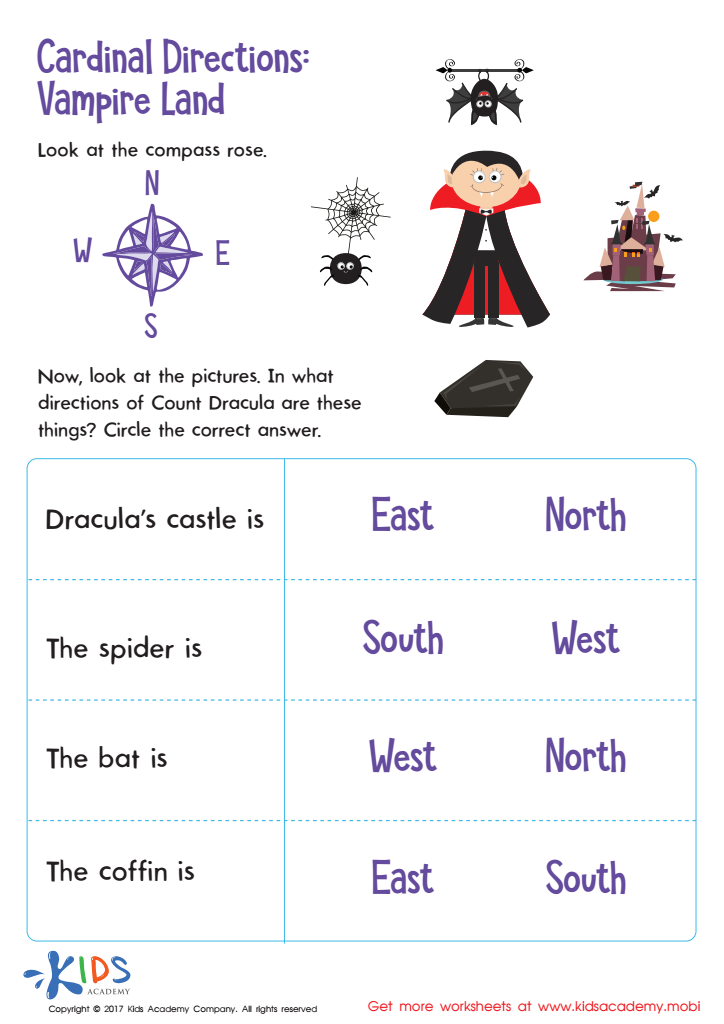
Cardinal Directions Printable
Perfect for fall, let's go to Transylvania with Count Dracula to learn cardinal directions. This printable worksheet introduces the compass rose and offers valuable practice. Kids will love the fun vampire theme! Get them motivated and help them discover the world with this spooky worksheet.
Cardinal Directions Printable
Worksheet
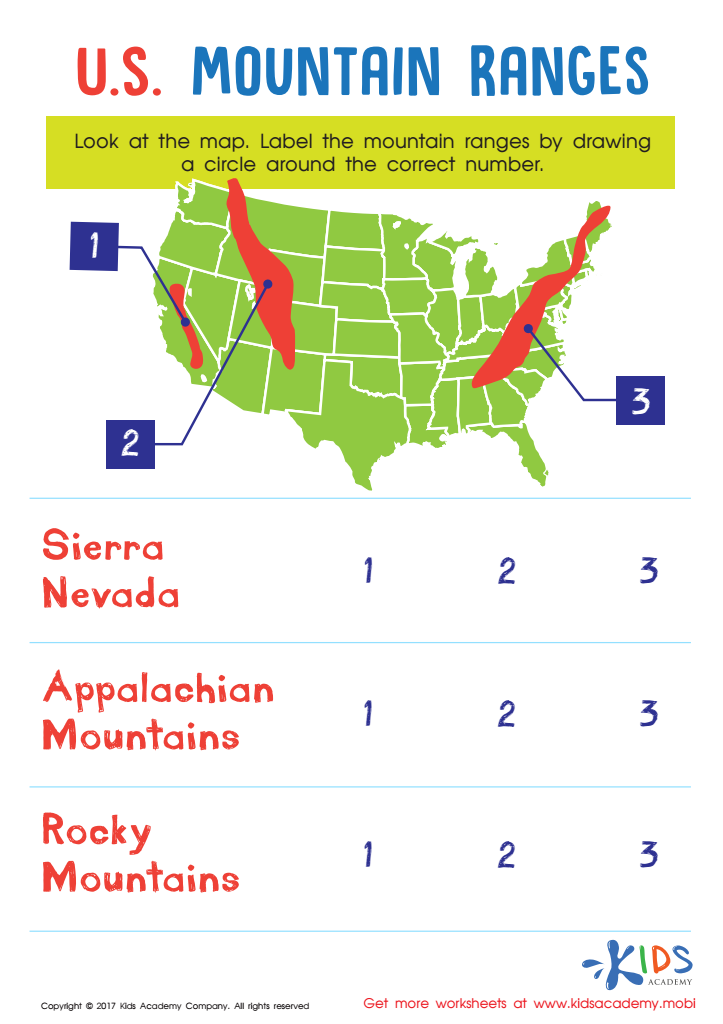
US Mountain Ranges Worksheet
Introduce your little one to the U.S. with this Mountain Ranges worksheet! It'll help them recognize the major ranges and locate them on a map, sharpening their map skills.
US Mountain Ranges Worksheet
Worksheet
Join Kids Academy for Free
Who is primarily going to use this learning content?






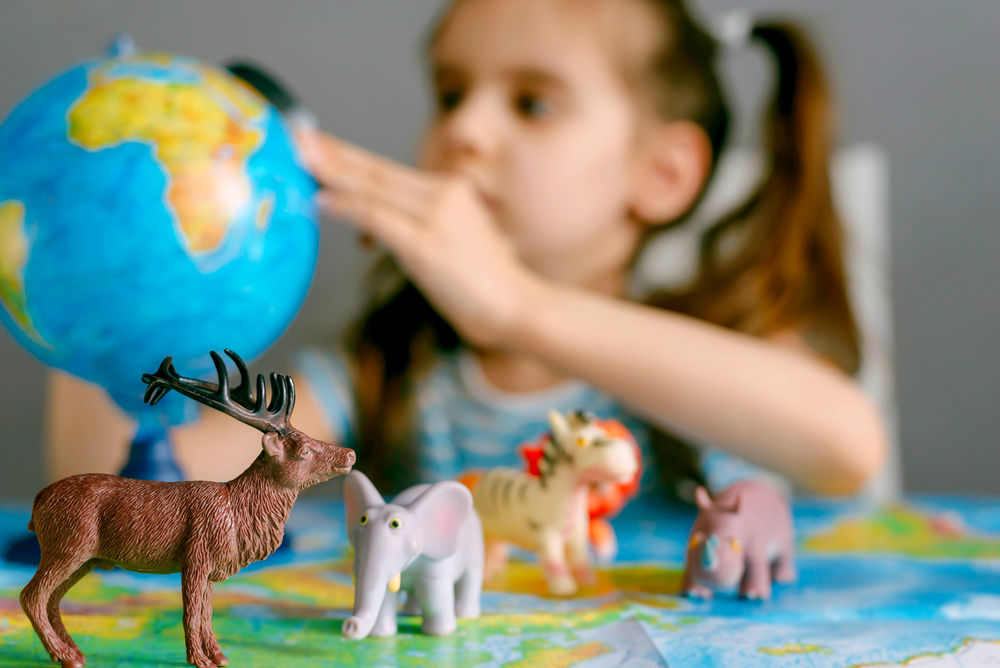
Map reading skills are crucial for children aged 3-7 as they lay the foundation for geographical understanding and spatial awareness. At this formative stage, children are naturally curious about their world, and introducing them to map reading nurtures this curiosity. By learning to interpret maps, children enhance their critical thinking and problem-solving abilities. They develop essential navigation skills that help them make sense of their environment, fostering independence and confidence.
Additionally, map reading in early childhood fosters social studies knowledge, allowing children to understand their community, local geography, and broader world concepts. Parents and teachers can use simple, engaging activities like treasure maps or community layouts to make learning fun. These activities encourage collaboration and communication skills among peers.
Involving parents, educators can also create a deeper connection between home and school. When caregivers participate in map-related activities, they reinforce classroom lessons, creating a cohesive learning experience. Ultimately, developing these skills prepares children for future academic success and instills a lifelong sense of place and belonging within their communities and beyond. By nurturing map reading skills, parents and teachers equip young learners with valuable tools for exploration, learning, and understanding their ever-changing world.








