Critical Thinking Governance and Civics Worksheets for Ages 3-7
3 filtered results
Difficulty Level
Grade
Age
-
From - To
Subject
Activity
Standards
Enhance your child's understanding of governance and civics with our Critical Thinking Governance and Civics Worksheets designed for ages 3-7. These engaging activities foster early critical thinking skills while introducing essential social studies concepts. Through fun and educational exercises, your young learner will explore topics such as community roles, basic rights, and responsibilities. Our printable worksheets not only support the development of logical reasoning but also make learning about civics enjoyable. Perfect for at-home enrichment or classroom use, these worksheets are tailored to spark curiosity and encourage active participation in young minds. Start your child's journey into critical thinking and civics today!
Favorites
With answer key
Interactive
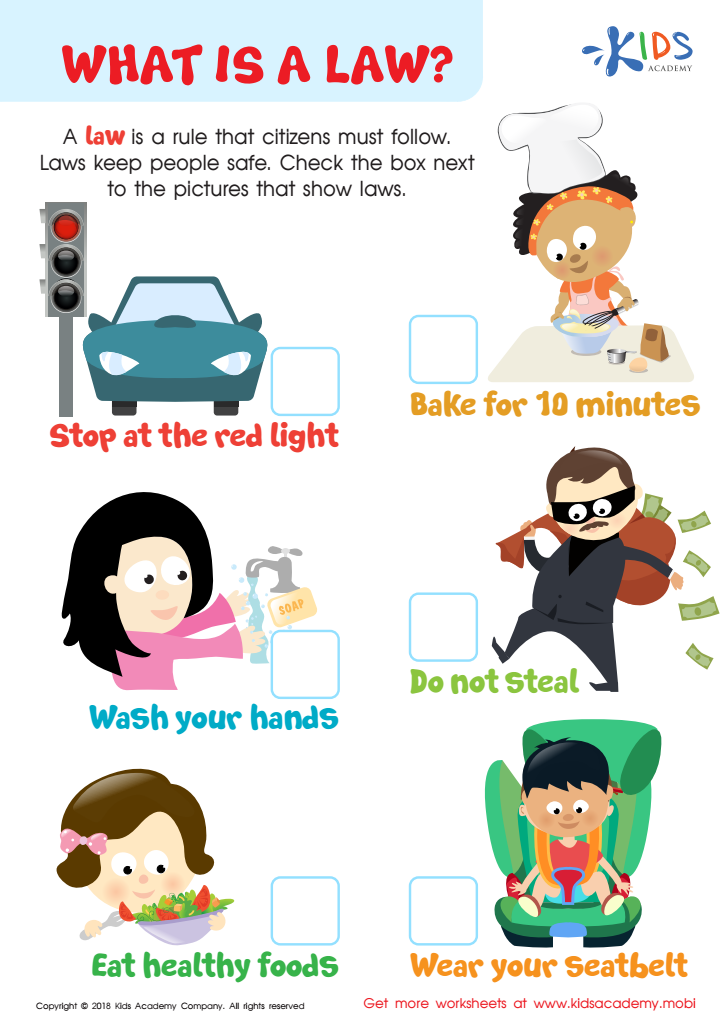
What is a Law? Worksheet
Encourage your students to think about the laws they abide by - at home, school, and the playground. Explain the importance of laws in keeping us safe, then ask them to check the box next to the pictures depicting different laws in a worksheet.
 Assign to My Students
What is a Law? Worksheet
Worksheet
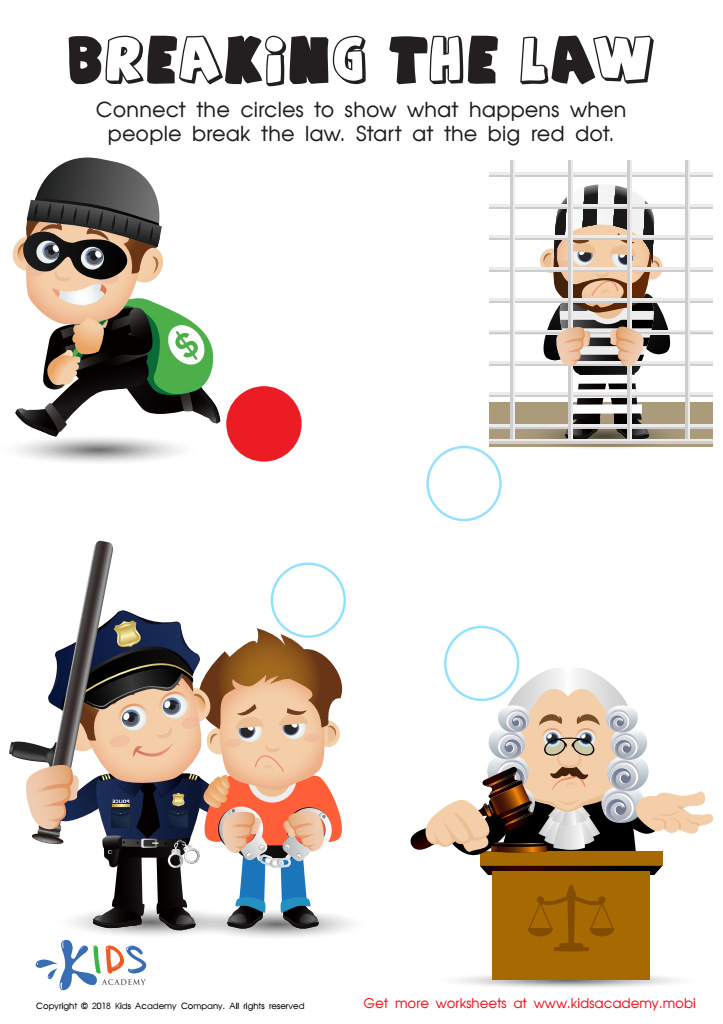
Breaking the Law Worksheet
Explain to your child why people go to jail. Show them this worksheet; it illustrates the stages a criminal goes through from breaking the law to receiving their punishment. Guide them in connecting the circles from the big red dot. Finish with a discussion on why it's important to follow the law.
Breaking the Law Worksheet
Worksheet
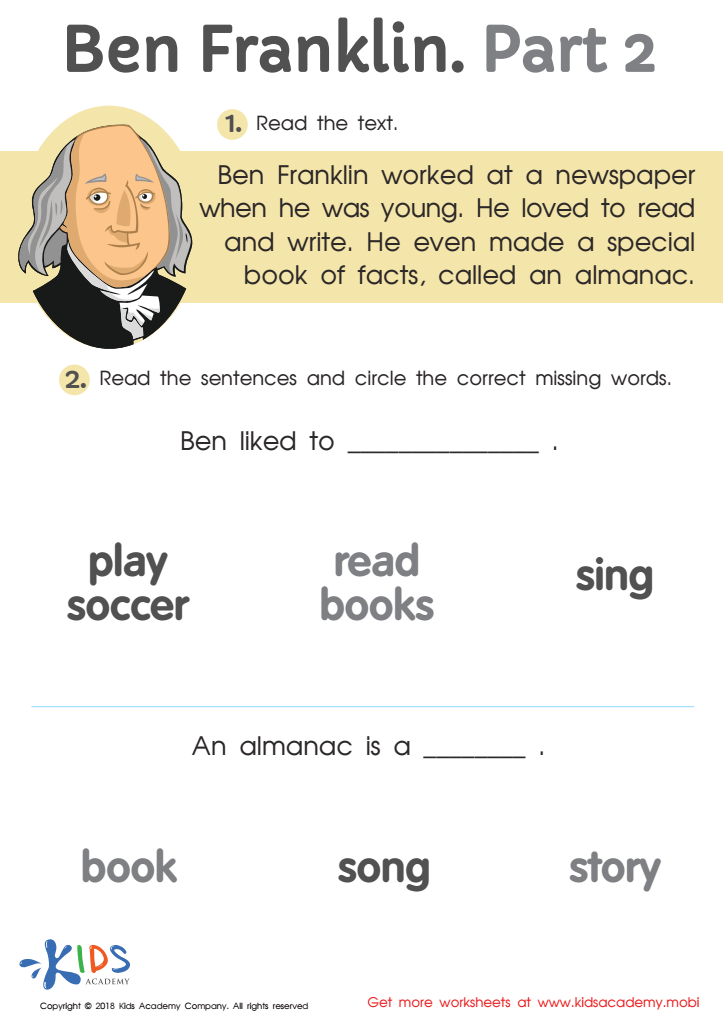
Ben Franklin Part 2 Worksheet
History is filled with great figures, like Benjamin Franklin. Let your kids in on the legacy by introducing them to the founder of the US fire department, diplomat, and inventor. Then, use a worksheet to have them fill in the blanks with the correct word to teach them more. Read the text, then read the sentences and have them circle the missing word.
Ben Franklin Part 2 Worksheet
Worksheet
Join Kids Academy for Free
Who is primarily going to use this learning content?


Parents and teachers play crucial roles in shaping young minds, making their involvement in critical thinking, governance, and civics essential. These foundational years (ages 3-7) are when children's cognitive and moral frameworks begin to take shape. Teaching them critical thinking skills fosters an independent and analytical mindset, enabling them to question, understand, and solve problems effectively. For instance, children learn to evaluate causes and consequences, an ability that underlies all learning processes—from questioning “why” something works (science) to considering “what happened next” in a story (literature).
Civics education at an early age instills fundamental values such as fairness, responsibility, and a sense of community. By introducing concepts of governance—like rules, leadership, and cooperation—children grasp the basics of civic society and their role within it. This helps them understand that their actions affect others and that they are part of broader systems, whether it’s classroom dynamics or society at large. Emotional intelligence and empathy, which grow from these activities, are crucial for healthy, cooperative interactions.
Together, these teachings equip children not just to contribute meaningfully to their immediate environments, but also to develop into well-rounded, thoughtful citizens of the world. By investing in these areas, parents and teachers ensure children grow up capable of making informed, ethical decisions in an increasingly complex world.