Understanding laws Governance and Civics Worksheets for Ages 3-7
3 filtered results
Difficulty Level
Grade
Age
-
From - To
Subject
Activity
Standards
Explore our engaging "Understanding Laws: Governance and Civics Worksheets for Ages 3-7" to introduce young learners to the basics of rules, laws, and community roles. Our specially crafted worksheets promote early social studies skills, fostering a sense of responsibility and citizenship. Through fun, age-appropriate activities, children learn the importance of rules, how laws are made, and the roles of community helpers. Perfect for parents and educators, these printable resources are designed to support and enrich early education, making complex concepts accessible and enjoyable for young minds. Empower your child's understanding of governance and civics in a playful, educational way!
Favorites
With answer key
Interactive
What is a Law? Worksheet
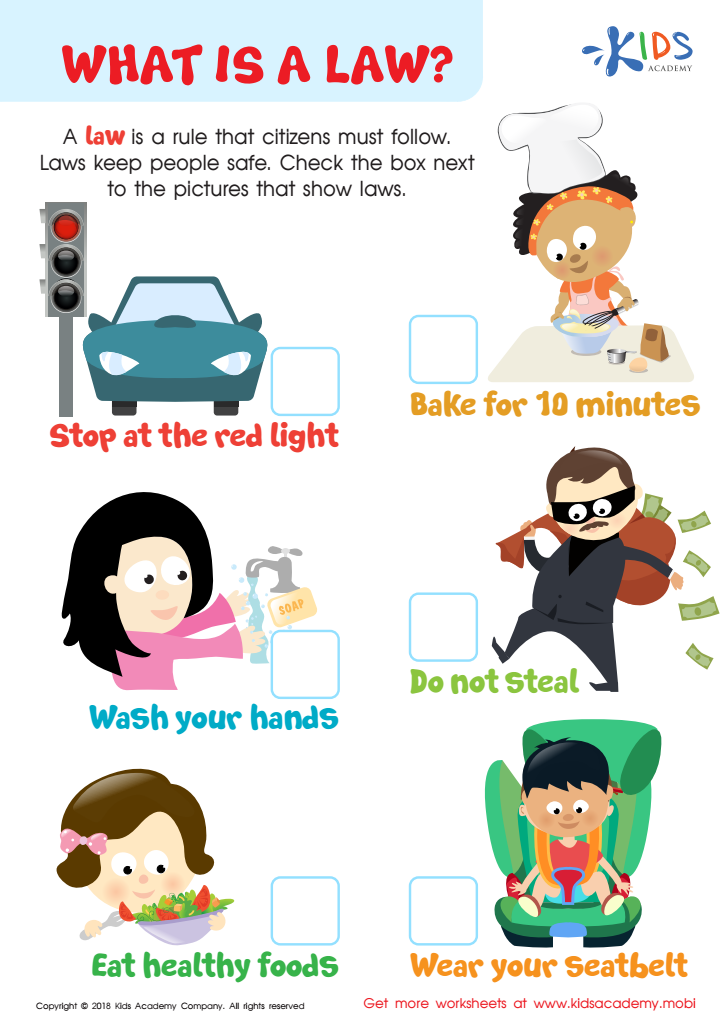
Encourage your students to think about the laws they abide by - at home, school, and the playground. Explain the importance of laws in keeping us safe, then ask them to check the box next to the pictures depicting different laws in a worksheet.
 Assign to My Students
What is a Law? Worksheet
Worksheet
Breaking the Law Worksheet
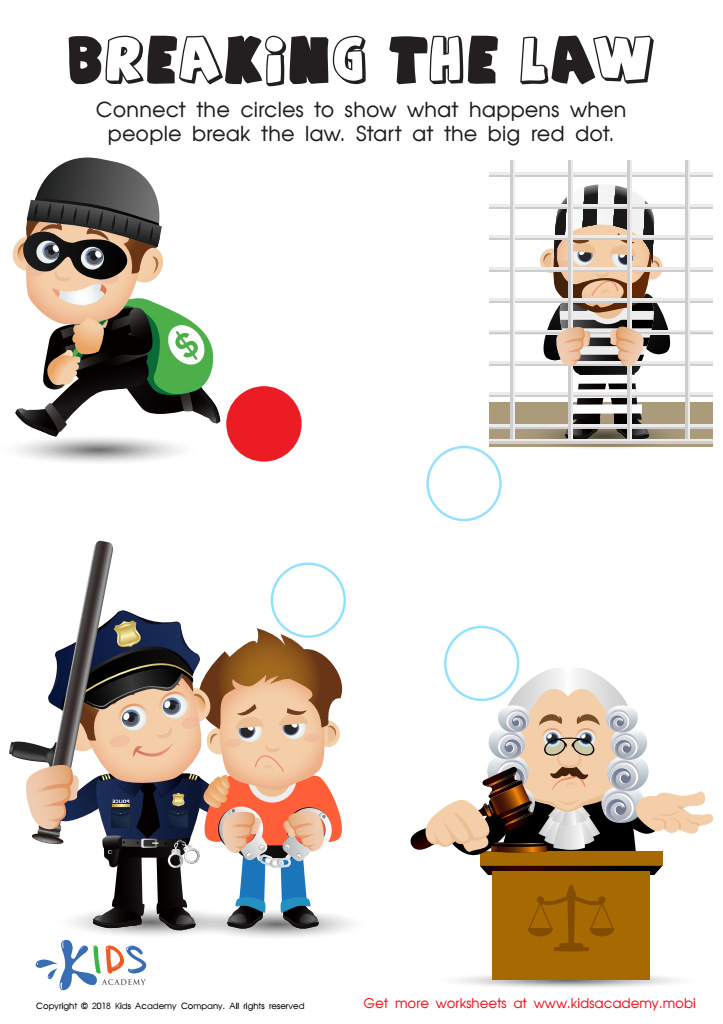
Explain to your child why people go to jail. Show them this worksheet; it illustrates the stages a criminal goes through from breaking the law to receiving their punishment. Guide them in connecting the circles from the big red dot. Finish with a discussion on why it's important to follow the law.
Breaking the Law Worksheet
Worksheet
Follow the Law Worksheet
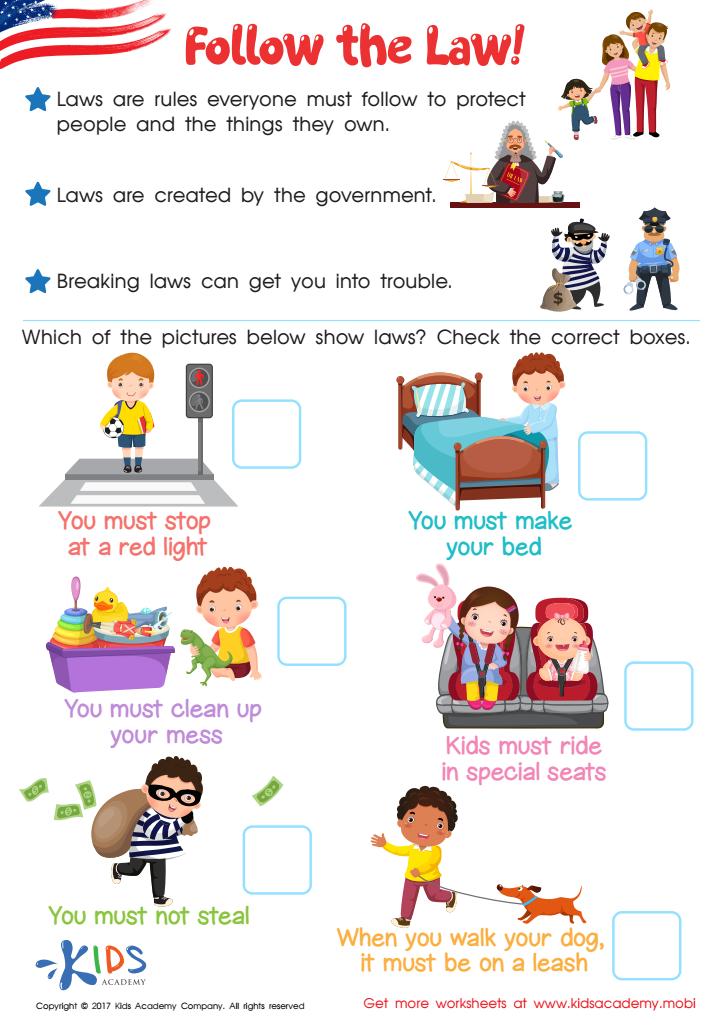
Kids should understand the difference between laws and household rules. Worksheets for 2nd grade review these differences, teaching kids more about life in their community. Breaking the law can lead to harsh consequences, so understanding the rules of home and public spaces is essential.
Follow the Law Worksheet
Worksheet
Join Kids Academy for Free
Who is primarily going to use this learning content?


Understanding laws, governance, and civics at ages 3-7 sets the foundation for a lifetime of informed citizenship. In early childhood, children are incredibly impressionable and open to new concepts. By introducing basic principles of how societies operate, rules exist, and why laws are important, we help nurture a sense of morality, responsibility, and social justice from an early age.
Embedding these concepts in young kids’ minds fosters respect for laws and appreciation for democratic principles. For instance, explaining why we follow traffic signals or take turns can be their first lesson in understanding the importance of societal norms and cooperation. Additionally, this helps develop their critical thinking skills as they learn to question why rules exist and how they benefit the community.
Moreover, parents and teachers play vital roles in modeling respect for laws and governance, making them tangible and relevant. Embedding these lessons early emphasizes the value of participating in and contributing to the community positively.
Early exposure to civics education prepares children for more complex topics they will encounter later in life, such as citizenship, justice, and government structure. Engaging children with age-appropriate discussions and activities empowers them to be empathetic, fair, and proactive members of society, leading to a well-rounded, conscientious future citizenry.