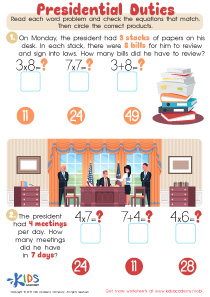
Unlock the world of citizenship for young learners aged 3-7 with our engaging Understanding Citizenship Social Studies Worksheets! Designed to foster awareness and appreciation of community, these worksheets help children explore the concepts of rights, responsibilities, and belonging in a fun and interactive way. Each activity encourages critical thinking and nurtures essential social skills, making it easier for kids to grasp their role within families and communities. Perfect for teachers and parents alike, our resources not only support early education but also instill the values of respect and kindness. Dive into a journey of discovery and empowerment today!

Check out this FREE Trial Lesson on Social Studies for age 3-7!

Citizenship

Favorites
With answer key
Interactive
  • 3-7
  • Understanding citizenship
  • Social Studies
What is a Citizen? Worksheet

What is a Citizen? Worksheet

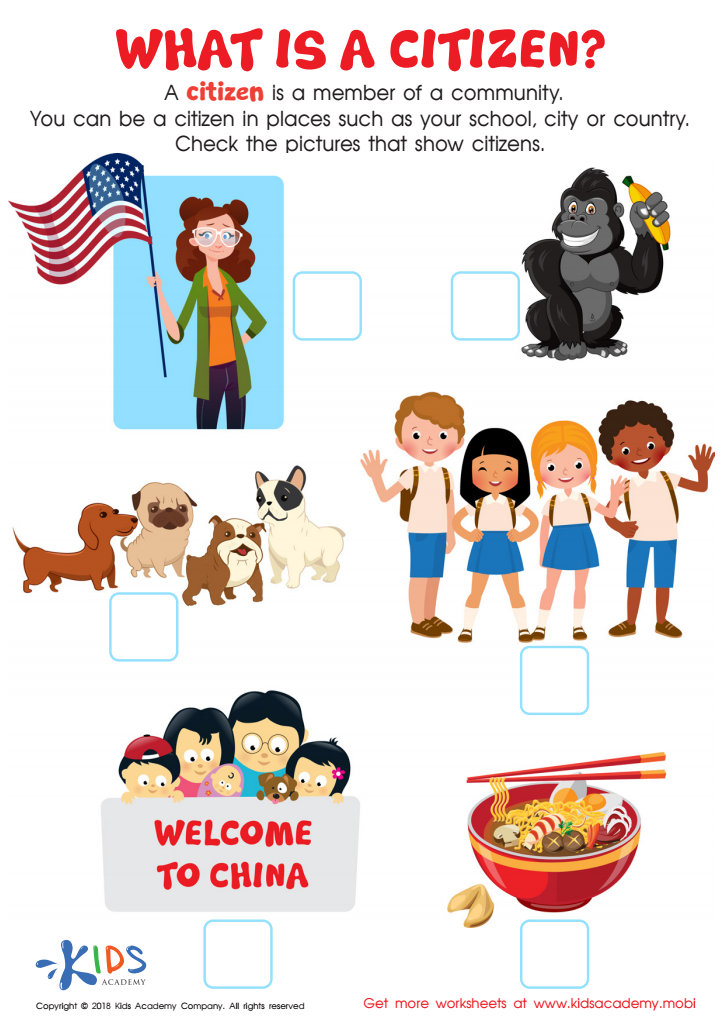
Do your students know who a citizen is? Use this worksheet to teach them: a citizen is a member of a community, such as your school, city or country. Look at the pictures in the pdf with your students. Ask them to identify who or what is in the pictures, and help them check which are citizens.
What is a Citizen? Worksheet
Worksheet
How to Be a Good Citizen Worksheet

Being a Good Citizen Printable

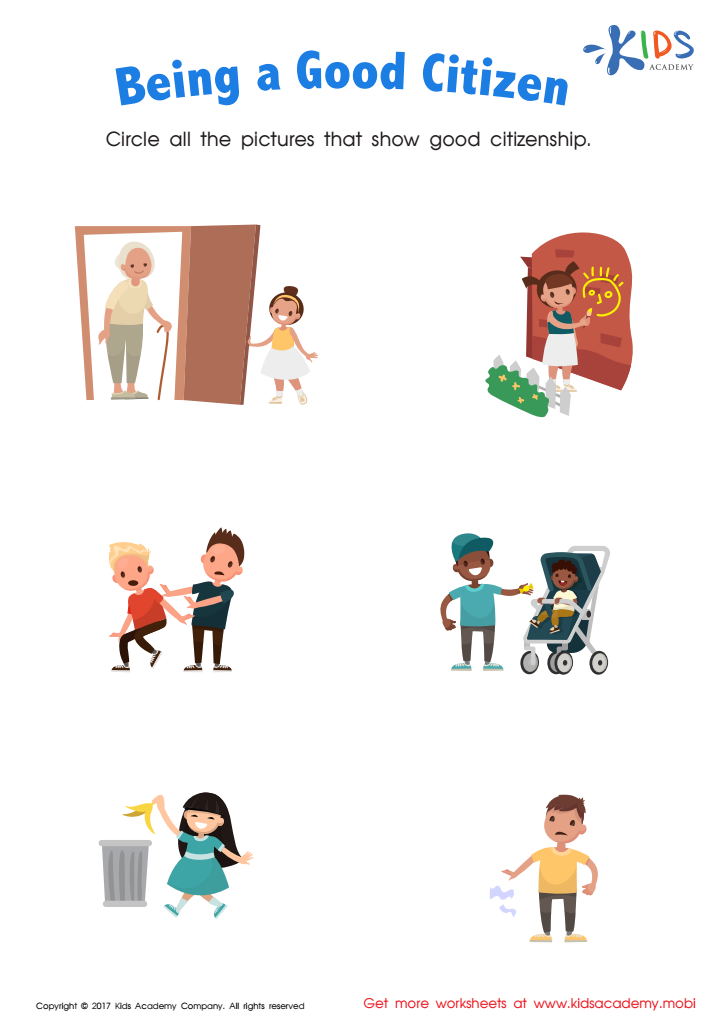
Help your child learn the importance of being a good citizen with this fun worksheet! It reinforces positive behaviors in the community and teaches essential skills like character. Try it today!
Being a Good Citizen Printable
Worksheet
Finding Good Citizens Worksheet

Finding Good Citizens Worksheet

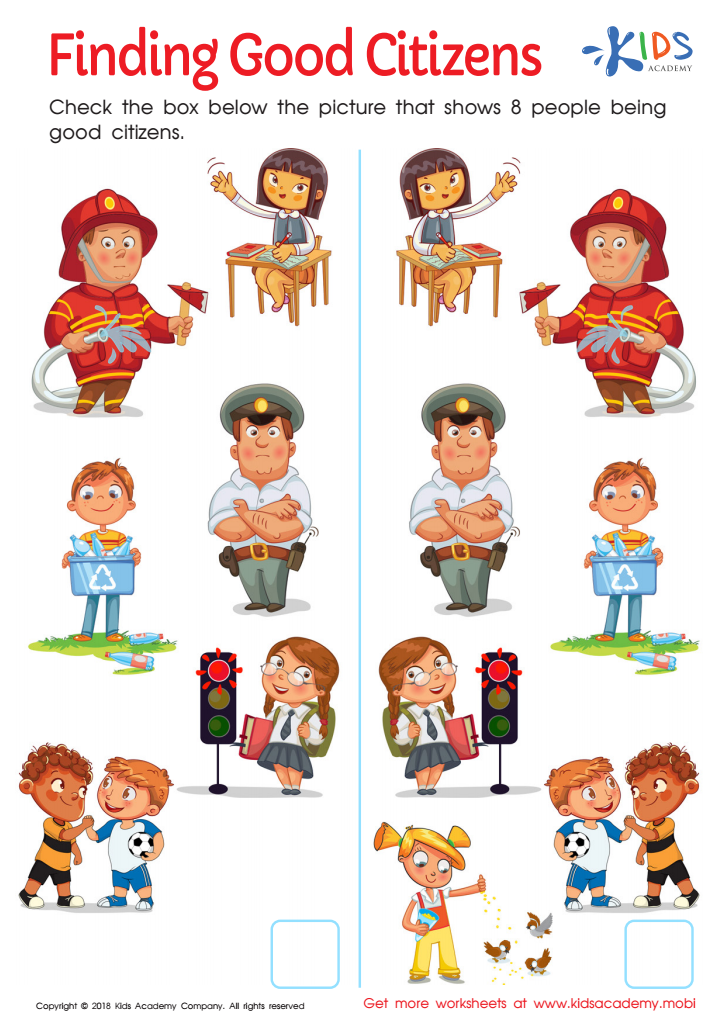
Teach your students what it takes to be a responsible citizen in their community. Test their knowledge by having them identify good citizen acts in pictures. Ask them to check the box showing 8 people being good citizens. Challenge their comprehension and make sure they understand the importance of being a good citizen.
Finding Good Citizens Worksheet
Worksheet
What Makes a Good Citizen? Worksheet

What Makes a Good Citizen? Worksheet

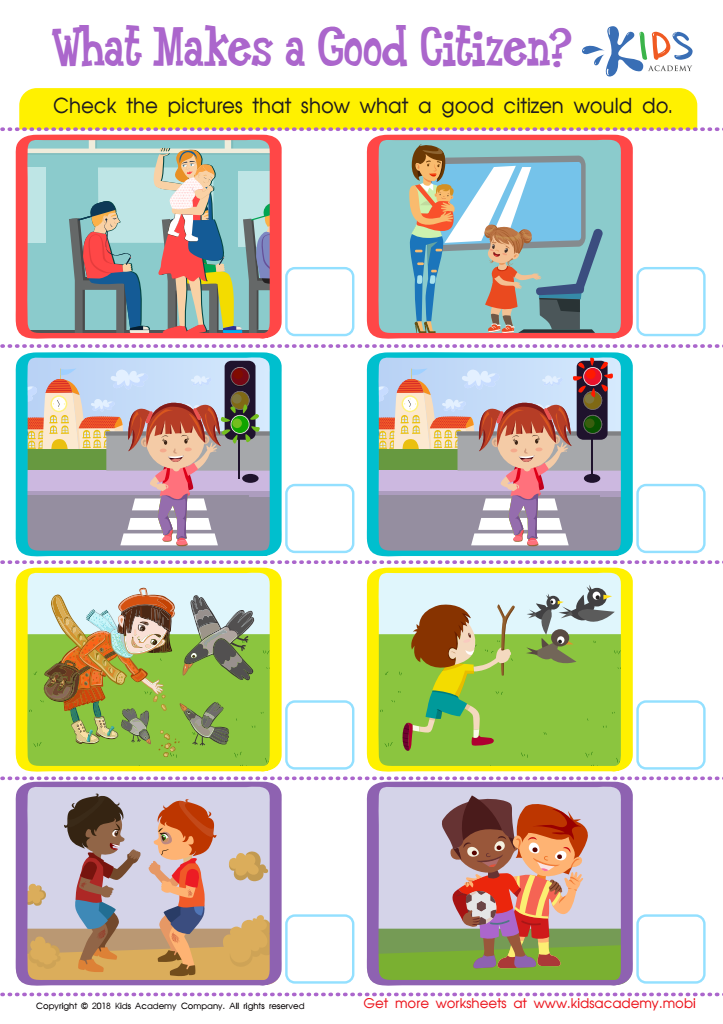
Ask your children to list some habits of a good citizen. Go through the worksheet and ask them if any of the pictures show good habits. Check the boxes of the actions that a good citizen would do to help your students understand what makes a good and bad citizen.
What Makes a Good Citizen? Worksheet
Worksheet
Good Citizens Award! Worksheet

Good Citizens Award! Worksheet

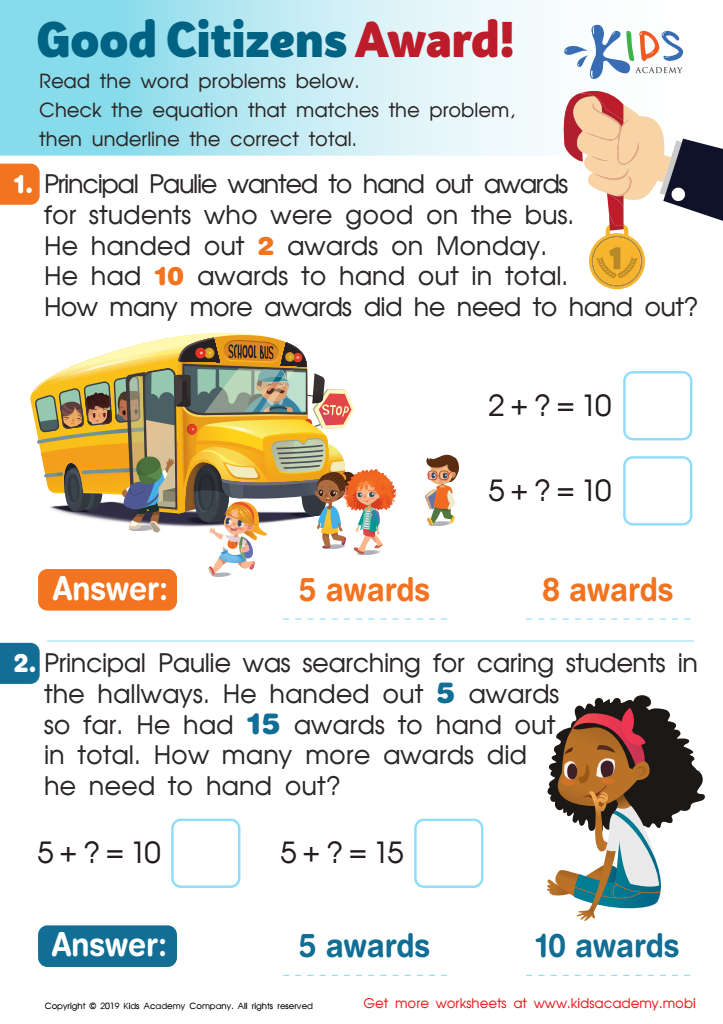
A citizen is a person who resides in a certain area and is granted legal rights and privileges. Becoming a citizen can be achieved in various ways, most commonly through birth or marriage. Good citizens honor their nation's laws and act responsibly. Ask your students to share examples of good citizenship. Have them read the word problem and choose the equation that yields the right answer, then underline it.
Good Citizens Award! Worksheet
Worksheet
A Good School Citizen Worksheet


A Good School Citizen Worksheet

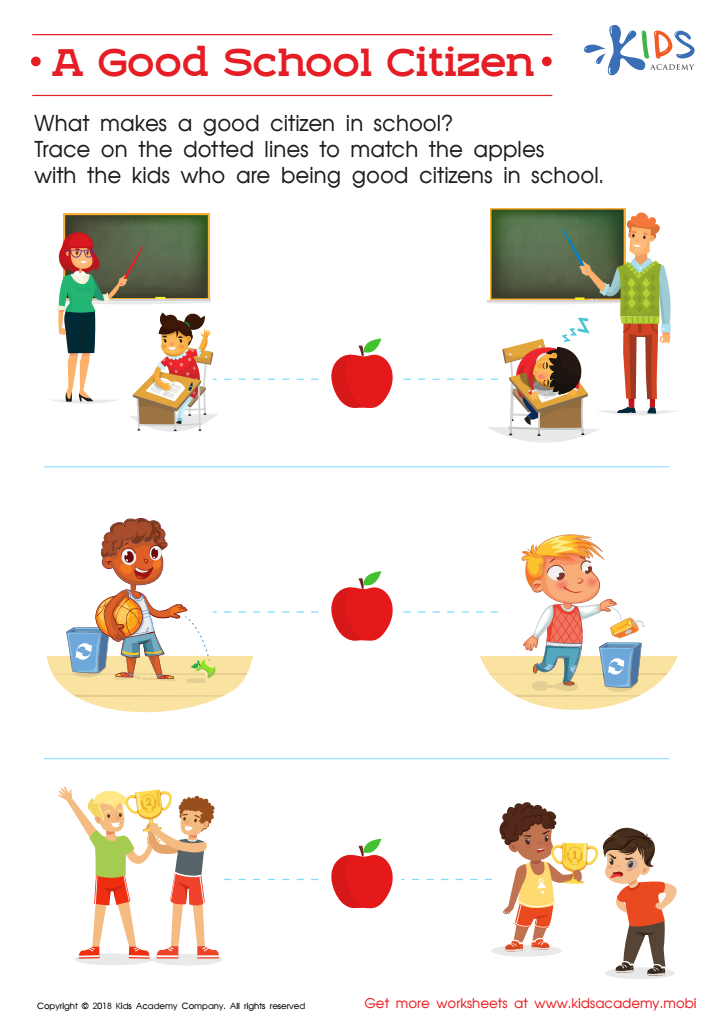
Ask your child to list qualities of a good citizen. Show them the pictures of good citizens in school and explain how they can display those behaviors. Help your kid trace the lines on the worksheet to match the pictures. Encouraging good citizenship in school helps children become upstanding members of their community.
A Good School Citizen Worksheet
Worksheet


Understanding citizenship is vital for children aged 3-7 as it lays the groundwork for their social and emotional development. During these formative years, children are beginning to grasp their roles within their families, communities, and larger society. Teaching citizenship in social studies helps young learners understand concepts like respect, responsibility, empathy, and teamwork, core values that shape their interactions with others.

Parents and teachers should care about this aspect of education because it fosters a sense of belonging and community. Engaging children in dialogues about rules, fairness, and diversity promotes critical thinking and interpersonal skills. For example, through role-playing and storytelling, kids learn to appreciate different perspectives and values, building tolerance and acceptance.

Moreover, early lessons in citizenship can empower children to express themselves and make them feel valued. They learn about their rights and duties and the importance of making positive contributions to their surroundings. Ultimately, teaching citizenship not only nurtures informed, compassionate citizens but also supports families and educators in creating a harmonious environment where children grow into responsible adults who actively engage in society. In a world that values collaboration and understanding, such foundational lessons are crucial.