Grammar skills improvement Grammar Worksheets for Ages 3-7
5 filtered results
-
From - To
Enhance your child's grammar skills with our engaging grammar worksheets designed specifically for ages 3-7. These printable activities are crafted to make learning fun and effective, covering essential topics such as sentence structure, punctuation, and parts of speech. Our worksheets encourage young learners to develop their language abilities through colorful illustrations and interactive exercises that capture their attention. By practicing through play, your child will build a solid foundation in grammar, boosting their writing skills and confidence at an early age. Start your child's journey toward mastering grammar today with our thoughtfully designed resources!
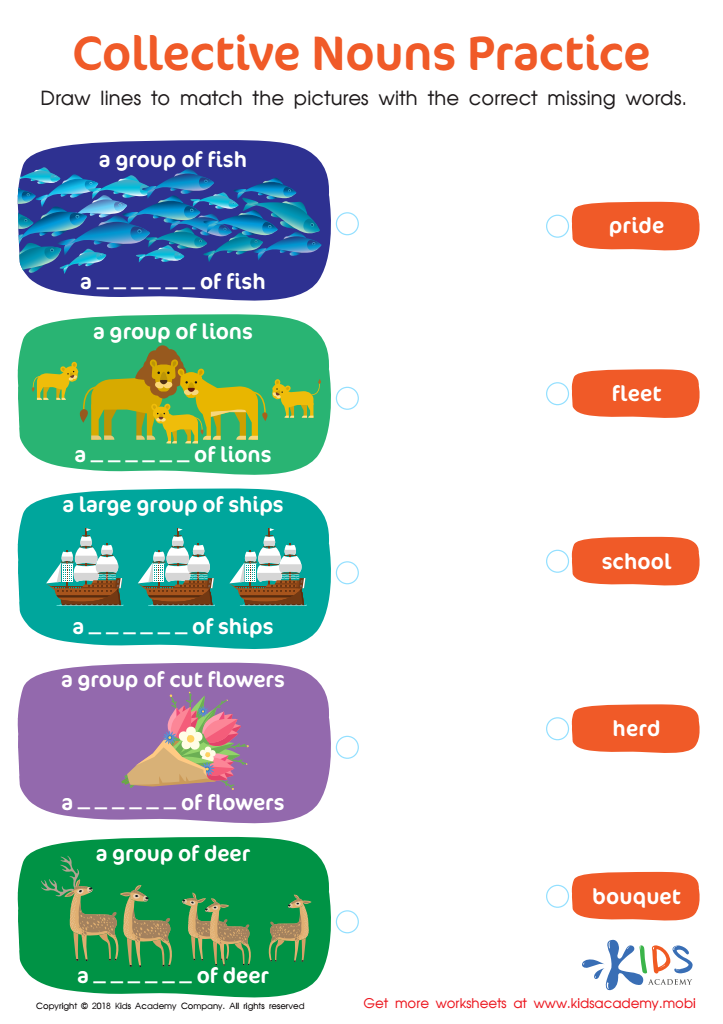
Collective Nouns Practice Worksheet
 Assign to My Students
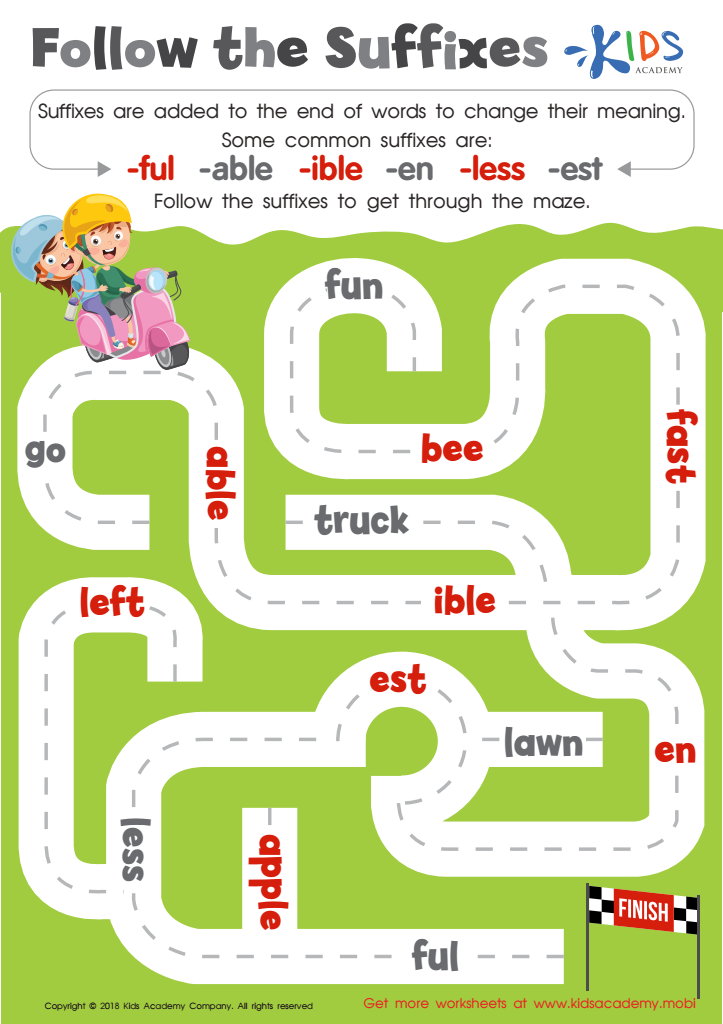
Reading: Follow the Suffixes Worksheet
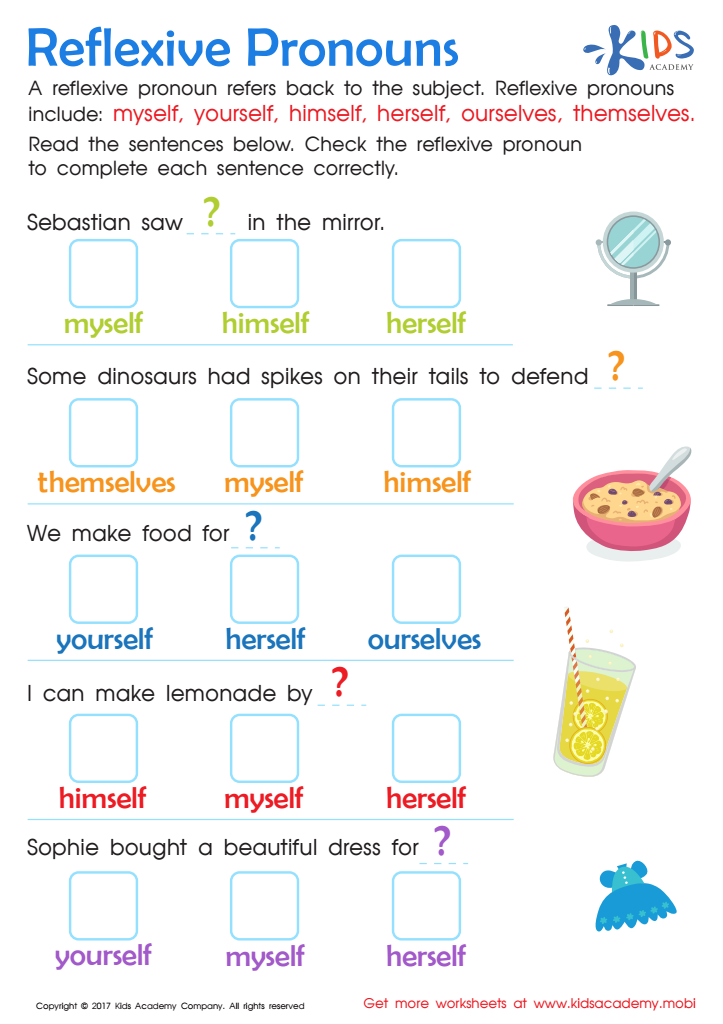
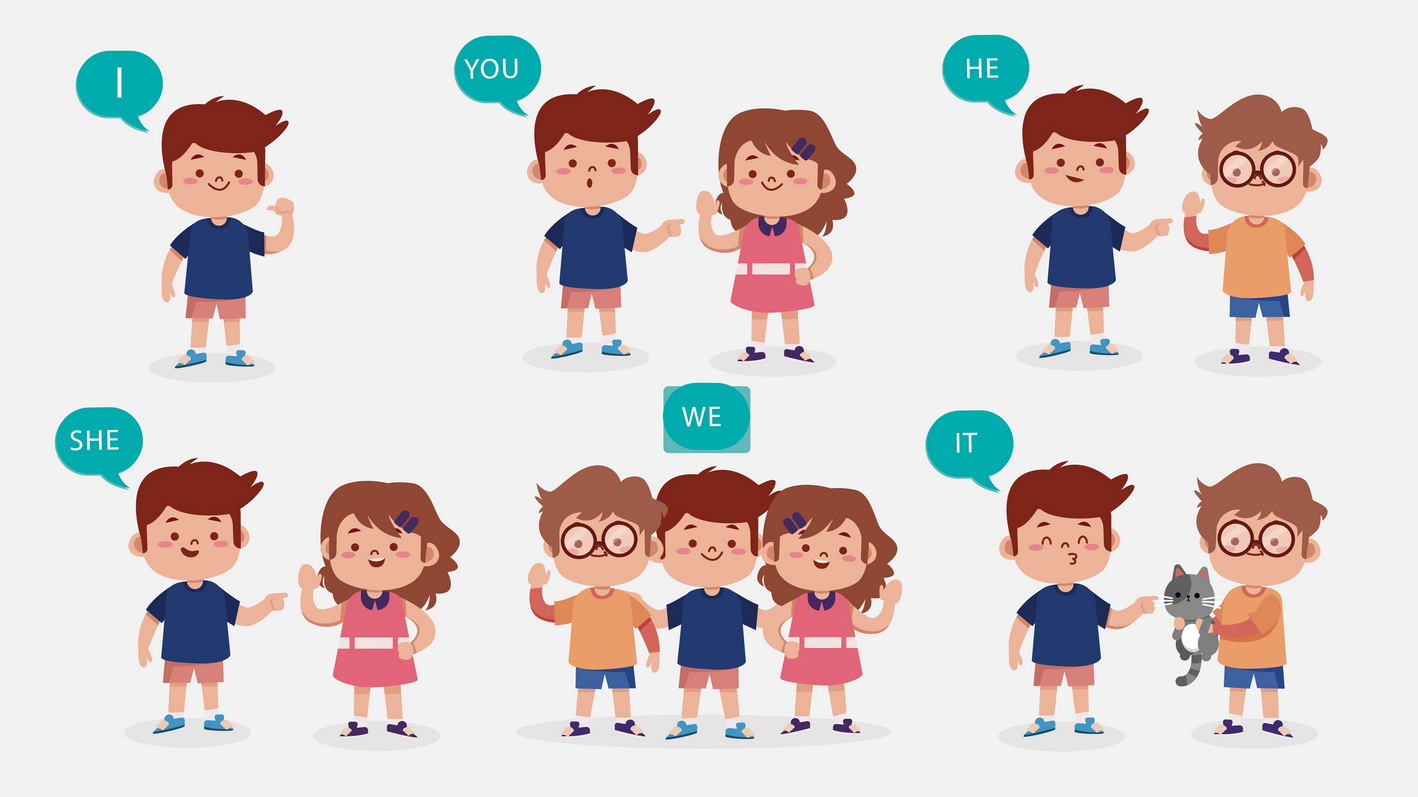
Reflexive Pronouns Worksheet
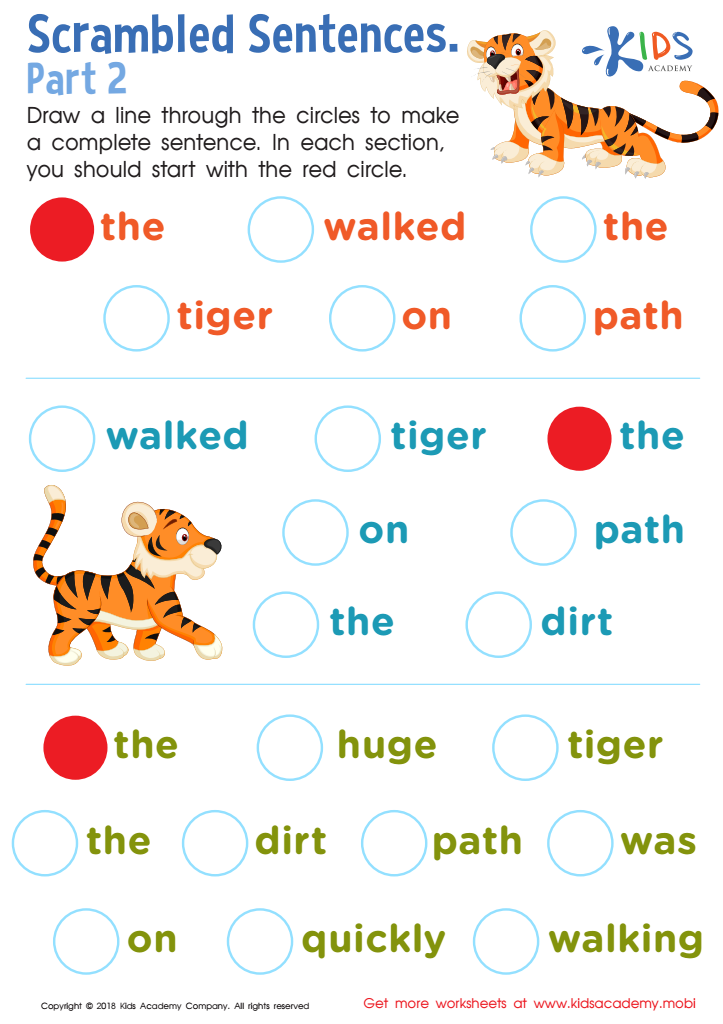
Scrambled Sentences Part 2 Worksheet
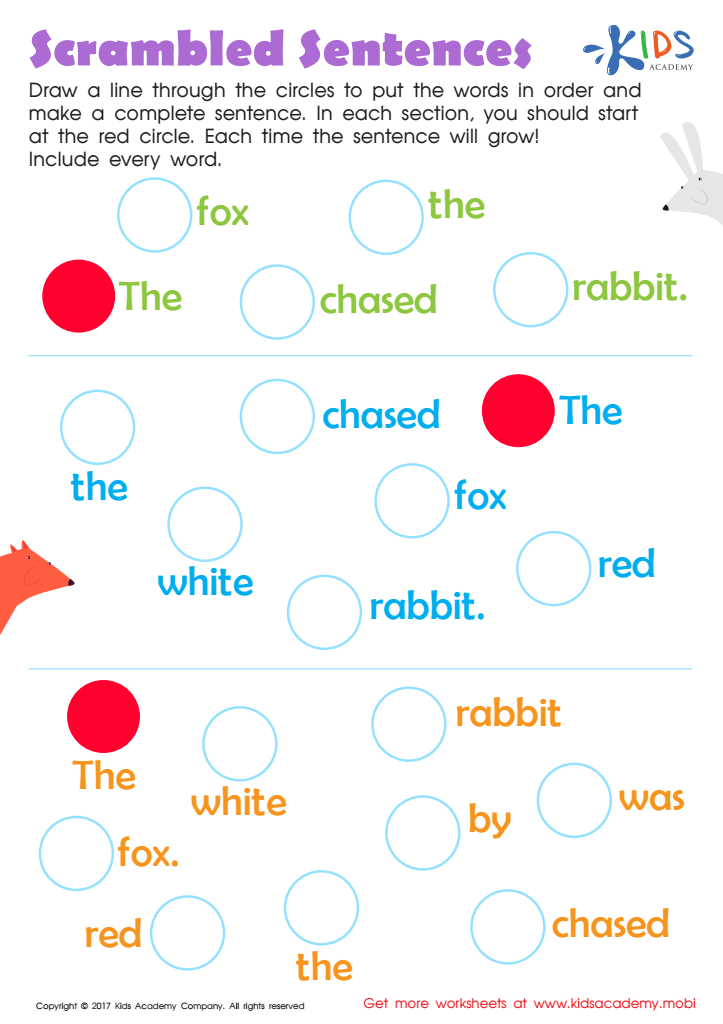
Scrambled Sentences Worksheet



.jpg)


Improving grammar skills in children aged 3-7 is crucial for several reasons. Firstly, this formative stage lays the groundwork for effective communication. Mastering basic grammar helps children express their thoughts and feelings clearly, facilitating successful interactions with peers and adults. As they learn to construct proper sentences, they build confidence in their speaking and writing abilities.
Moreover, grammar proficiency is essential for literacy development. Children who grasp foundational grammar concepts are better equipped to understand reading materials, which enhances their comprehension skills. Early grammar education fosters a love for reading and writing, as kids feel empowered to create and engage with stories.
Additionally, grammatical skills often impact academic performance. Strong grammar knowledge enhances a child's ability to tackle complex subjects in later years, including literacy and language arts, supporting their overall educational journey.
Lastly, grammar is tied to social skills. Proper language use encourages respectful communication and aids in conflict resolution among friends. By prioritizing grammar improvement, parents and teachers provide children with the tools necessary for personal and academic success, ultimately paving the way for lifelong effective communication skills.








