Verb identification Grammar Worksheets for Ages 3-7
6 filtered results
-
From - To
Introducing our engaging Verb Identification Grammar Worksheets designed for children ages 3-7! Perfect for early learners, these fun and educational printables help kids recognize and understand verbs through diverse activities, including tracing, coloring, and simple sentence exercises. By integrating playful illustrations and interactive tasks, our worksheets make grammar enjoyable and accessible. Support your child's language development and boost their confidence in writing with our expertly crafted resources. Ideal for both classroom and at-home learning! Spark an early mastery of verbs and make learning a delightful adventure with our Verb Identification Grammar Worksheets today!
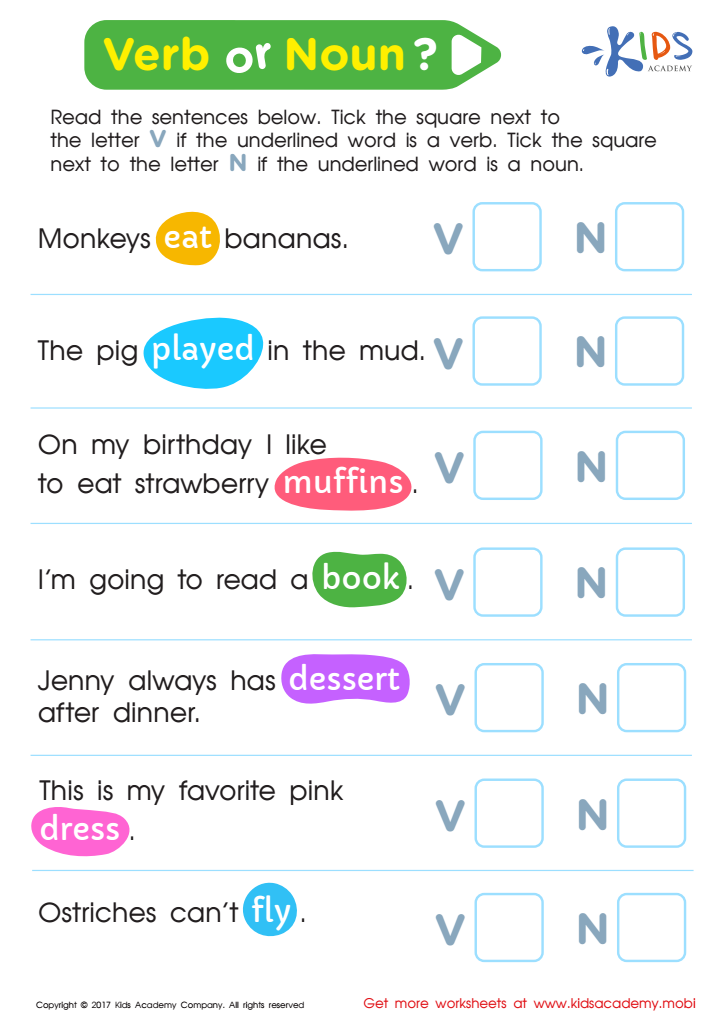
Verb or Noun Worksheet
 Assign to My Students
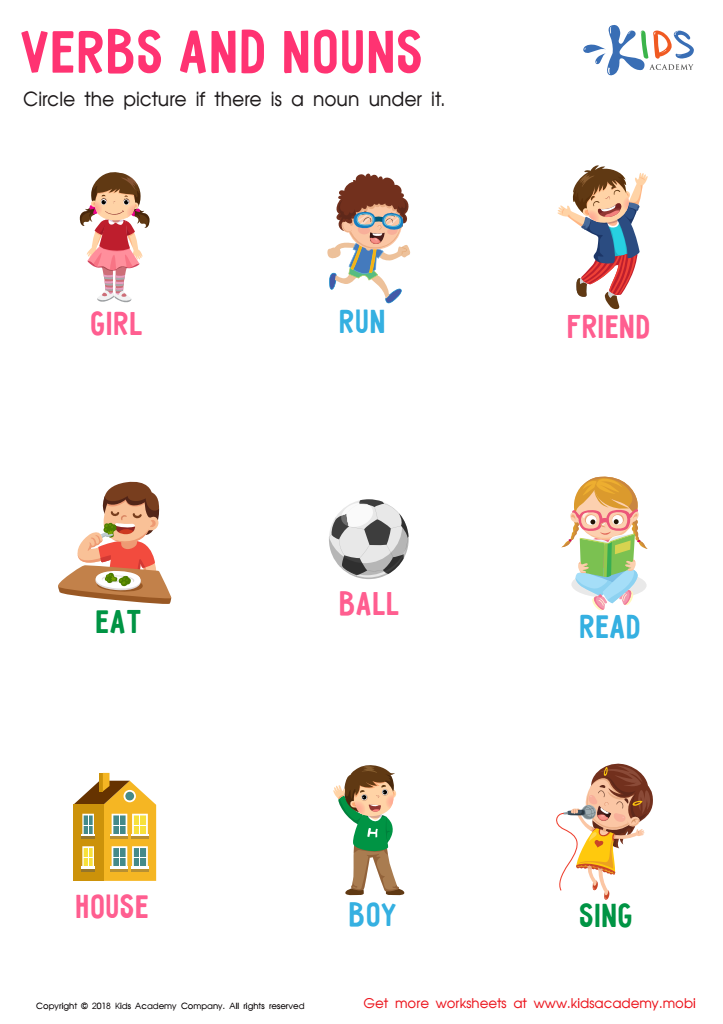
Verbs and Nouns Worksheet
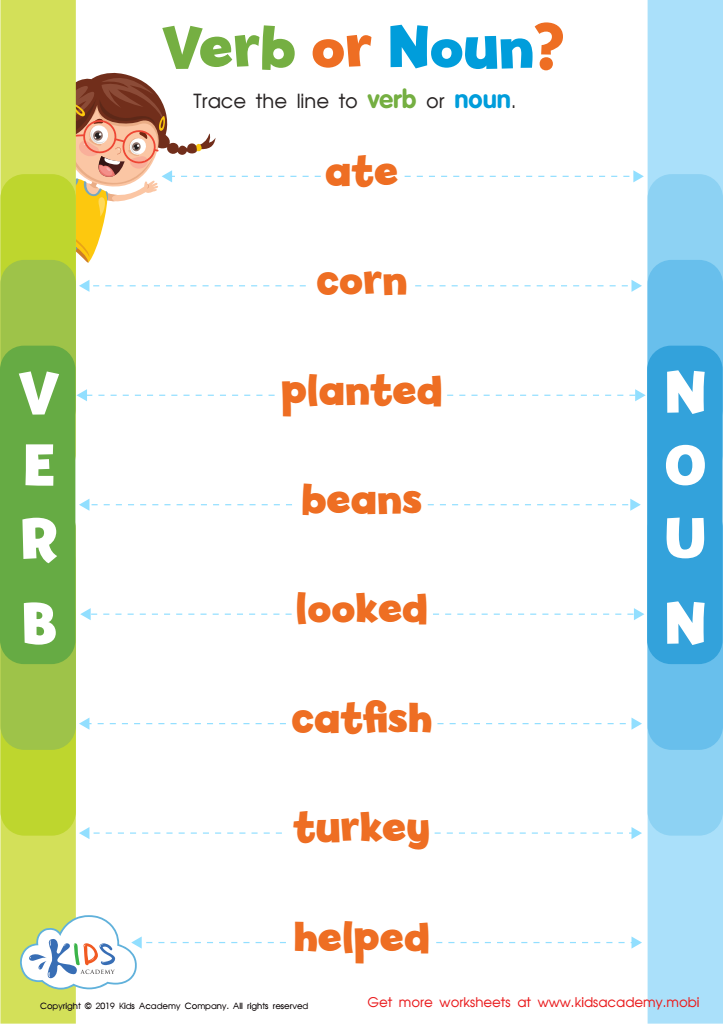
Verb or Noun Worksheet
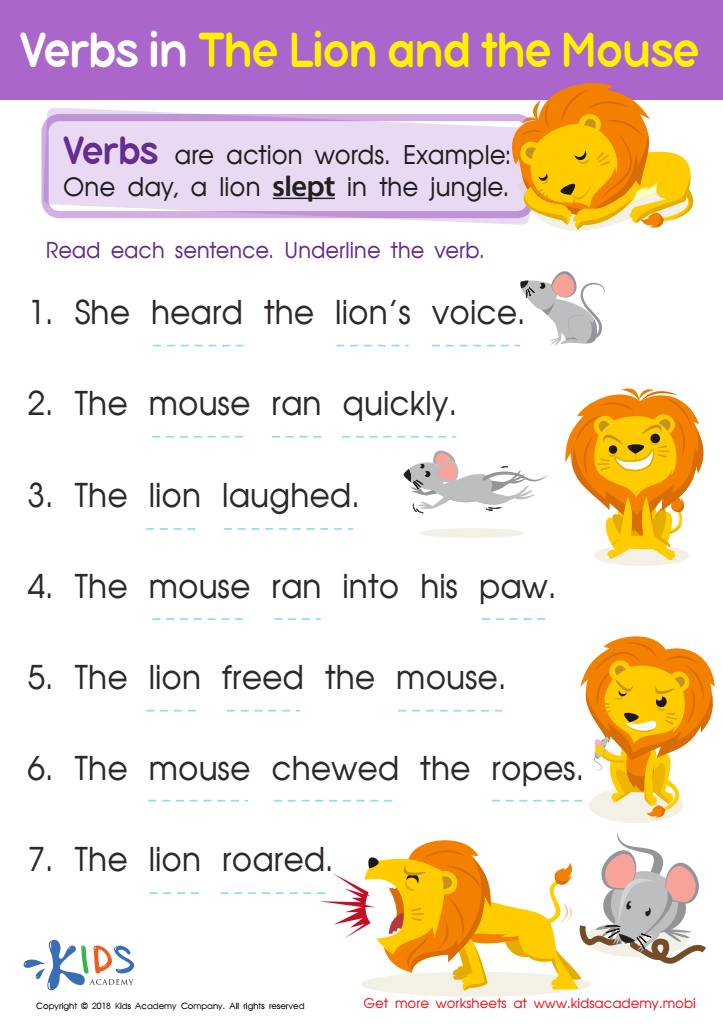
Verbs in The Lion and the Mouse Worksheet
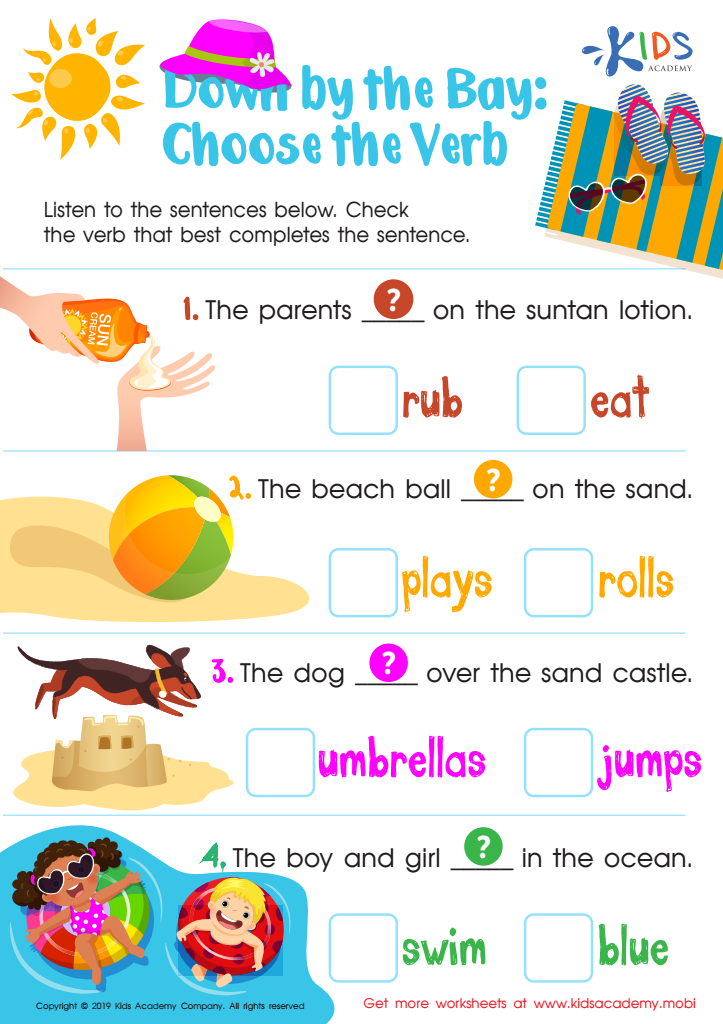
Down by the Bay: Choose the Verb Worksheet
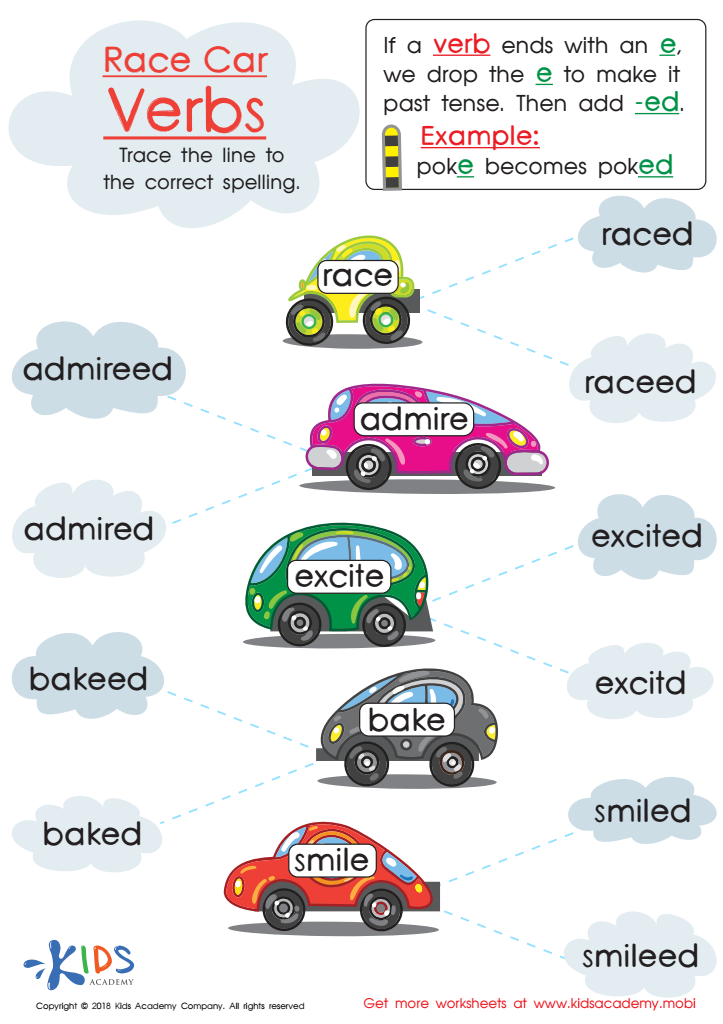
Race Car Verbs Worksheet







Verb identification is a crucial skill for young children aged 3-7 as it forms the foundation of effective communication and literacy. During these formative years, children are developing their language skills rapidly, and understanding basic grammatical concepts like verbs can significantly enhance their overall linguistic proficiency.
Firstly, verbs are essential for constructing sentences because they express actions, events, or states of being. By identifying verbs, children can learn how to build and understand simple sentences, which is integral to both spoken and written communication. This skill helps them to express their thoughts and ideas coherently and confidently.
Secondly, early verb identification contributes to reading comprehension. As children learn to recognize and understand verbs, they can better grasp the meaning of stories and texts they encounter. This understanding can foster a love for reading and improve academic performance across subjects.
Lastly, focusing on verb identification during early education supports cognitive development. Recognizing and using verbs in context encourages critical thinking and problem-solving, as children learn to associate actions with words. The process of identifying verbs also enhances memory and attention to detail.
In essence, caring about verb identification allows parents and teachers to equip children with essential communication tools, foster a deeper understanding of language, and support cognitive growth, all of which are vital for their overall development and future learning experiences.








