Spatial awareness Writing Worksheets for Ages 3-7
3 filtered results
-
From - To
Enhance your child's spatial awareness with our carefully designed writing worksheets, targeted for ages 3-7. These engaging resources, available at Kids Academy, help young learners understand the relationships between objects in space, paving the way for improved handwriting and cognitive skills. Each worksheet offers fun, interactive activities that encourage kids to navigate and interpret space through drawing, tracing, and positioning tasks. Perfect for early development, these worksheets foster spatial intelligence, boosting overall academic success. Discover the perfect blend of education and play to help your child excel in spatial awareness and writing, all in a fun and accessible format!
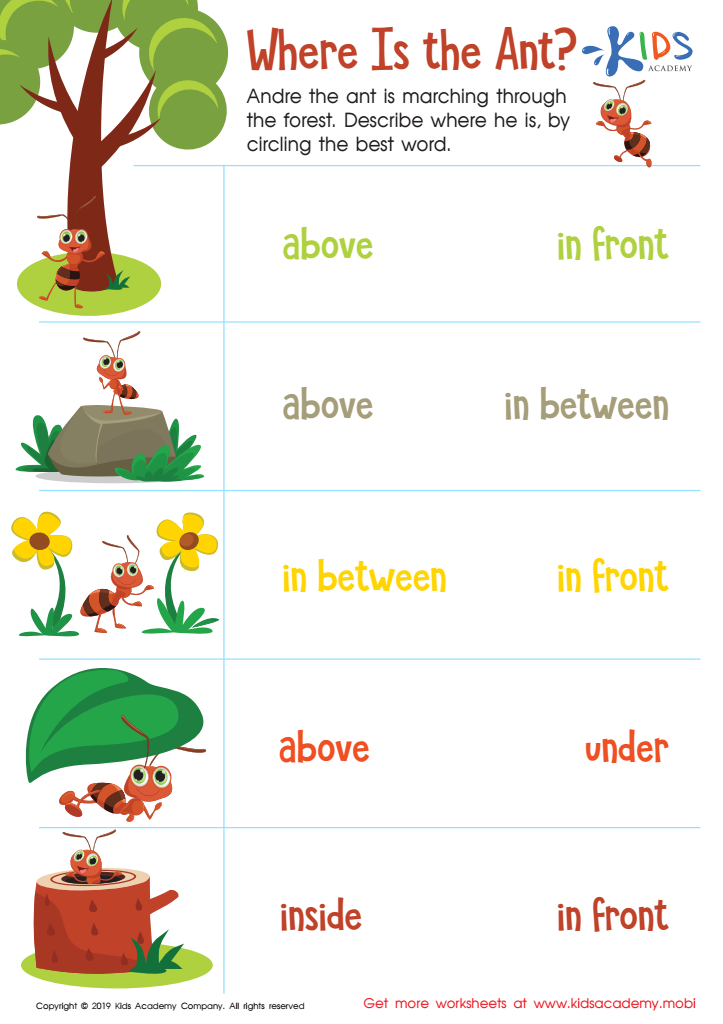
Where Is the Ant? Worksheet
 Assign to My Students
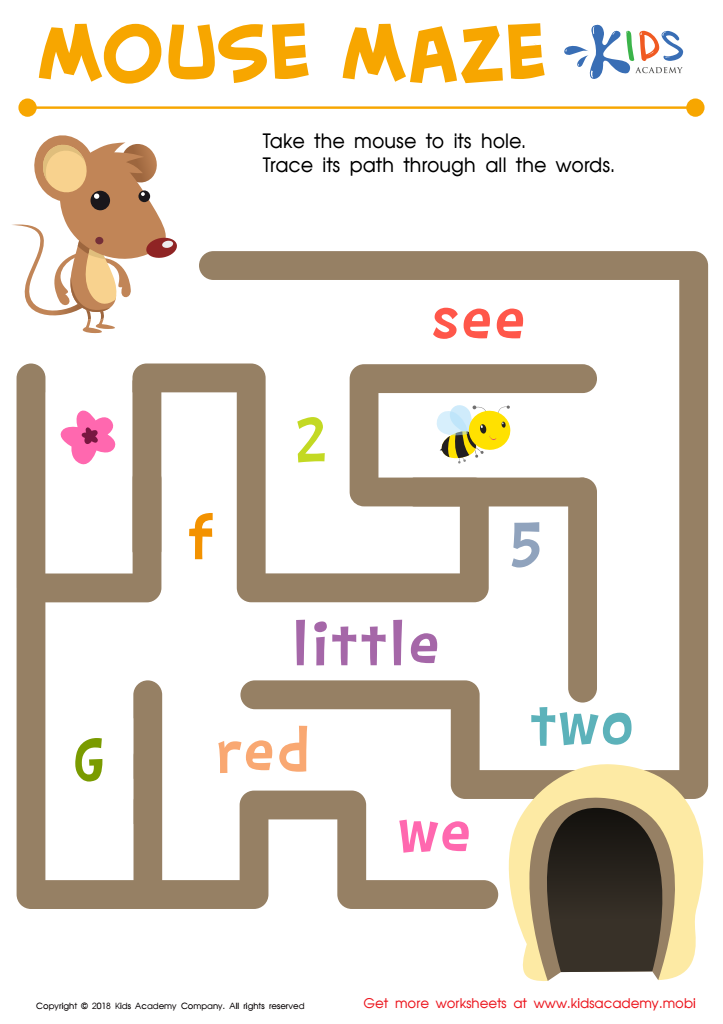
Find Words Mouse Maze Worksheet
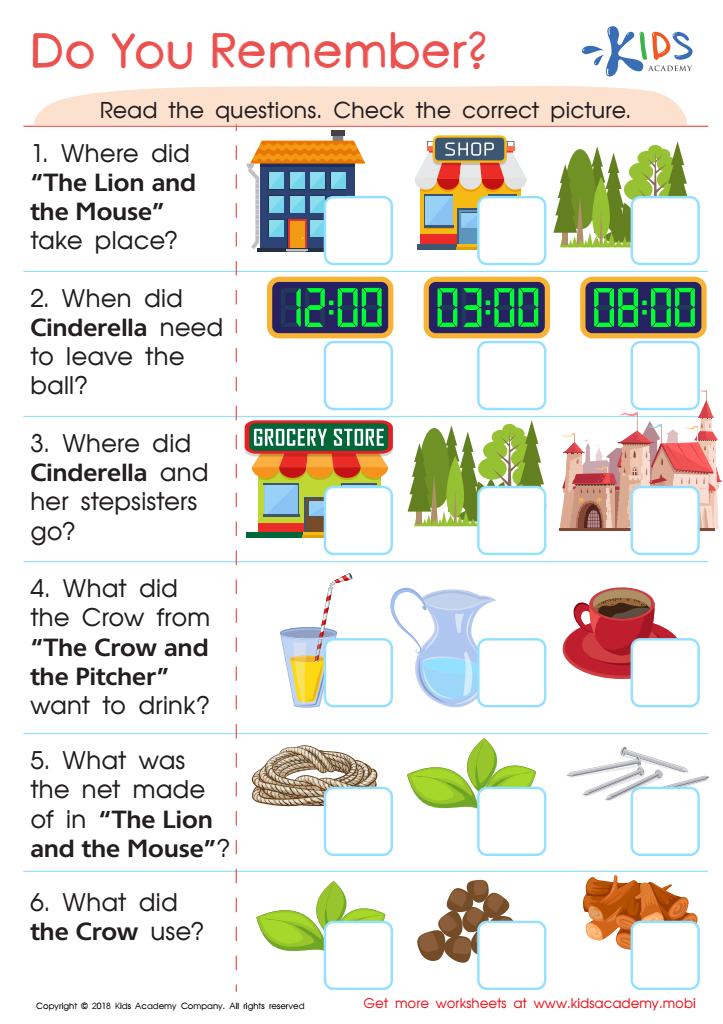
Do You Remember? Worksheet







.jpg)
Spatial awareness is crucial for young children, ages 3-7, because it plays a foundational role in their overall development, learning, and future academic success. For starters, spatial awareness involves understanding the relationships between objects in space—concepts like up, down, near, and far. When parents and teachers help children develop this skill, they foster better motor coordination; kids learn to navigate their physical environment more adeptly, which is vital for everyday activities like dressing, playing, and eventually, writing.
Good spatial awareness contributes significantly to handwriting skills. Children with well-developed spatial senses can better judge the size and placement of their letters, ensuring legibility and neatness in their writing. This is particularly important as they begin to form words and sentences, linking letters sequentially on a page.
Moreover, spatial awareness is closely linked to mathematical understanding. Early mathematics often involves geometric concepts and spatial reasoning, such as recognizing shapes, fitting puzzles, and understanding patterns. Therefore, fostering spatial awareness can lead to stronger math skills.
Beyond academics, strong spatial skills can boost a child's confidence and independence, helping them perform tasks accurately and efficiently. Whether tying their shoes or organizing their school desk, children benefit immensely when they understand spatial concepts. Hence, a focus on spatial awareness is an investment in a child's cognitive and physical growth, setting a firm foundation for future learning and life skills.








