Our "Understanding Suffixes Writing Worksheets for Ages 3-7" are designed to enhance early literacy skills by introducing young learners to common suffixes. Through engaging activities, children learn how suffixes can modify word meanings, helping to expand their vocabulary and improve reading comprehension. These worksheets are perfect for preschool through early elementary students, offering a fun and educational way to build foundational language arts skills. Each worksheet features child-friendly themes and illustrations that stimulate interest and make learning enjoyable. Equip your child with the tools they need for language success—explore our collection today!

Check out this FREE Trial Lesson on Writing for age 3-7!

Identify Common Suffixes

Favorites
With answer key
Interactive
  • 3-7
  • Understanding suffixes
  • Writing
Reading: Follow the Suffixes Worksheet

Reading: Follow the Suffixes Worksheet

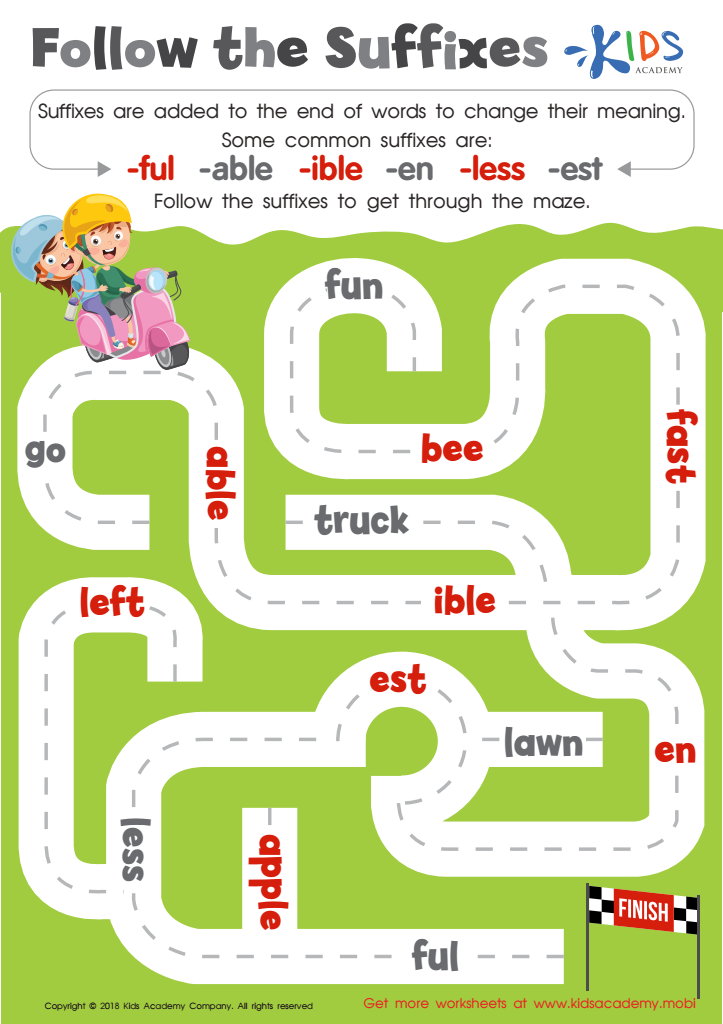
Students use suffixes to find the right way through a maze in this enjoyable activity! Understanding suffixes helps kids decode and comprehend more words, leading to better reading fluency. A great addition to your reading classes, keep this printable close!
Reading: Follow the Suffixes Worksheet
Worksheet
Reading: Words With Suffixes Worksheet

Reading: Words With Suffixes Worksheet

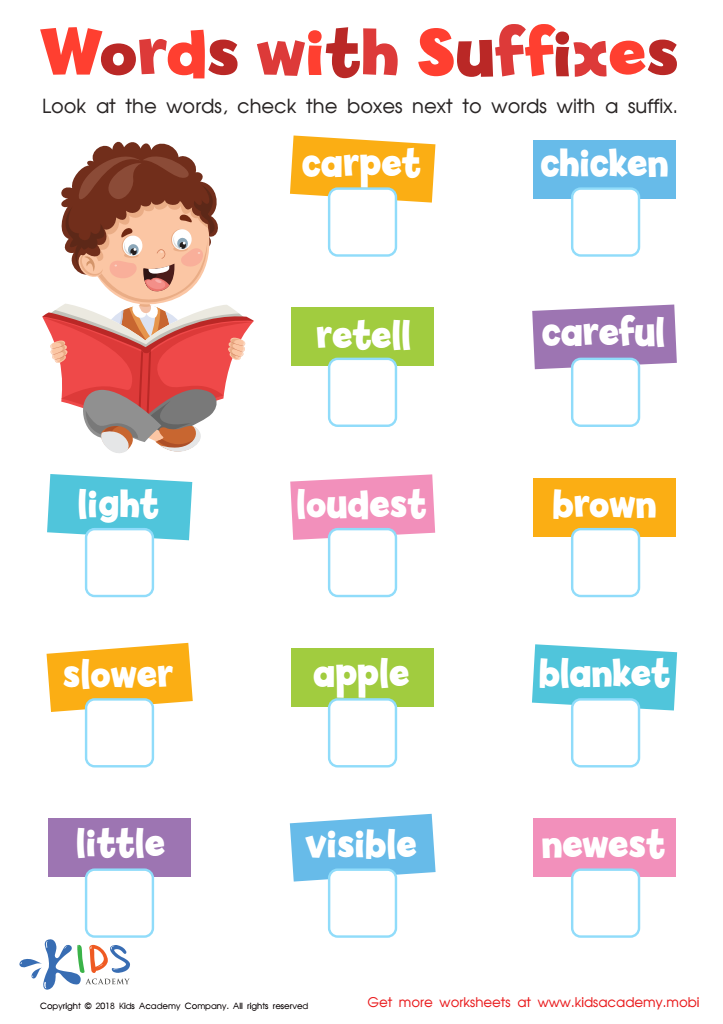
Help your students understand suffixes and build reading fluency with this worksheet. Have them read each word, then choose the ones with a suffix. Practicing this will lead to better comprehension and more confident reading. Save it for future use in language and reading classes.
Reading: Words With Suffixes Worksheet
Worksheet
Suffix-ed Worksheet
Suffix-ed Worksheet

Suffix-ed Worksheet

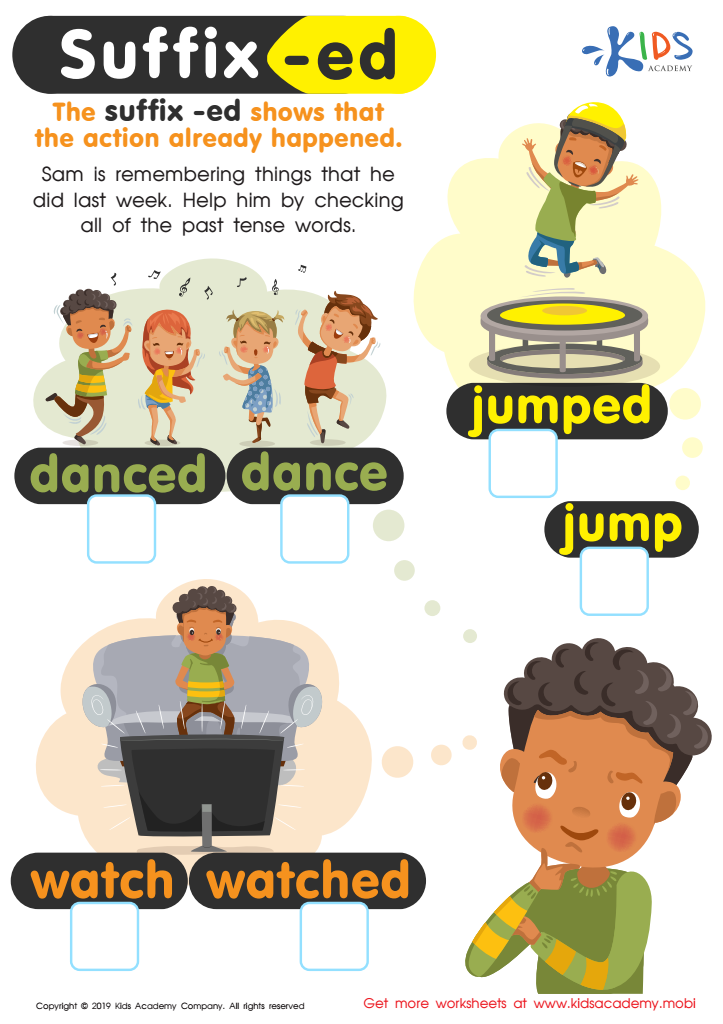
Ask your kids if they know what suffixes are, and explain they are words added to the end of another word which changes the meaning. This worksheet focuses on the suffix -ed which shows something already happened. Help the kid in the picture find the past tense words.
Suffix-ed Worksheet
Worksheet
Suffix -Able Worksheet

Suffix -Able Worksheet

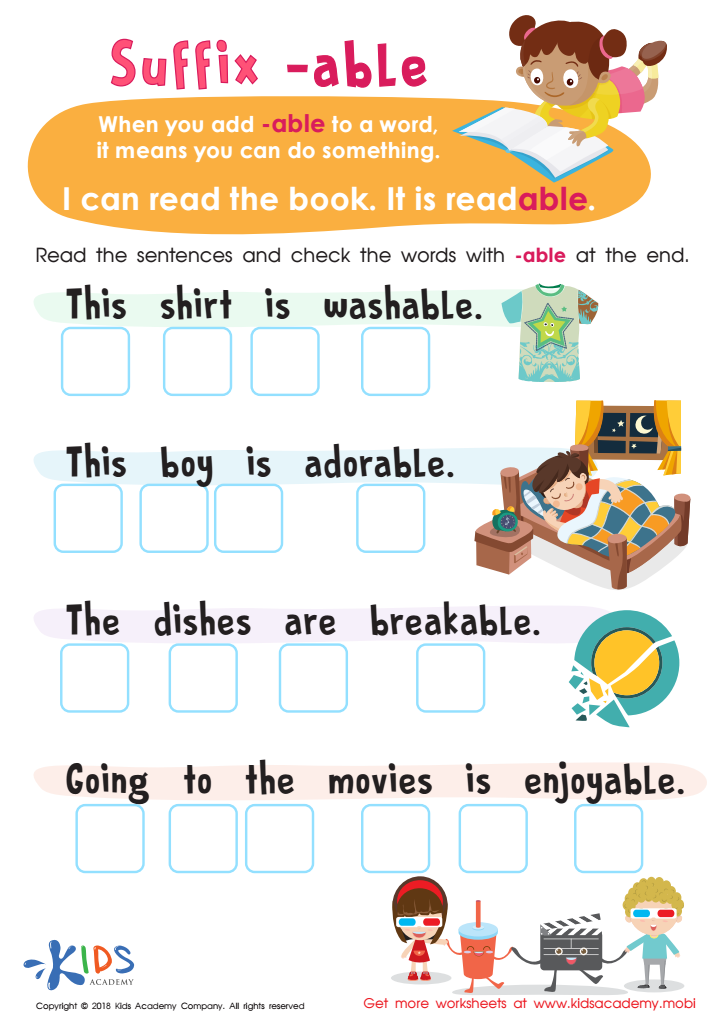
Suffix -able means you can do something. Example: readable - means you can read it. Give kids examples then check this worksheet. Read sentences with kids, looking for words with -able at the end.
Suffix -Able Worksheet
Worksheet
Suffixes –ful and –less Worksheet

Suffixes –ful and –less Worksheet

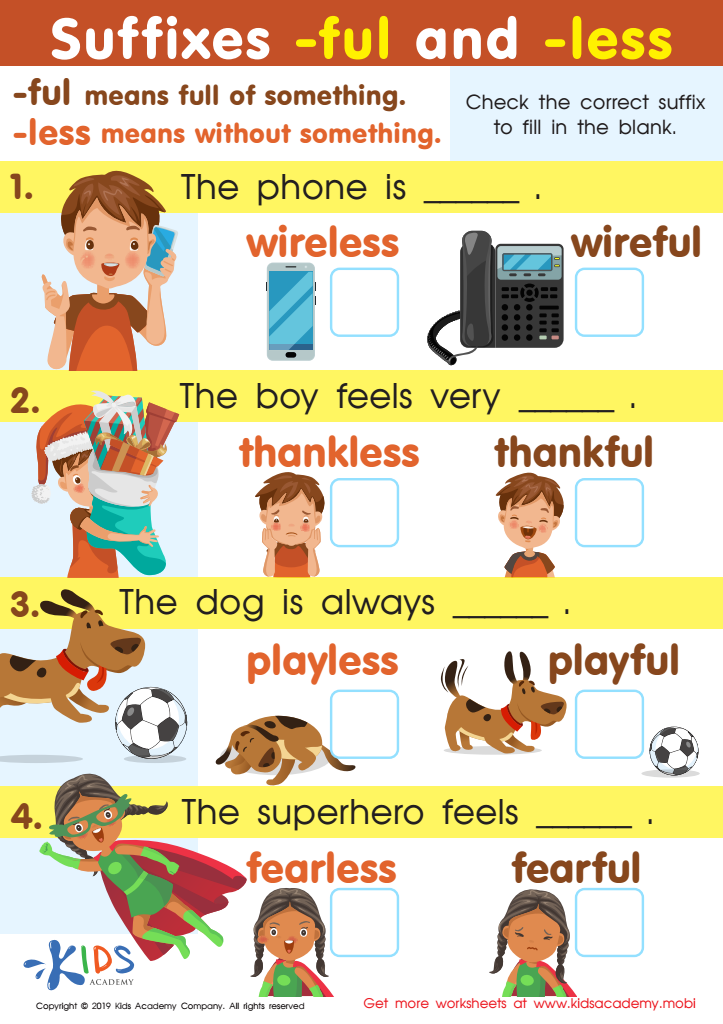
Before you start this worksheet, make sure your kids know about suffixes. Explain that they're added to the end of words to change their meaning. In the worksheet, kids will learn about the suffixes –ful and –less. Look at the sentences in the picture with them, and help them to choose the right one for each blank.
Suffixes –ful and –less Worksheet
Worksheet
Suffixes in the Forest Worksheet

Suffixes in the Forest Worksheet

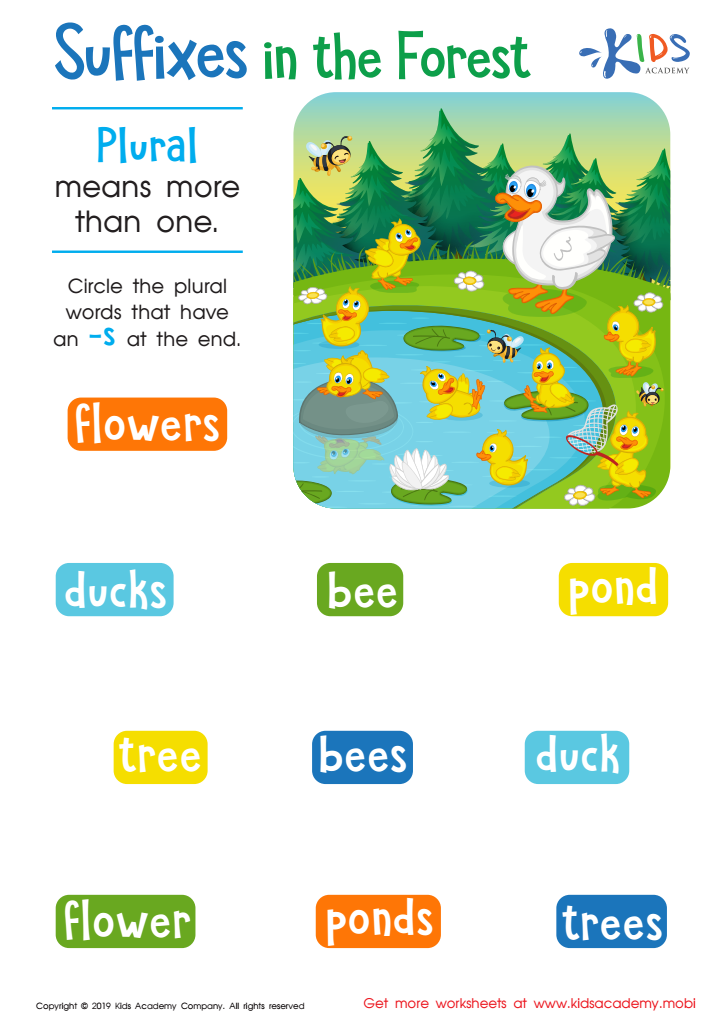
Suffixes are letters added to the end of words to form new words. These can be used to denote one who does something (e.g. reader) or more than one (e.g. adding -s). This worksheet helps kids practice pluralizing words they know by circling the plural words ending with -s.
Suffixes in the Forest Worksheet
Worksheet
The Suffix -Ly Worksheet

The Suffix -Ly Worksheet

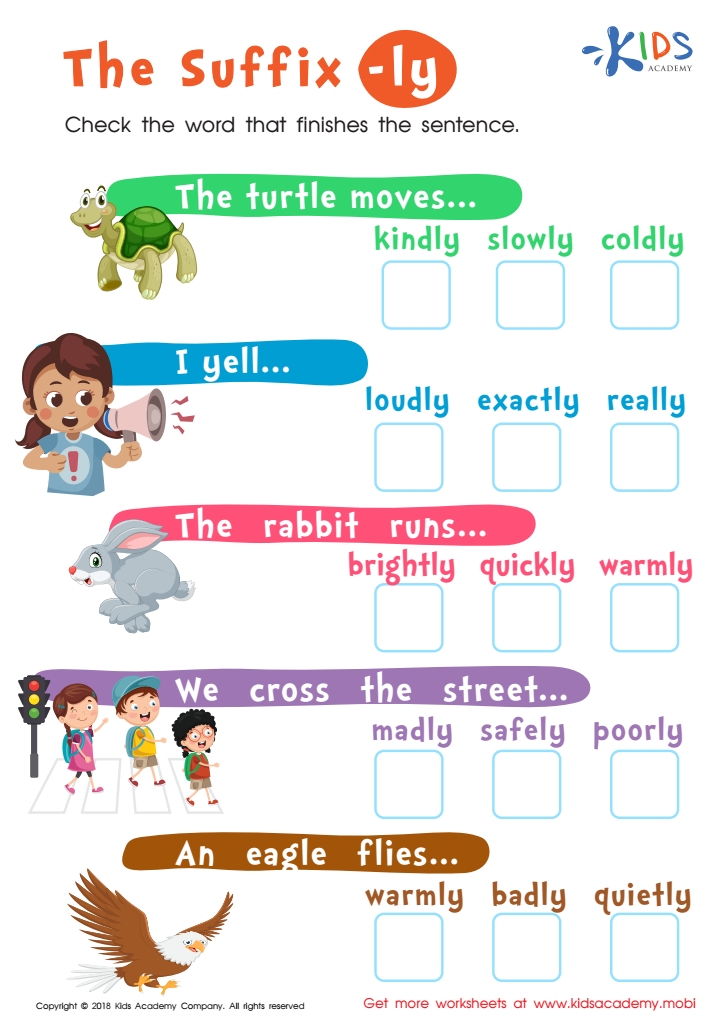
Suffixes change the meaning of words: the -ly suffix usually describes how an action is done (e.g. slowly, quickly, loudly). Help your child understand this and then check out the fun worksheet. Ask them to identify the animals and people in the pictures, then read the sentences out loud and have them check the ones that finish the sentence.
The Suffix -Ly Worksheet
Worksheet


Understanding suffixes at an early age is crucial for children's language development, making it a vital area of focus for both parents and teachers. A suffix is a word ending that adds to the original word's meaning, which helps in building vocabulary, improving spelling, and understanding word meanings. For children aged 3-7, learning about suffixes can significantly aid early reading and writing skills.

Grasping suffixes helps children decode new words by understanding how they are formed. For example, by knowing the suffix '-s' usually makes a noun plural, or '-ed' makes a verb past tense, children can infer meaning without direct instruction. This promotes reading fluency and prepares them for more advanced literacy tasks.

Additionally, understanding suffixes enhances children's ability to construct varied sentences, enriching their written and spoken communication. Awareness of how suffixes alter words, for instance, making an adjective 'happy' into a noun 'happiness', encourages creative expression and comprehension.

Early exposure to suffixes lays a foundation for more complex language skills, fosters critical thinking, and boosts confidence, making young learners more proficient readers and writers. Parents and teachers play a pivotal role in introducing these linguistic tools, turning everyday reading and writing activities into opportunities for meaningful learning and development.