Word identification Writing Worksheets for Ages 3-7
6 filtered results
-
From - To
Explore our engaging Word Identification Writing Worksheets designed for children ages 3-7! These worksheets are perfect for young learners to develop essential literacy skills, including recognizing and writing words through fun activities. Each worksheet features captivating themes and illustrations to keep kids focused and motivated. With a variety of exercises, children will practice identifying, tracing, and writing new vocabulary, enhancing their reading and writing proficiency. Our resources cater to different learning styles, ensuring a supportive environment for every child. Ideal for both classroom and home use, these worksheets lay a solid foundation for a lifelong love of reading and writing!
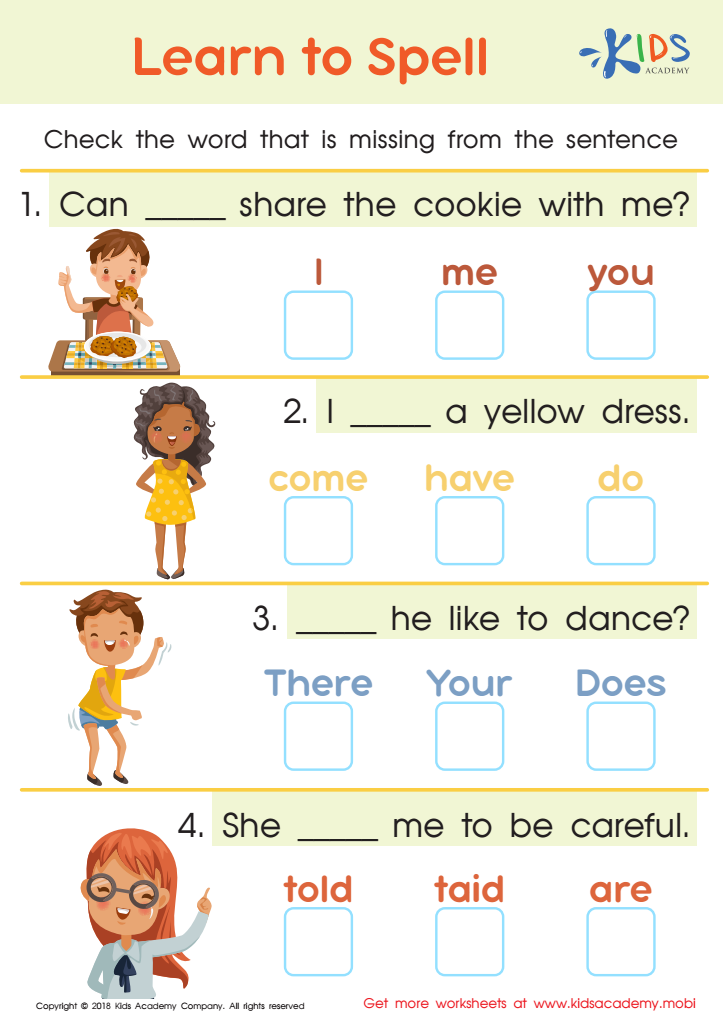
Learn to Spell Worksheet
 Assign to My Students
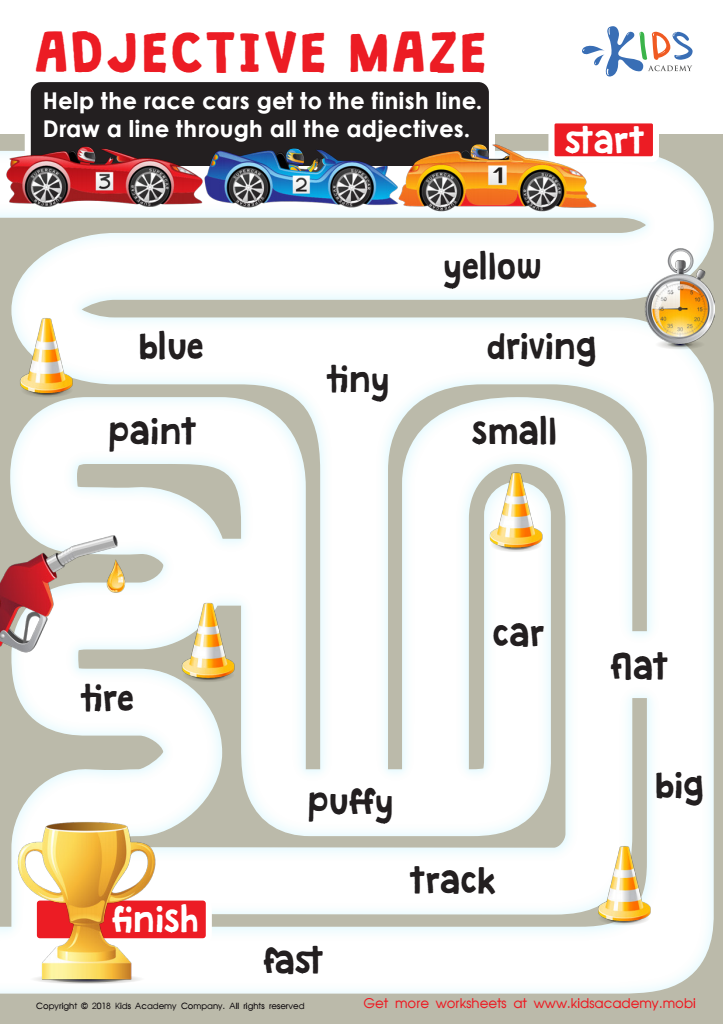
Adjective Maze Worksheet
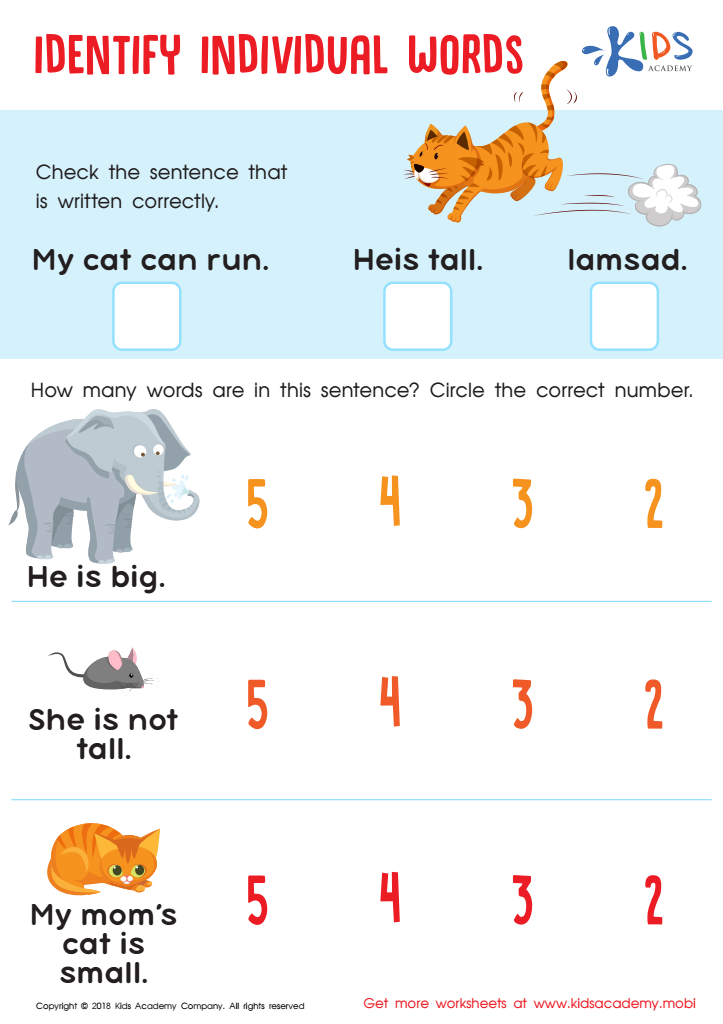
Identify Individual Words Worksheet
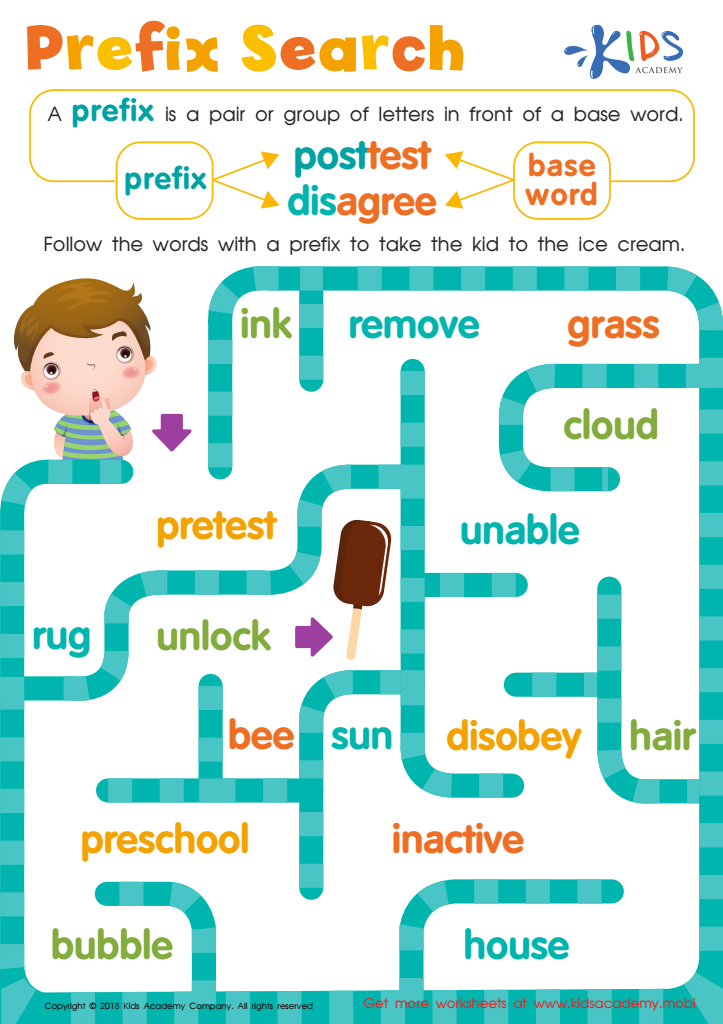
Reading: Prefix Search Worksheet
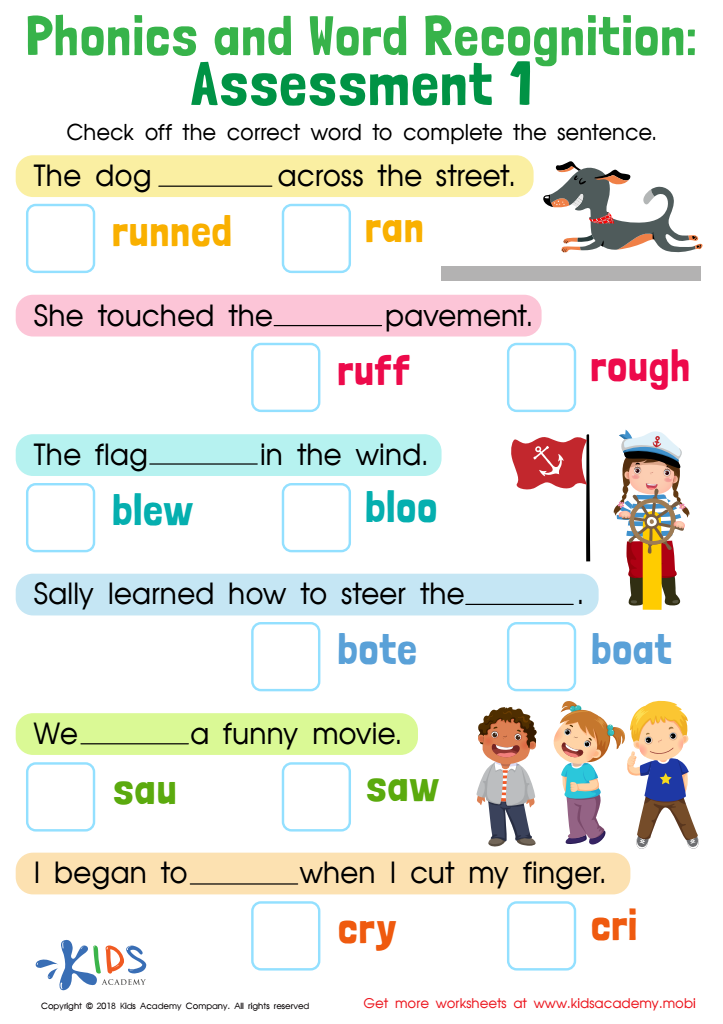
Phonics and Word Recognition: Assessment 1 Worksheet
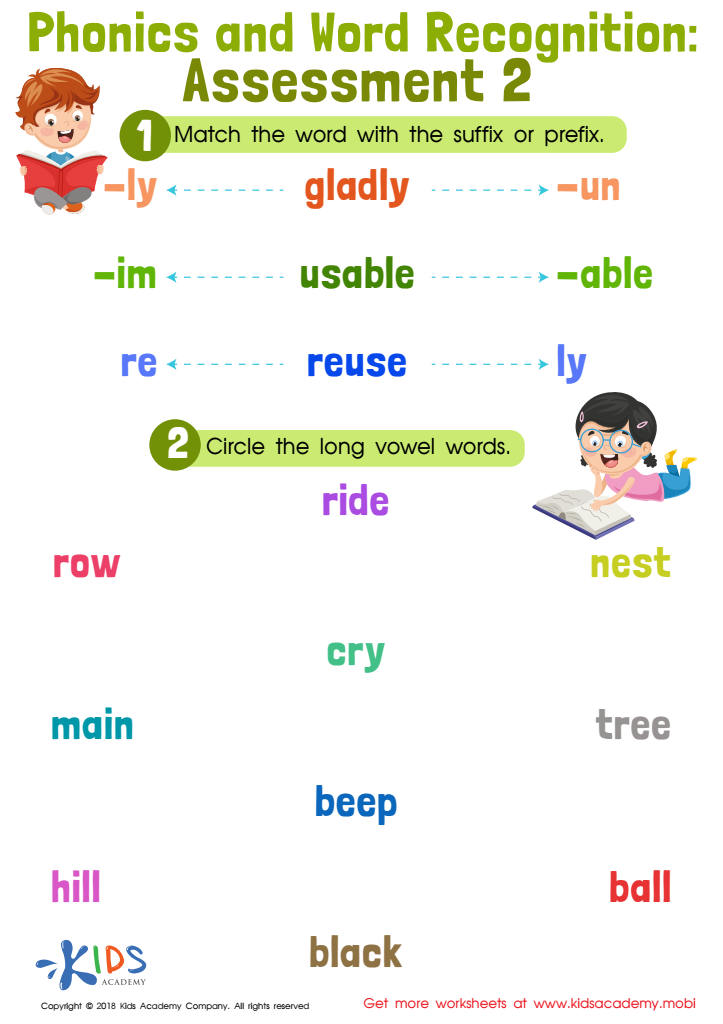
Phonics and Word Recognition: Assessment 2








Word identification writing is a crucial skill for children ages 3-7 and serves as a foundational element in literacy development. During these formative years, children are beginning to make connections between sounds and letters, which promotes early reading and writing skills. When parents and teachers prioritize word identification writing, they foster a love for language and literacy that can last a lifetime.
By engaging in word identification activities, children enhance their vocabulary, improve spelling, and develop phonemic awareness. This not only prepares them for future academic success but also builds confidence in expressing their thoughts and ideas. Moreover, early writing experiences encourage creativity and critical thinking skills, which are essential for problem-solving in later stages of their education.
Furthermore, word identification writing helps bridge the gap between spoken language and written communication, solidifying children's understanding of the importance of print in their lives. This is particularly significant in today's world, where effective communication skills are vital. By actively supporting word identification writing, parents and teachers play a pivotal role in nurturing proficient readers and writers, ultimately contributing to their overall academic achievement and lifelong love for learning.








