Spelling practice Vowel Blends Worksheets for Ages 3-8
5 filtered results
Difficulty Level
Grade
Age
-
From - To
Subject
Activity
Standards
Enhance your child's spelling skills with our engaging Vowel Blends Worksheets designed for ages 3-8. These worksheets provide a fun and interactive way for young learners to master vowel blends, an essential building block for reading and writing. With a variety of activities, including tracing, coloring, and matching exercises, children will develop their phonetic awareness and strengthen their spelling abilities. Perfect for at-home learning or classroom use, our printable resources foster essential literacy skills while keeping learning enjoyable. Explore our collection of Vowel Blends Worksheets today and set your child on the path to reading success!
Favorites
With answer key
Interactive
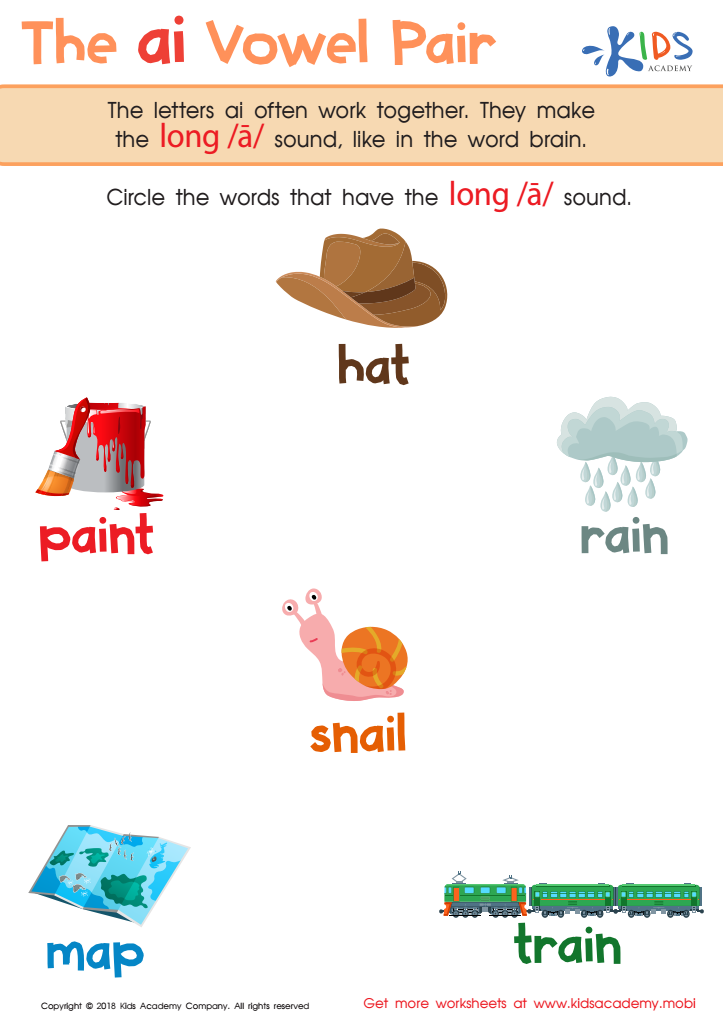
The AI Vowel Pair Worksheet
Vowel pairs make different sounds than individual letters. The 'ai' combination often forms the long /a/ sound, like in 'brain' and 'strain'. Get your kids to look at the pictures in the worksheet, identify each and say the name aloud. Help them circle the words with the long /a/ sound.
 Assign to My Students
The AI Vowel Pair Worksheet
Worksheet
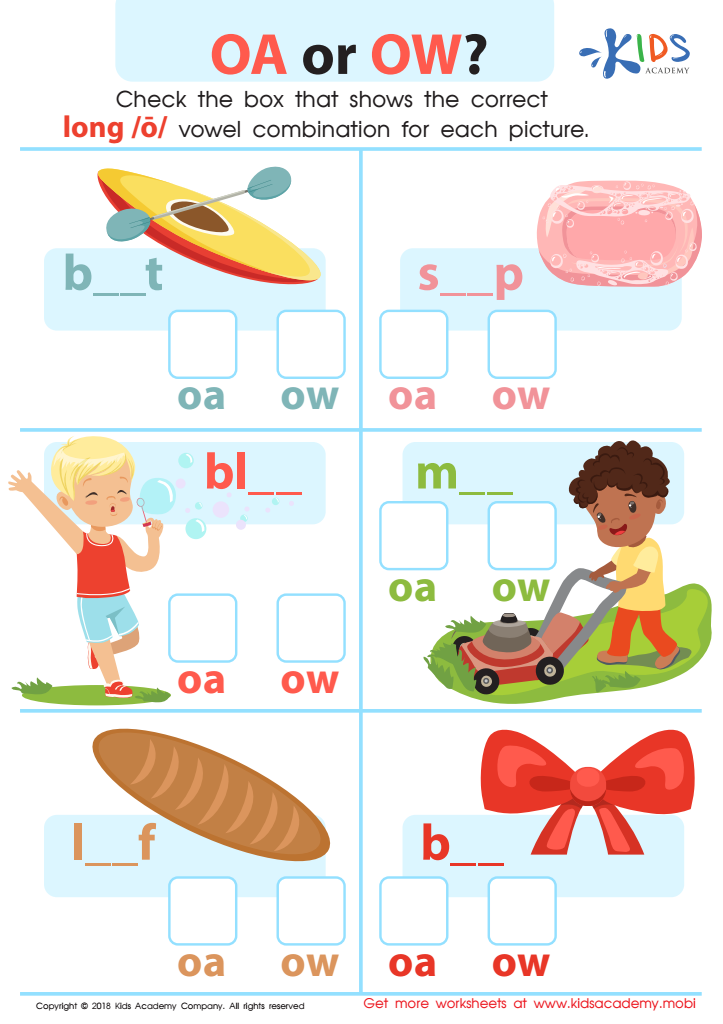
Reading: OA or OW Worksheet
This printable worksheet helps young and emergent readers with decoding words and understanding digraphs (two letters with one sound). It requires students to complete the spelling for each word based on the picture, focusing on /oa/ and /ow/ spellings. It's ideal for a reading classroom and for spelling practice.
Reading: OA or OW Worksheet
Worksheet
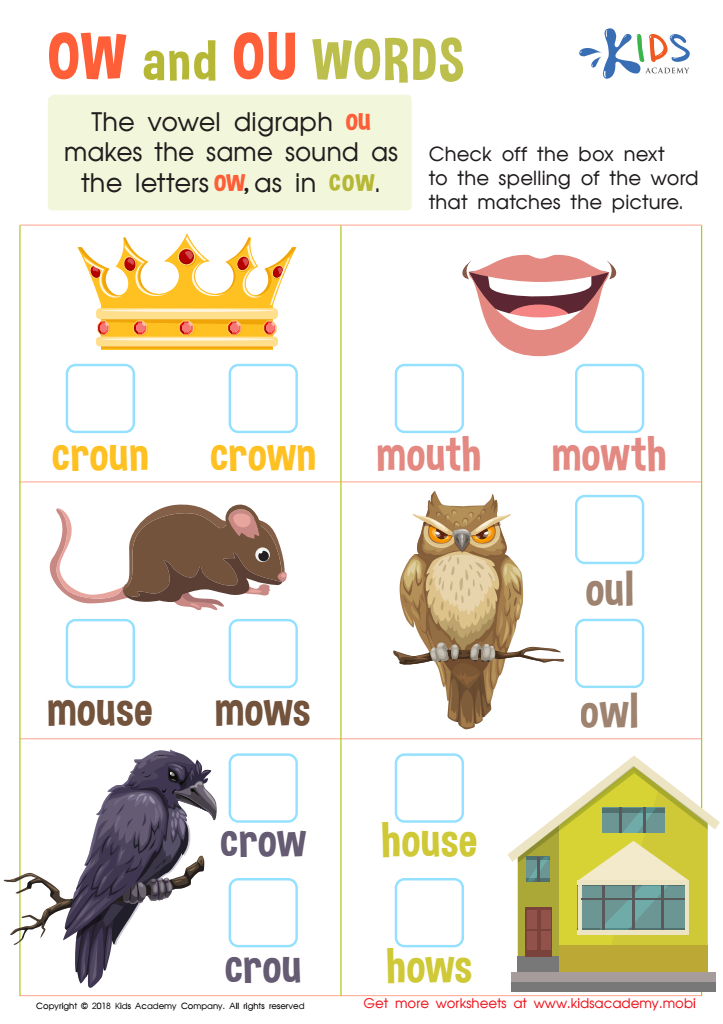
Reading: OW and OU Words Worksheet
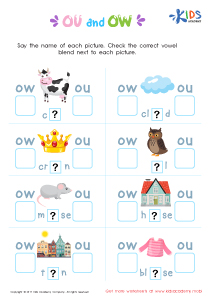
Help your kids learn phonetics! Explain the different sounds and long/short variations. Emphasize that some vowel sounds are the same, e.g. ou = ow in cow. For practice, have them read aloud the words in the worksheet and check the box next to the spelling that matches the picture.
Reading: OW and OU Words Worksheet
Worksheet
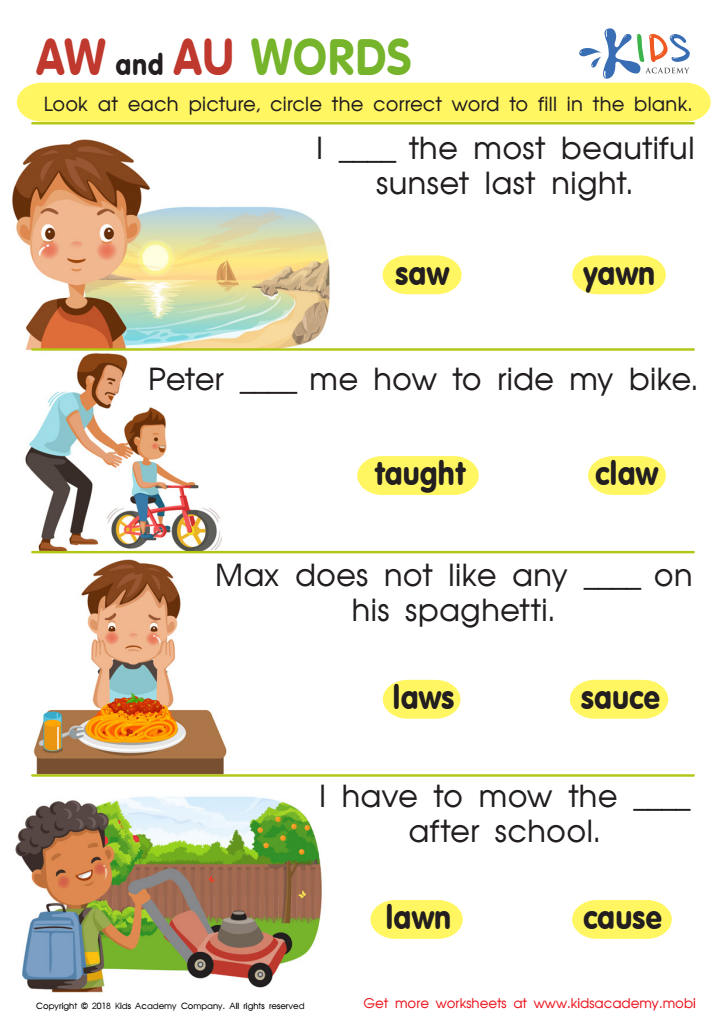
Reading: AW and AU Words Worksheet
This worksheet helps kids recognize that /au/ and /aw/ can make the same sound. Students read sentences and pick the correct word with one of the digraphs. Understanding digraphs improves decoding and reading fluency. Perfect for reading and phonics classes.
Reading: AW and AU Words Worksheet
Worksheet
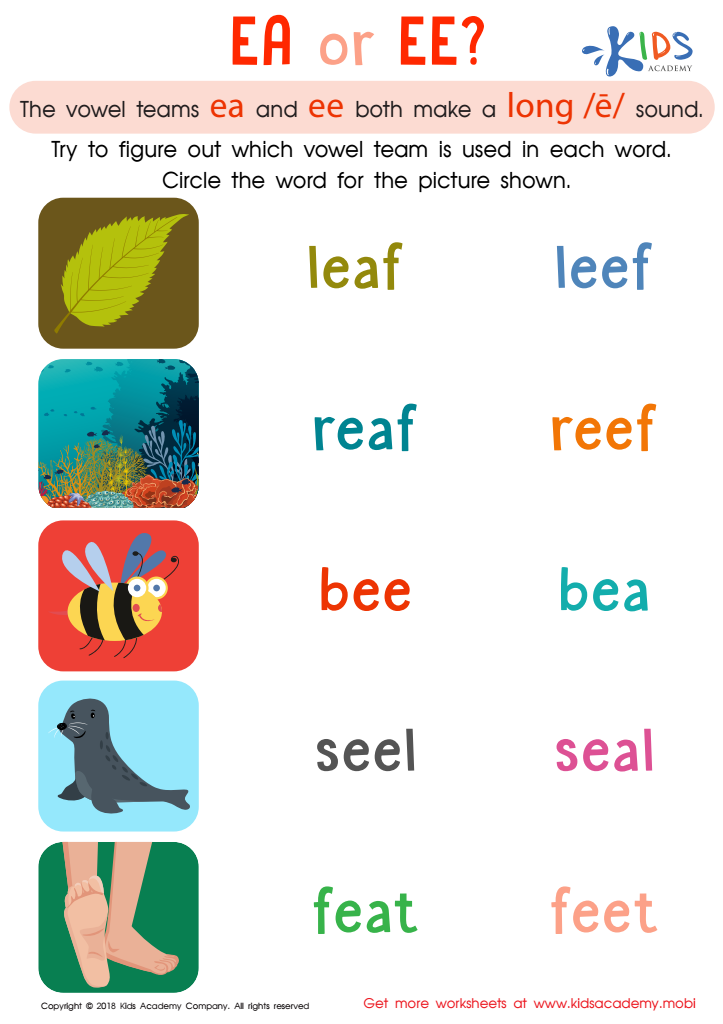
Reading: EA and EE Worksheet
Confused by the long E sound's varying spellings? Give students practice with this printable. It will improve their reading and spelling skills by helping them identify the correct spellings for words with the /ee/ and /ea/ vowel teams. Clear up the confusion and sharpen their skills.
Reading: EA and EE Worksheet
Worksheet
Join Kids Academy for Free
Who is primarily going to use this learning content?





Spelling practice, particularly with vowel blends, is crucial for children aged 3-8 as it lays the foundation for effective reading and writing skills. At this stage, children are developing their phonemic awareness, which is the ability to hear, identify, and manipulate individual sounds in words. Vowel blends, where two vowels combine to create a unique sound (like "ai" in "rain" or "ea" in "team"), play a significant role in this process.
Understanding vowel blends not only aids in decoding words but also enhances vocabulary development. When children develop the ability to recognize and spell blends, they gain confidence in their reading abilities, which encourages a lifelong love for literature. Moreover, engaging in spelling practice helps improve fine motor skills through writing exercises, reinforcing muscle memory.
By incorporating spelling practice into daily activities, teachers and parents can provide invaluable support in children’s literacy development. This can be achieved through playful and interactive methods, ensuring learning remains enjoyable. Ultimately, solid spelling skills contribute to better academic performance and a higher degree of self-efficacy in young learners, setting them on a positive educational trajectory.