Phonics Skills Phonics Coloring Pages Worksheets for Ages 3-8
3 filtered results
Difficulty Level
Grade
Age
-
From - To
Subject
Activity
Standards
Discover the perfect blend of fun and learning with our Phonics Coloring Pages Worksheets for Ages 3-8! Designed to foster early reading skills, these engaging worksheets help children master phonics by coloring captivating images. Each worksheet focuses on essential phonics skills like letter recognition, sounds, blends, and more. As kids progress through delightful coloring activities, they naturally enhance their phonemic awareness and vocabulary. Ideal for preschoolers, kindergarteners, and early elementary students, our phonics worksheets make learning to read a colorful adventure. Visit Kids Academy for high-quality educational resources to spark your child's love for reading!
Favorites
With answer key
Interactive
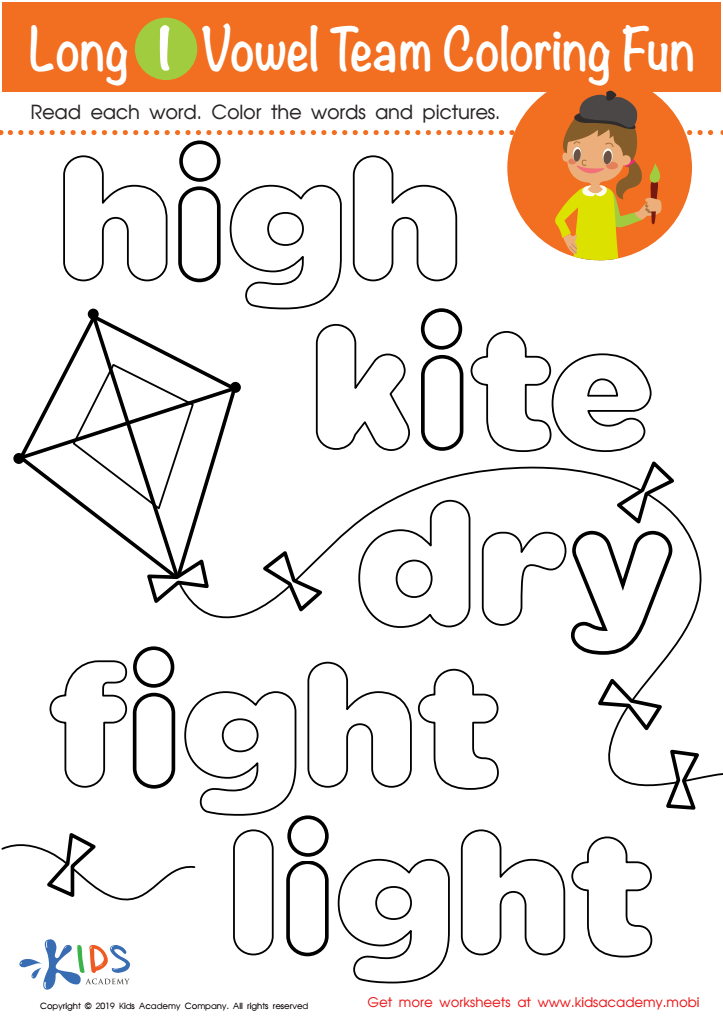
Long I Vowel Team Coloring Worksheet
This worksheet provides practice with letter combinations that make the long "i" sound while enhancing creativity and motor skills with a fun coloring activity. Unknowingly, new readers learn key phonics skills while having fun!
Download (PDF)
 Assign to My Students
Assign to My Students
Long I Vowel Team Coloring Worksheet
Worksheet

Long and Short E Worksheet
This fun printout makes learning phonics enjoyable for Grade 3 students. Get them to read the words “tree” and “bed” to recognize the different sounds of the letter “E”. After hearing the words they can color the words and the pictures to understand differences between long and short vowels.
Download (PDF)
Assign to My Students
Assign to My Students
Long and Short E Worksheet
Worksheet
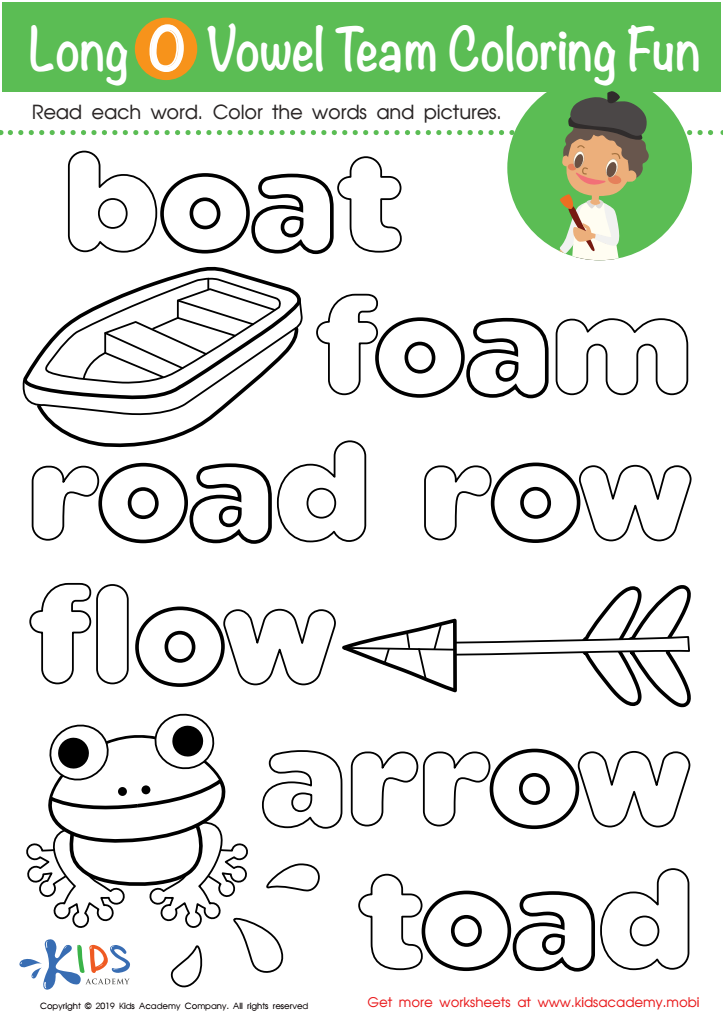
Long O Vowel Team Coloring Worksheet
Divide your class into teams and have them work together to identify and pronounce the long O sound in words like "boat" and "flow". As they read aloud, have the rest of the class listen attentively. Then let teams color in the words and matching pictures, reinforcing the lesson. This simple printout is perfect for phonics lessons and a fun way to energize your class.
Download (PDF)
Assign to My Students
Assign to My Students
Long O Vowel Team Coloring Worksheet
Worksheet
Join Kids Academy for Free
Who is primarily going to use this learning content?







Phonics skills are foundational for early literacy development, and Phonics Coloring Pages can be an invaluable educational tool for children ages 3-8. Integrating phonics learning with coloring activities makes the learning experience engaging, interactive, and enjoyable, helping young learners to develop essential reading skills while having fun.
When children engage with Phonics Coloring Pages, they associate letters with their corresponding sounds, improving their ability to decode new words. This multisensory approach reinforces recognition of letter shapes and sounds in an enjoyable, relaxed setting, enhancing memory retention. Coloring also aids in fine motor skills development, a crucial aspect for writing proficiency.
Moreover, using Phonics Coloring Pages helps bridge learning at school with activities at home, fostering a cooperative learning environment where parents' involvement becomes natural and beneficial. These pages provide a structured and age-appropriate medium for parents and teachers to explore phonics concepts together, strengthening family engagement and featuring positive reinforcement in the learning process.
Finally, the flexibility of these pages means they can be tailored to diverse learning needs and paces, allowing for differentiated instruction. The appealing format can cater to different learning styles, making it an inclusive educational tool that nurtures a child’s early literacy success and inherent love for learning.