Check out this FREE "Basic Addition Skills" Trial Lesson for age 3-8!

My Family

Favorites
With answer key
Interactive
  • 3-8
  • Basic Addition Skills
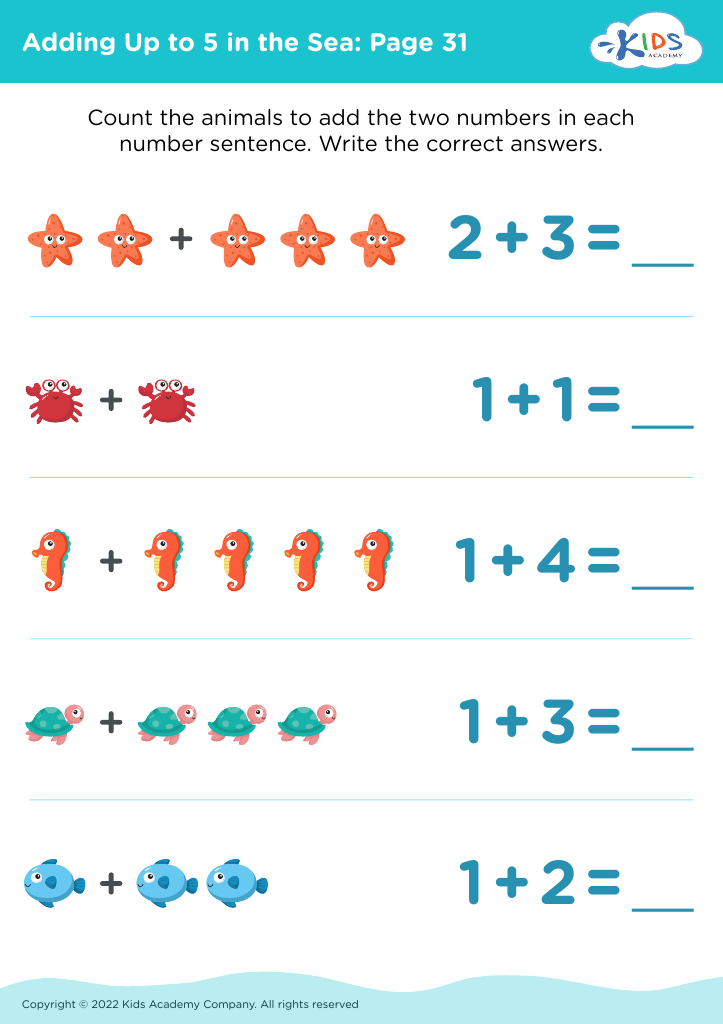
Adding Up to 5 in the Sea: Page 31
Worksheet
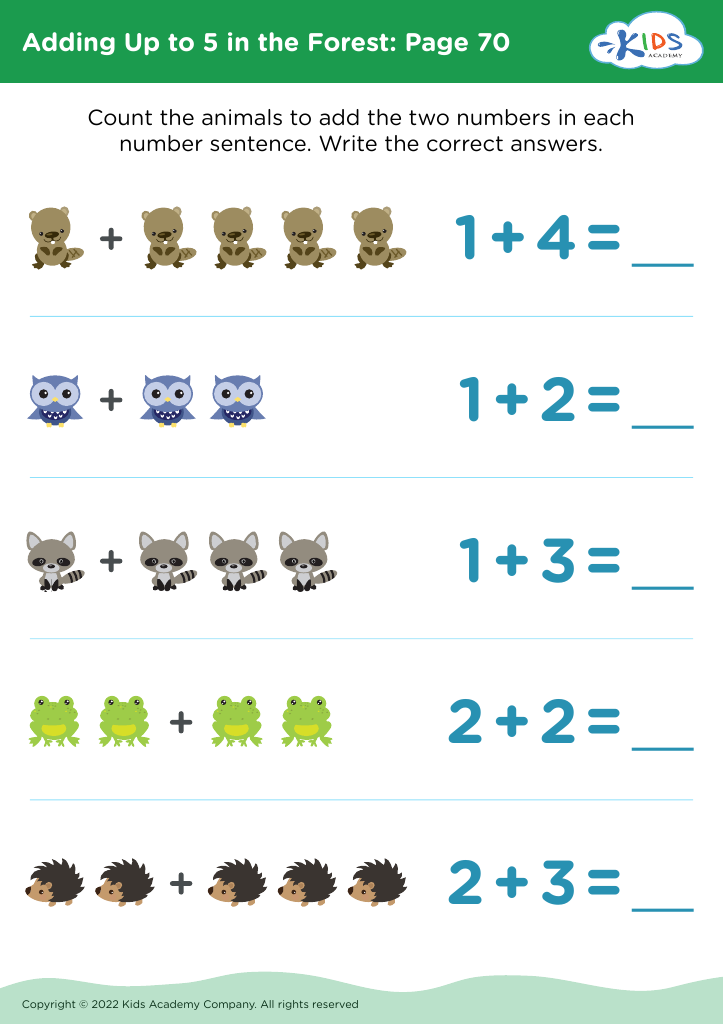
Adding Up to 5 in the Forest: Page 70
Worksheet
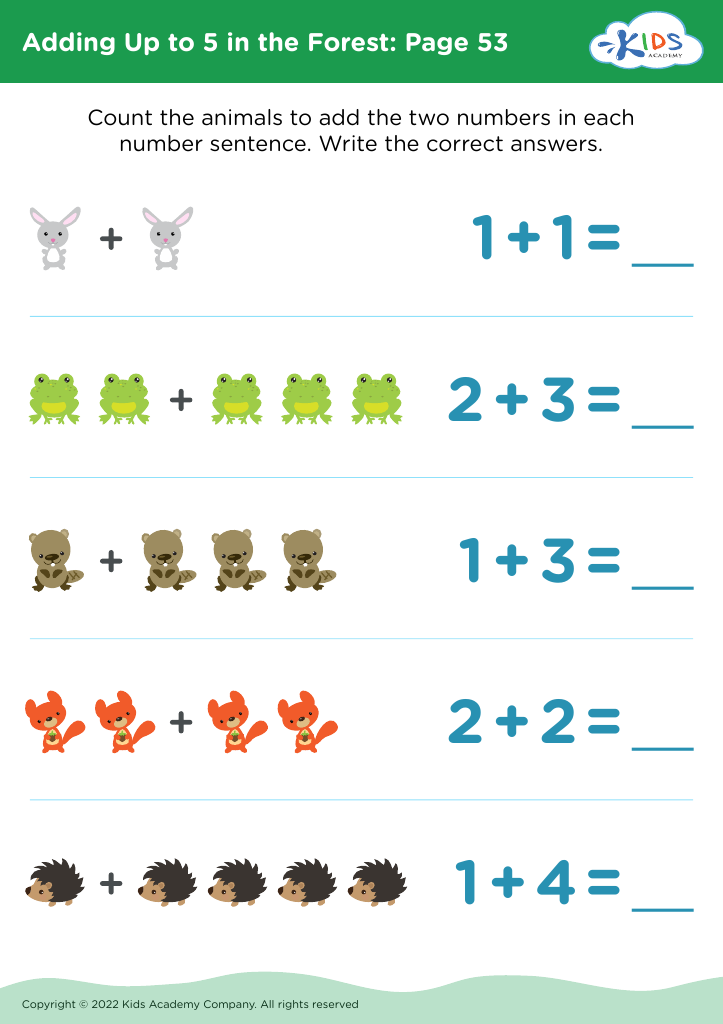
Adding Up to 5 in the Forest: Page 53
Worksheet
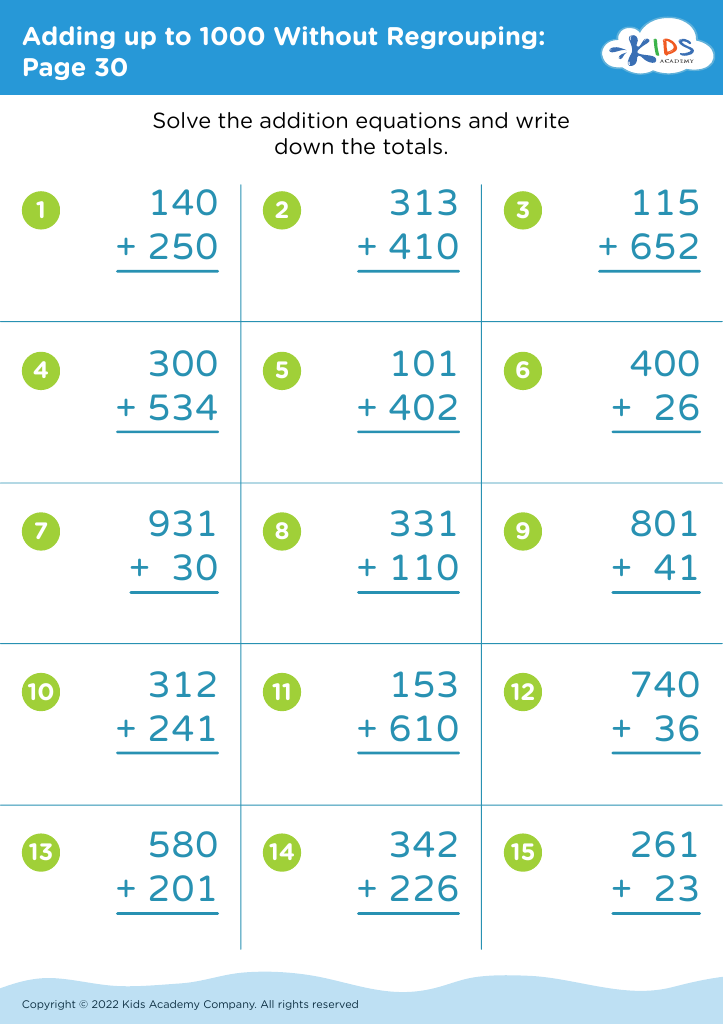
Adding up to 1000 Without Regrouping: Page 30
Worksheet
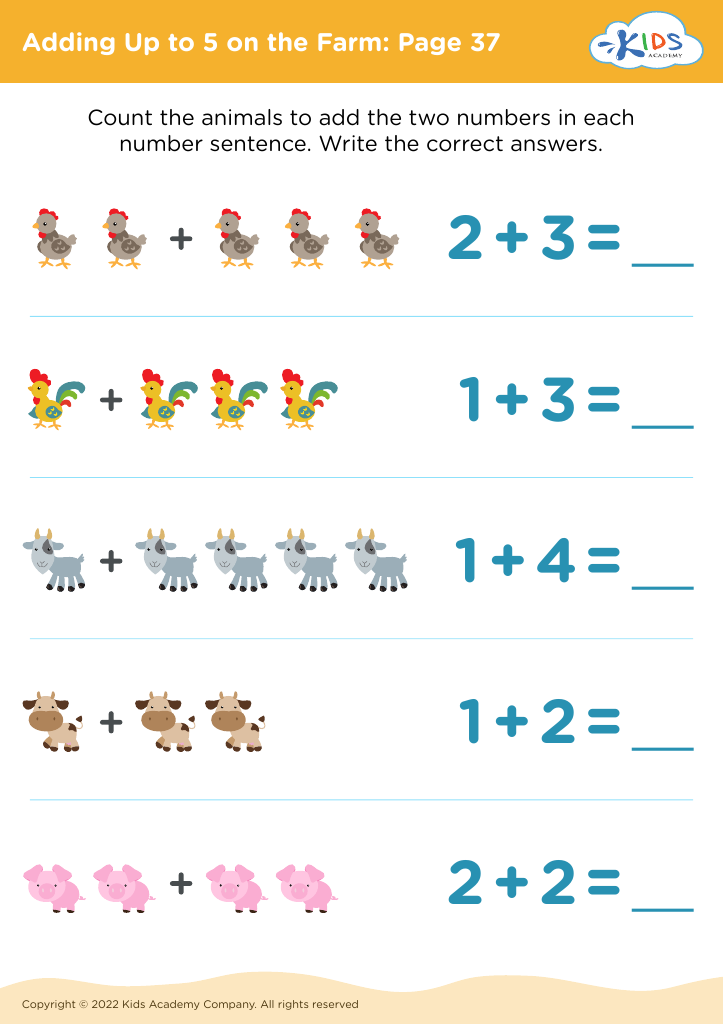
Adding Up to 5 on the Farm: Page 37
Worksheet
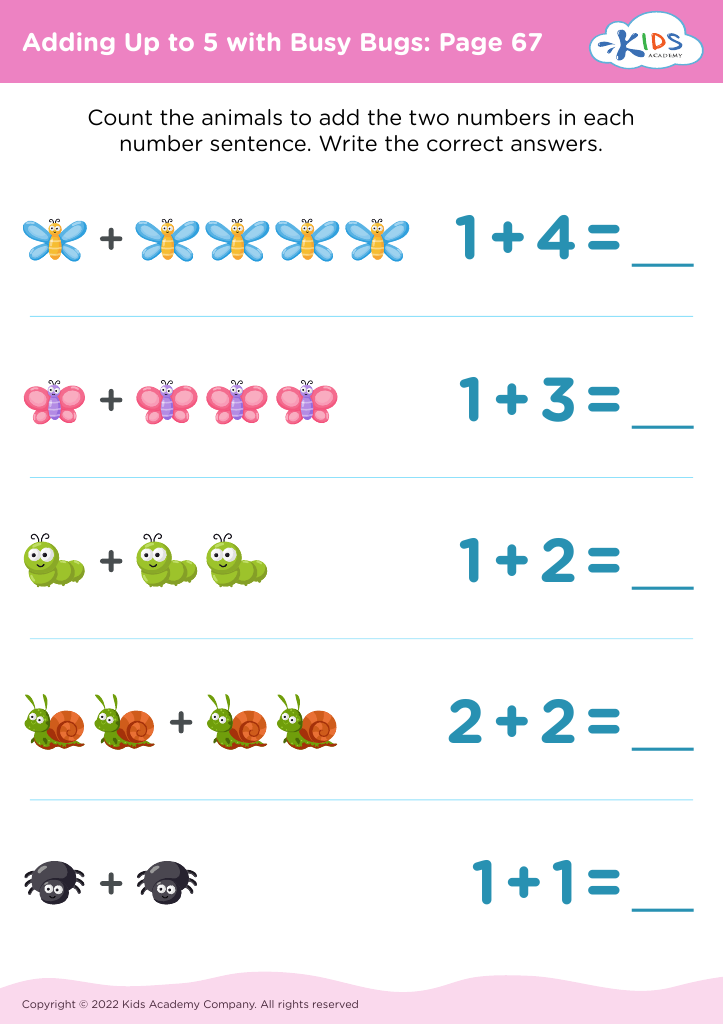
Adding Up to 5 with Busy Bugs: Page 67
Worksheet
Dot to Dot Numbers Printables

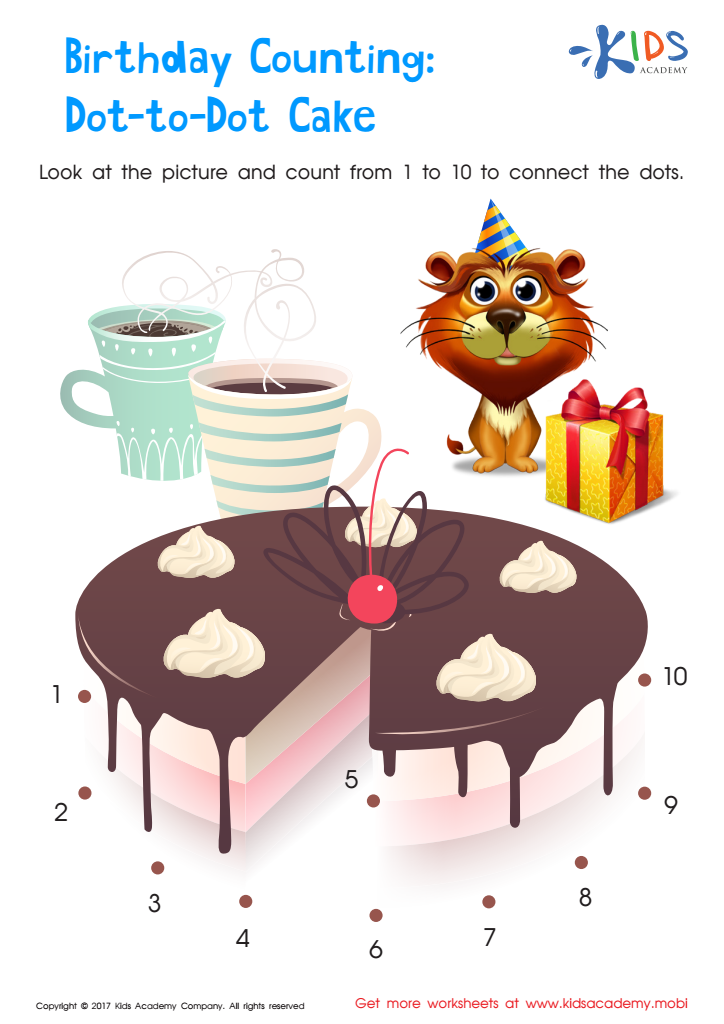
Birthday Counting Connect Dots Worksheet

Help your child count to ten and draw curved lines with this birthday cake dot to dot! Practice numeracy and problem solving skills, and enjoy the fun of creating a picture. Then, use it as a reminder for your child’s birthday and learn about the days and months of the year.
Birthday Counting Connect Dots Worksheet
Worksheet
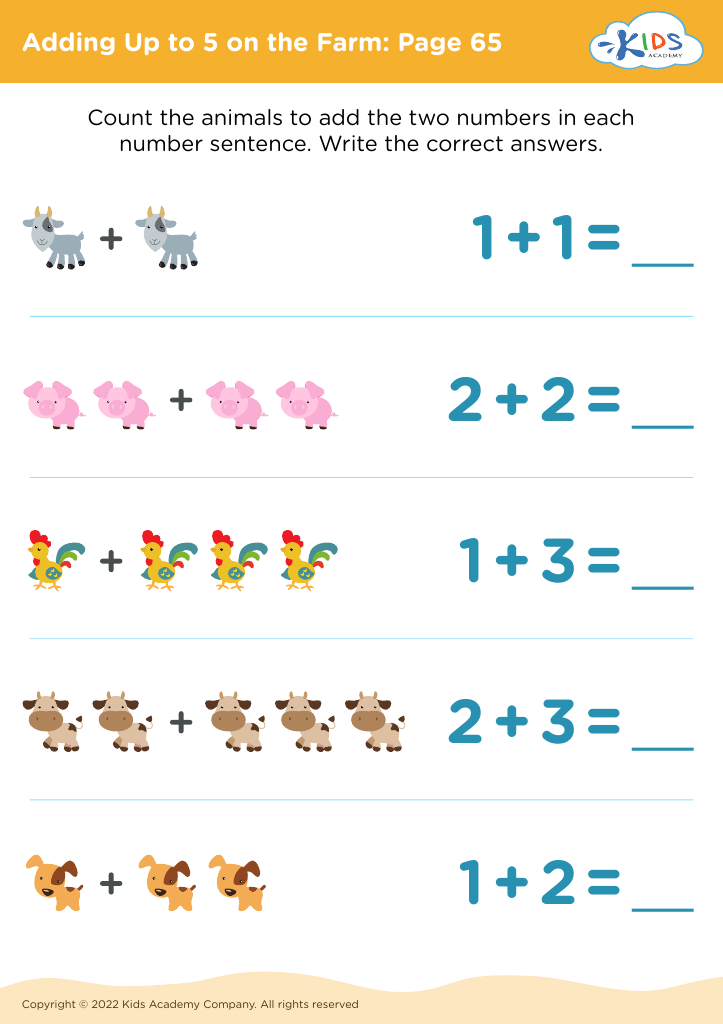
Adding Up to 5 on the Farm: Page 65
Worksheet
Birds of a Feather: Commutative Property Worksheet
Birds of a Feather: Commutative Property Worksheet
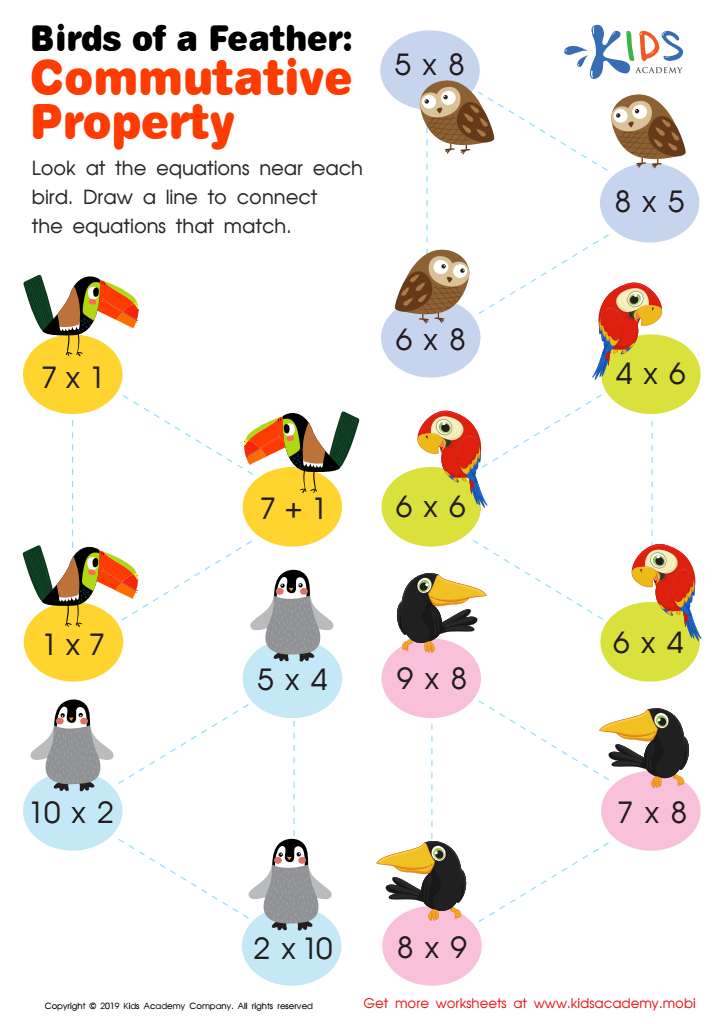
The commutative property states that order of factors doesn't affect the product. Use it to help your kids solve simple problems. If they love birds, they'll love the colorful worksheet to identify exotic ones. Practicing is the best way to understand difficult topics. Look at the equations in this tracing sheet; help them draw a line to connect equations that match.
Birds of a Feather: Commutative Property Worksheet
Worksheet
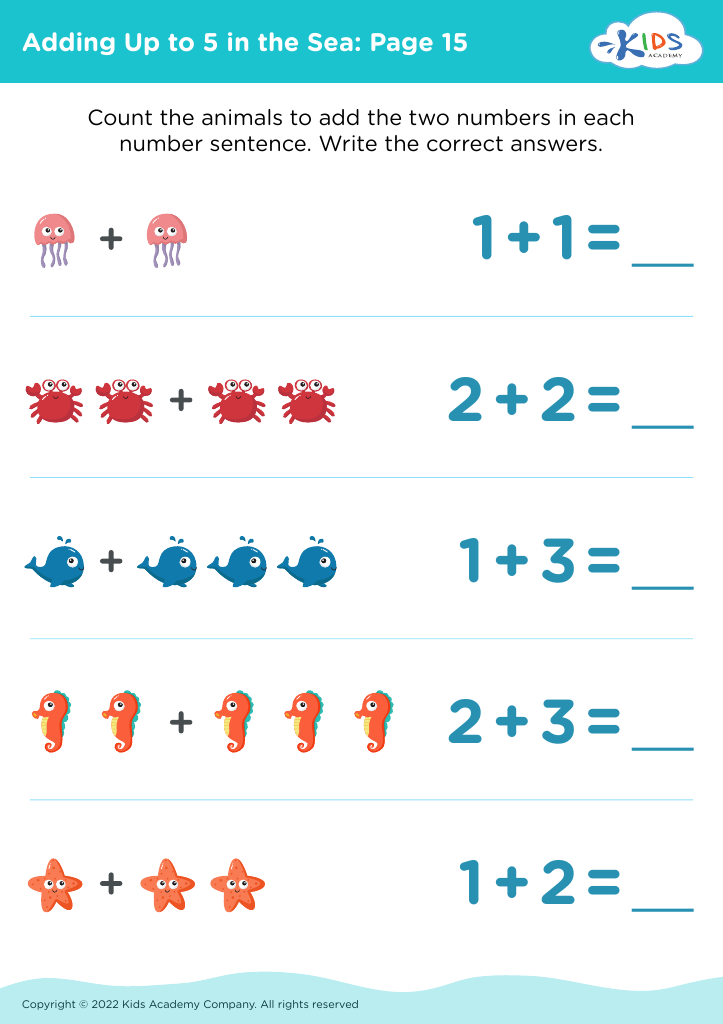
Adding Up to 5 in the Sea: Page 15
Worksheet
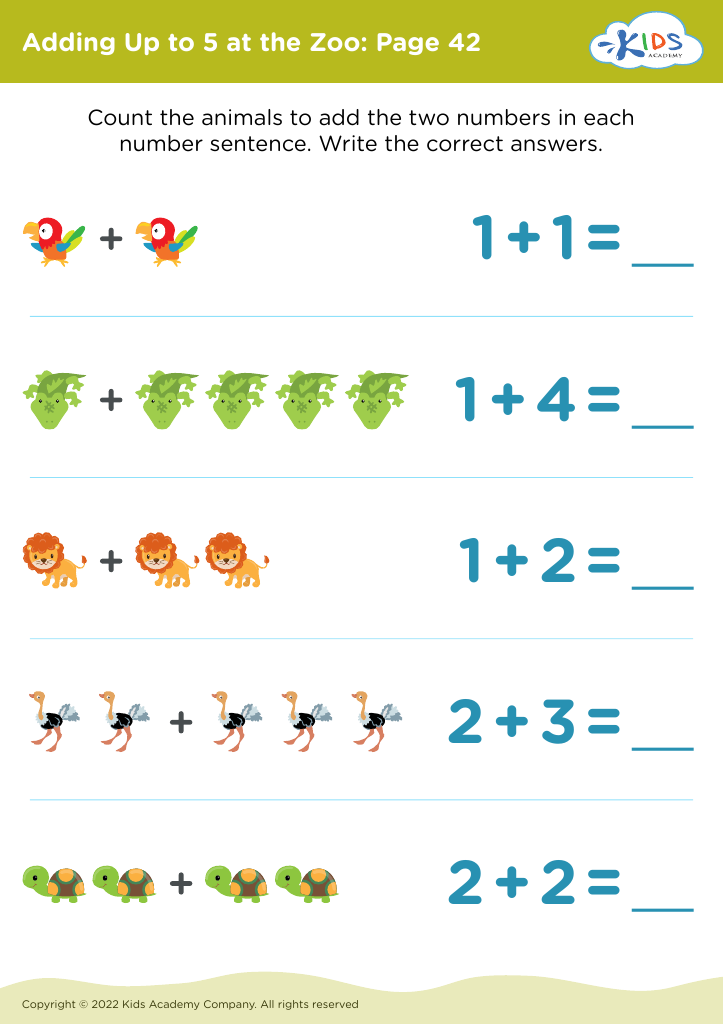
Adding Up to 5 at the Zoo: Page 42
Worksheet
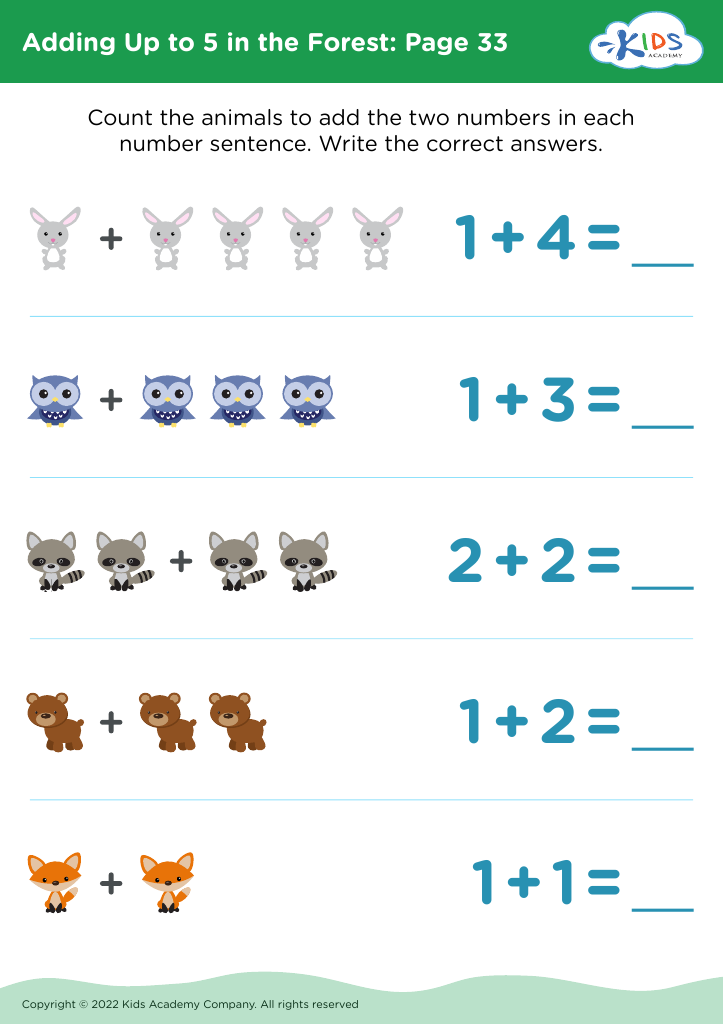
Adding Up to 5 in the Forest: Page 33
Worksheet
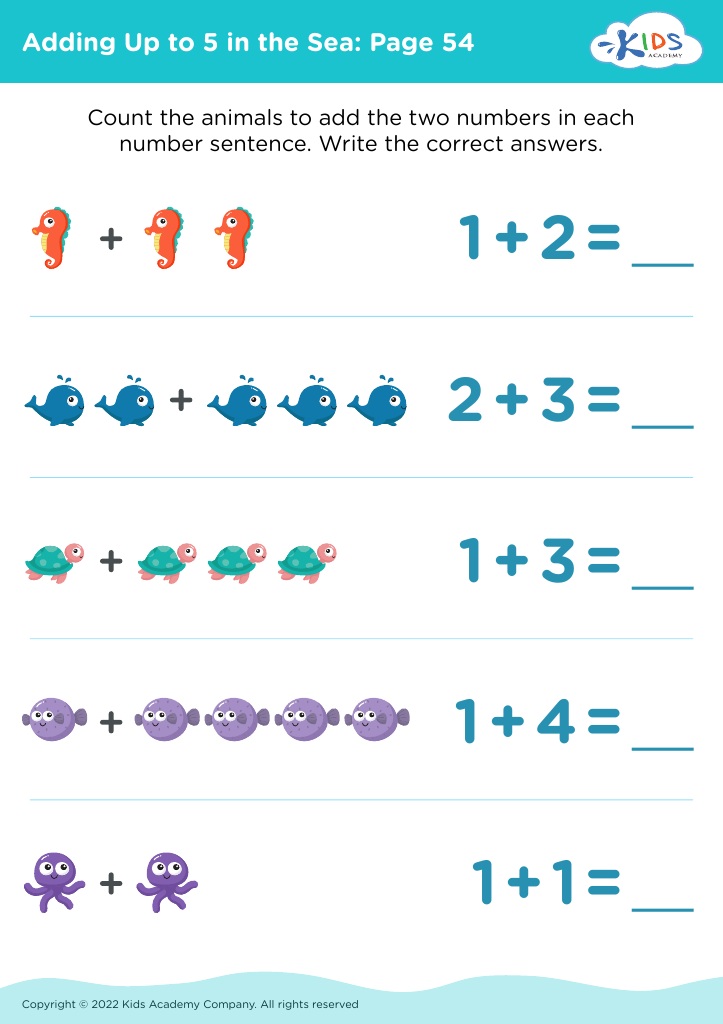
Adding Up to 5 in the Sea: Page 54
Worksheet
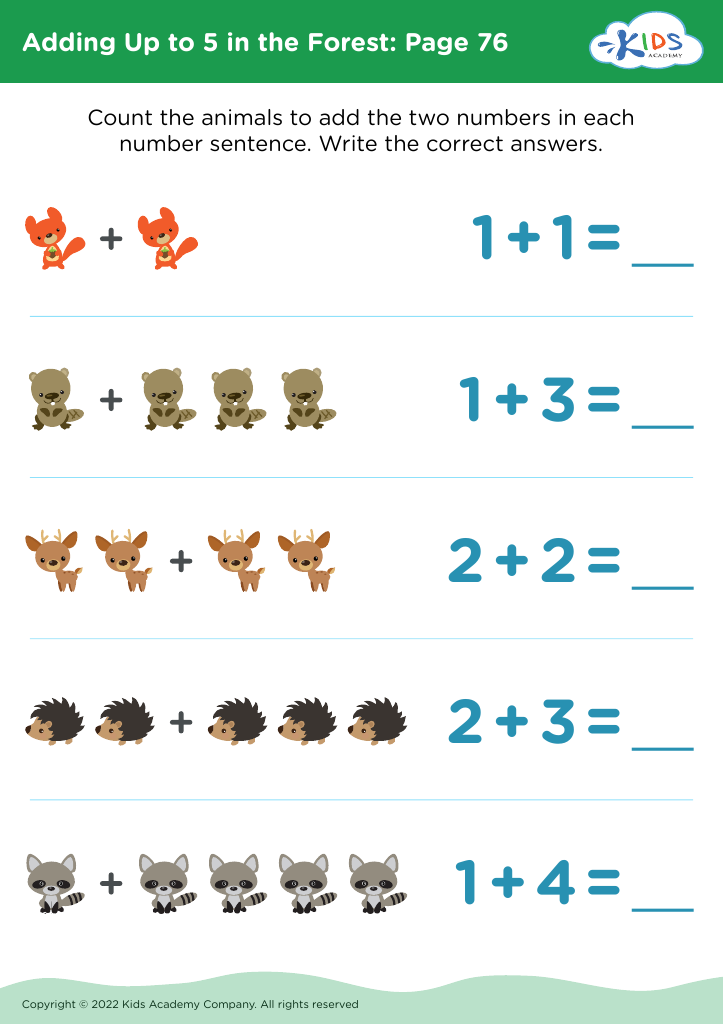
Adding Up to 5 in the Forest: Page 76
Worksheet
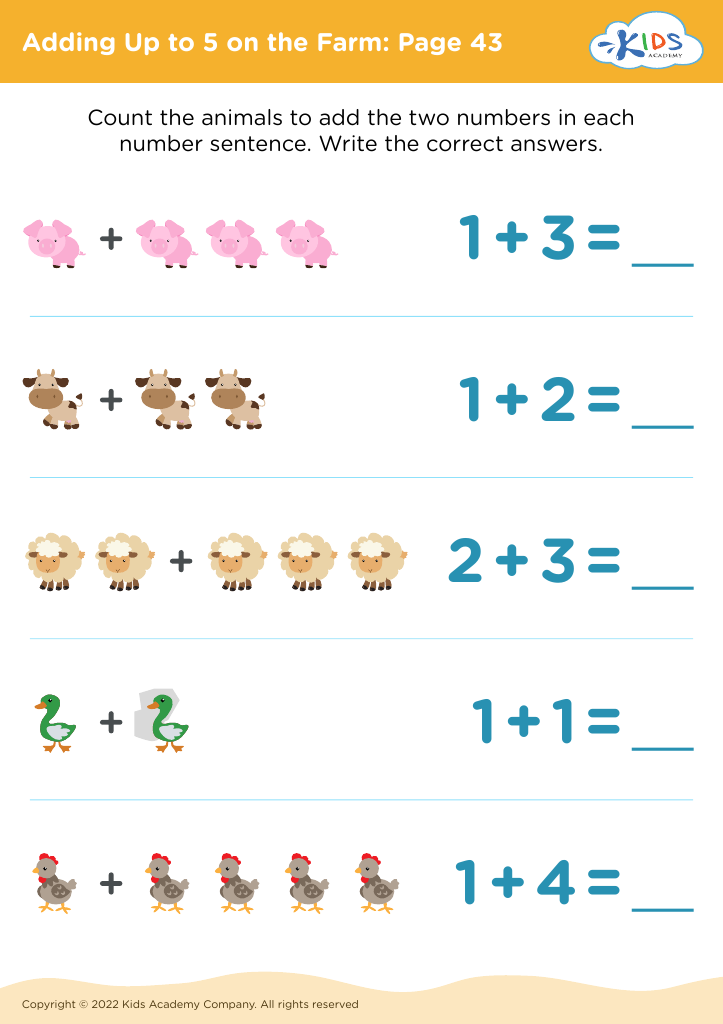
Adding Up to 5 on the Farm: Page 43
Worksheet
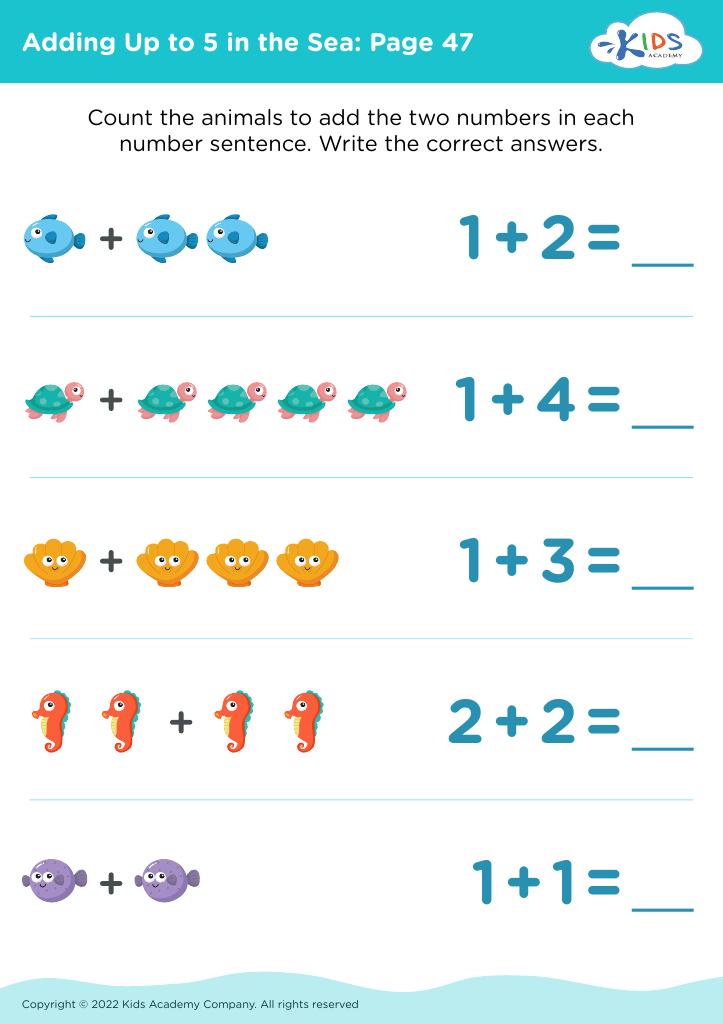
Adding Up to 5 in the Sea: Page 47
Worksheet
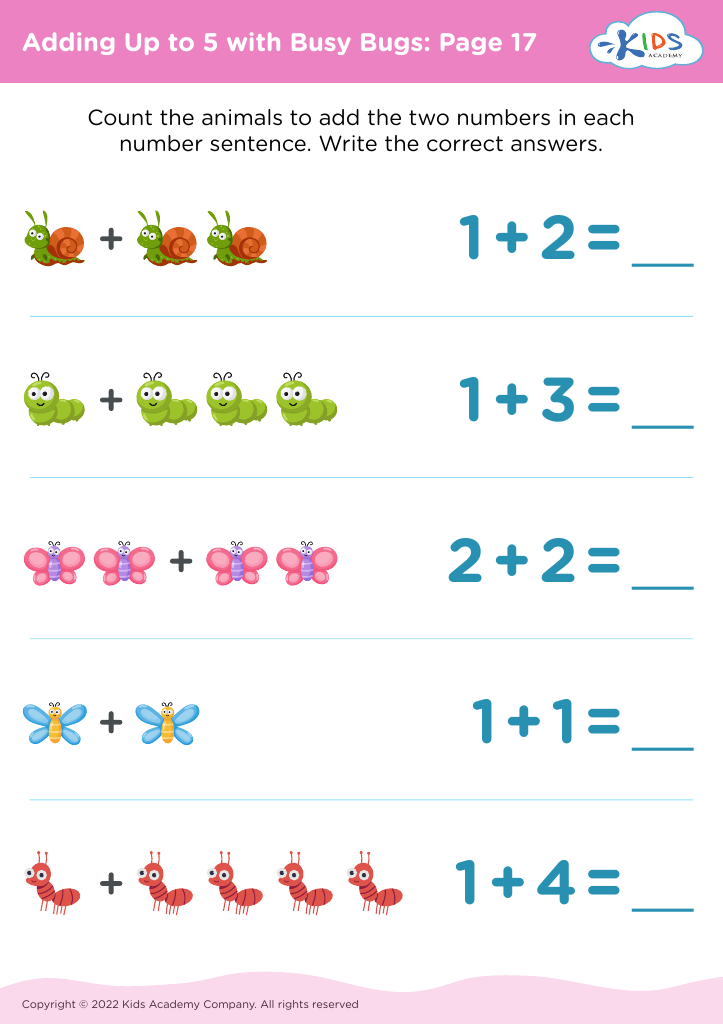
Adding Up to 5 with Busy Bugs: Page 17
Worksheet
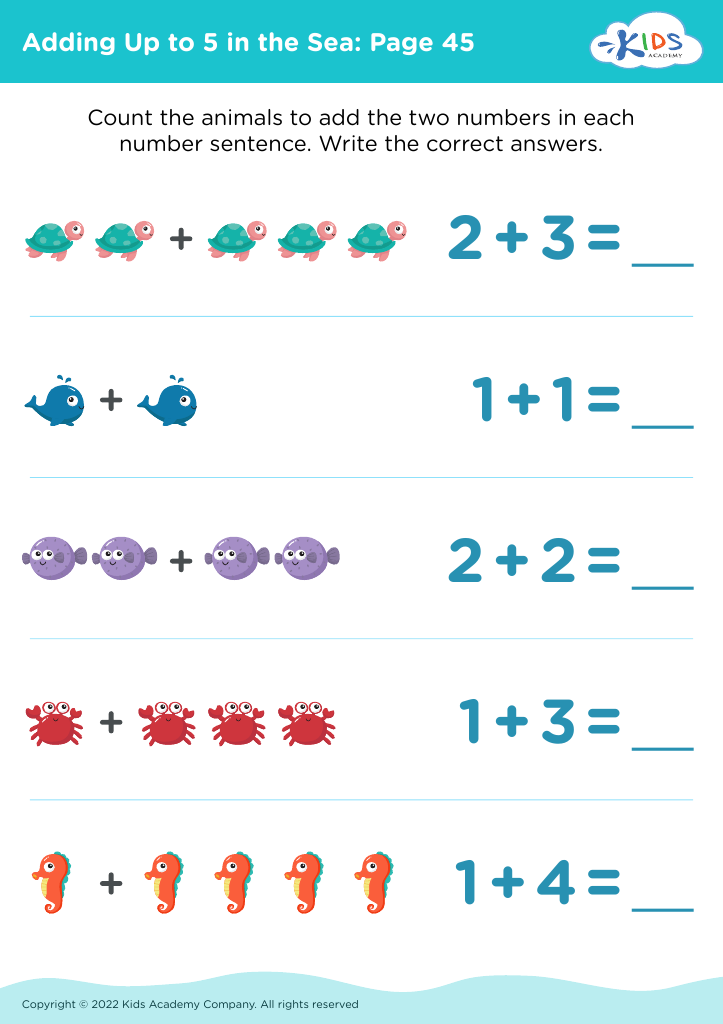
Adding Up to 5 in the Sea: Page 45
Worksheet
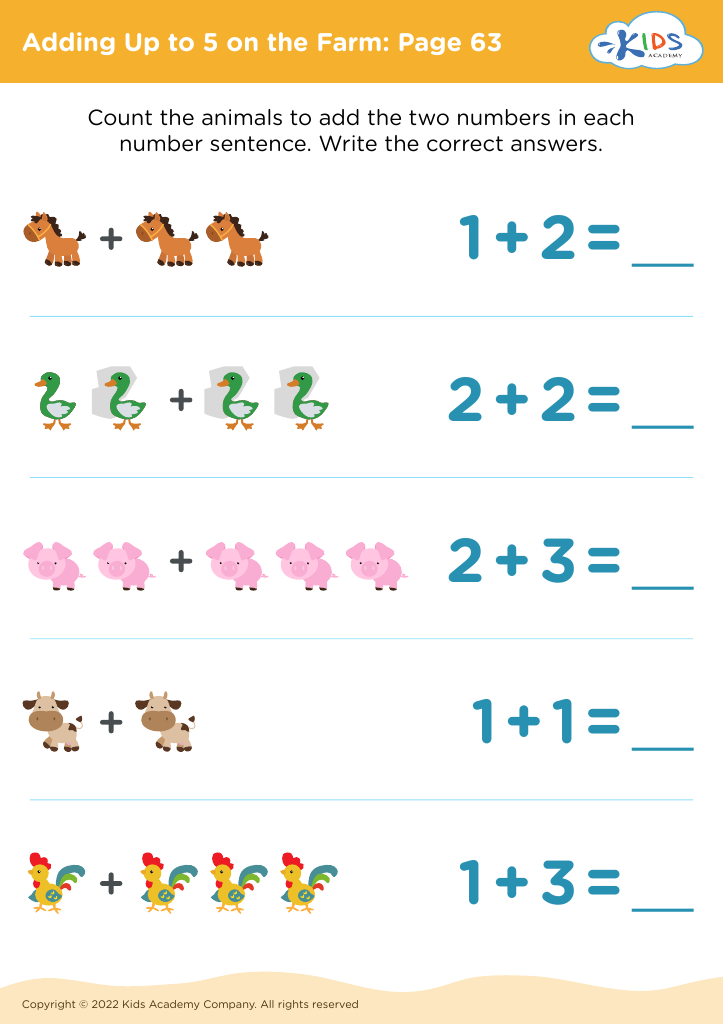
Adding Up to 5 on the Farm: Page 63
Worksheet
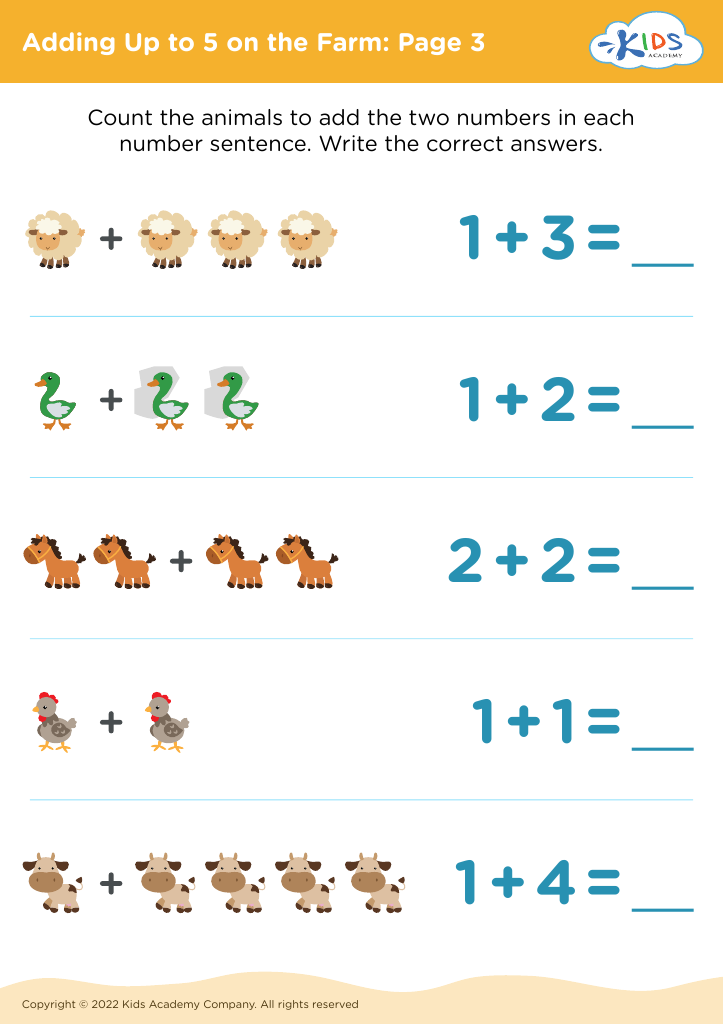
Adding Up to 5 on the Farm: Page 3
Worksheet
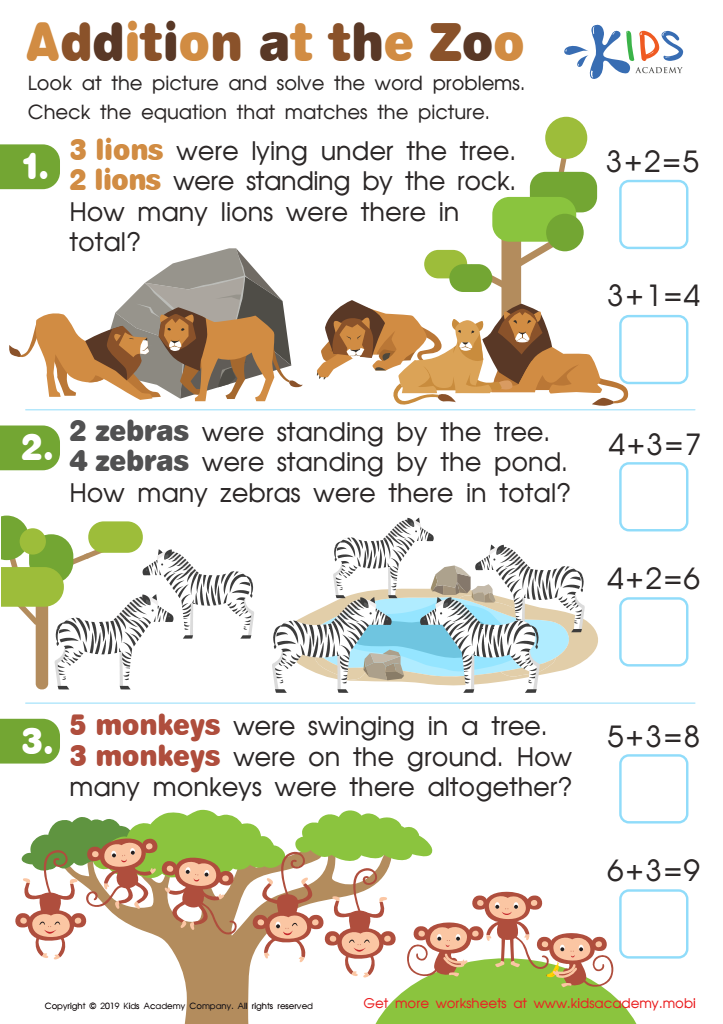
Addition at the Zoo Worksheet
Addition at the Zoo Worksheet
Visit the zoo with your kids and point out all the different animals. Ask them to name their favorites and identify animals on a worksheet. Challenge them to solve word problems related to the pictures. Ask them for the equation that fits the picture and check the answer.
Addition at the Zoo Worksheet

Worksheet
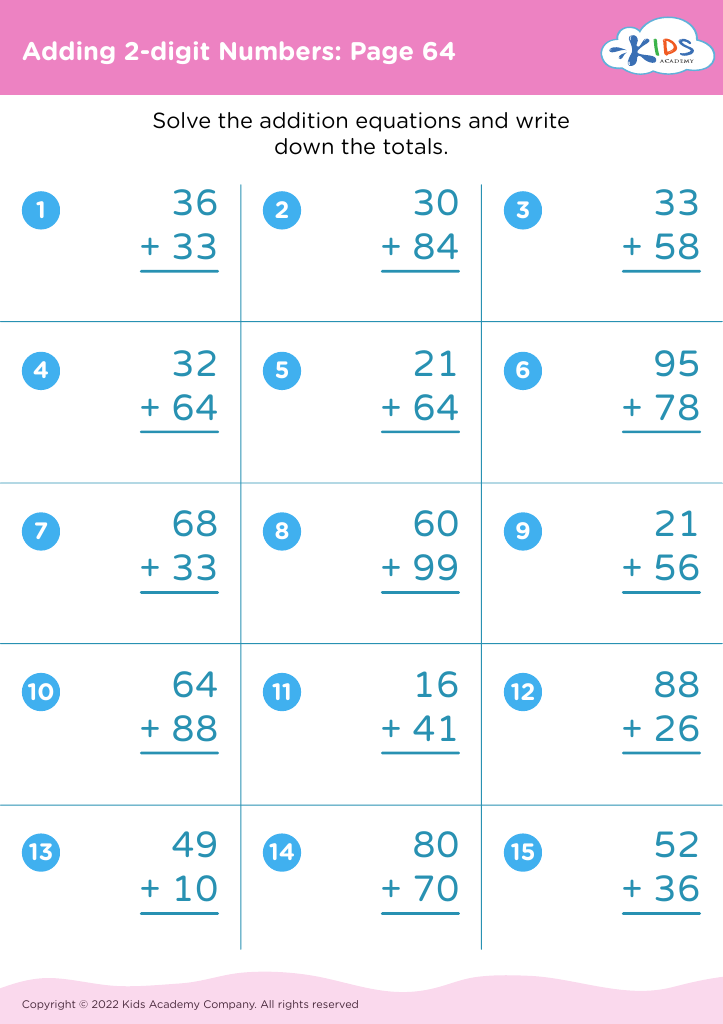
Adding 2-digit Numbers: Page 64

Adding 2-digit Numbers: Page 64

Adding 2-digit Numbers: Page 64
Worksheet
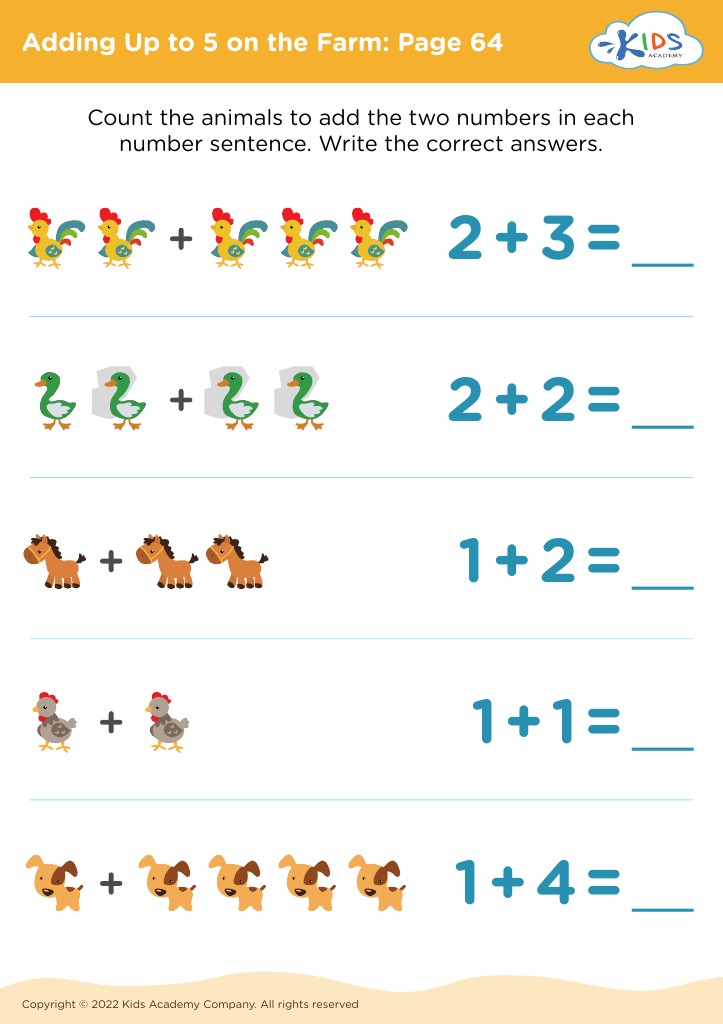
Adding Up to 5 on the Farm: Page 64
Worksheet
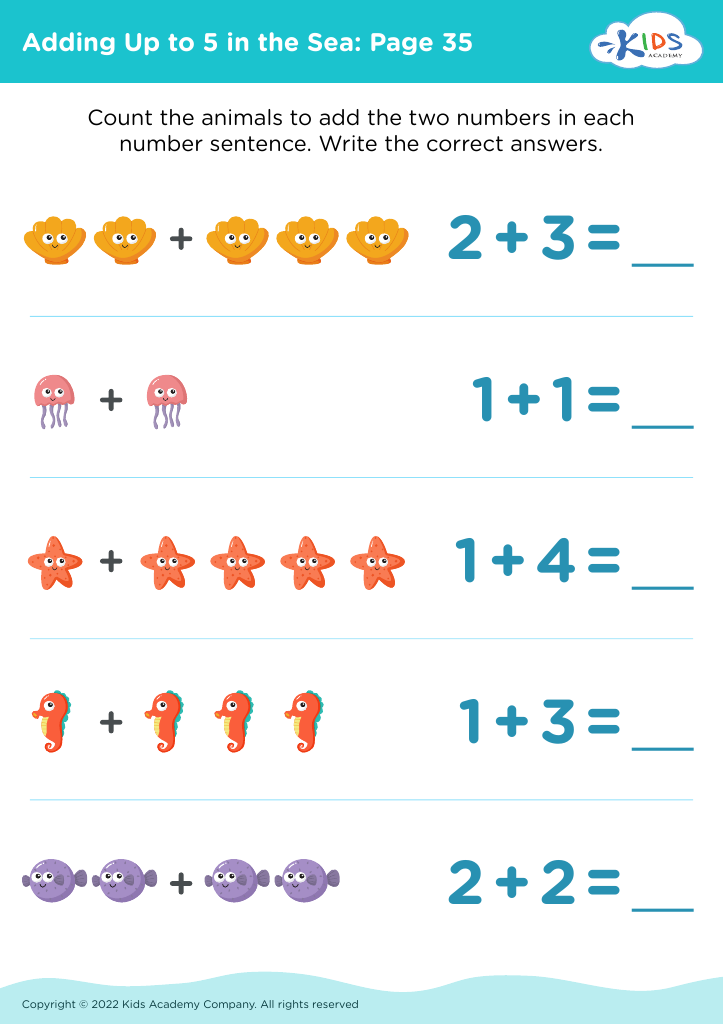
Adding Up to 5 in the Sea: Page 35
Worksheet


Basic addition skills are a foundational aspect of early childhood education, playing a crucial role in cognitive development and everyday problem-solving. For children ages 3-8, acquiring these skills fosters critical thinking and memory retention, which are essential for future academic success. Understanding addition helps youngsters develop number sense, enhance their ability to categorize and compare quantities, and build a strong mathematical foundation.

Furthermore, early mathematical skills have been linked to later achievements in math and other subjects. Research shows that children who grasp basic addition early are more likely to excel in more complex mathematical concepts in later grades. Moreover, these skills encourage confidence and independence—children learn to tackle challenges and think logically.

In social settings, basic addition enables children to engage in group activities, enhancing their interpersonal skills as they collaborate with peers on tasks that involve counting or sharing items. By focusing on basic addition, parents and teachers also create a supportive and stimulating learning environment, fostering a love of learning and exploration. Overall, prioritizing basic addition skills for young learners is essential for their holistic development and sets a positive trajectory for their educational journey.