Developing math skills Worksheets for Ages 3-8
19 filtered results
-
From - To
Nurture your child’s love for learning with our comprehensive Developing Math Skills Worksheets, tailored for kids ages 3-8. These printable worksheets cover essential topics, including counting, basic arithmetic, shapes, patterns, and problem-solving skills. Designed with engaging visuals and age-appropriate activities, our resources make math fun and accessible, fostering a strong foundation for future success. Perfect for parents and teachers, these worksheets support both in-class and at-home learning, making math a delightful adventure for young minds. Equip your child with the confidence and skills needed to excel in math with our expertly crafted worksheets.
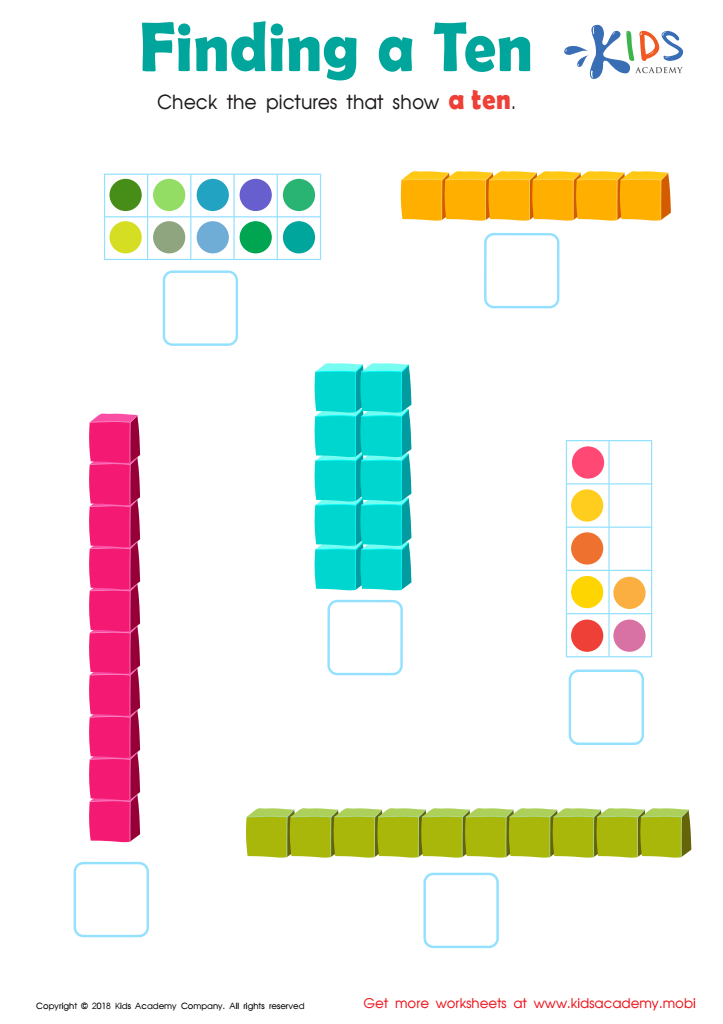
Finding a Ten Worksheet
 Assign to My Students
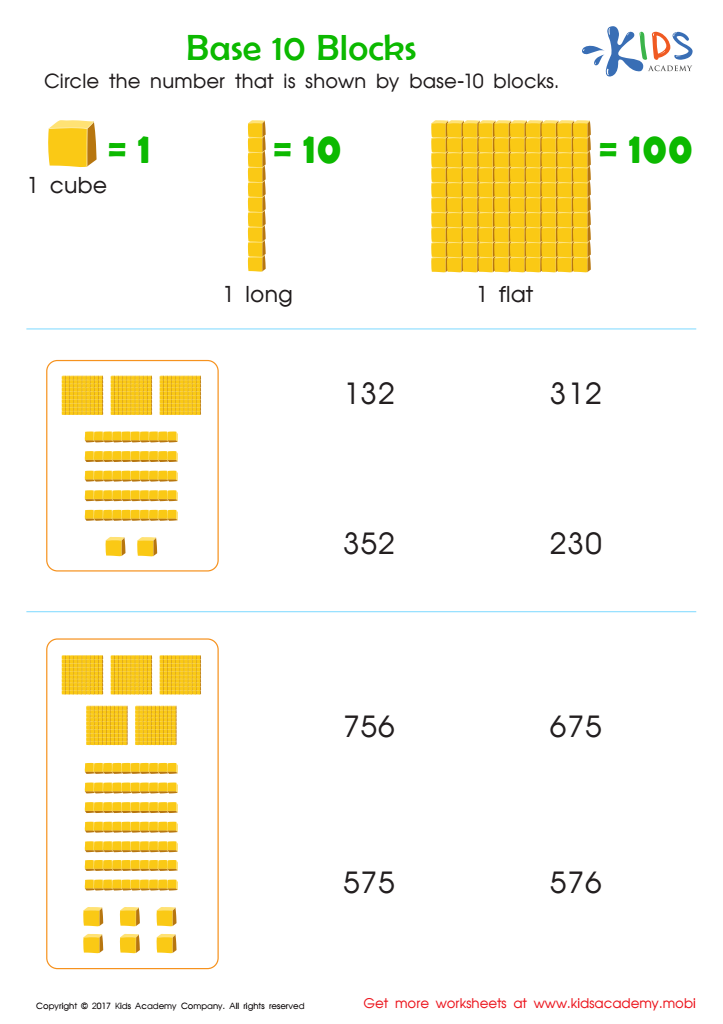
Base Ten Blocks Worksheet
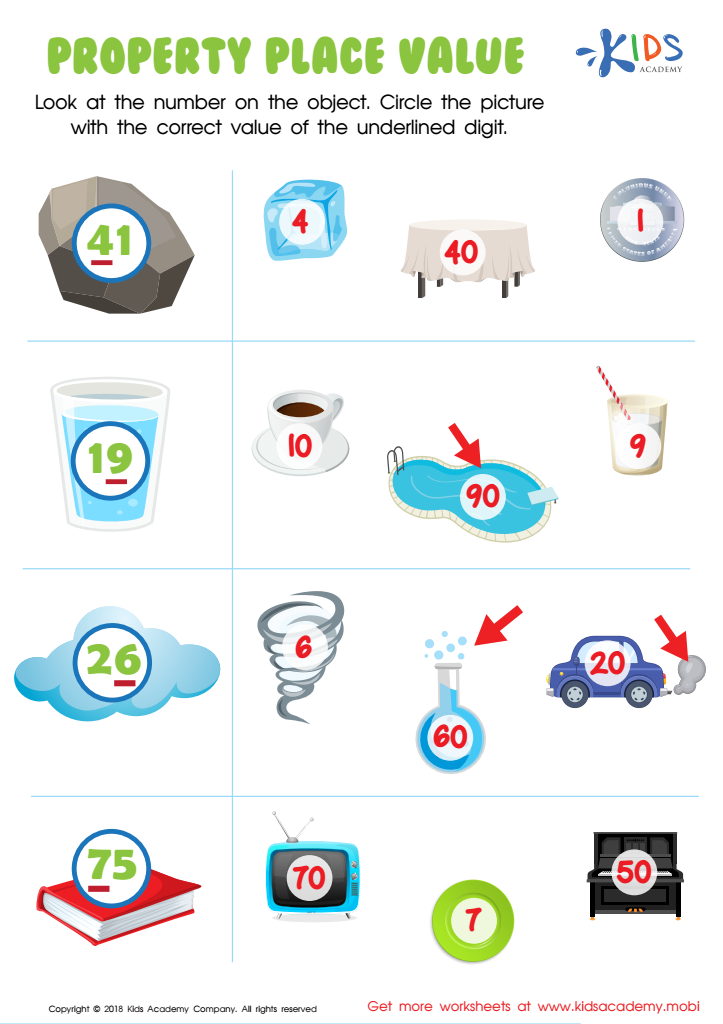
Property Place Value Worksheet
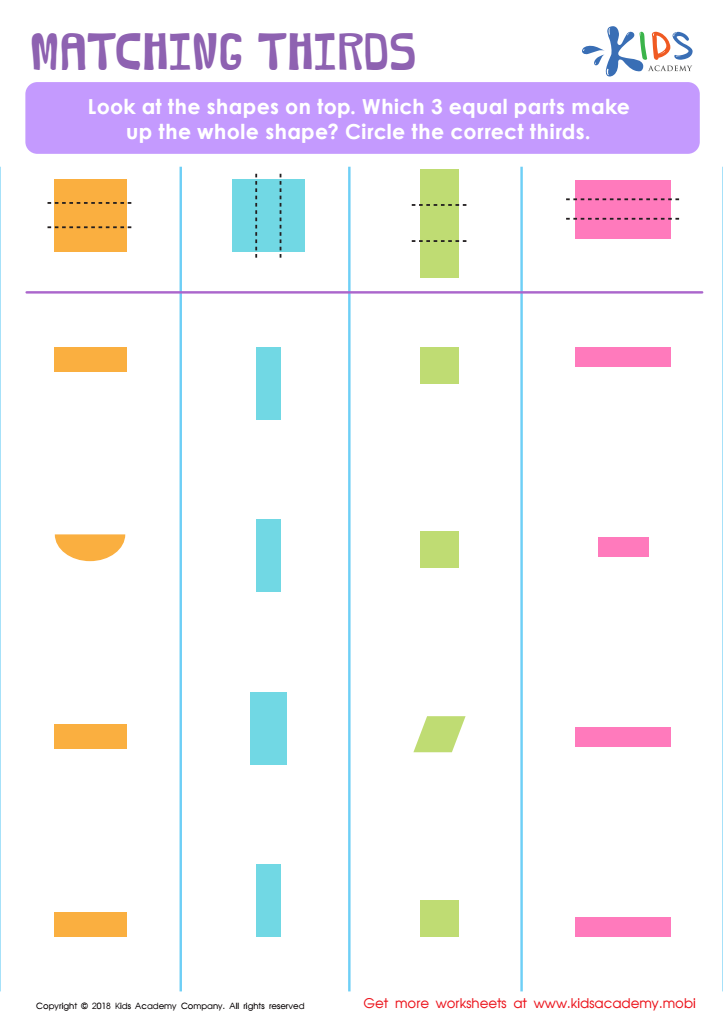
Matching Thirds Worksheet
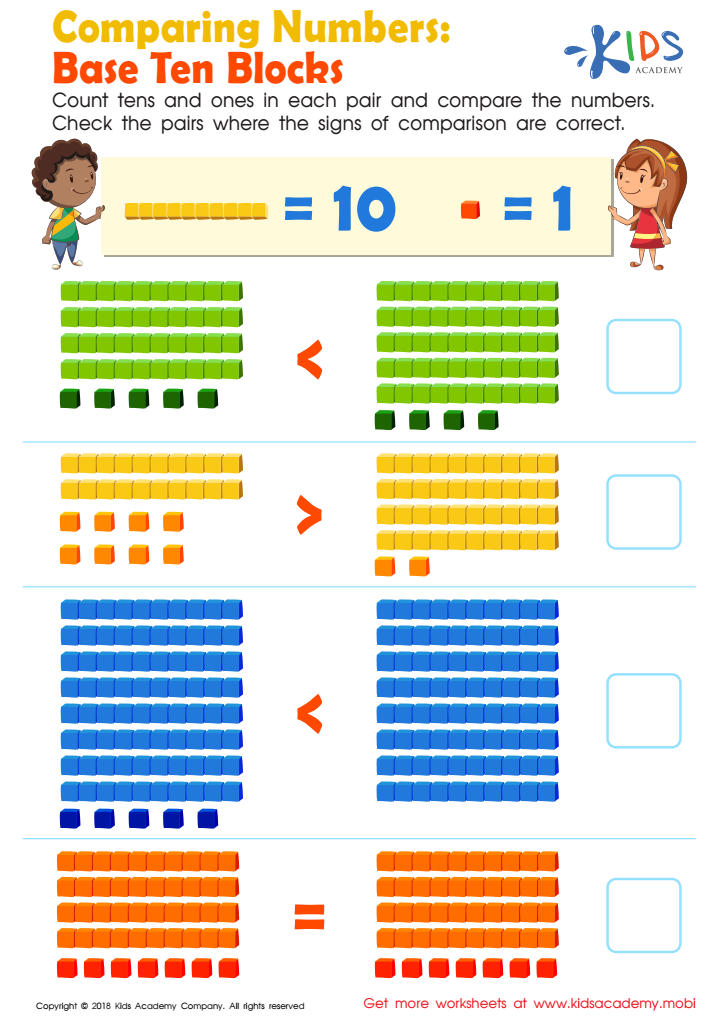
Comparing Numbers: Base Ten Blocks Worksheet
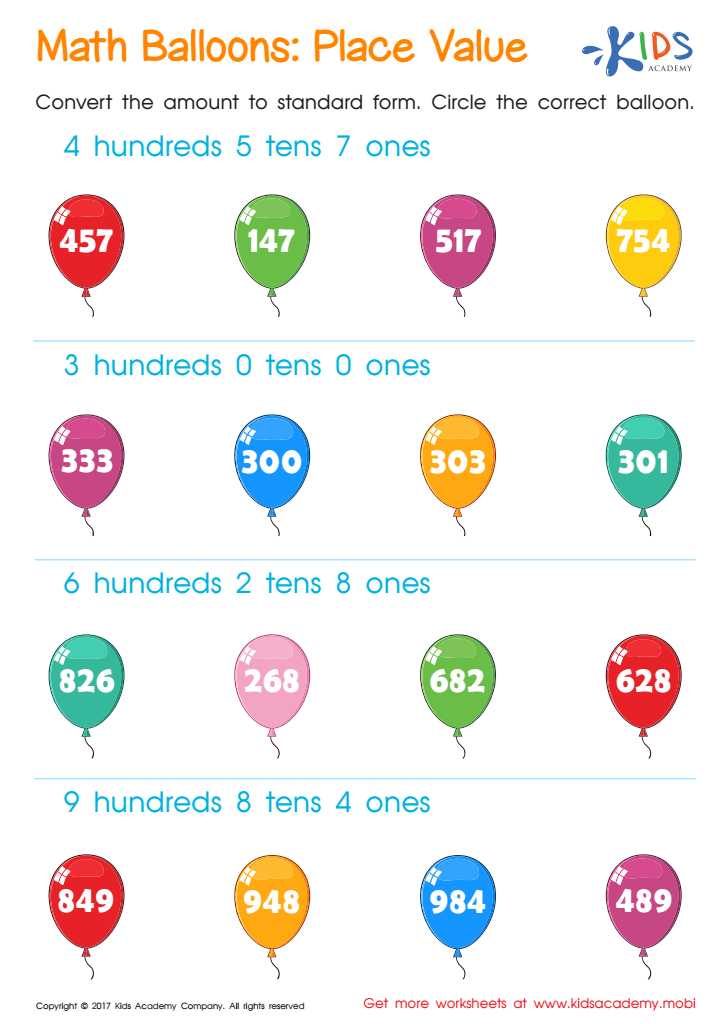
Place Value Printable Worksheet
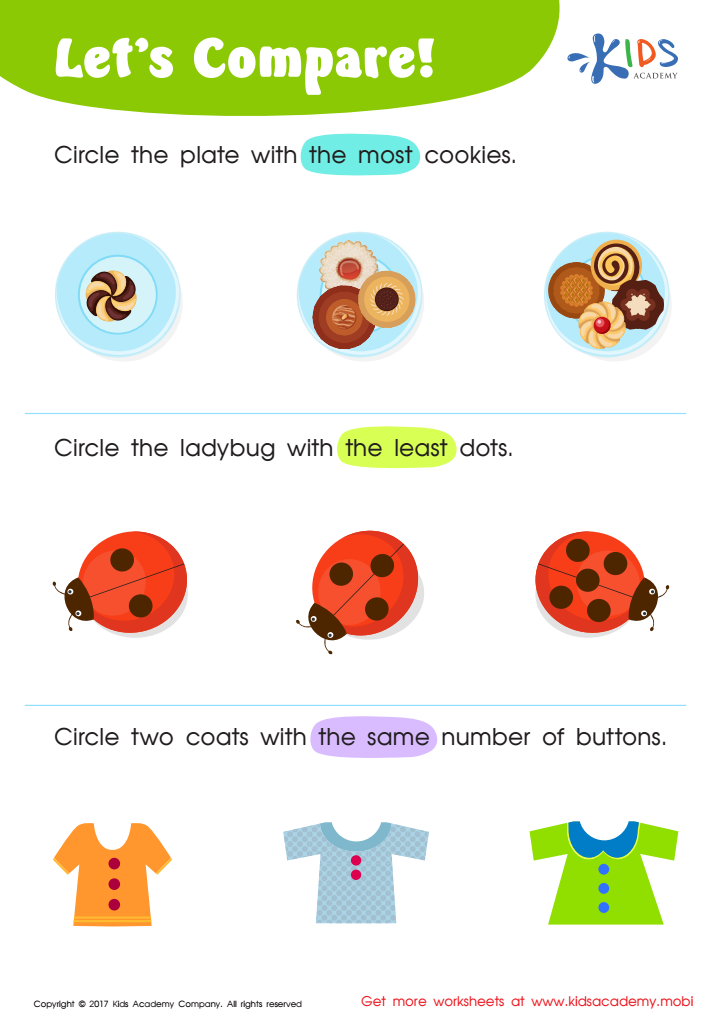
Matching: Classifying Toys by Size Worksheet
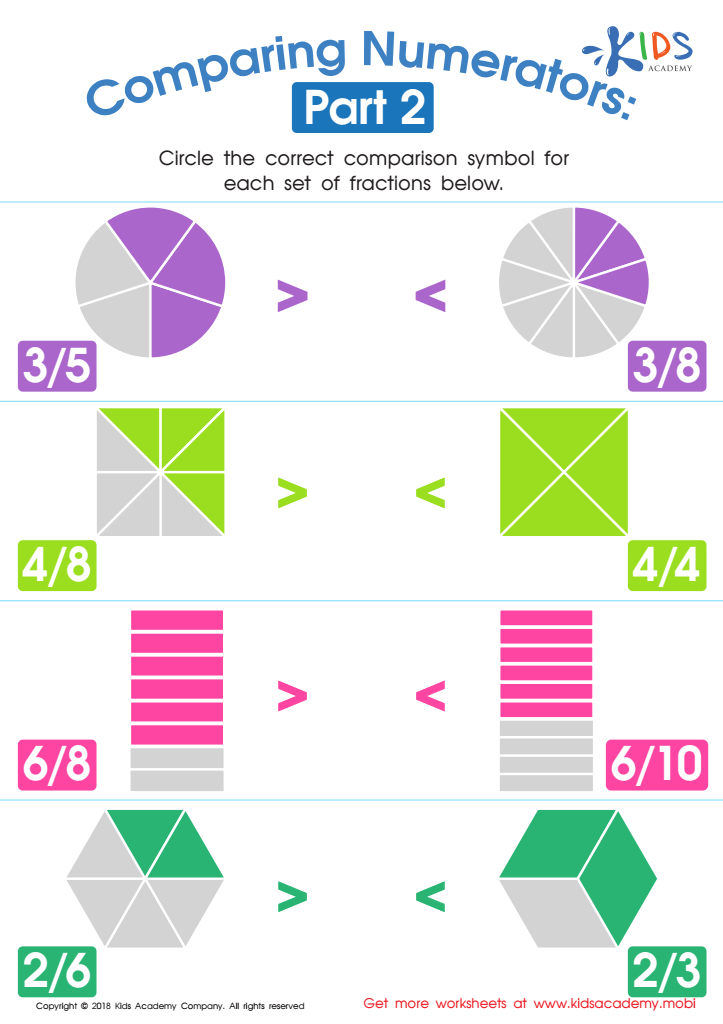
Comparing Numerators Part 2 Worksheet
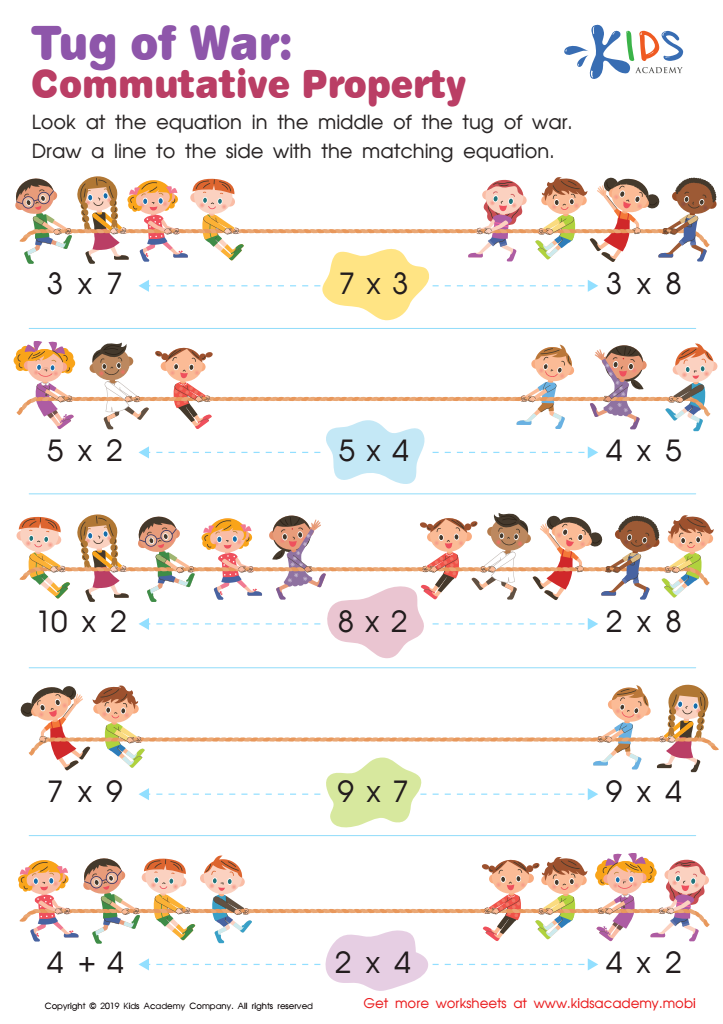
Tug of War: Commutative Property Worksheet
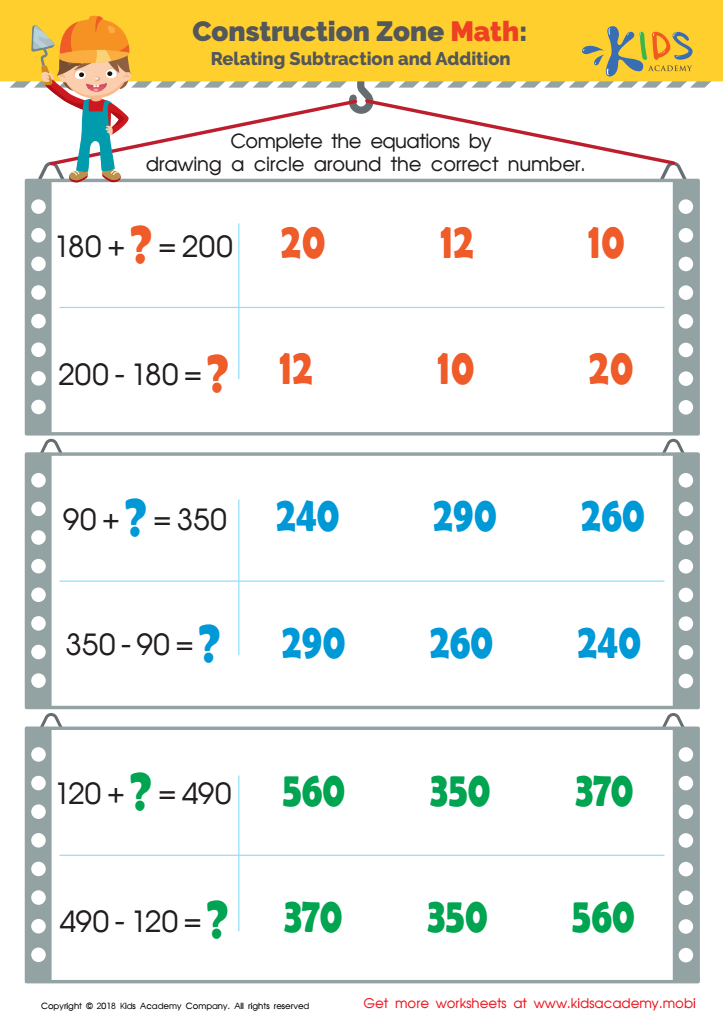
Construction Zone Math: Relating Subtraction and Addition Worksheet
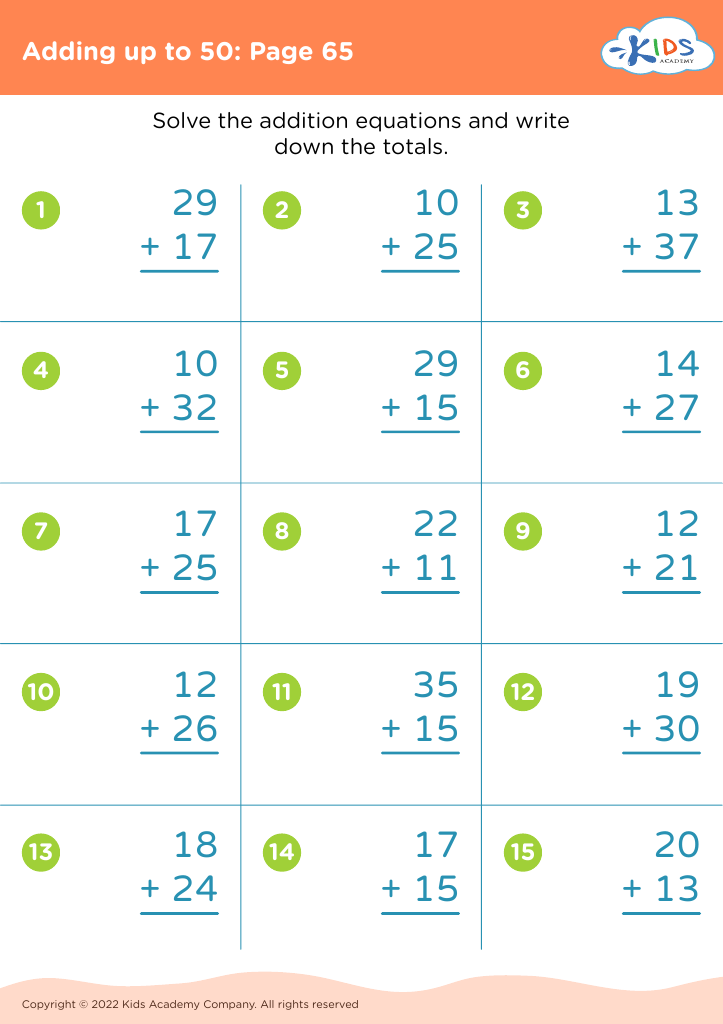








Developing math skills for children aged 3-8 sets a critical foundation for their academic and everyday lives. During this period, children's brains are highly receptive to learning and building new neural connections. Early math skills like counting, recognizing numbers, and understanding basic concepts such as shapes and patterns equip children with problem-solving and analytical abilities. These are essential not only in mathematics but also in reading comprehension and logical reasoning tasks.
Additionally, fostering math skills early can significantly boost a child's confidence and interest in the subject, reducing the likelihood of math anxiety in later years. Parental involvement and support from teachers at this stage can make math feel approachable and fun, further encouraging positive attitudes towards learning.
Mathematical proficiency at a young age is also predictive of later academic success. Numerous studies have indicated that early mastery of math fundamentals is strongly linked to future achievements in a range of subjects. Early math skills are practical life skills too; they help children make sense of the world around them, such as understanding time, managing simple finances, and assessing measurements. Therefore, investing effort and resources in developing math skills for children aged 3-8 is indispensable for their holistic cognitive and emotional development.








