Enhancing Counting Skills Worksheets for Ages 3-8 - Page 2
29 filtered results
-
From - To
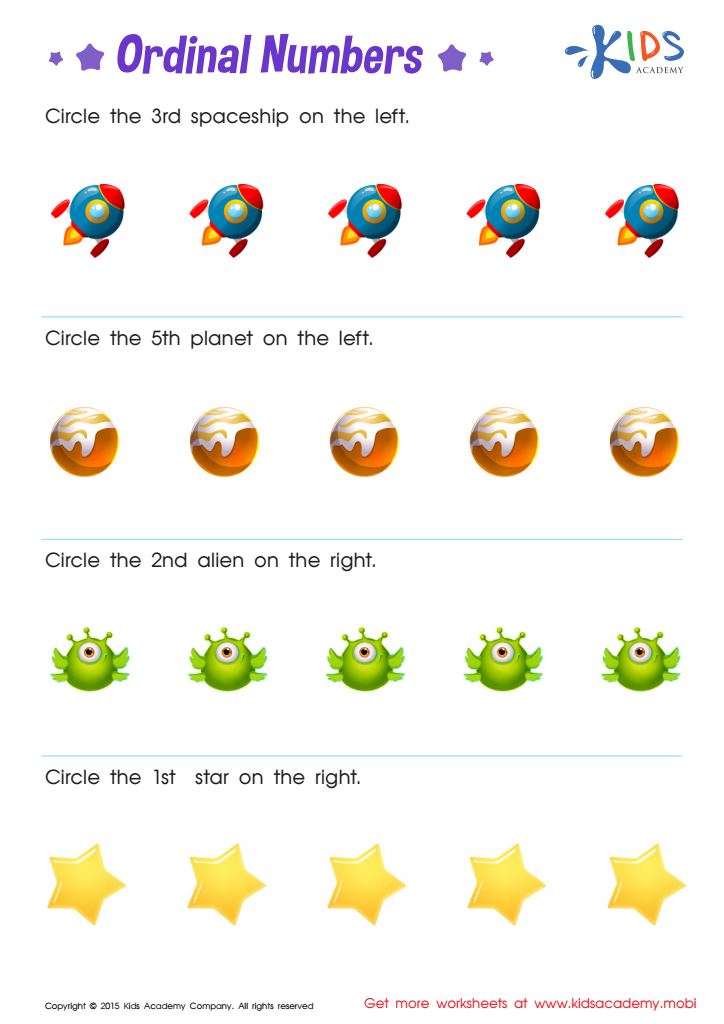
Ordinal Numbers: Space Ordinals Worksheet
 Assign to My Students
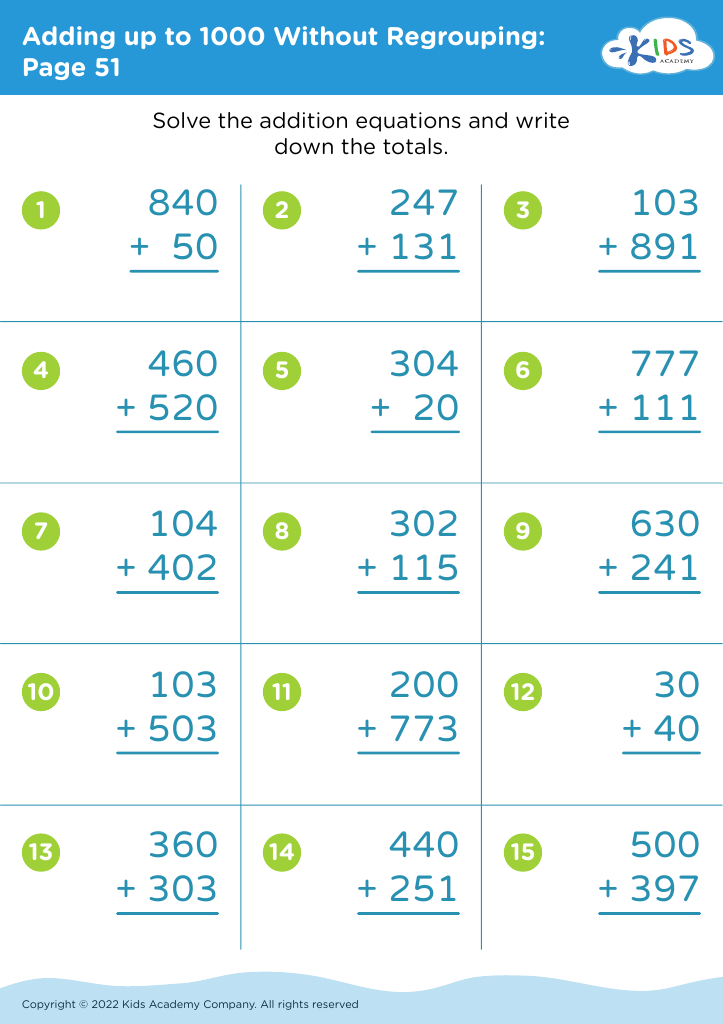
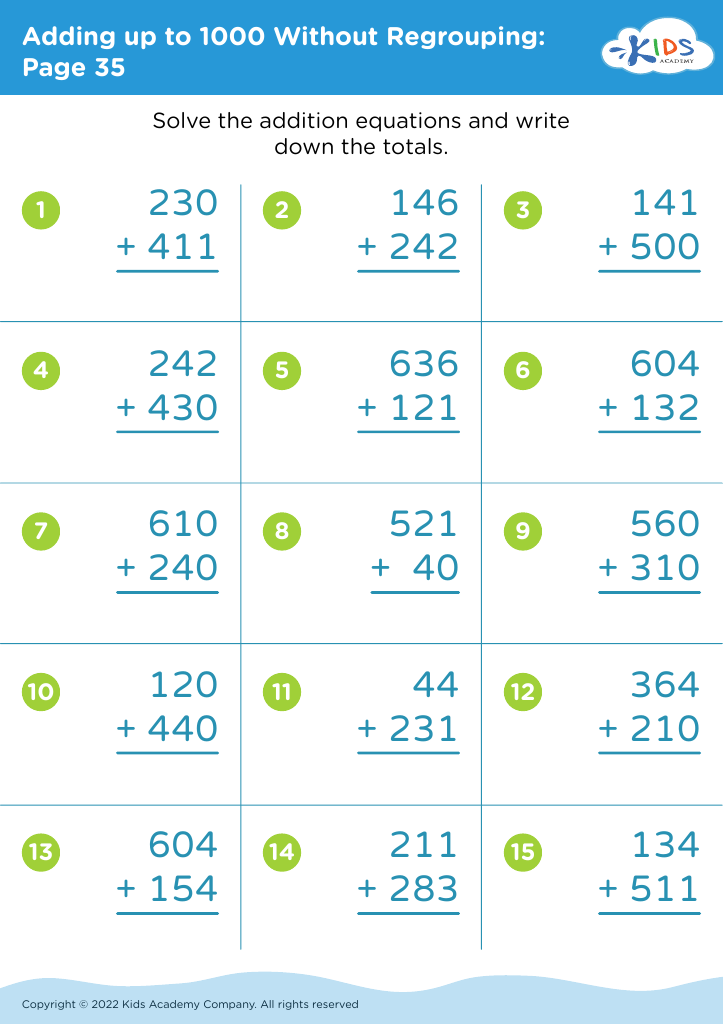
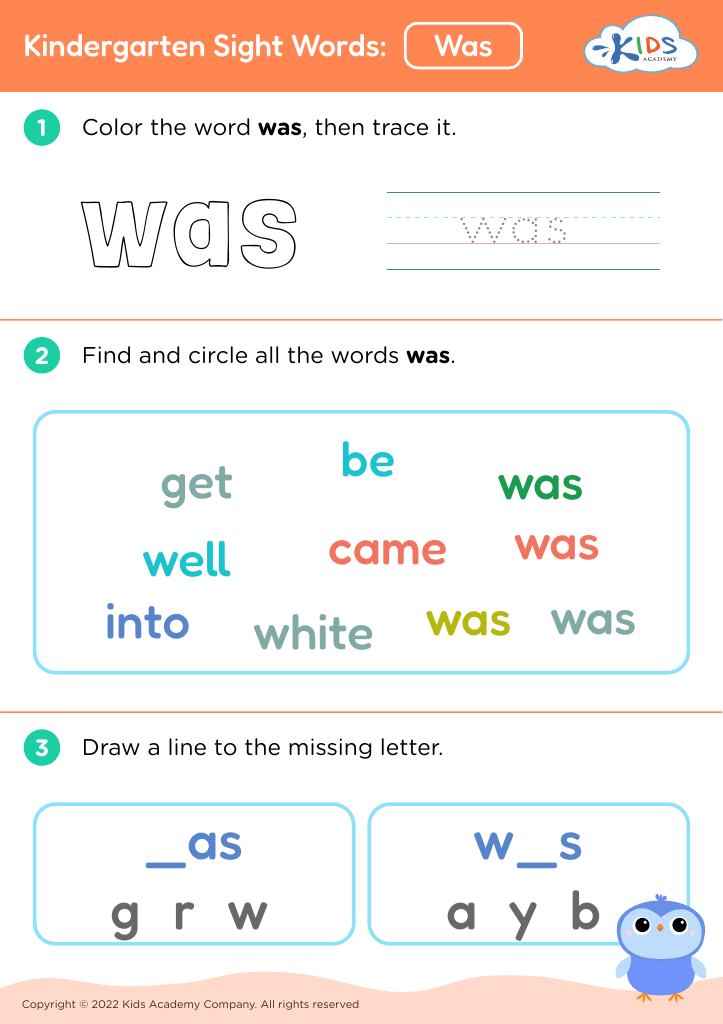






Enhancing counting skills for children aged 3-8 is crucial as it lays the foundation for their future mathematical understanding and academic success. At this formative age, children are exceptionally receptive to learning and developing cognitive skills. Counting not only helps with basic number recognition but also fosters a sense of order, comparison, and an understanding of quantities and relationships—crucial components of early math education.
Count-enhancement activities improve fine motor skills through tangible interactions with objects. When children physically handle items to count, they integrate visual and tactile learning, enhancing overall engagement and retention. Additionally, counting fosters problem-solving and logical thinking, skills vital for academic subjects beyond mathematics.
For teachers and parents, prioritizing counting makes early math fun and relevant. It sparks curiosity and confidence, reducing math anxiety in the long run. Practical benefits include improving children’s abilities to follow patterns, sequences, and perform simple calculations. As a cornerstone of early education, improved counting skills influence overall academic readiness, social interaction, and self-esteem.
Providing diverse and culturally relevant counting activities—be it through games, stories, or everyday tasks—can build a child’s proficiency in number synthesis seamlessly. Teachers and parents should care because foundational number strength leads to a confident, successful student with strong life-long analytical skills.








