Graph interpretation Worksheets for Ages 3-8
5 filtered results
-
From - To
Introduce your little ones to the exciting world of data with our engaging Graph Interpretation Worksheets designed for ages 3-8. These diverse and colorful worksheets help children develop essential skills in understanding and analyzing graphs. From pictographs to bar graphs, our resources make learning fun and interactive, stimulating young minds and building a solid foundation in math and data comprehension. Perfect for parents, teachers, and homeschooling curriculum, our worksheets turn learning into a delightful adventure, fostering critical thinking and problem-solving skills that are vital for academic success. Explore our collection today and watch your child's confidence grow!
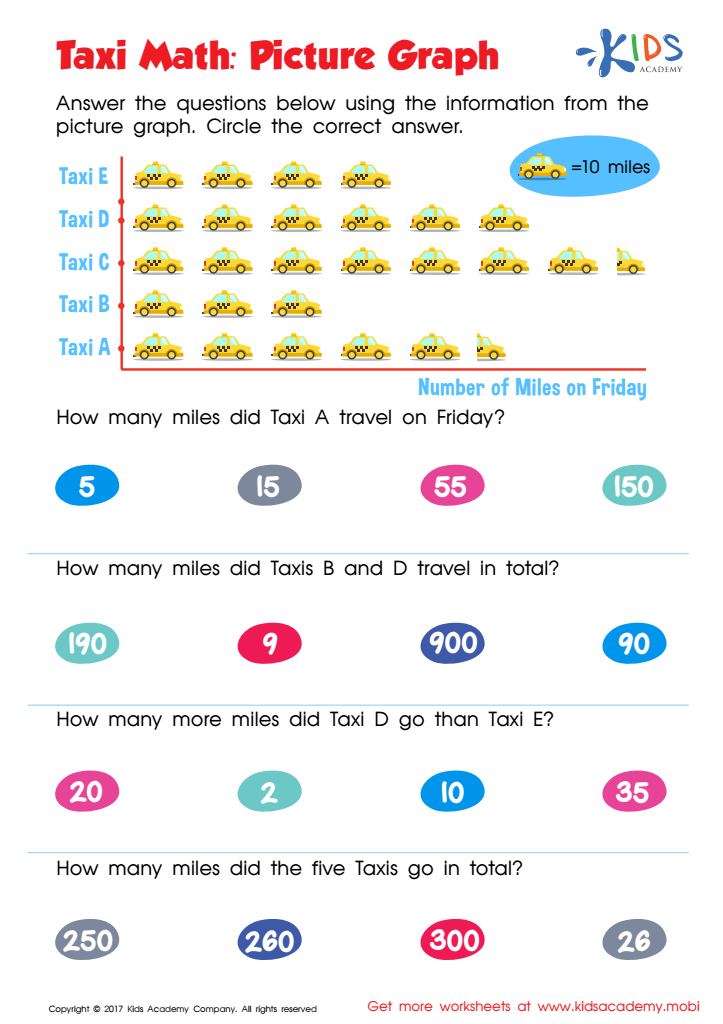
Taxi Math Worksheet
 Assign to My Students
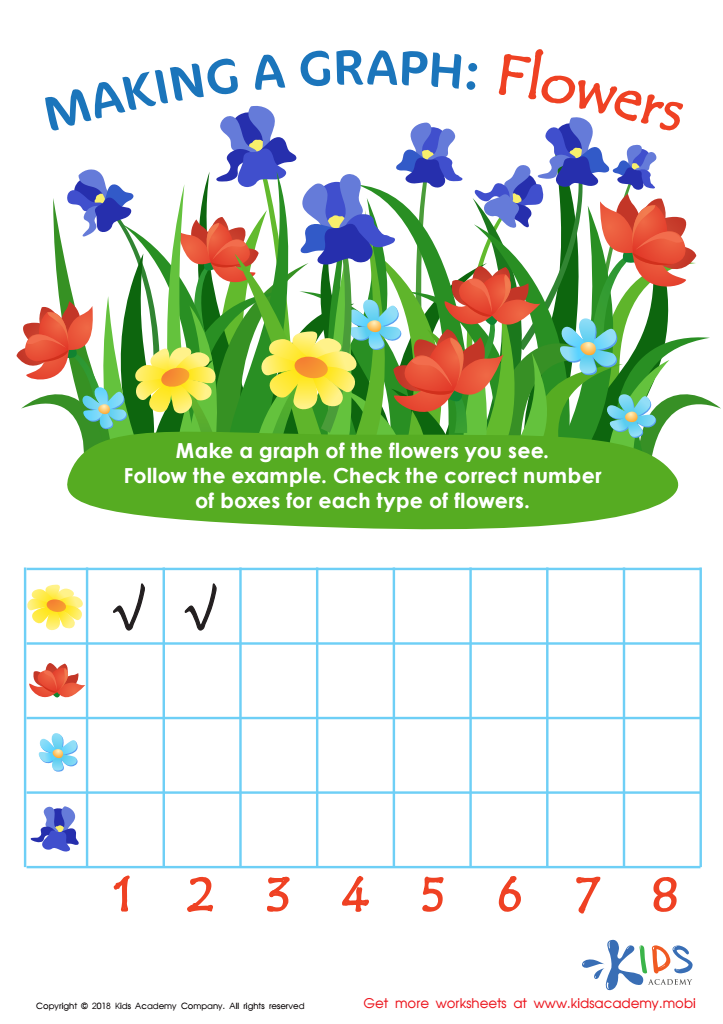
Making a Graph: Flowers Worksheet
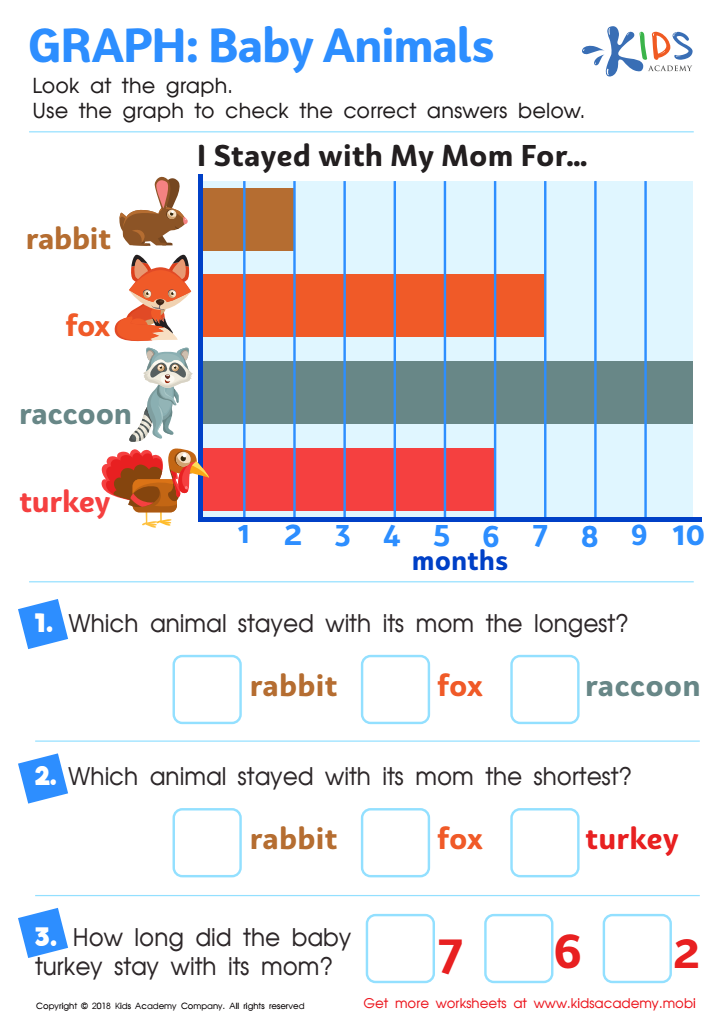
Graph: Baby Animals Worksheet
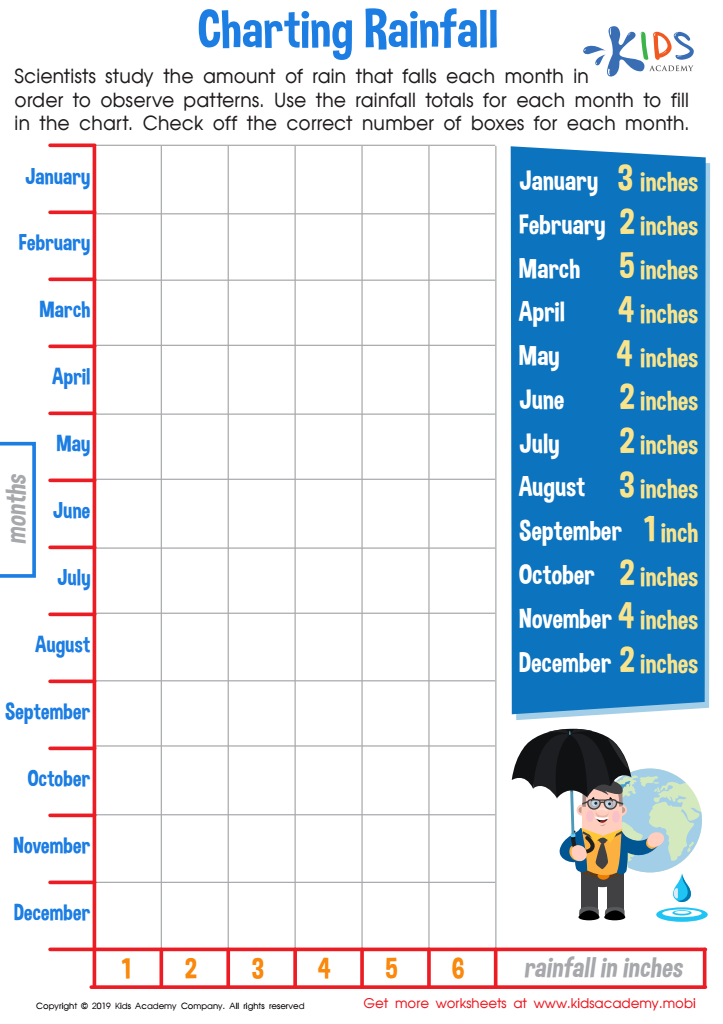
Charting Rainfall Worksheet
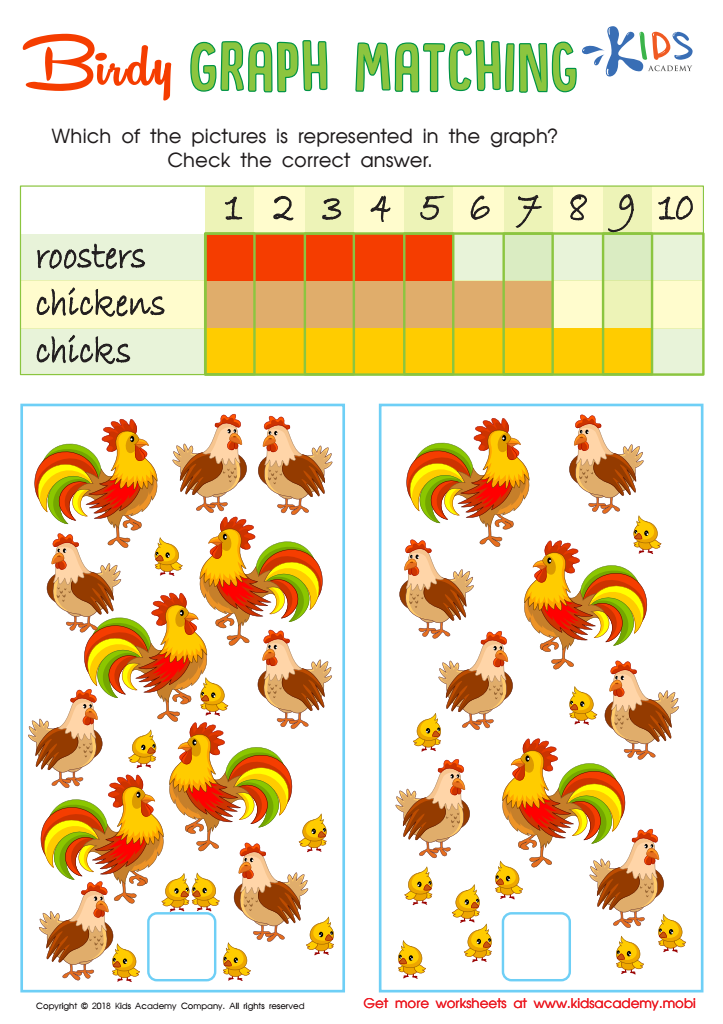
Birdy Graph Matching Worksheet








Understanding graph interpretation from an early age is crucial for a child's cognitive development and lays the foundation for critical thinking skills. For children ages 3-8, graphs can be an engaging and visual way to make sense of data. When parents and teachers introduce graph interpretation, they're helping children develop key analytical skills such as comparing quantities, recognizing patterns, and making predictions. These skills foster mathematical understanding and logical reasoning, vital for success in future academic pursuits.
Graphs also offer a multi-sensory learning experience. Colorful and dynamic visuals help children grasp abstract concepts more concretely, aiding better retention. By interpreting simple bar graphs or pie charts, young learners start to see the world quantitatively, recognizing numerical relationships in daily activities, like comparing the number of apples to oranges.
Moreover, engaging with graphs can build a child's confidence in navigating more complex informational texts later in their education. It encourages curiosity and exposes them to scientific methods, foundational elements of STEM education. Given our data-driven world, graph literacy is increasingly essential. Early introduction ensures children are comfortable and proficient with this critical skill, empowering them for lifelong learning and problem-solving. Investing attention in this area equips young minds with a versatile tool for understanding and engaging with the world.








