Text analysis Worksheets for Ages 3-8
4 filtered results
-
From - To
Our Text Analysis Worksheets for Ages 3-8 are meticulously designed to help young learners develop critical reading comprehension skills. Focusing on foundational concepts like identifying main ideas, comparing and contrasting information, and recognizing story elements, these engaging activities are perfect for preschoolers and early elementary students. Each worksheet promotes interactive and fun learning through colorful graphics and age-appropriate content, encouraging curiosity and fostering a love for reading. Ideal for both classroom and home use, our worksheets are an essential resource for parents and teachers aiming to boost literacy and learning proficiency in young children.
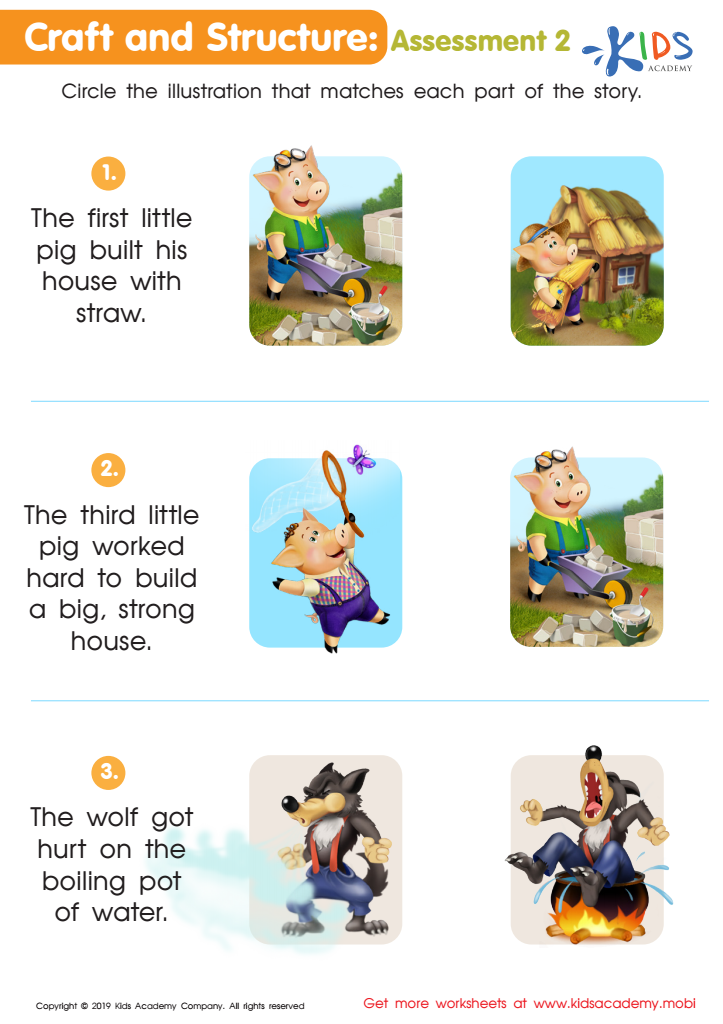
Craft and Structure: Assessment 2 Worksheet 2
 Assign to My Students
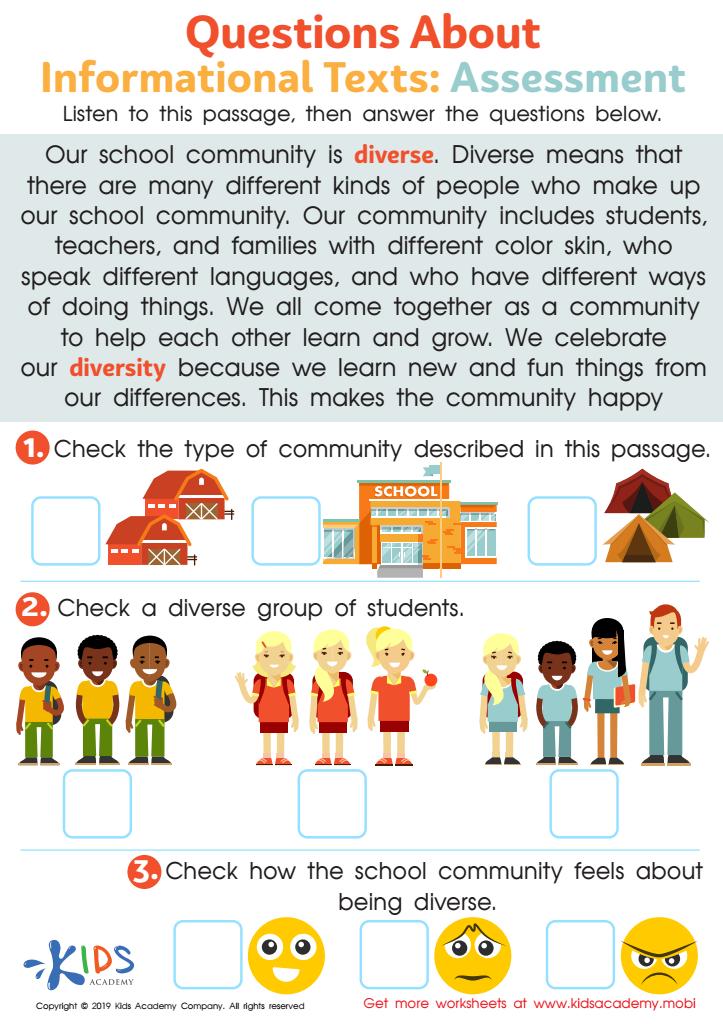
Questions About Informational Texts: Assessment 1 Worksheet
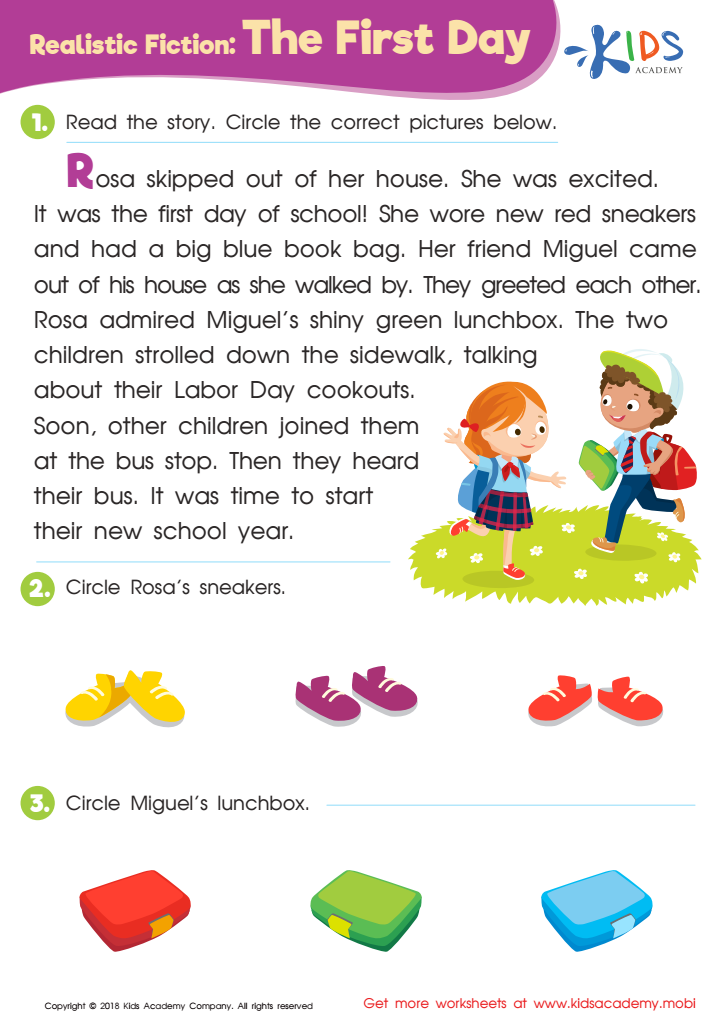
Realistic Fiction: The First Day Worksheet
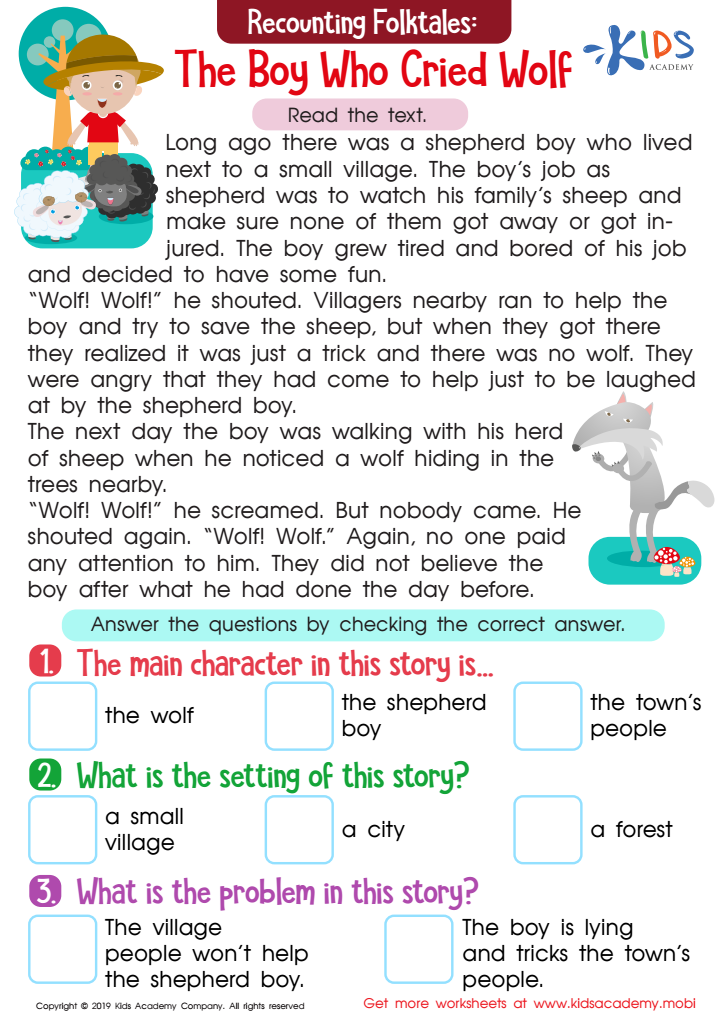
The Boy Who Cried Wolf Part 1 Worksheet






Text analysis for ages 3-8 is essential in laying the foundation for lifelong literacy and cognitive development. At this critical stage, children's brains are exceptionally receptive to language acquisition, and exposure to well-analyzed, age-appropriate texts can make a significant difference in their reading abilities, comprehension skills, and overall intellectual growth.
Parents and teachers who invest in text analysis can ensure that the materials presented are not only developmentally appropriate but also engaging and enriching. Analyzing a text involves understanding complexities such as vocabulary difficulty, sentence structure, thematic elements, and potential cultural references which can either enhance or hinder a young reader's experience.
For example, through thoughtful text analysis, teachers can select books and resources tailored to the specific developmental needs and interests of their students, making learning both enjoyable and relevant. Similarly, parents can facilitate a love of reading by providing materials that challenge their children without causing frustration.
Additionally, comprehension and critical thinking skills are honed through texts that offer both literal and inferential challenges. This early engagement helps prepare young learners for more complex texts in later years while fostering an intrinsic motivation for reading. By prioritizing text analysis, parents and teachers act as gatekeepers, providing scaffolding that supports children as they embark on their educational journey.








