Understanding measurements Worksheets for Ages 3-8 - Page 2
28 filtered results
-
From - To
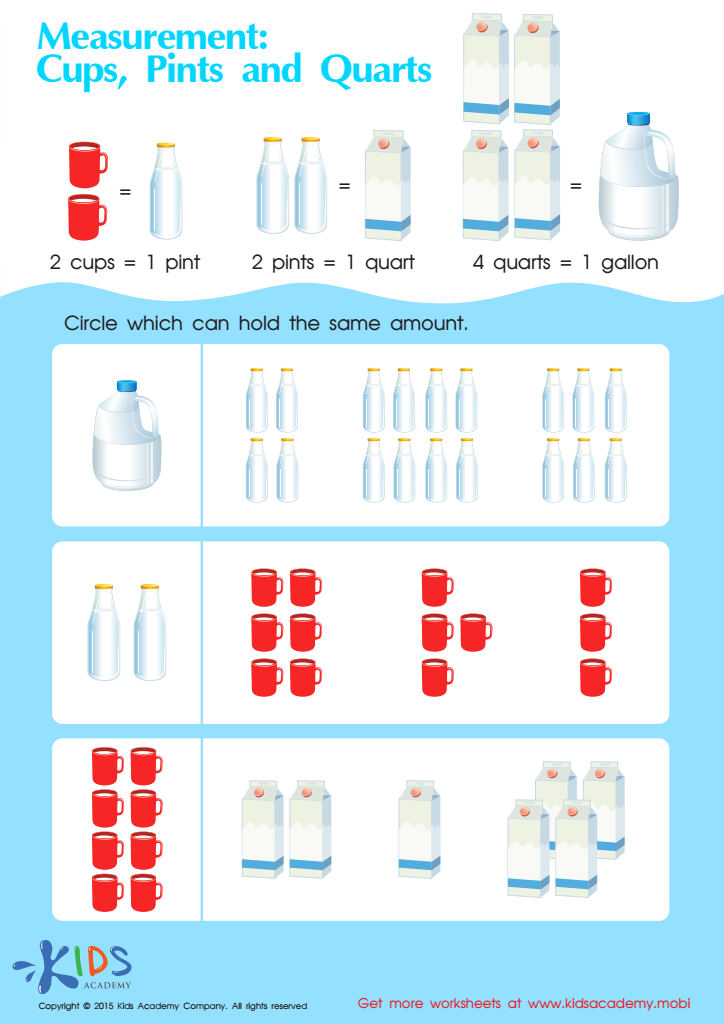
Cups, Pints and Quarts 2 Worksheet
 Assign to My Students
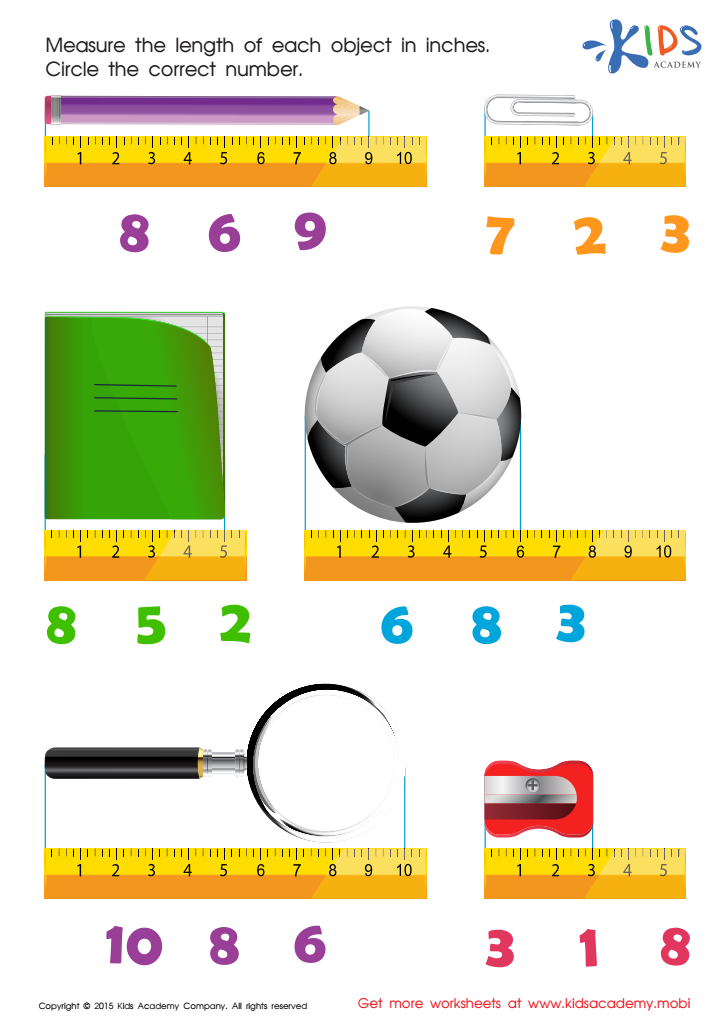
Learning measuring objects in inches Worksheet
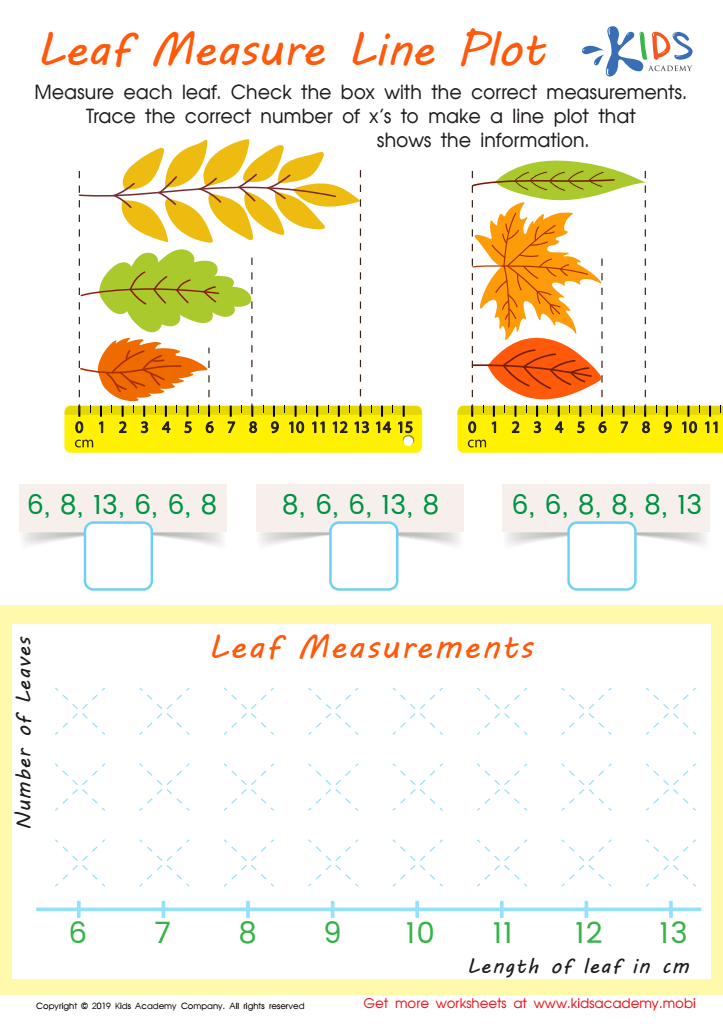
Leaf Measure Line Plot Worksheet




Understanding measurements is crucial for children ages 3 to 8, as it lays the foundation for critical thinking and problem-solving skills. At this age, children naturally explore their environments, and introducing measurement concepts enhances their awareness of the world around them. When parents and teachers prioritize measurement understanding, they facilitate children's ability to compare, classify, and quantify objects, which are vital skills for later math proficiency.
Moreover, measurement evokes curiosity and encourages children to make observations and predictions. Through hands-on activities like measuring ingredients in cooking or comparing the heights of different objects, children much more interactively connect math with real-life experiences. This practicality boosts their confidence and fosters a love for learning.
Additionally, understanding measurements enhances language development. It increases their vocabulary as they learn terms related to size, weight, volume, and time. Furthermore, these skills are interconnected with STEM (Science, Technology, Engineering, and Math) learning, promoting a well-rounded educational experience.
Ultimately, when children grasp the concepts of measurement, they are better prepared for more complex subjects in later grades, leading to improved academic success. Thus, supporting measurement learning is a vital step every caregiver and educator should embrace.








