2D Shapes Worksheets for Ages 3-8 - Page 4
75 filtered results
-
From - To
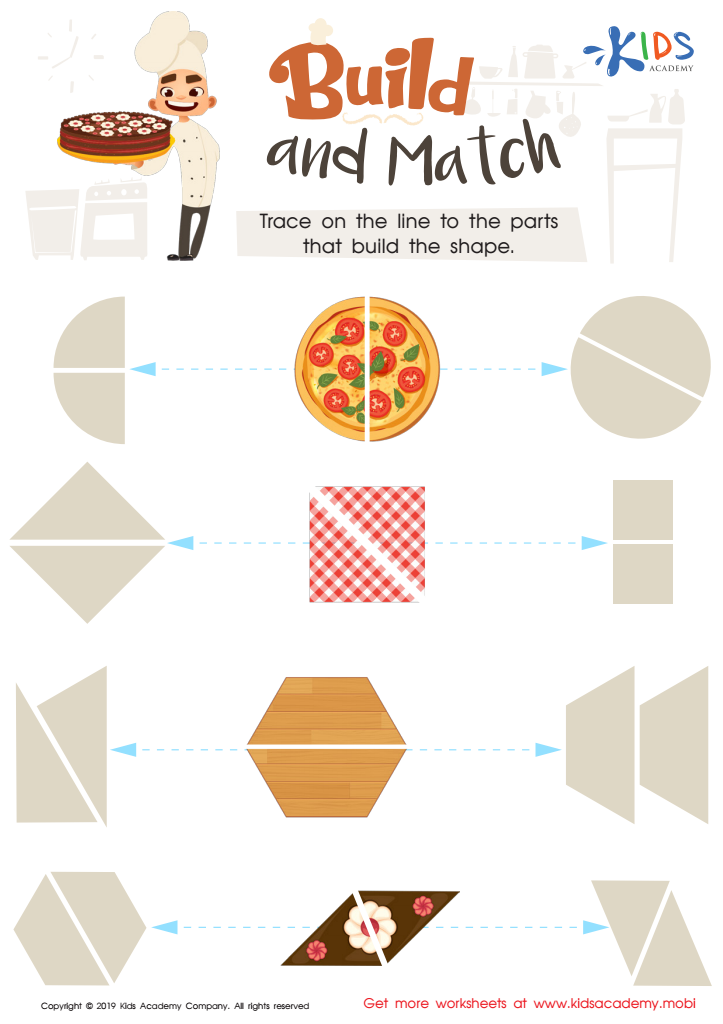
Build and Match Worksheet
 Assign to My Students











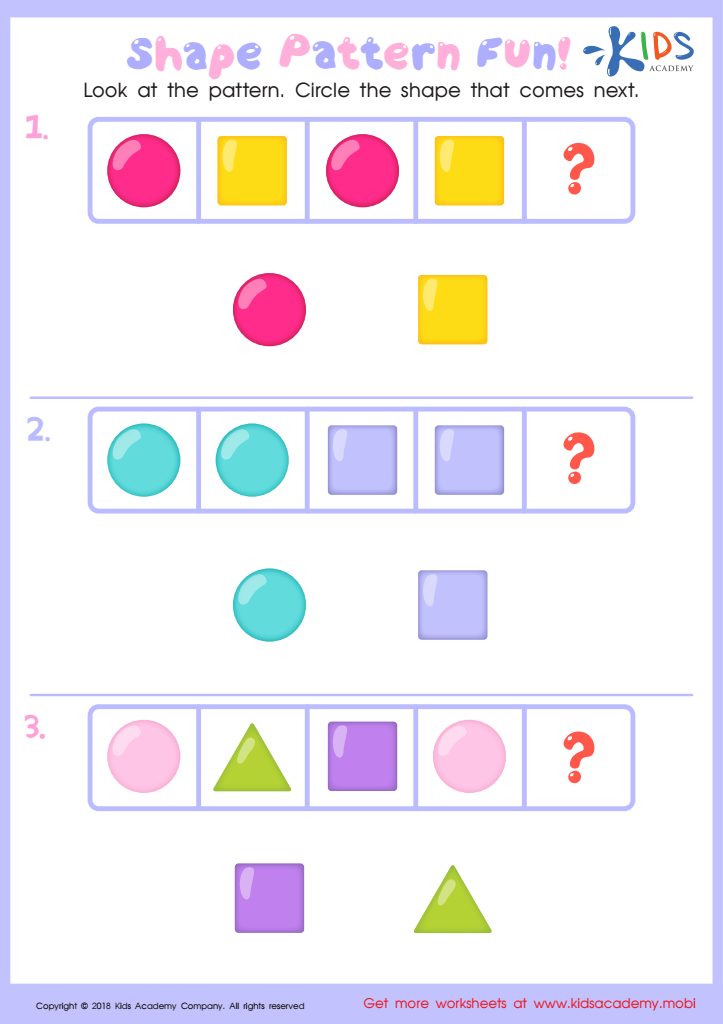
Shape Pattern Fun Worksheet
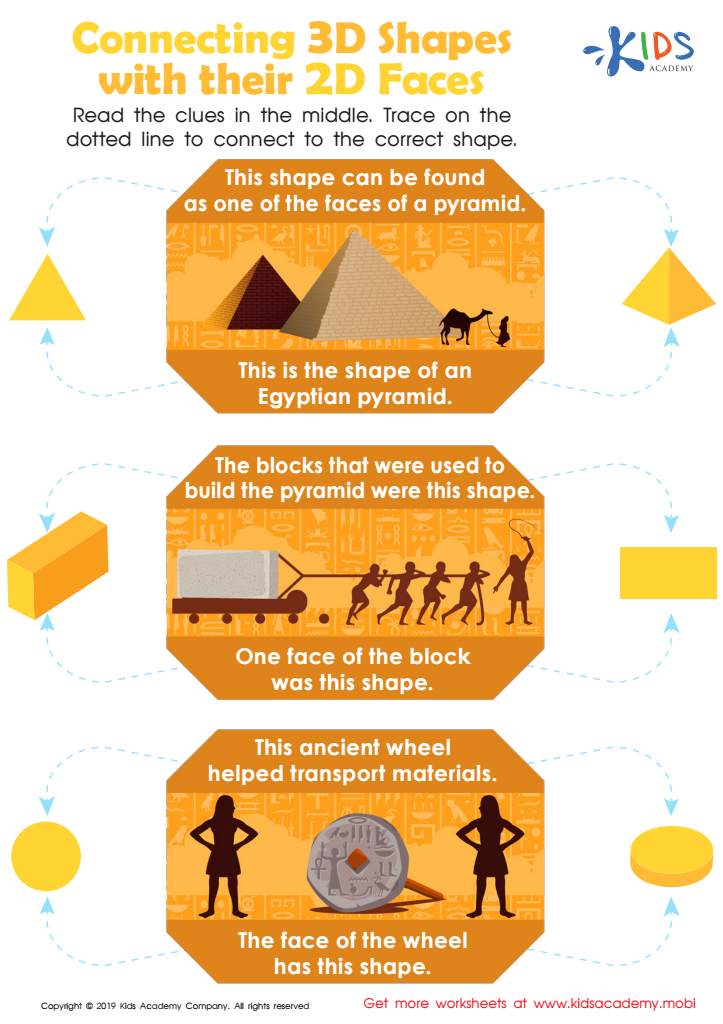
Connecting 3D Shapes with Their 2d Faces Worksheet








Understanding 2D shapes is essential for children aged 3 to 8 as they form the building blocks of mathematical concepts and spatial awareness. At this developmental stage, recognizing shapes like squares, circles, triangles, and rectangles is critical not just for math, but also for everyday life.
First, learning about 2D shapes enhances cognitive skills; it encourages pattern recognition and logical thinking. When children identify and categorize shapes, they develop problem-solving skills that they will use across various subjects. Furthermore, these activities often involve hands-on learning, which is both engaging and effective at this age.
Second, 2D shapes contribute to fine motor skill development. Tracing or drawing these shapes helps young children refine their hand-eye coordination and dexterity, essential skills for writing and other school-related tasks.
Finally, an understanding of shapes lays the foundation for geometry, which is typically introduced in later grades. By fostering an early interest and understanding of shapes, parents and teachers can cultivate a positive attitude toward mathematics, making it less intimidating and more fun.
In summary, establishing a solid understanding of 2D shapes in early education supports cognitive, motor, and social growth, all vital for a child’s overall development.








