Shape Recognition 2D Shapes Worksheets for Ages 3-8 - Page 2
37 filtered results
-
From - To
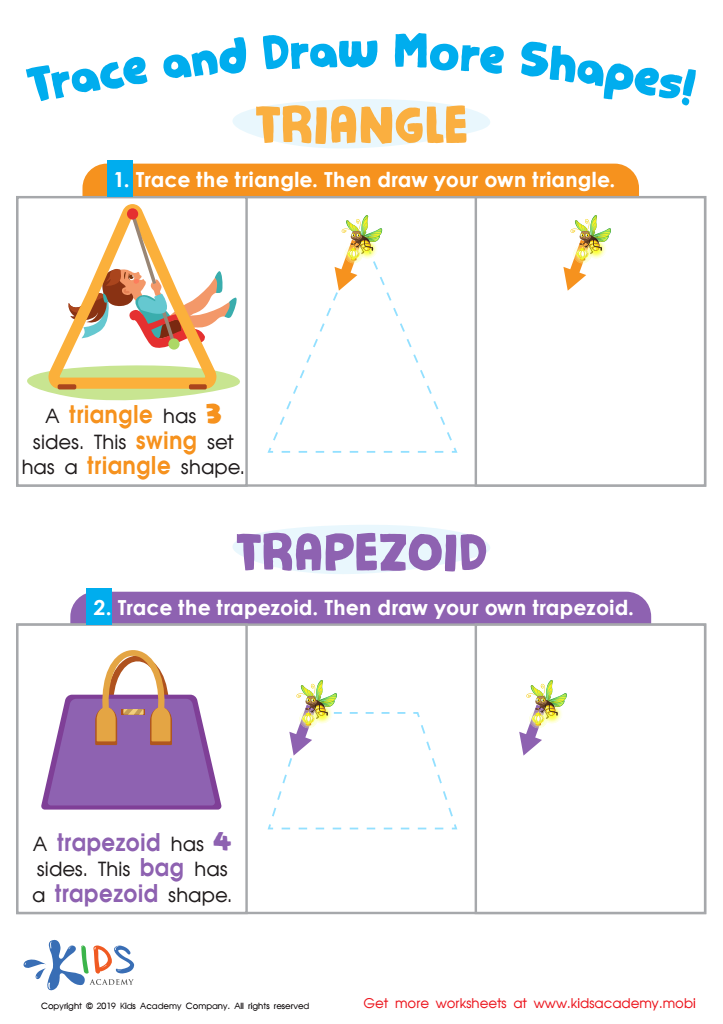
Trace and Draw More Shapes Worksheet
 Assign to My Students

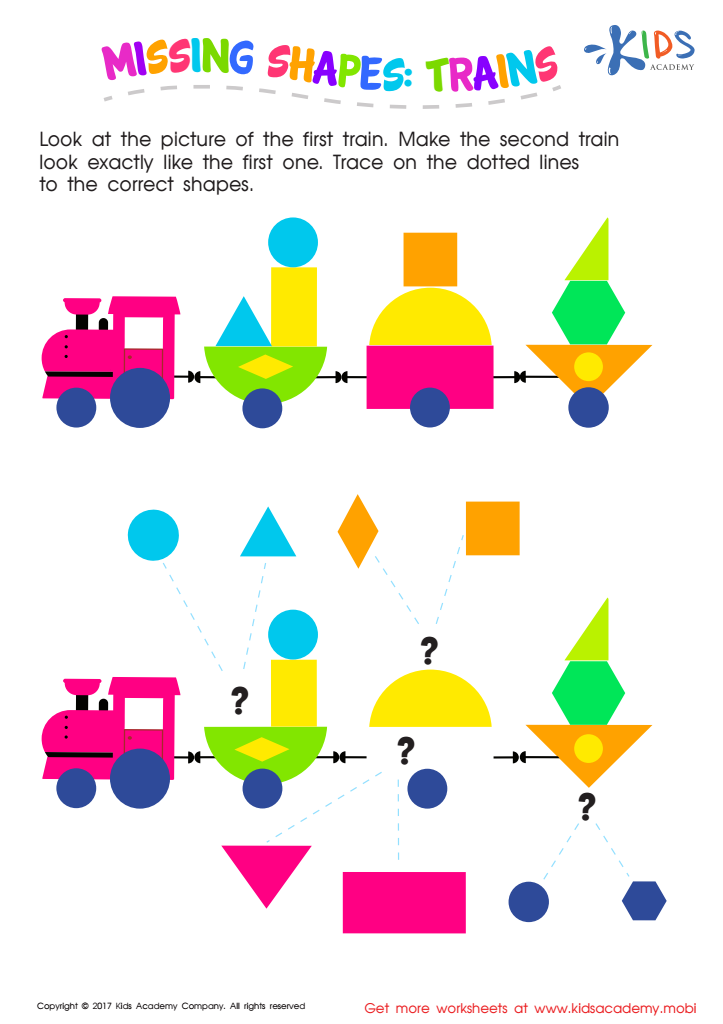
Missing Shapes: Trains Worksheet
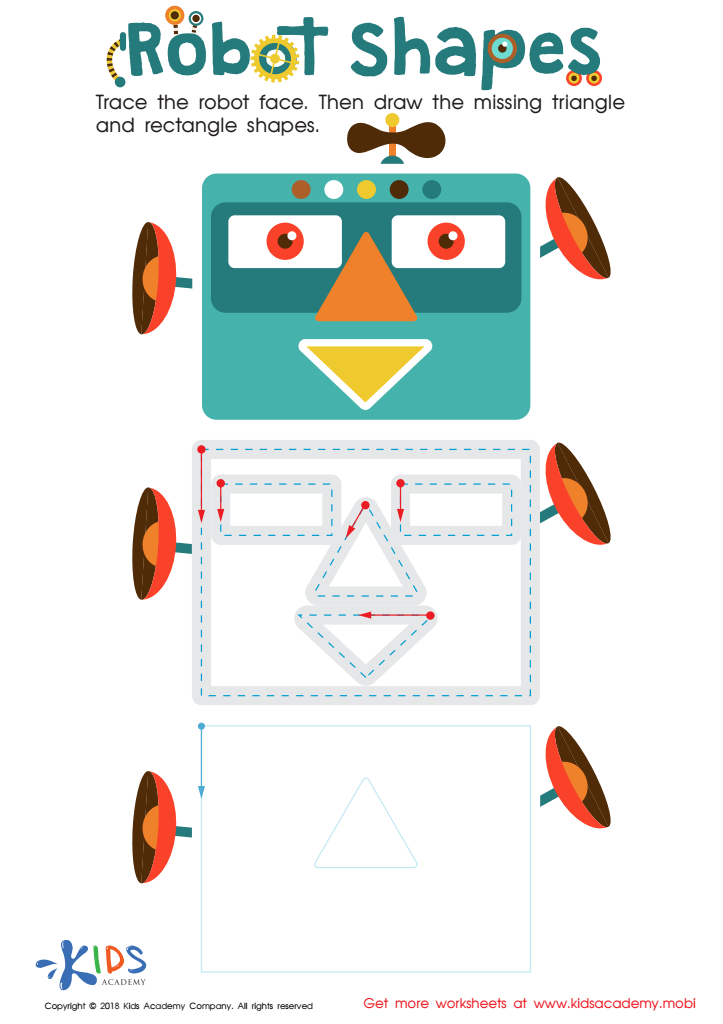
Robot Shapes Worksheet
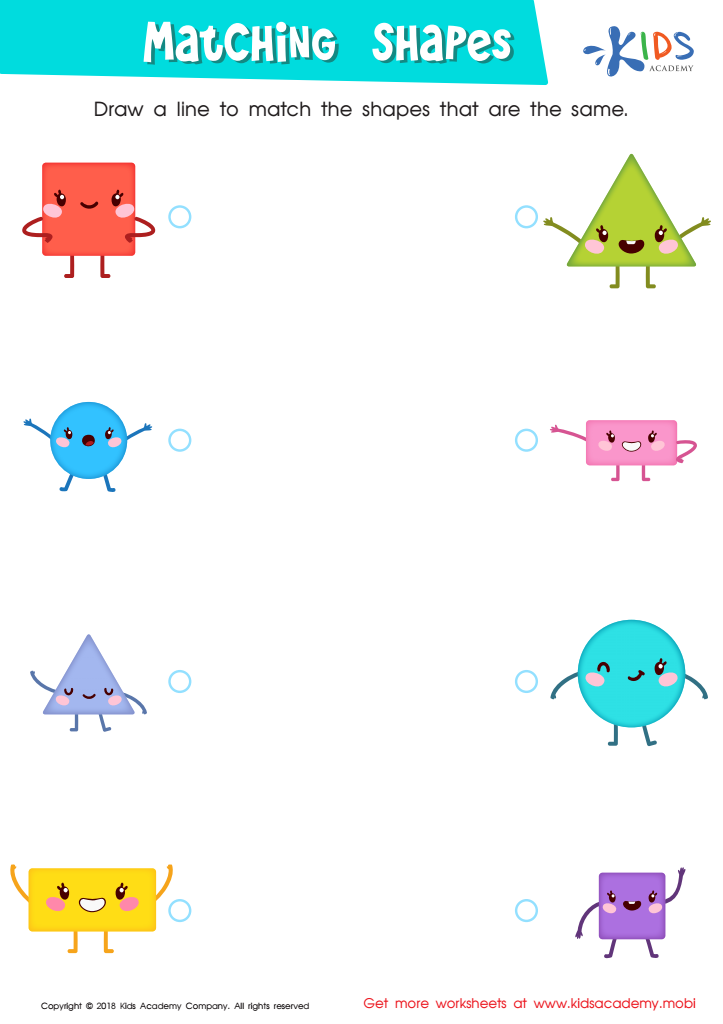
Matching Shapes Worksheet
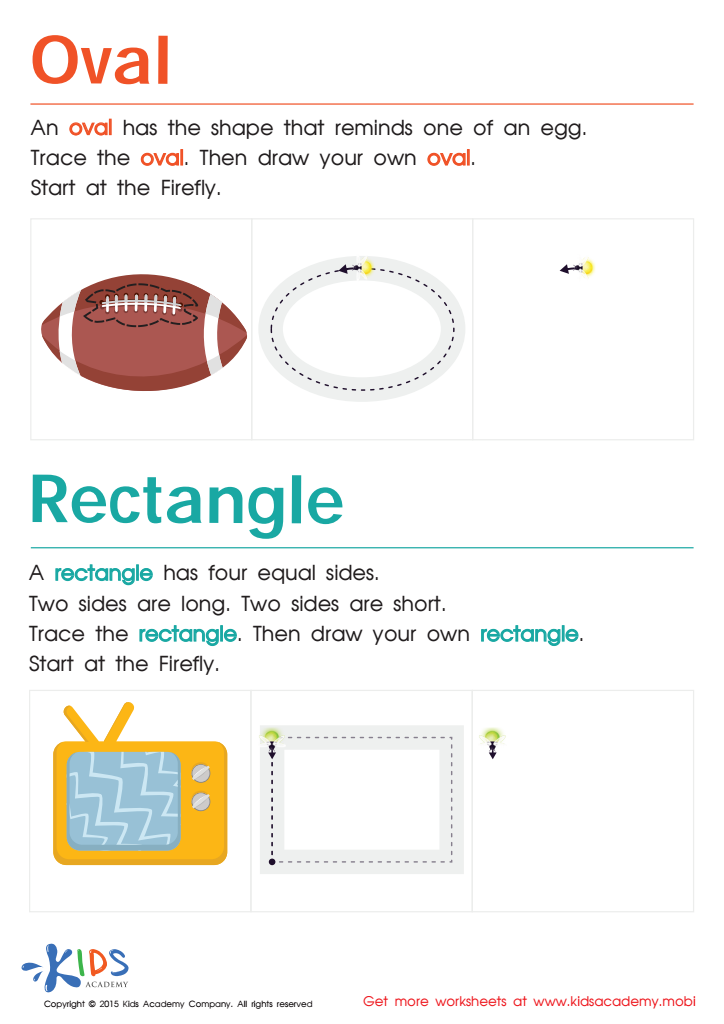
Easy Drawing of Ovals And Rectangles Worksheet
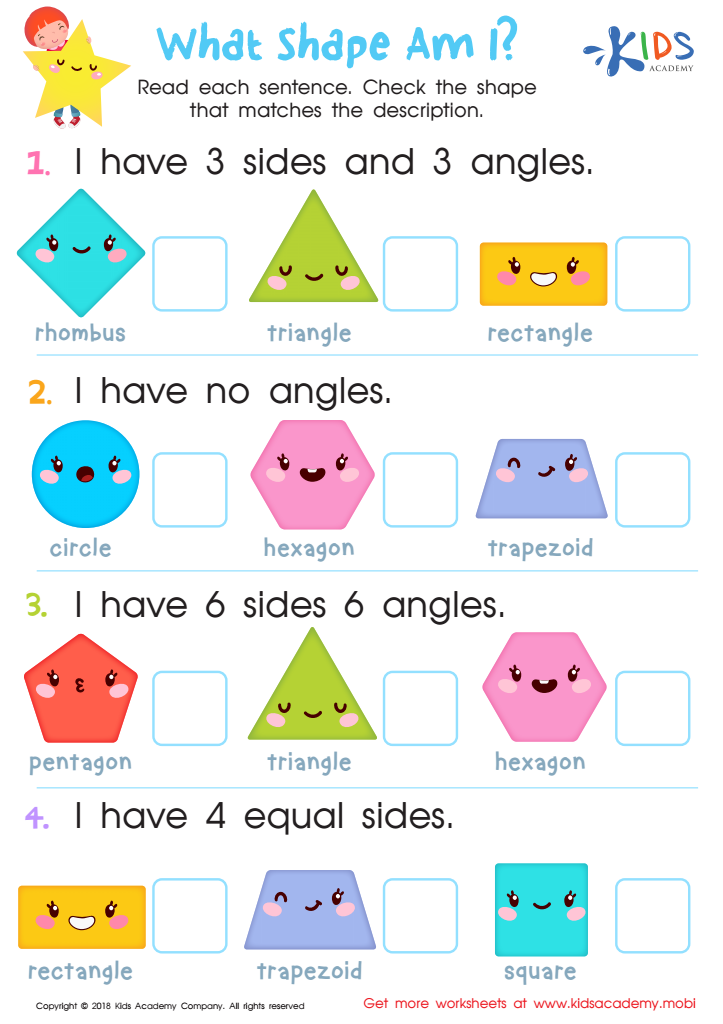
What Shape Am I? Worksheet
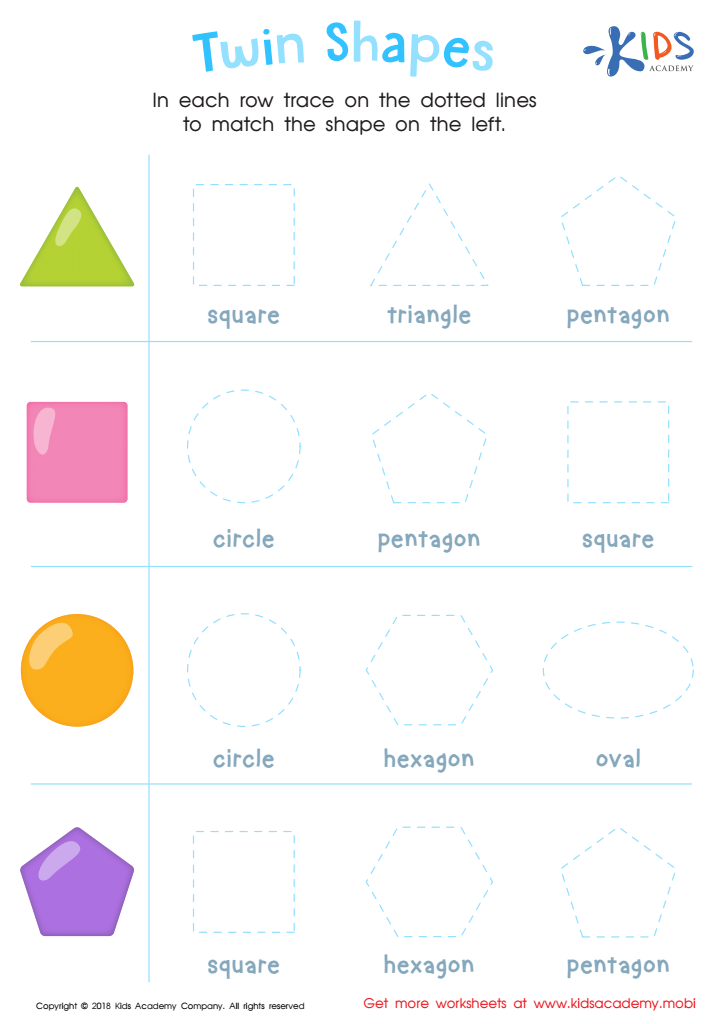
Twin Shapes Dot-to-Dot Worksheet
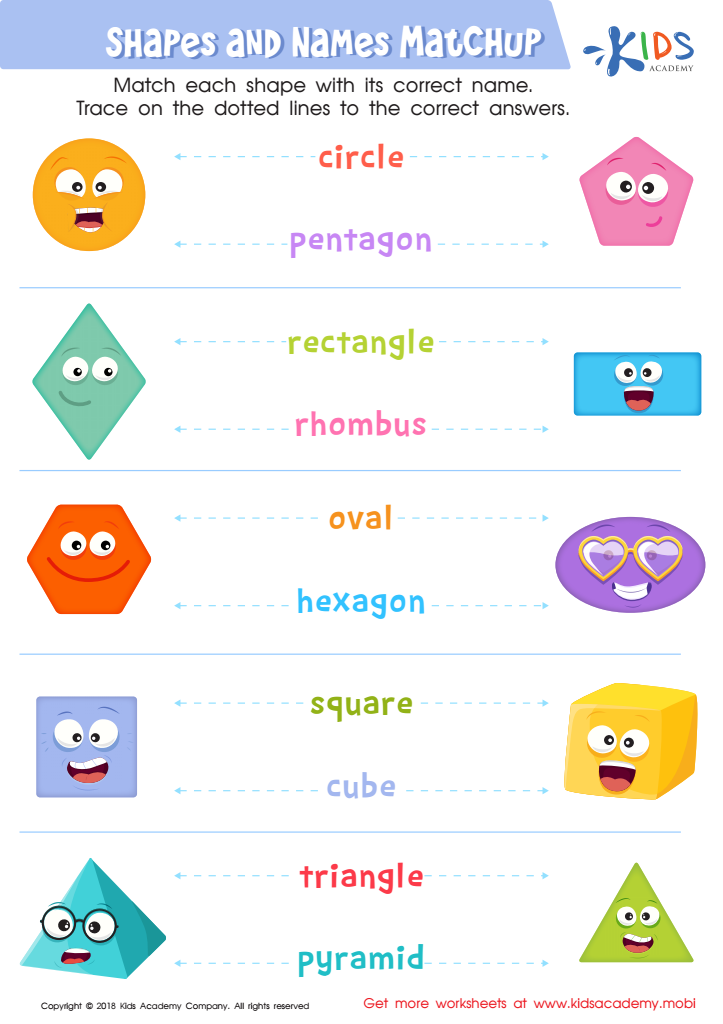
Shapes and Names Matchup Worksheet
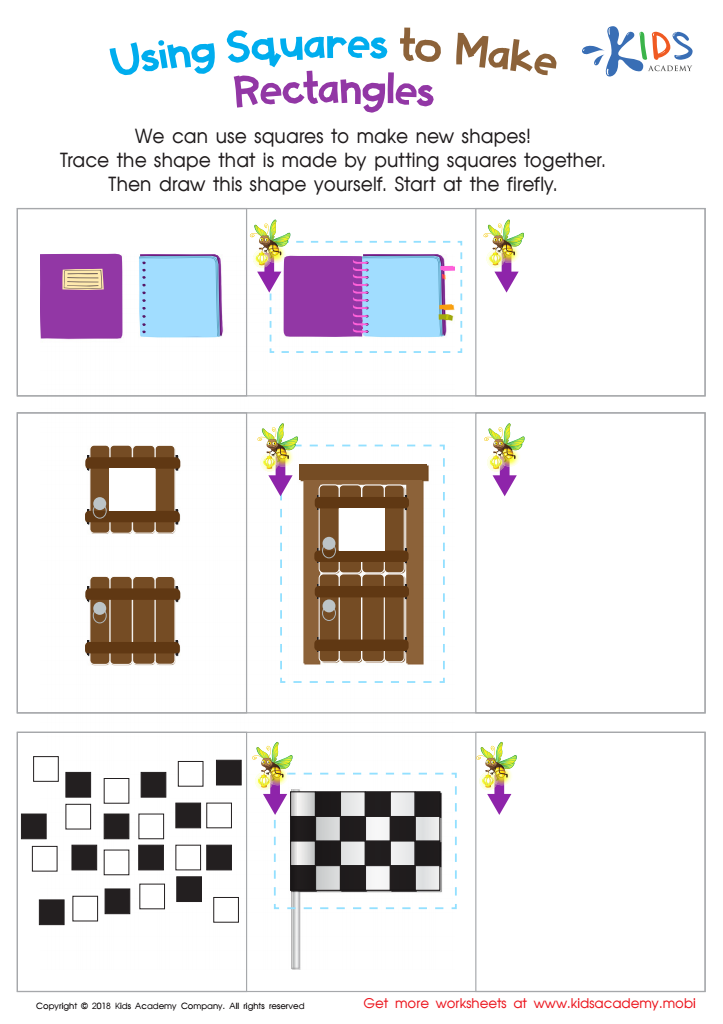
Using Squares to Make Rectangles Worksheet
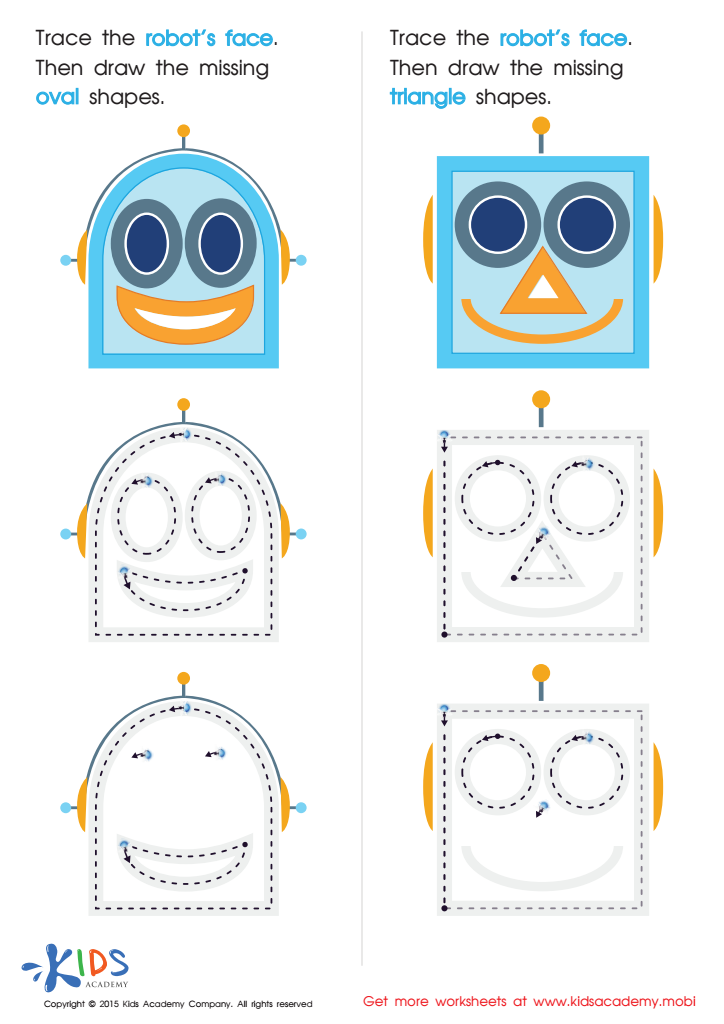
Drawing Ovals And Triangles with Fun Printable
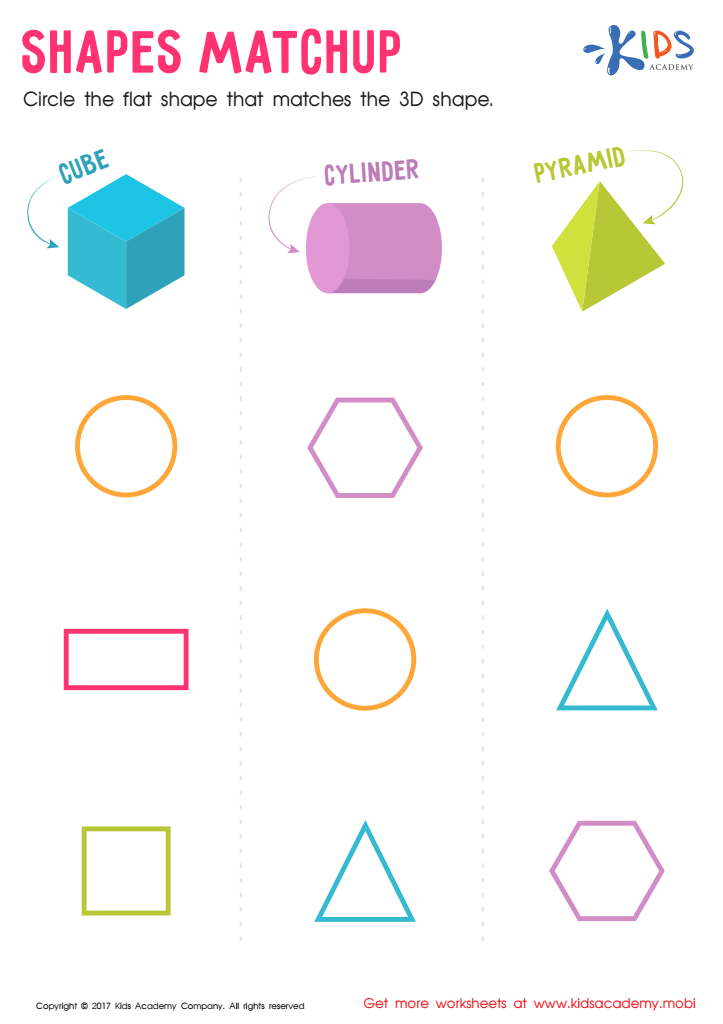
Shapes Matchup Worksheet
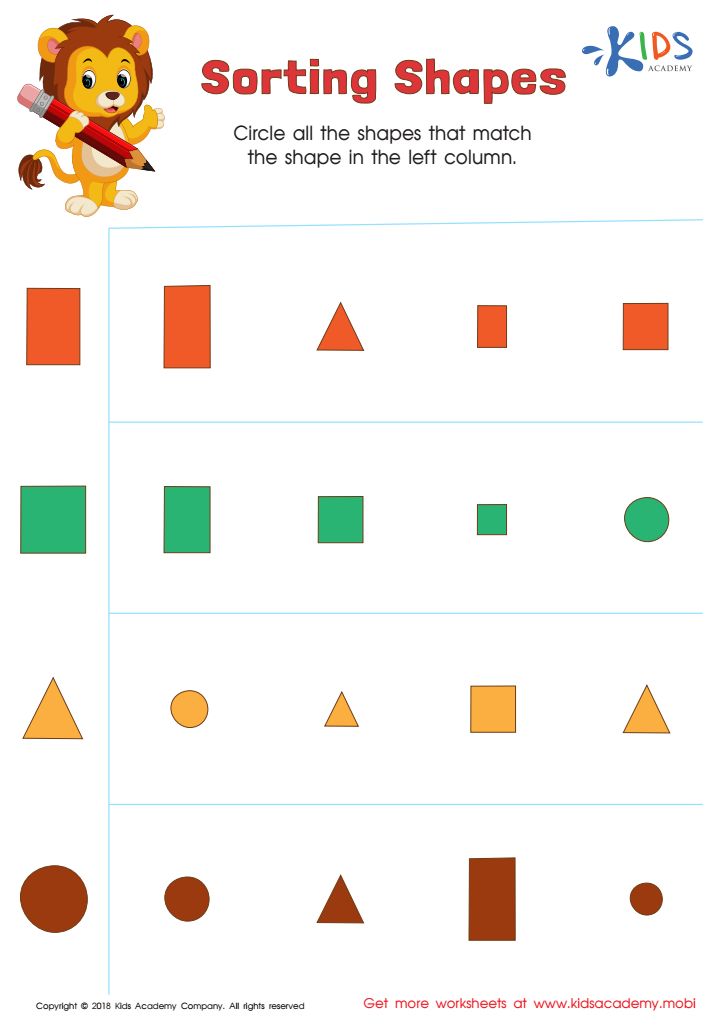
Sorting Shapes - Part 2 Worksheet
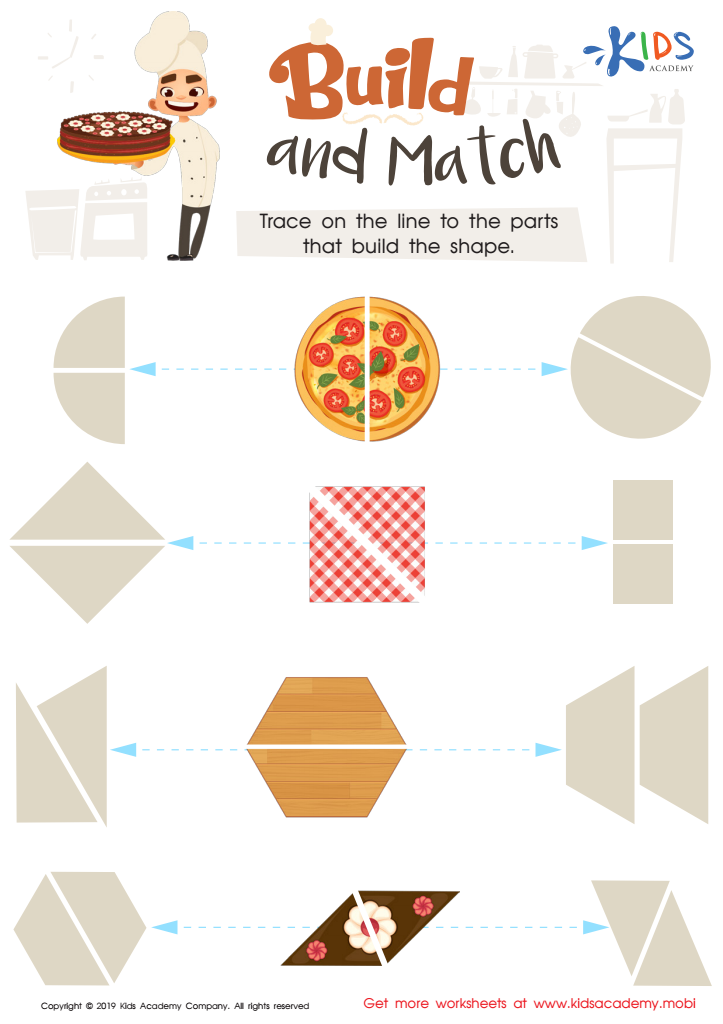
Build and Match Worksheet








Shape recognition is a foundational skill that plays a crucial role in a child's cognitive development and serves as a building block for more advanced learning. For children ages 3-8, understanding 2D shapes helps in the development of critical thinking and problem-solving abilities. By identifying and distinguishing between different shapes, children enhance their visual perception and spatial awareness.
Parents and teachers should care about shape recognition because it is directly linked to future mathematical concepts such as geometry, measurement, and patterning. Recognizing shapes also assists in the development of literacy skills; for instance, the shape of letters and numbers are essential for reading and writing. Furthermore, engaging with 2D shapes helps improve fine motor skills through activities like drawing, tracing, and cutting shapes, which are significant for hand-eye coordination.
Introducing shape recognition early on fosters an environment of curiosity and exploration. It encourages children to observe their surroundings more keenly, giving them a better understanding of the world. Moreover, discussing shapes builds vocabulary and language skills as children learn to describe their shapes, sizes, and properties.
In summary, understanding and recognizing 2D shapes is not just a basic skill but a foundational one that supports various aspects of a child's intellectual growth, making it a critical component of early education.