Filters

34 filtered results

Clear all filters
Favorites
With answer key
Interactive

34 filtered results

Difficulty Level

Grade


Subject

    Check out this FREE Trial Lesson on Adding up to 50 for age 3-8!

    L

    Favorites
    With answer key
    Interactive
    • 3-8
    • Counting skills
    • Adding up to 50
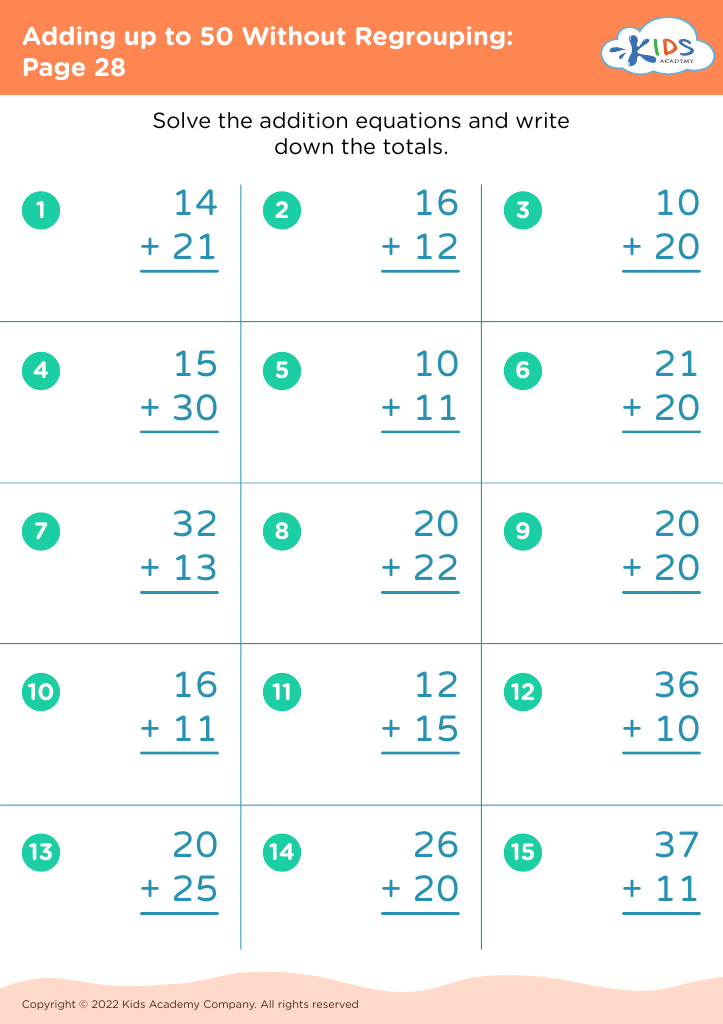
    Adding up to 50 Without Regrouping: Page 28
    Adding up to 50 Without Regrouping: Page 28
    Adding up to 50 Without Regrouping: Page 28
    Worksheet
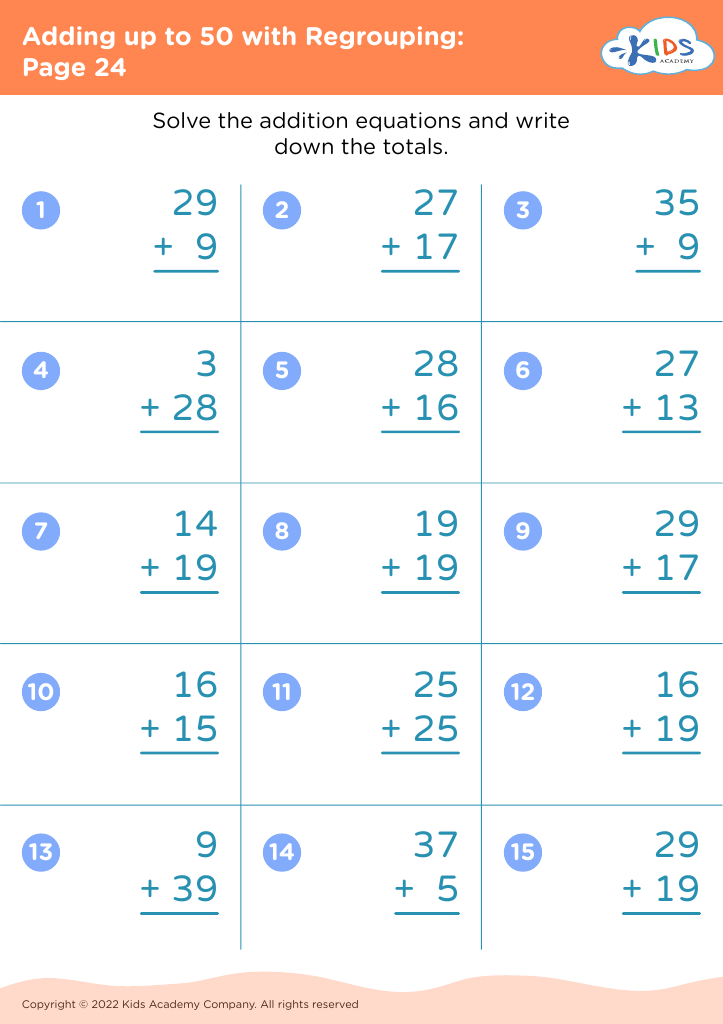
    Adding up to 50 with Regrouping: Page 24
    Adding up to 50 with Regrouping: Page 24
    Adding up to 50 with Regrouping: Page 24
    Worksheet
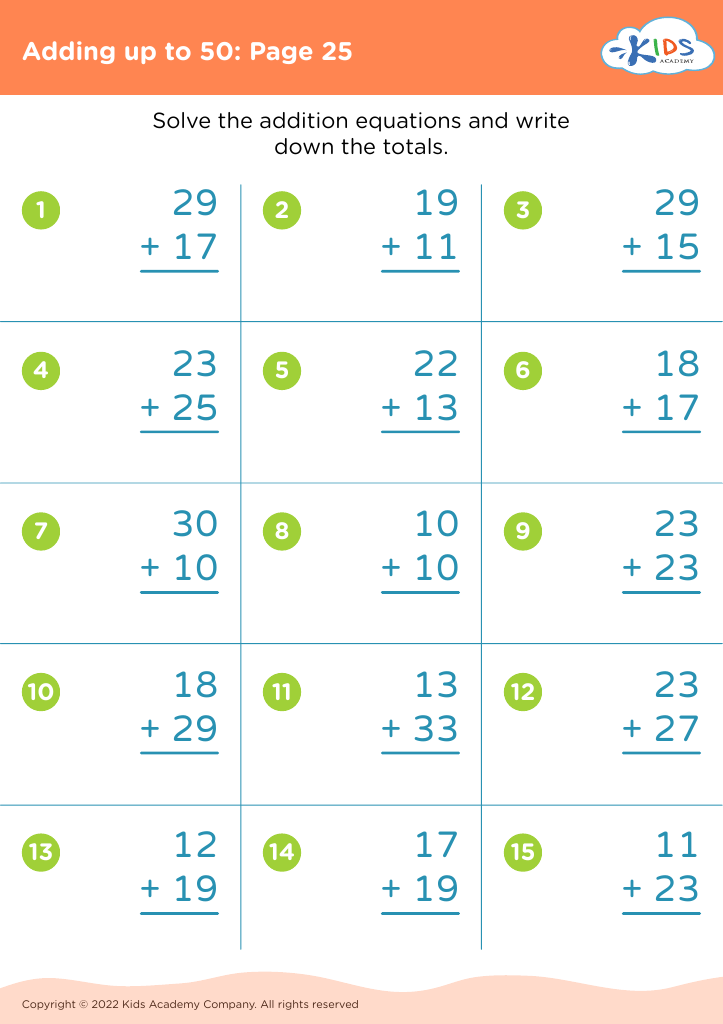
    Adding up to 50: Page 25
    Adding up to 50: Page 25

    Adding up to 50: Page 25

    Adding up to 50: Page 25
    Worksheet
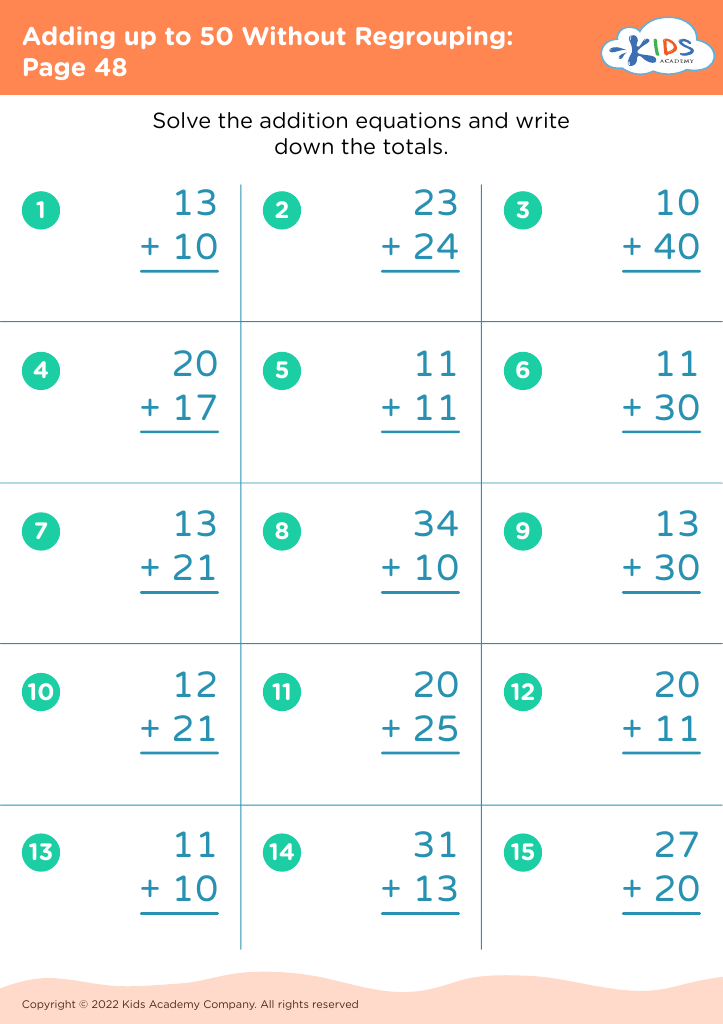
    Adding up to 50 Without Regrouping: Page 48
    Adding up to 50 Without Regrouping: Page 48
    Adding up to 50 Without Regrouping: Page 48
    Worksheet
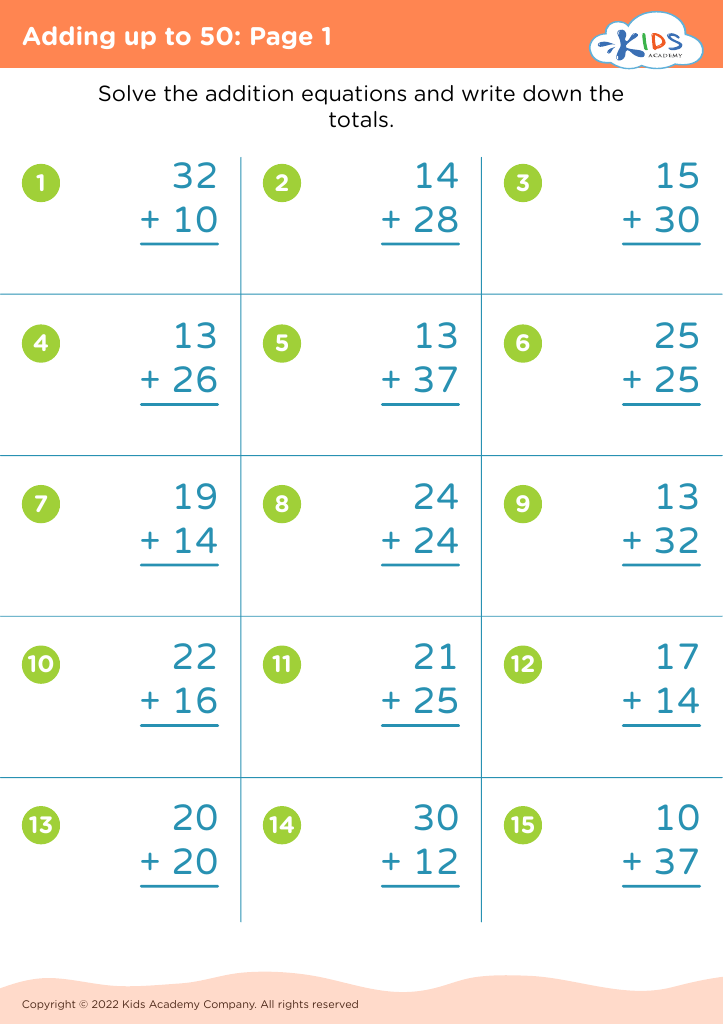
    Adding up to 50: Page 1
    Adding up to 50: Page 1

    Adding up to 50: Page 1

    Adding up to 50: Page 1
    Worksheet
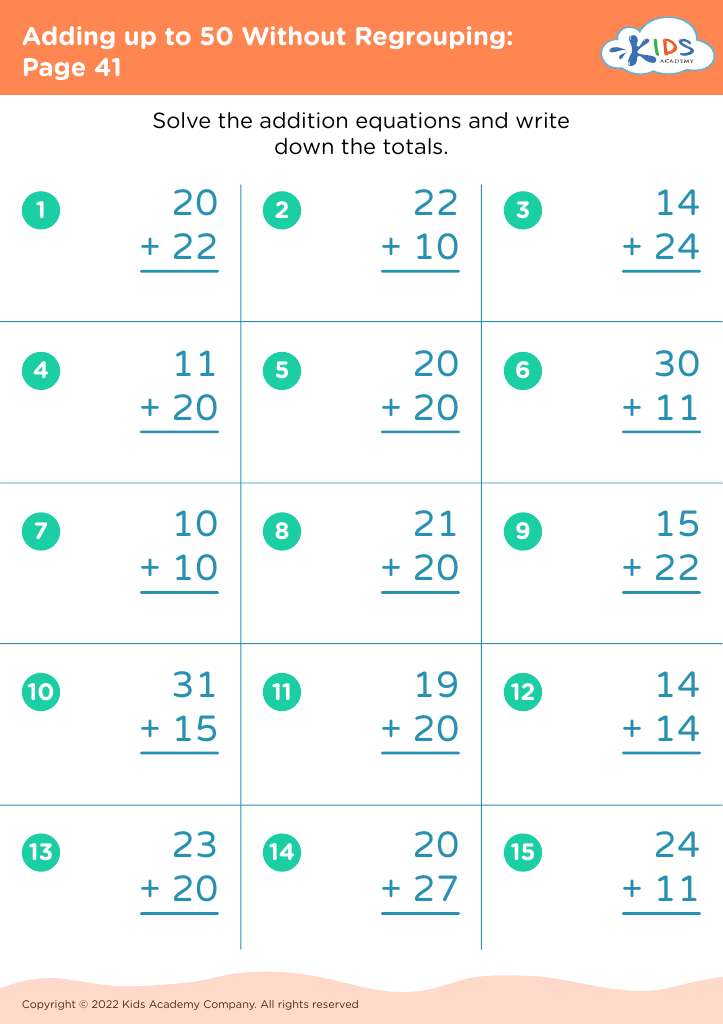
    Adding up to 50 Without Regrouping: Page 41
    Adding up to 50 Without Regrouping: Page 41
    Adding up to 50 Without Regrouping: Page 41
    Worksheet
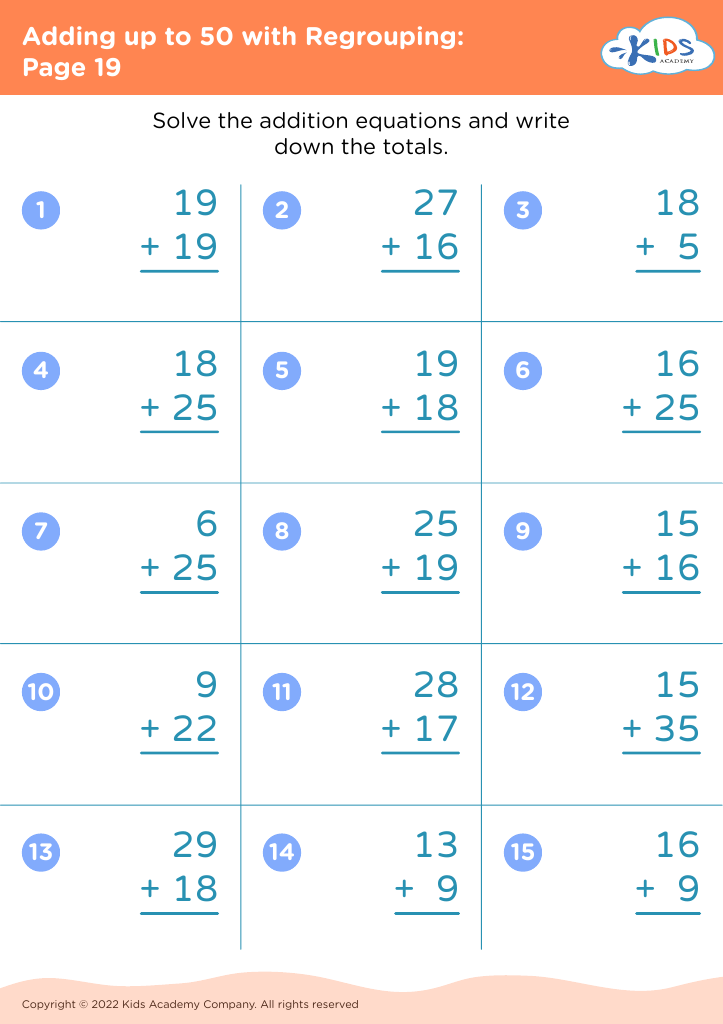
    Adding up to 50 with Regrouping: Page 19
    Adding up to 50 with Regrouping: Page 19
    Adding up to 50 with Regrouping: Page 19
    Worksheet
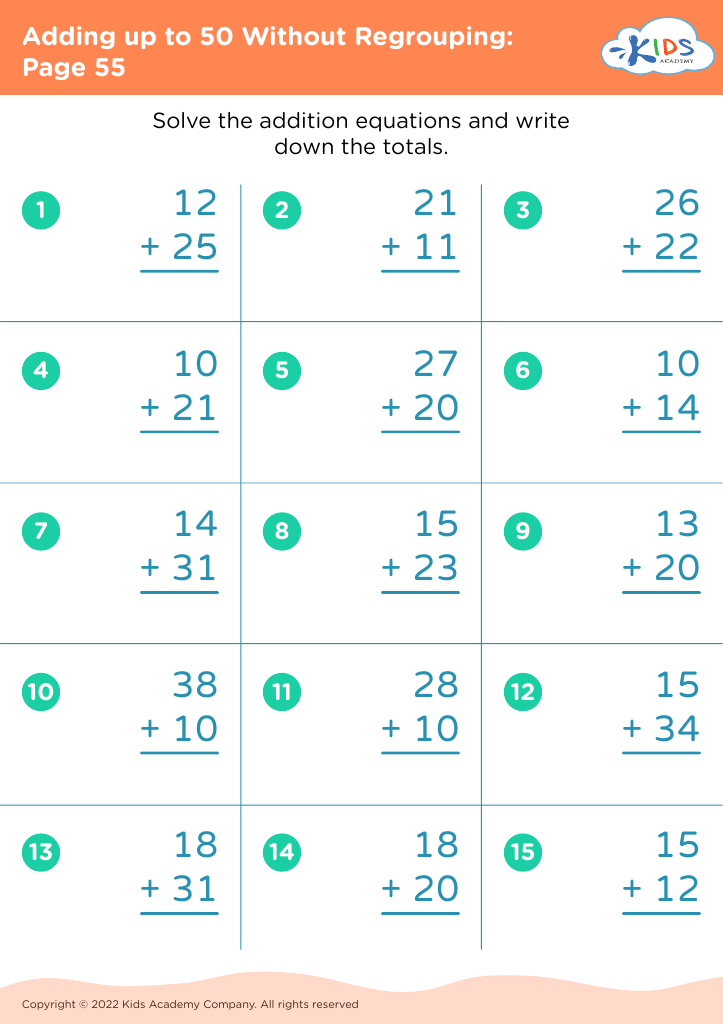
    Adding up to 50 Without Regrouping: Page 55
    Adding up to 50 Without Regrouping: Page 55
    Adding up to 50 Without Regrouping: Page 55
    Worksheet
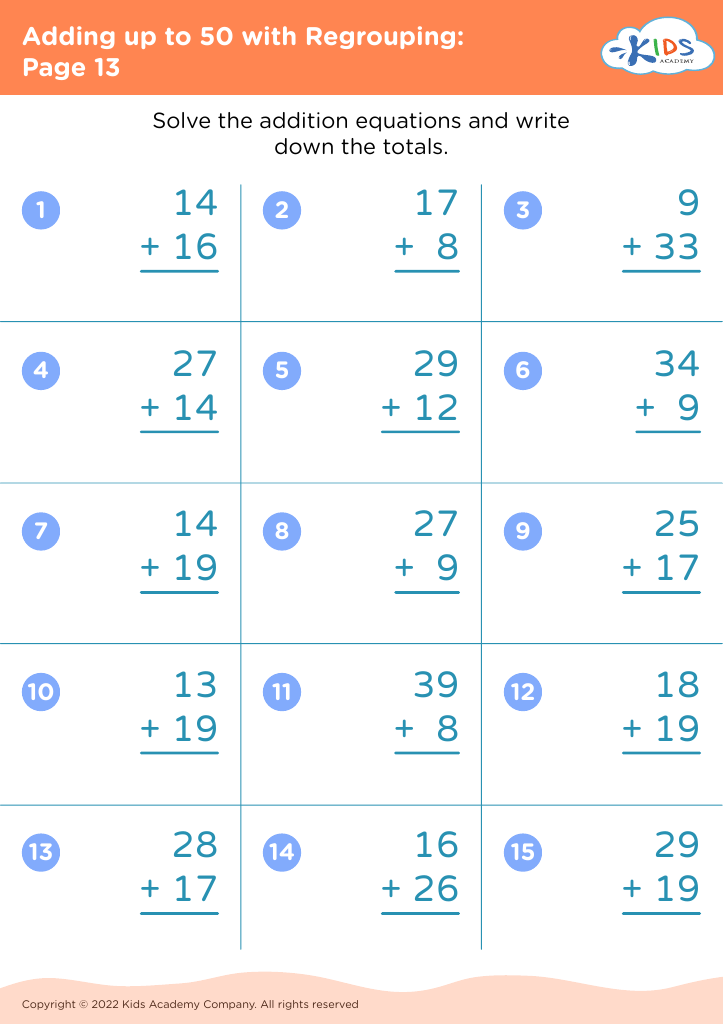
    Adding up to 50 with Regrouping: Page 13
    Adding up to 50 with Regrouping: Page 13
    Adding up to 50 with Regrouping: Page 13
    Worksheet
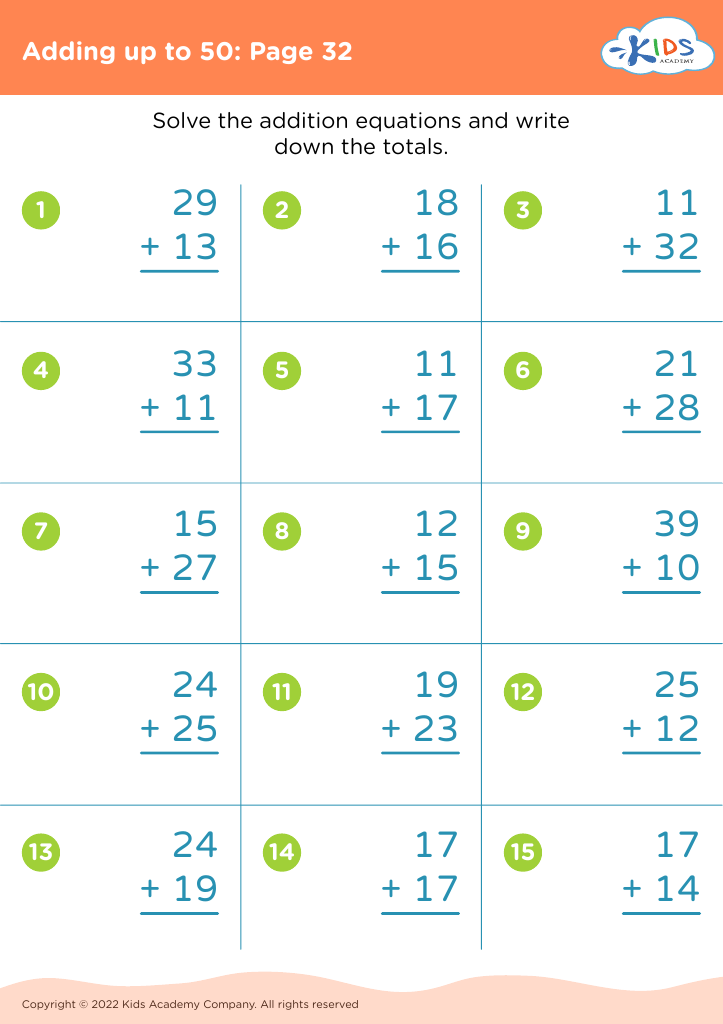
    Adding up to 50: Page 32
    Adding up to 50: Page 32

    Adding up to 50: Page 32

    Adding up to 50: Page 32
    Worksheet


    Counting skills, especially adding up to 50, are foundational for children aged 3 to 8, as they prepare for more complex mathematics in later years. These early skills foster number sense, enhance cognitive development, and build the confidence needed in all academic subjects. When parents and teachers focus on counting skills, they are laying the groundwork for critical thinking and problem-solving abilities essential for future learning.

    Moreover, mastering counts up to 50 allows children to understand quantity, comparison, and relationships between numbers, making math more accessible and intuitive. Engaging in counting activities can also improve memory and attention—skills that are vital for overall educational success.

    Additionally, early familiarity with numbers promotes a positive attitude toward math, reducing anxiety often experienced as children progress to higher grades. By nurturing these skills through games, counting songs, or everyday tasks, parents and teachers cultivate a rich learning environment where math becomes a logical and enjoyable part of life.

    In summary, caring about counting skills up to 50 enables both parents and teachers to empower children with essential tools for academic achievement, helping them to become confident learners as they navigate the educational landscape.