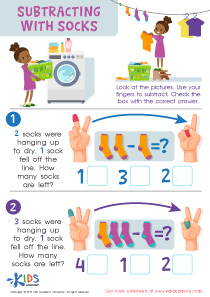
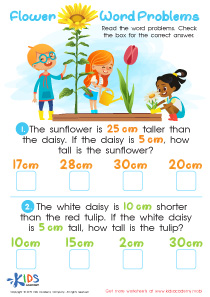
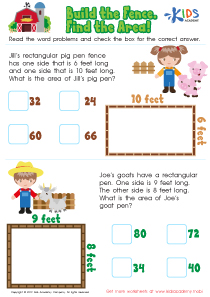
Subtraction skills Addition and Subtraction Word Problems Worksheets for Ages 3-8
6 filtered results
-
From - To
Unlock your child's potential with our engaging Addition and Subtraction Word Problems Worksheets, designed for ages 3-8! These interactive worksheets focus on building essential subtraction skills through fun and relatable word problems. Each activity is crafted to develop critical thinking and problem-solving abilities, ensuring your little ones grasp key concepts in a meaningful way. Ideal for home or classroom use, our worksheets cater to various learning styles and skill levels, providing plenty of opportunities for practice. Help your child master subtraction effortlessly while encouraging a love for math! Explore our colorful resources and watch their confidence grow!
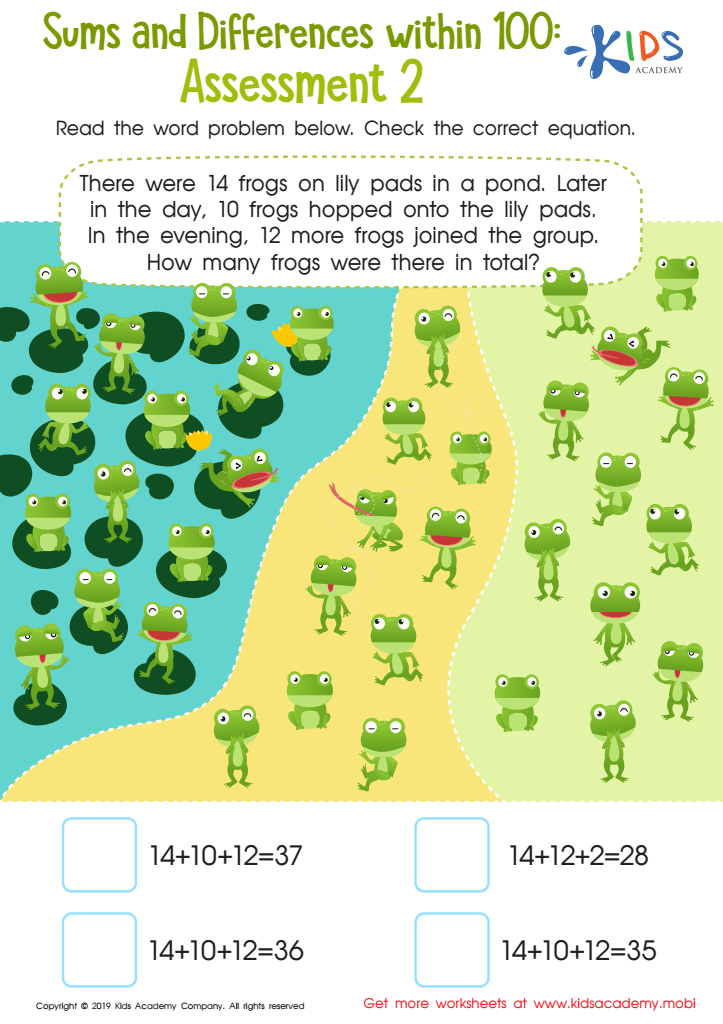
Sums and Differences Within 1 - Assessment 2 Worksheet
 Assign to My Students
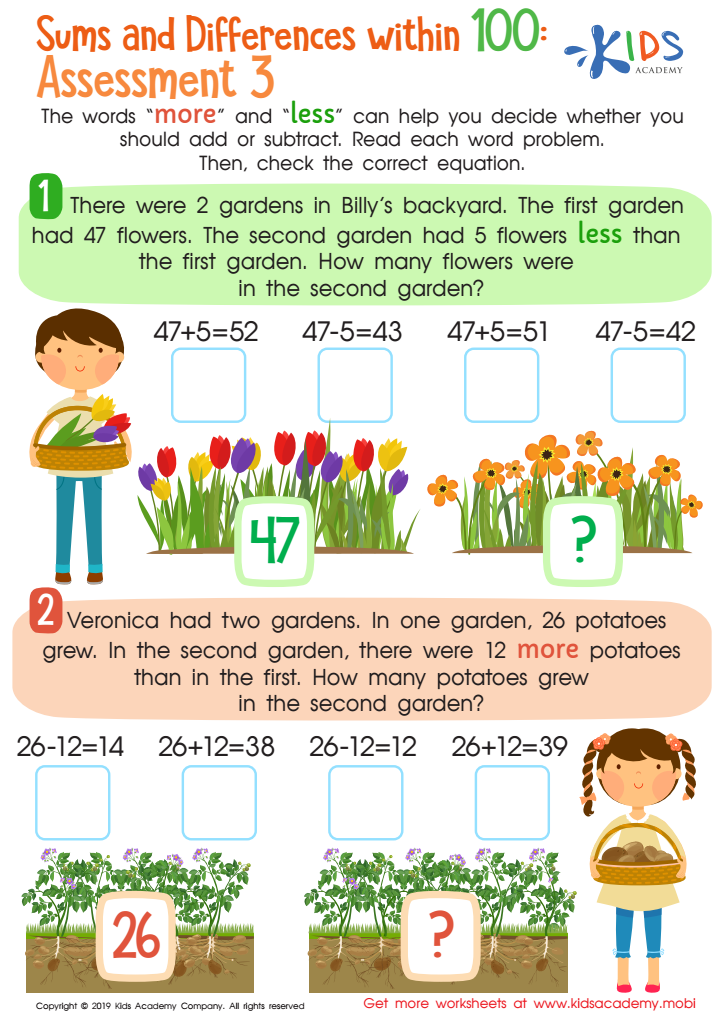
Sums and Differences Within 1 - Assessment 3 Worksheet
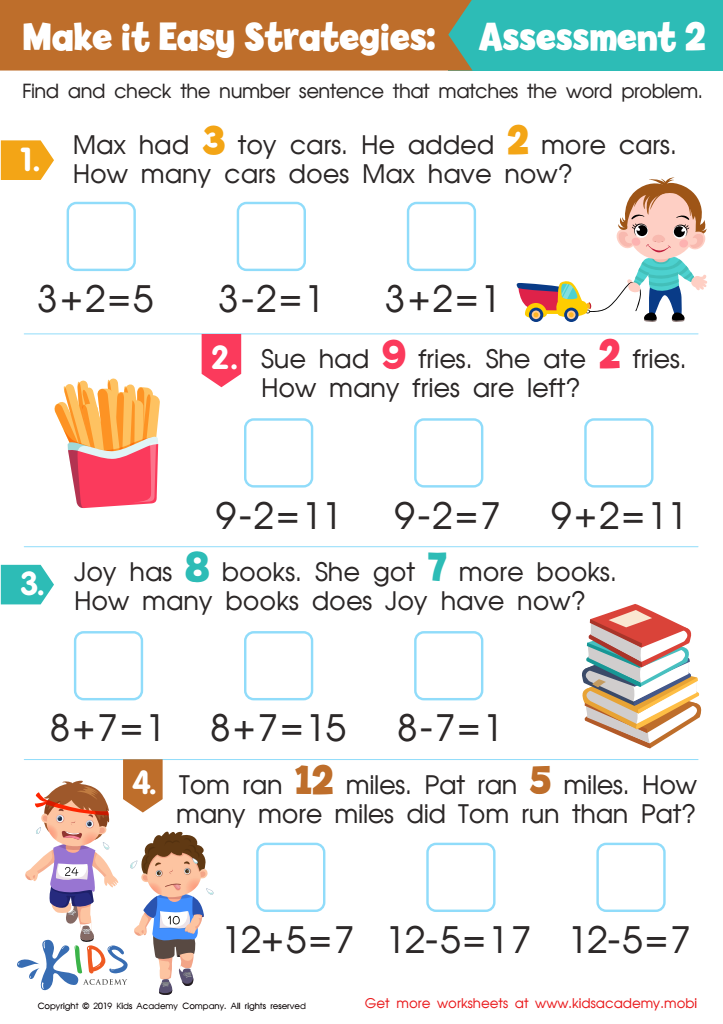
Make it Easy Strategies: Assessment 2 Worksheet
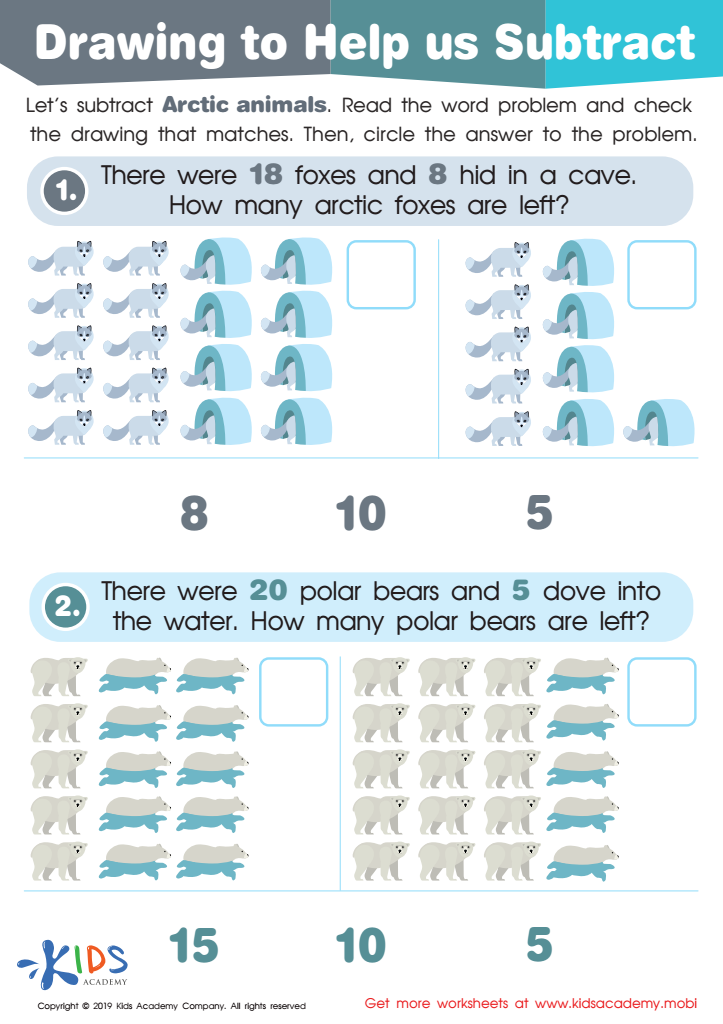
Drawing to Help Us Subtract Worksheet
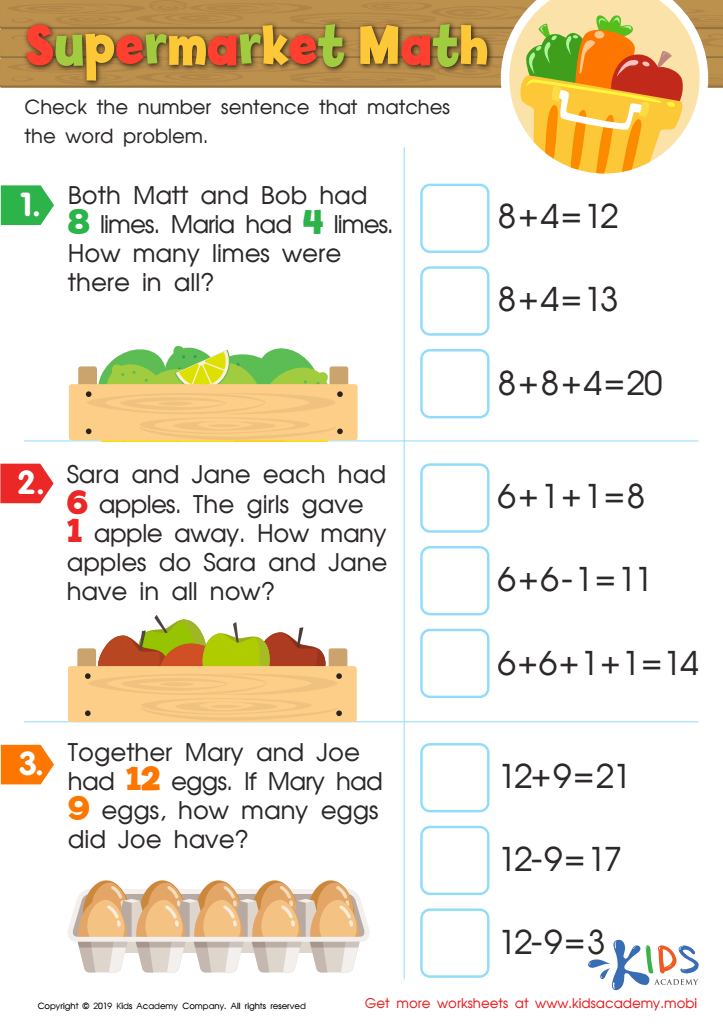
Supermarket Math Worksheet
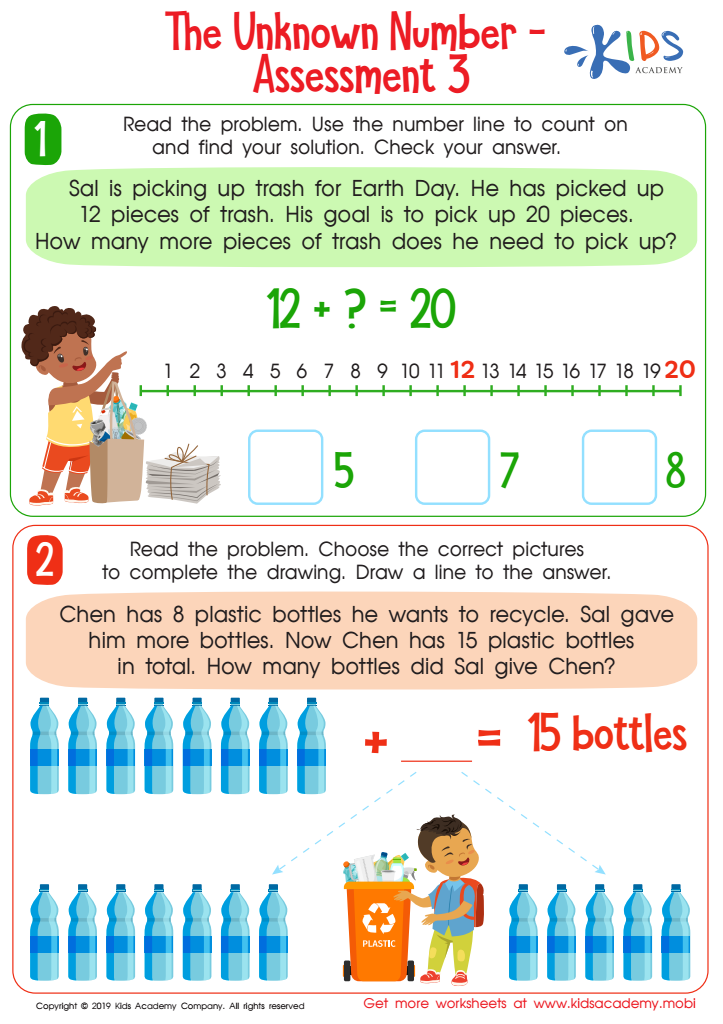
The Unknown Number - Assessment 3 Worksheet








Parents and teachers should prioritize developing subtraction skills and understanding addition and subtraction word problems for children aged 3-8, as these foundational concepts play a crucial role in early mathematics and cognitive development. Mastery of these skills enhances children’s problem-solving abilities, critical thinking, and logical reasoning. As they learn to subtract, children begin to grasp the concept of quantity, allow them to relate numbers to real-world scenarios.
Moreover, word problems help bridge the gap between abstract mathematical concepts and everyday situations, fostering their ability to apply math in practical contexts. Engaging with subtraction through relatable stories boosts comprehension and retention, making learning more enjoyable. It also encourages language development and comprehension skills, as children interpret phrases and concepts in the word problems.
Developing strong subtraction skills early is essential, as they are foundational for future mathematics success. The ability to confidently subtract will prepare them for more complex operations and enhance their self-esteem in academic settings. Ultimately, fostering these skills not only supports children’s mathematical journey but also instills a love for learning and exploration, laying the groundwork for lifelong academic and personal growth. Parents and teachers, therefore, play an instrumental role in nurturing these essential skills.