Unlock your child's potential with our "Recognizing Patterns Addition & Subtraction Worksheets" tailored for ages 3-8. These engaging, colorful worksheets from Kids Academy seamlessly blend learning with fun by helping young minds identify and create patterns while practicing basic math skills. Our worksheets reinforce fundamental addition and subtraction concepts, boost critical thinking, and enhance pattern recognition. Designed by educational experts, they offer step-by-step guidance, ensuring your child's continuous progress. Ideal for home or classroom use, these worksheets strengthen essential math skills and build a strong foundation for future learning adventures. Make math fun and effective today!
Check out this FREE Trial Lesson on Addition & Subtraction for age 3-8!

Bar Graphs 1 Step Word Problems

Favorites
With answer key
Interactive
  • 3-8
  • Recognizing Patterns
  • Addition & Subtraction
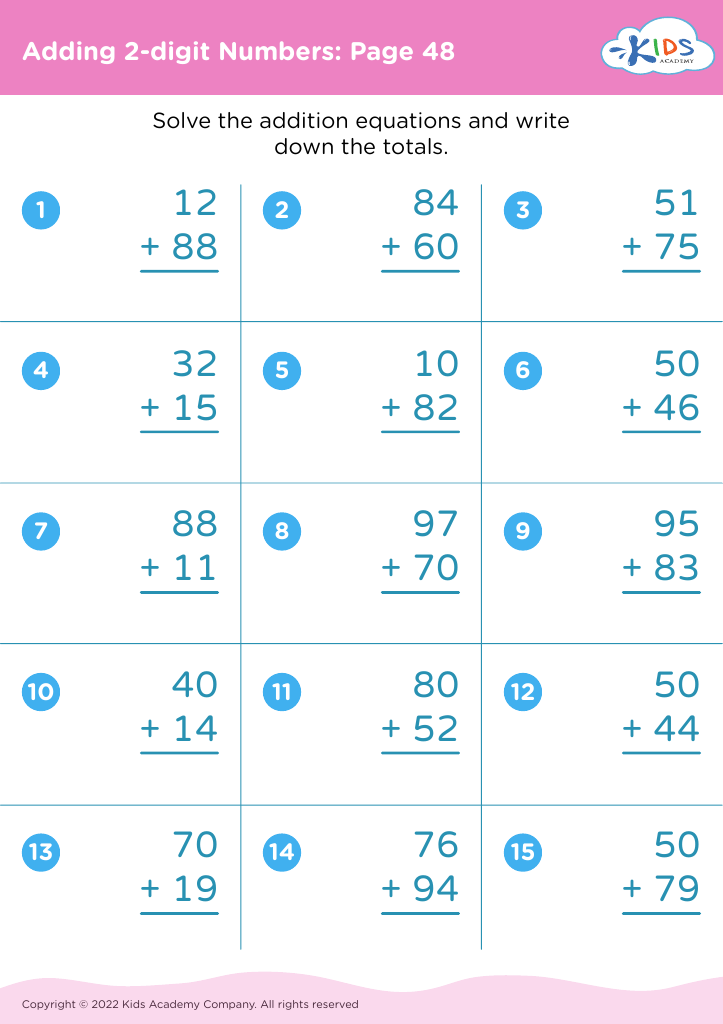
Adding 2-digit Numbers: Page 48

Adding 2-digit Numbers: Page 48

Adding 2-digit Numbers: Page 48
Worksheet
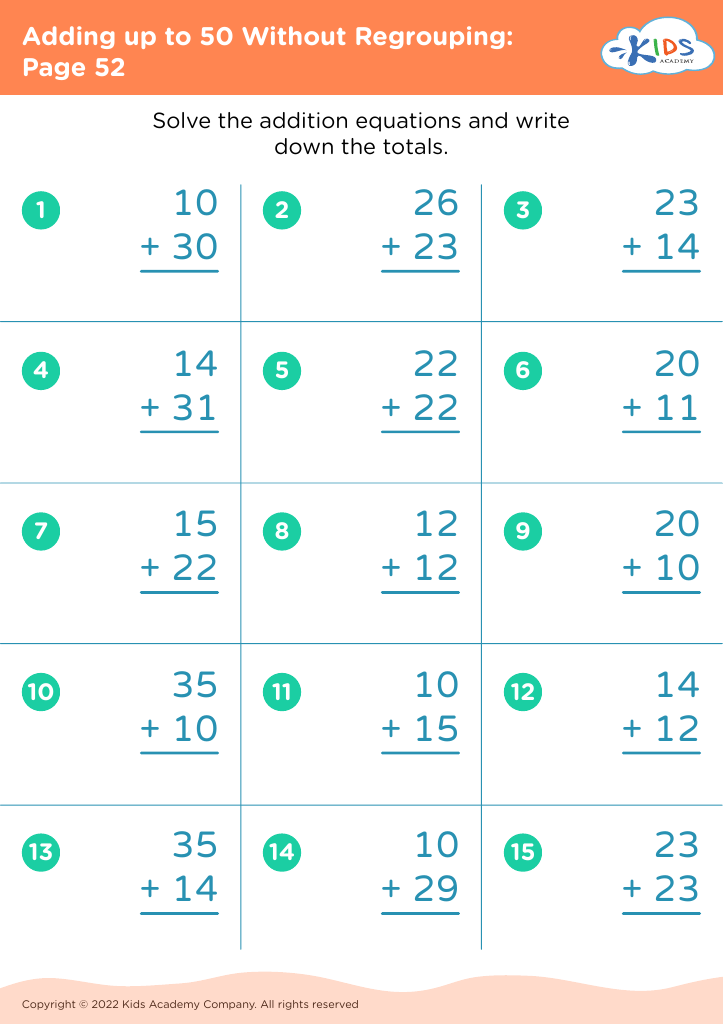
Adding up to 50 Without Regrouping: Page 52
Worksheet
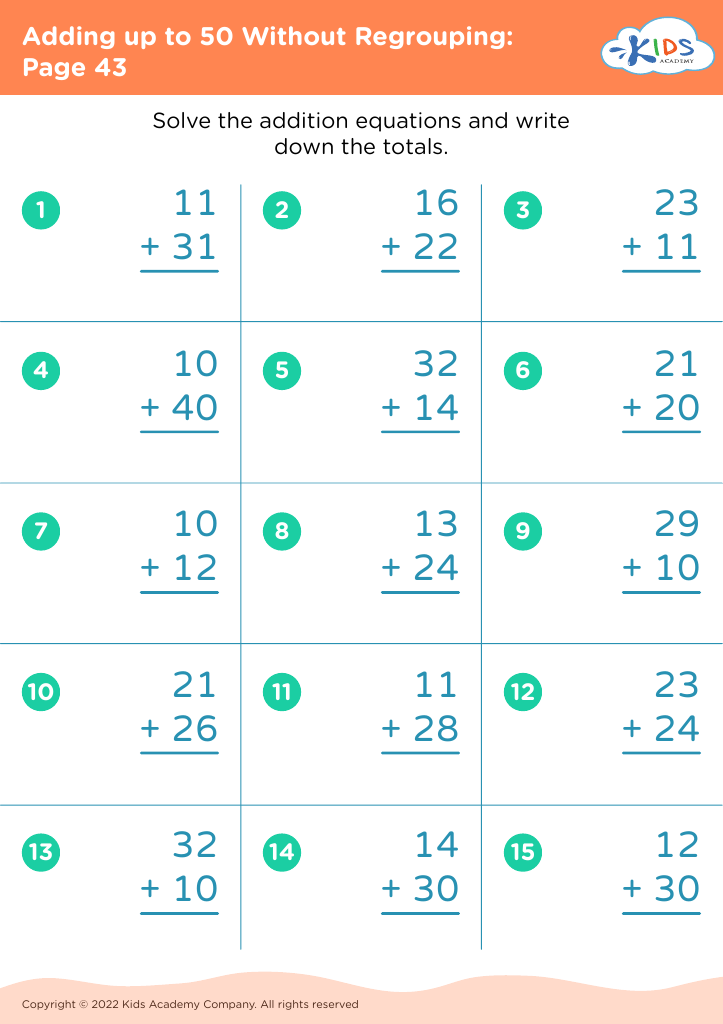
Adding up to 50 Without Regrouping: Page 43
Worksheet
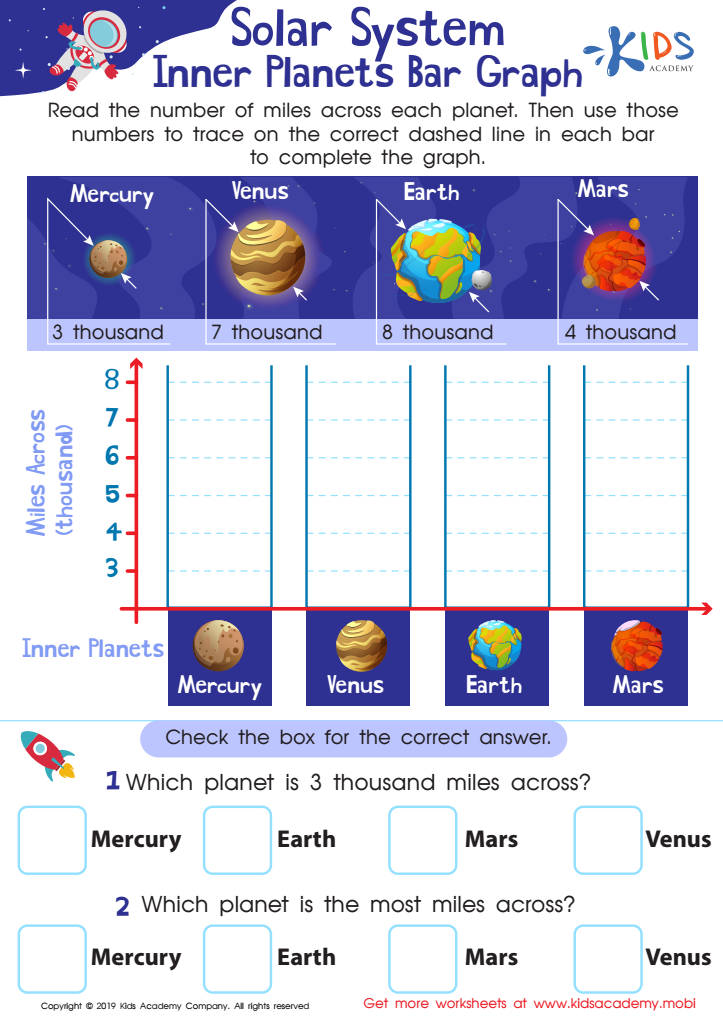
Planets Bar Graph Worksheet

Planets Bar Graph Worksheet

With this fun, educational worksheet, kids can learn about bar graphs and the solar system simultaneously. Introduce them to the concept by reading out the number of miles for each planet, then help them trace the dashed lines in each bar to complete the graph.
Planets Bar Graph Worksheet
Worksheet
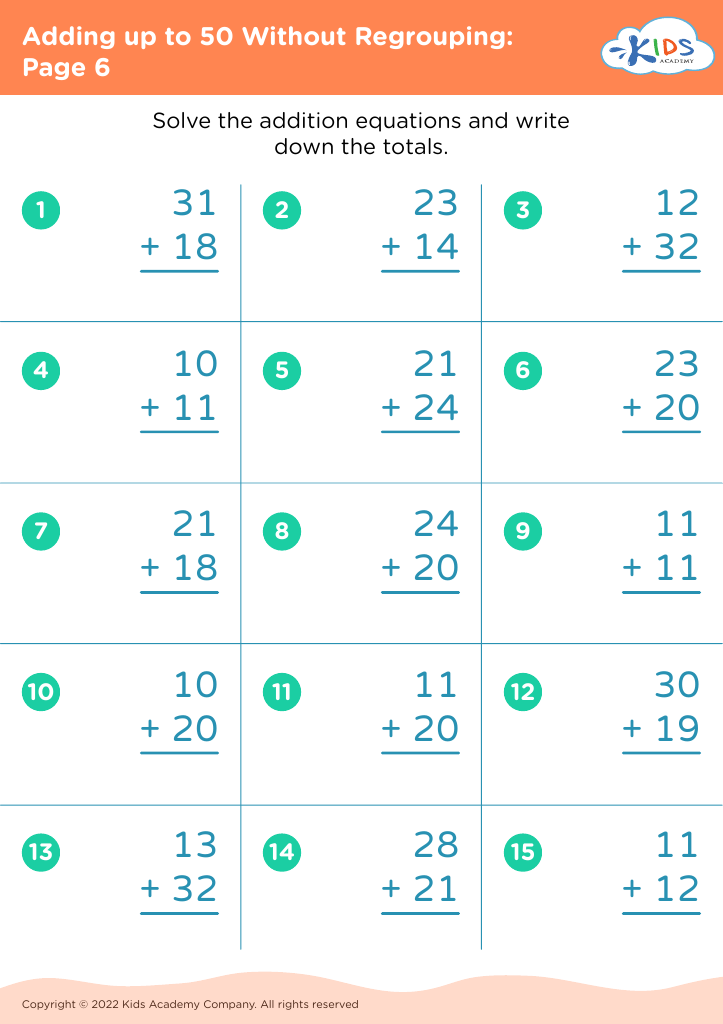
Adding up to 50 Without Regrouping: Page 6
Worksheet
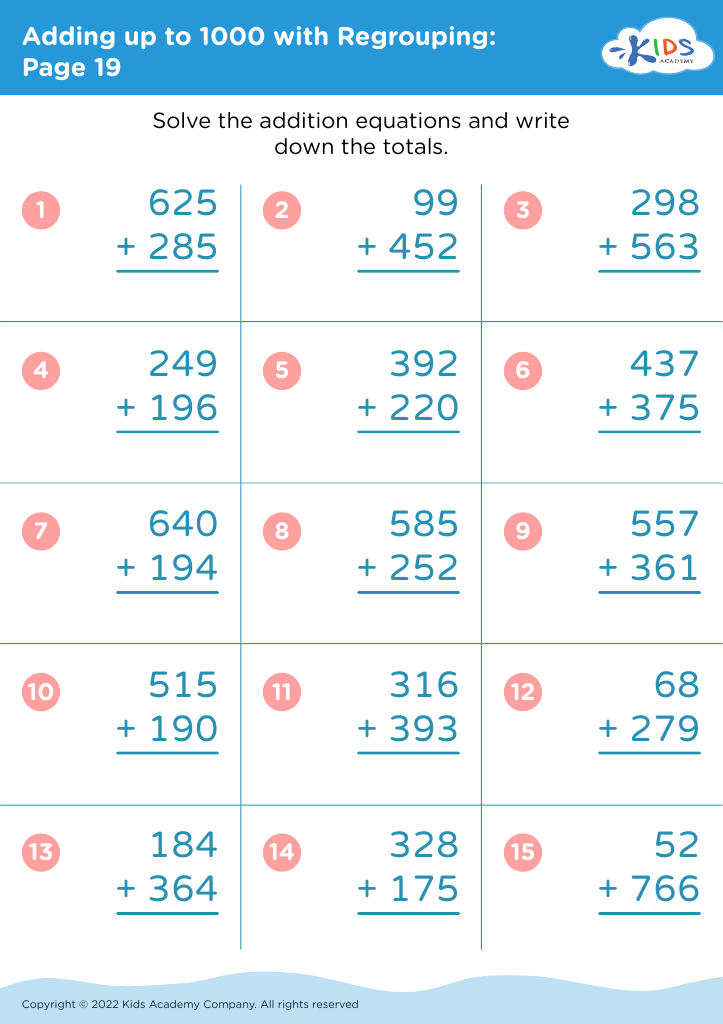
Adding up to 1000 with Regrouping: Page 19
Worksheet
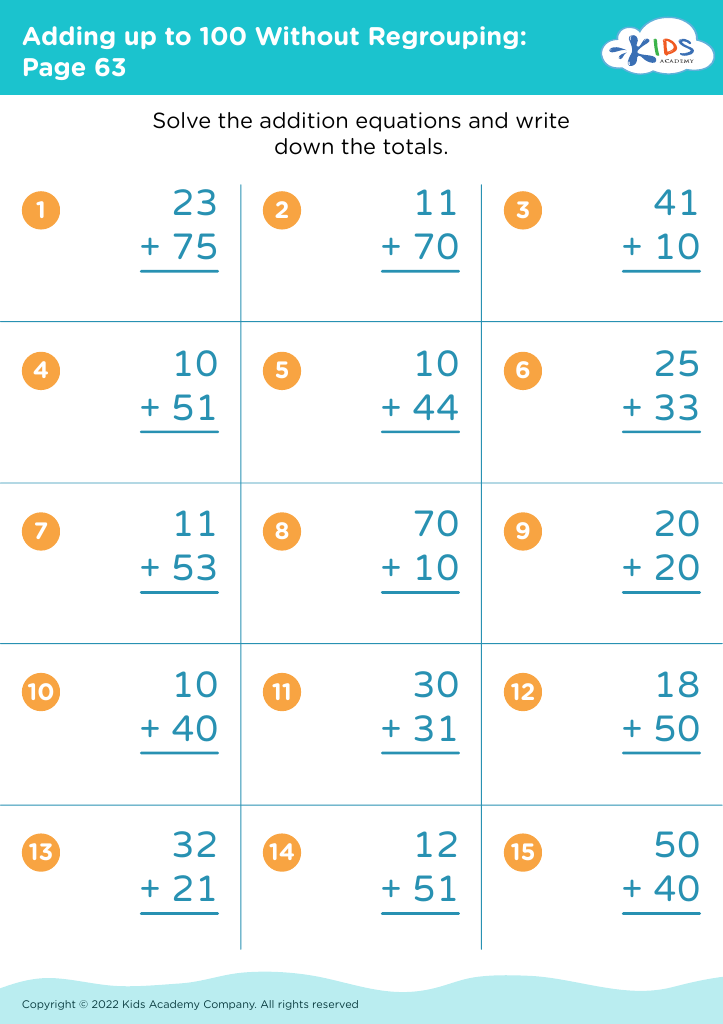
Adding up to 100 Without Regrouping: Page 63
Worksheet
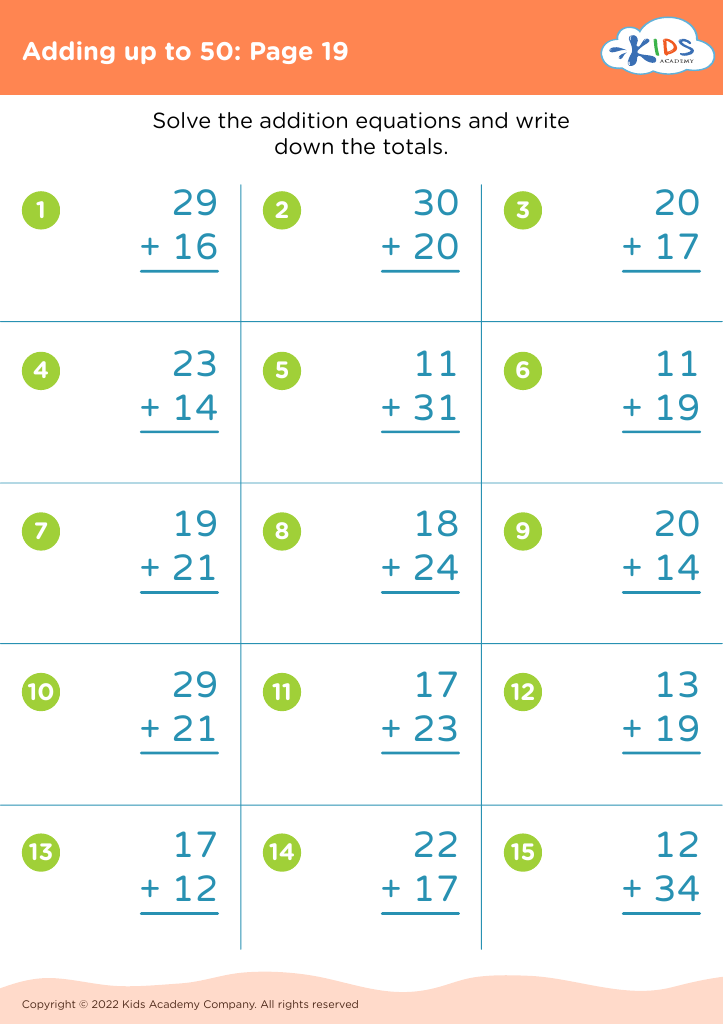
Adding up to 50: Page 19

Adding up to 50: Page 19

Adding up to 50: Page 19
Worksheet
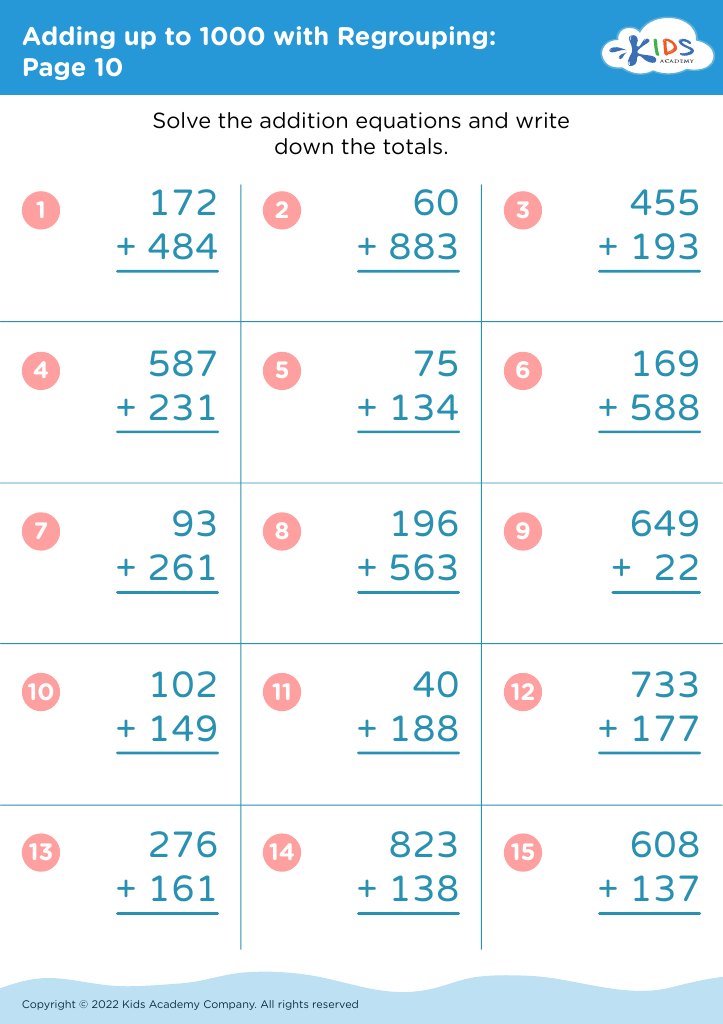
Adding up to 1000 with Regrouping: Page 10
Worksheet
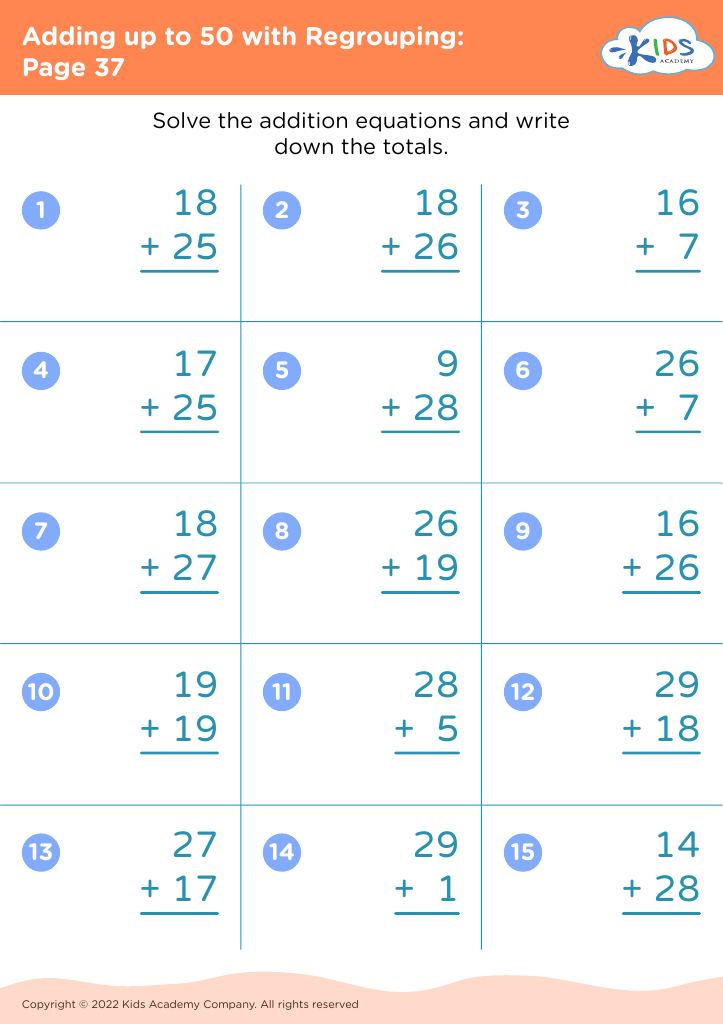
Adding up to 50 with Regrouping: Page 37
Worksheet
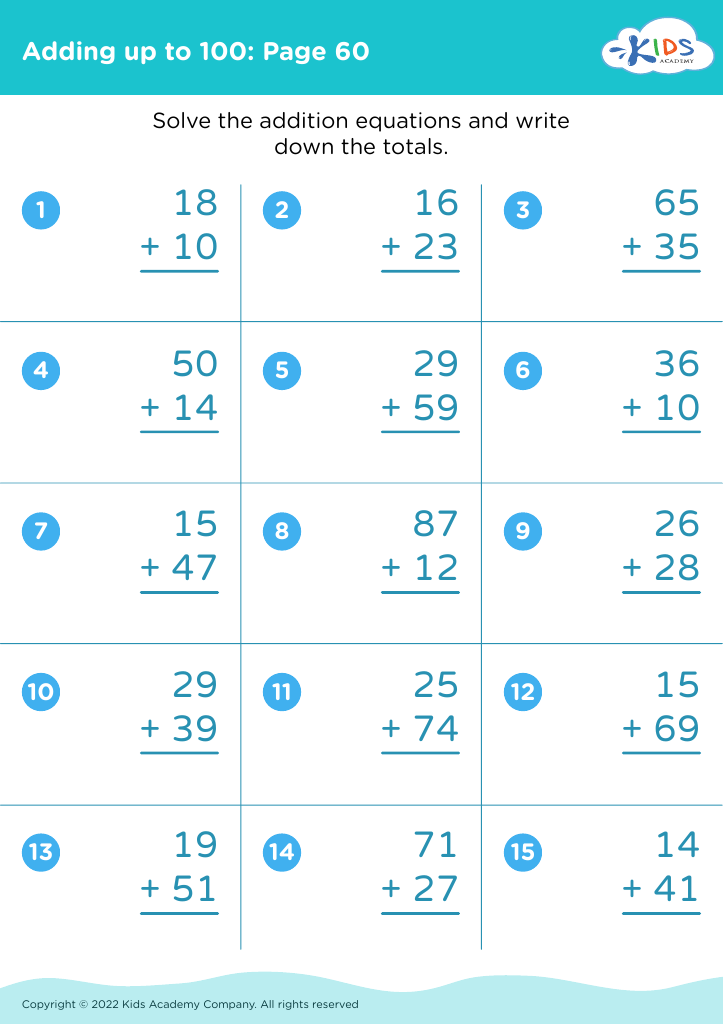
Adding up to 100: Page 60

Adding up to 100: Page 60

Adding up to 100: Page 60
Worksheet
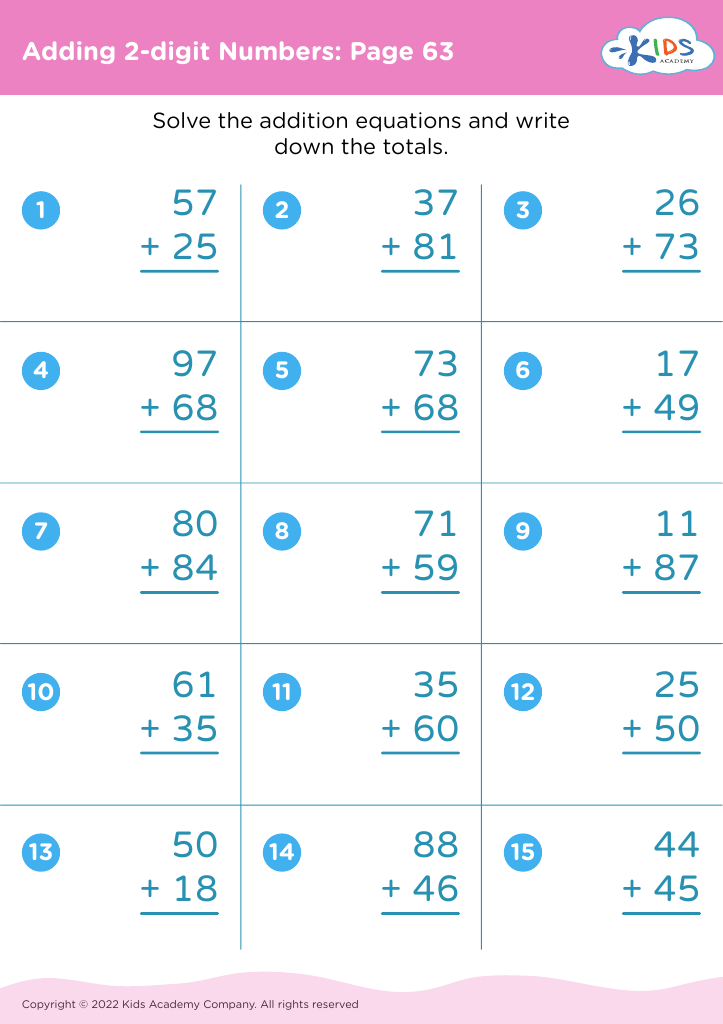
Adding 2-digit Numbers: Page 63

Adding 2-digit Numbers: Page 63

Adding 2-digit Numbers: Page 63
Worksheet
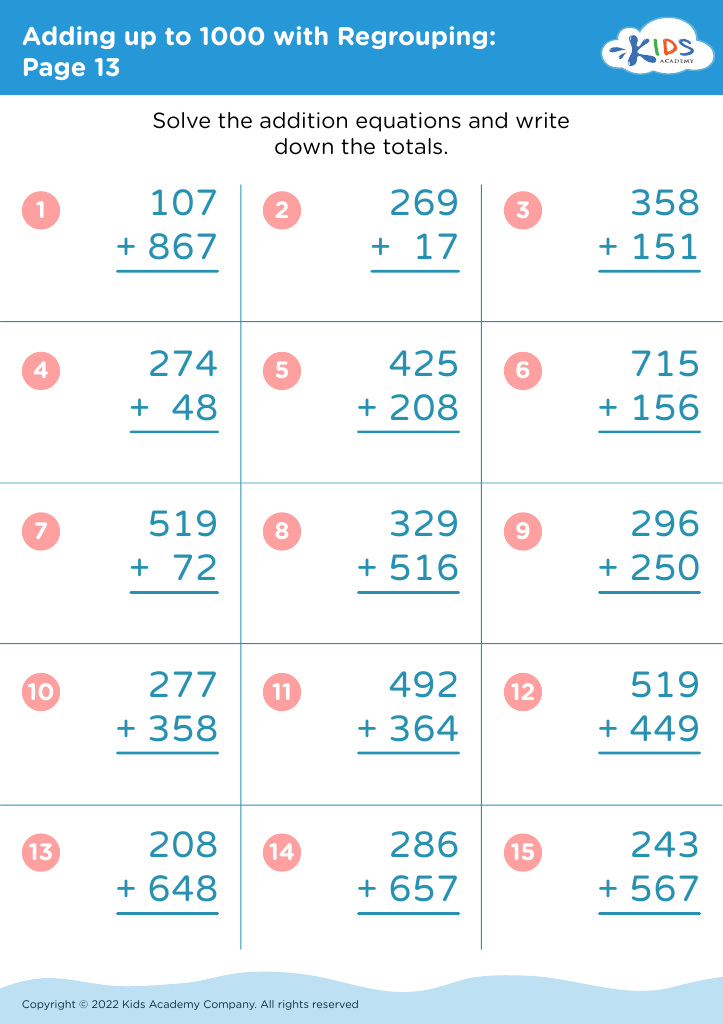
Adding up to 1000 with Regrouping: Page 13
Worksheet
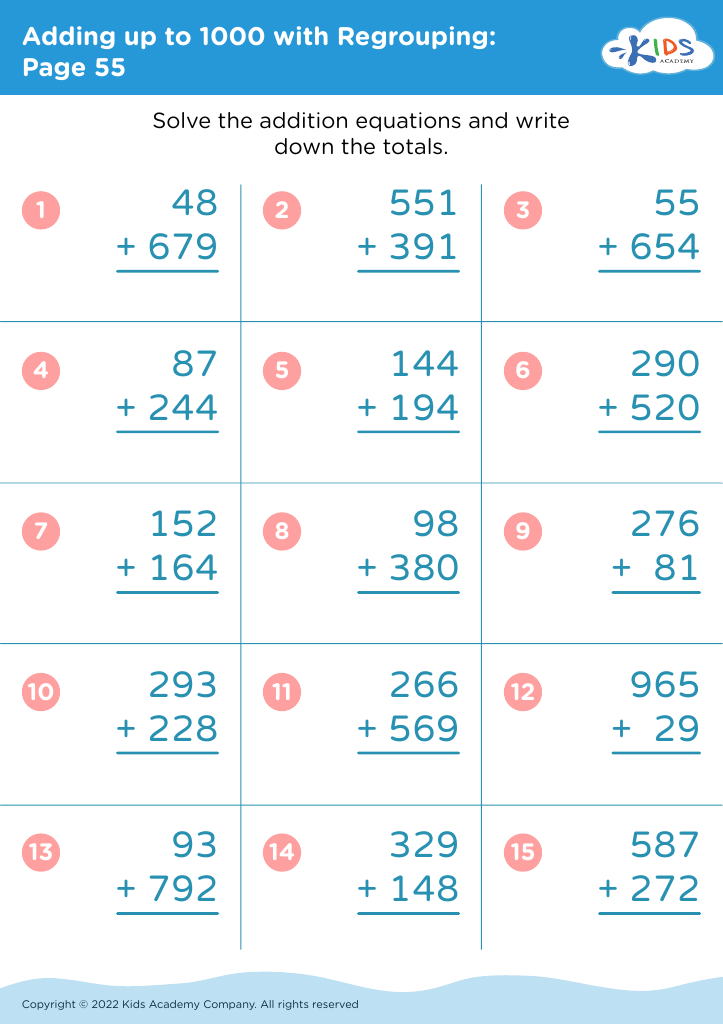
Adding up to 1000 with Regrouping: Page 55
Worksheet
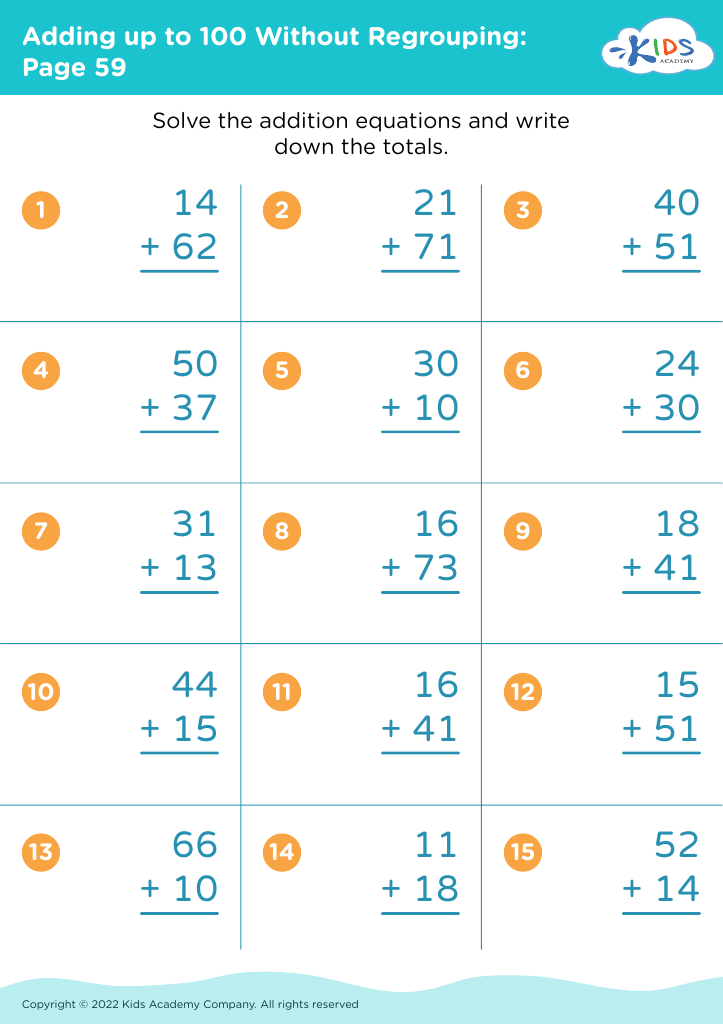
Adding up to 100 Without Regrouping: Page 59
Worksheet
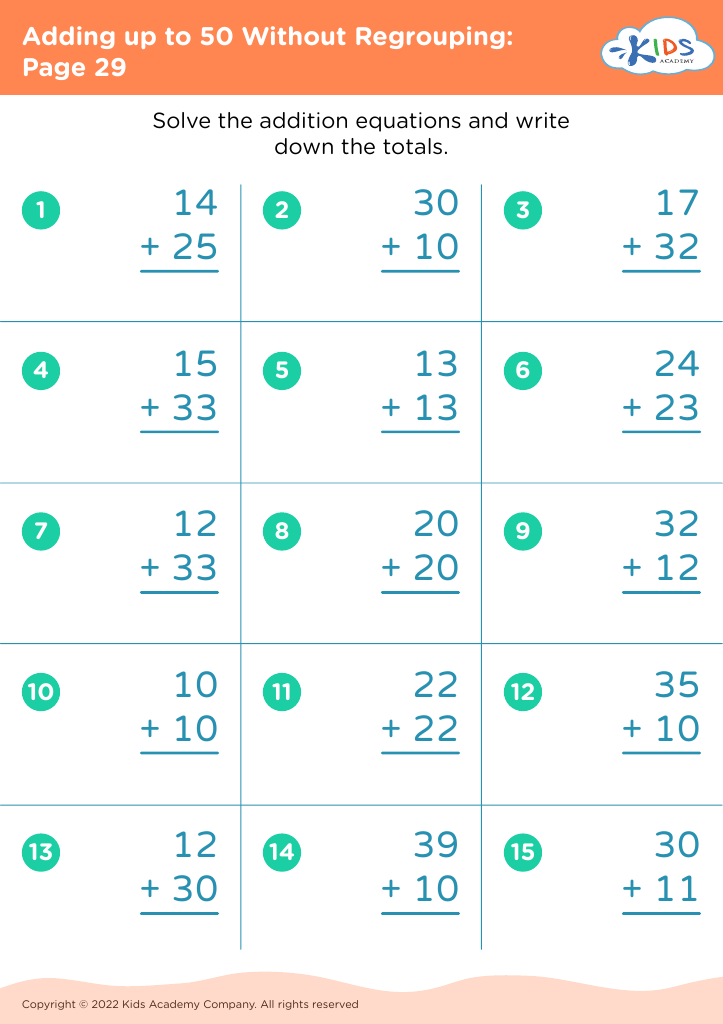
Adding up to 50 Without Regrouping: Page 29
Worksheet
Understanding Pictures as Equations Worksheet
Understanding Pictures as Equations Worksheet
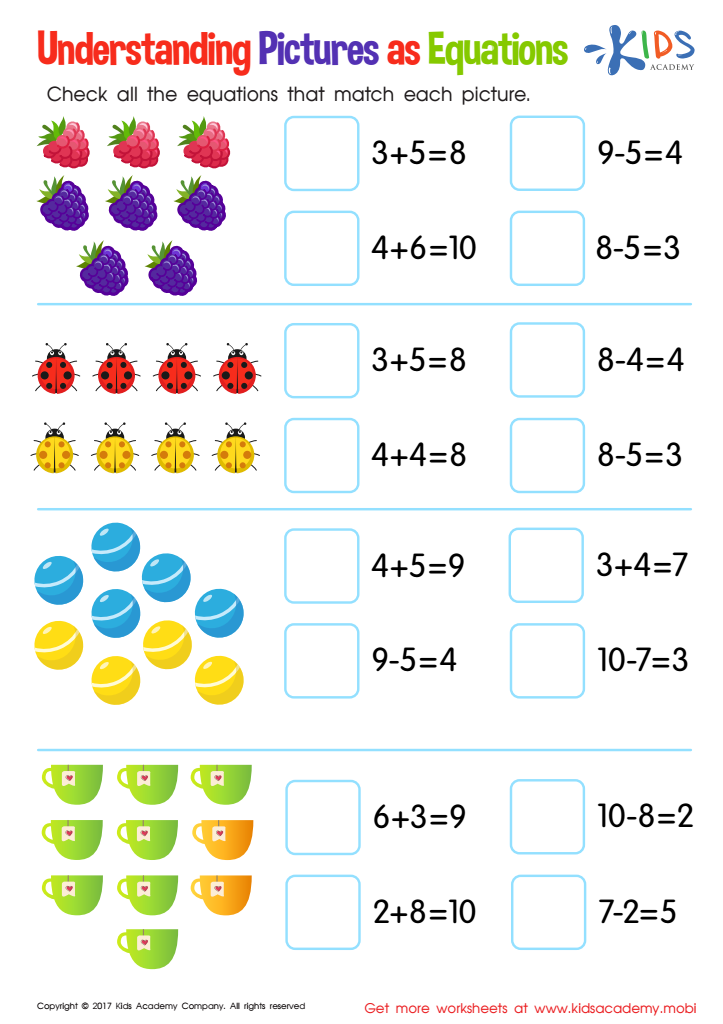
This worksheet helps your child interpret pictures into numbers and equations. Colourful grapes, ladybirds, balls and cups represent numbers which must be added to reach the total. Your child must also choose the equations that match the pictures correctly. A great way to practice math!
Understanding Pictures as Equations Worksheet
Worksheet
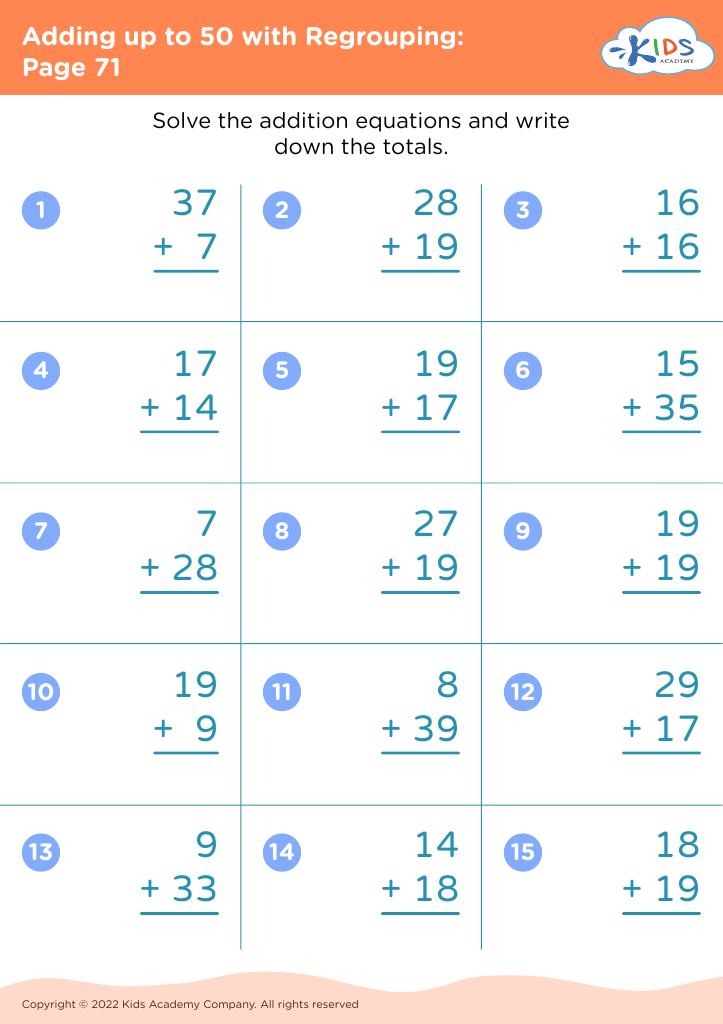
Adding up to 50 with Regrouping: Page 71
Worksheet
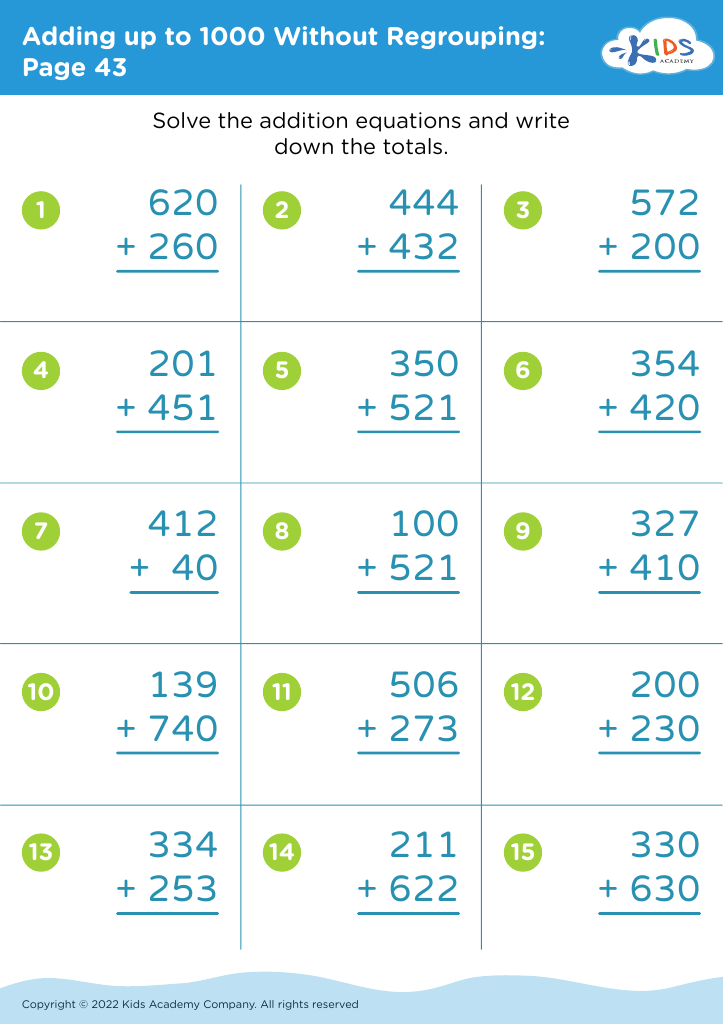
Adding up to 1000 Without Regrouping: Page 43
Worksheet
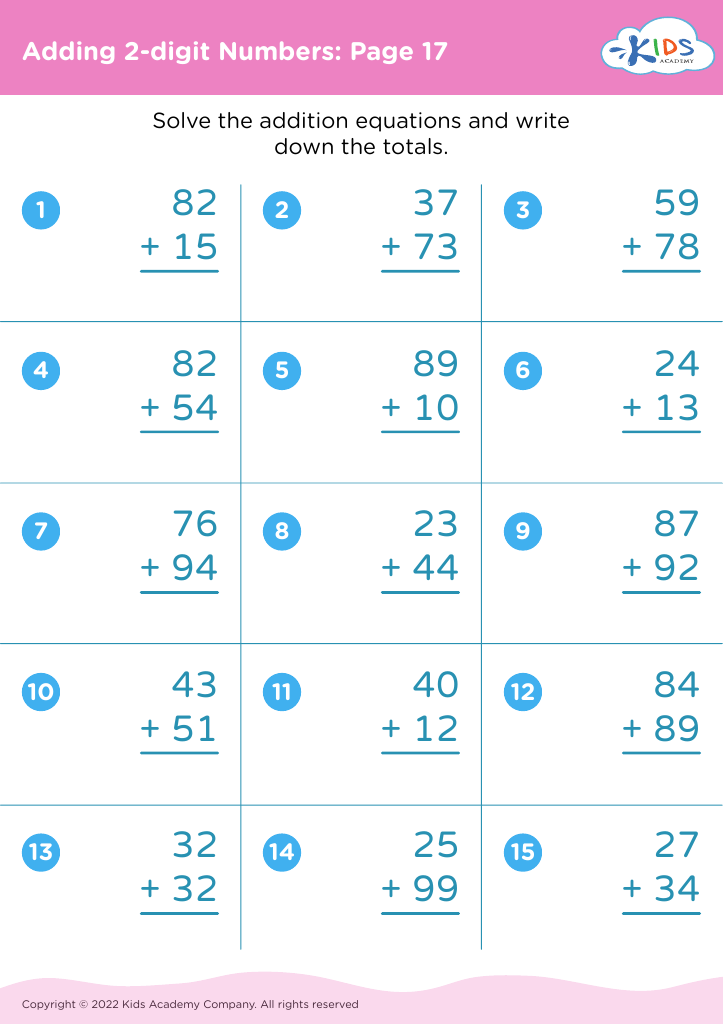
Adding 2-digit Numbers: Page 17

Adding 2-digit Numbers: Page 17

Adding 2-digit Numbers: Page 17
Worksheet
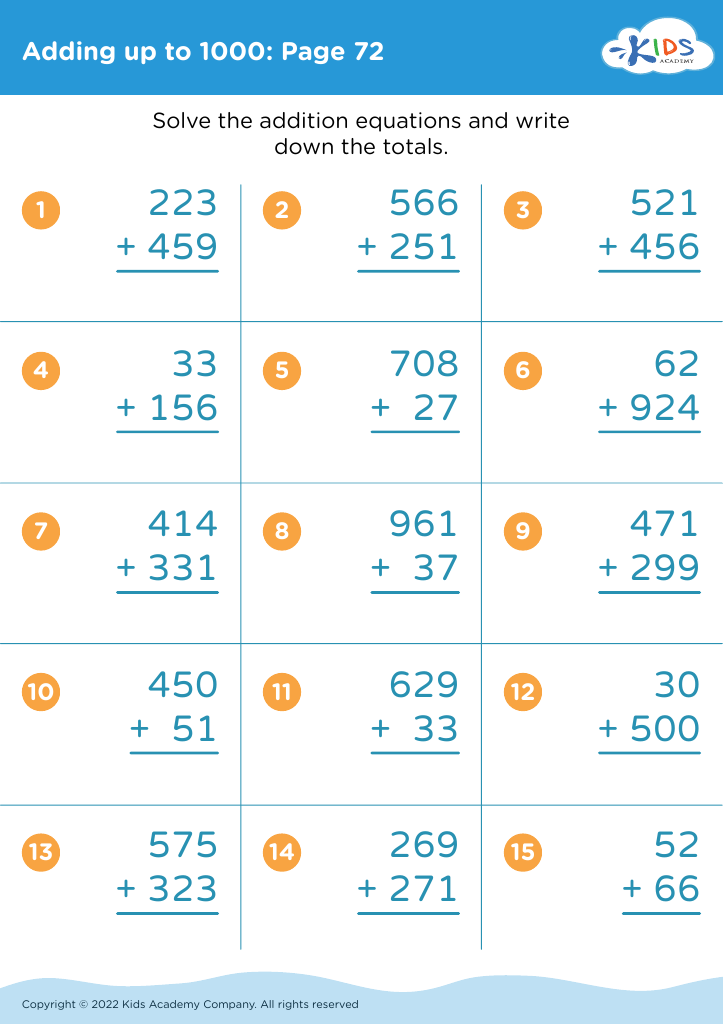
Adding up to 1000: Page 72

Adding up to 1000: Page 72

Adding up to 1000: Page 72
Worksheet
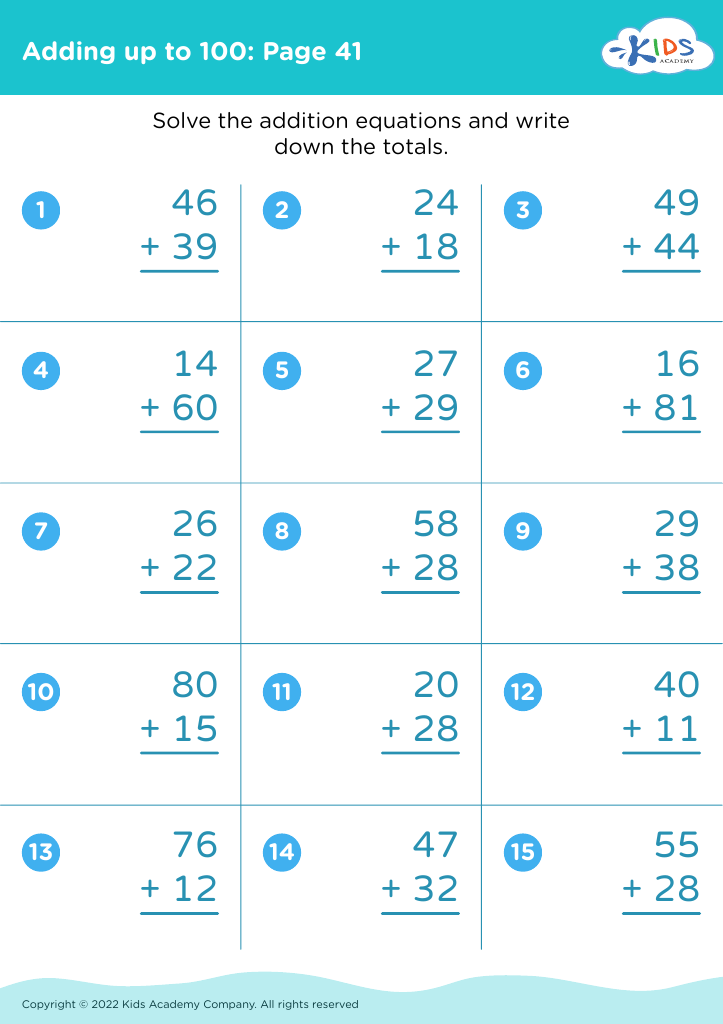
Adding up to 100: Page 41

Adding up to 100: Page 41

Adding up to 100: Page 41
Worksheet
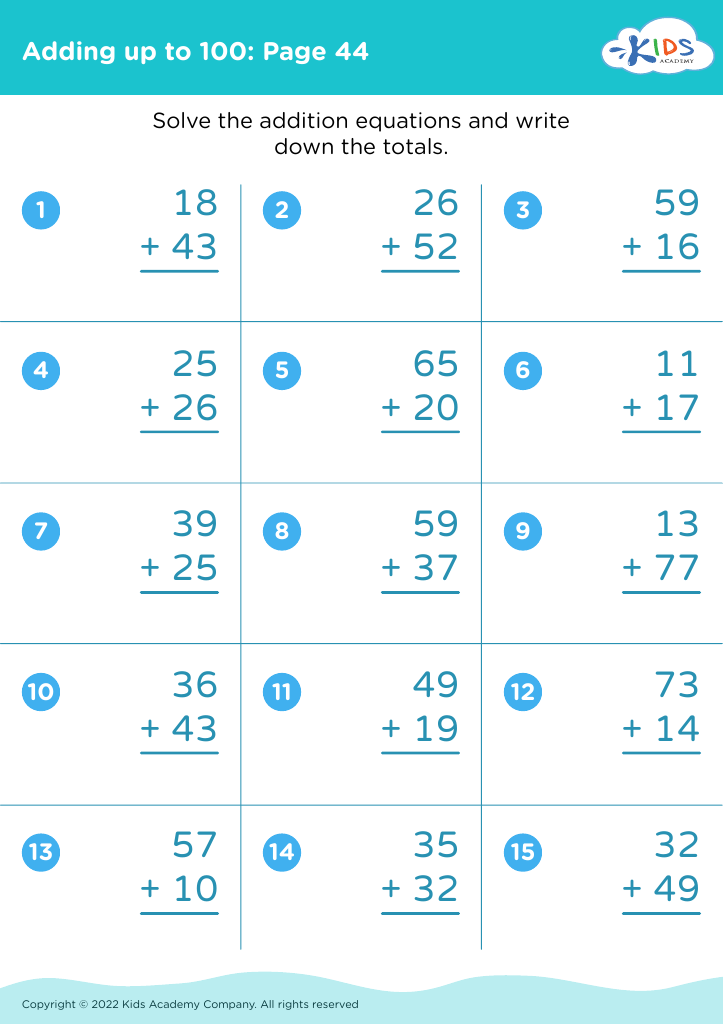
Adding up to 100: Page 44

Adding up to 100: Page 44

Adding up to 100: Page 44
Worksheet


Recognizing patterns in addition and subtraction is essential for young children aged 3-8 because it forms the foundation for understanding more complex mathematical concepts in the future. Patterns are the building blocks of mathematics, and early exposure helps children develop critical thinking and problem-solving skills. When children identify patterns, they learn to predict what comes next, which enhances their ability to understand mathematical relationships and operations.

For instance, recognizing a repeating pattern in numbers helps children with addition by seeing that adding the same number repeatedly leads to a predictable outcome. It also aids in understanding subtraction as the inverse of addition. This ability to see and interact with patterns makes learning new concepts easier and less intimidating as they progress through their education.

Additionally, pattern recognition boosts cognitive development and improves memory and organizational skills. It fosters a sense of curiosity and engagement, making learning math fun and interactive. When parents and teachers emphasize this learning stage, children are more likely to feel confident and competent in their math abilities, reducing anxiety and fostering a positive attitude towards learning. Thus, recognizing patterns in addition and subtraction at an early age is critical for laying a solid mathematical foundation and fostering lifelong learning skills.