Underwater animal identification Addition & Subtraction Worksheets for Ages 3-8
3 filtered results
-
From - To
Dive into fun learning with our Underwater Animal Identification Addition & Subtraction Worksheets, designed for children ages 3-8! These engaging worksheets combine math skills with fascinating marine life, encouraging young learners to identify and explore various underwater creatures while practicing addition and subtraction. Each worksheet features vibrant illustrations and age-appropriate challenges, making math exciting and enjoyable. Perfect for home or classroom use, our resources help develop essential math fluency and foster a love for the ocean. Encourage your child's curiosity and mathematical skills simultaneously—start your underwater adventure today with our printable worksheets!
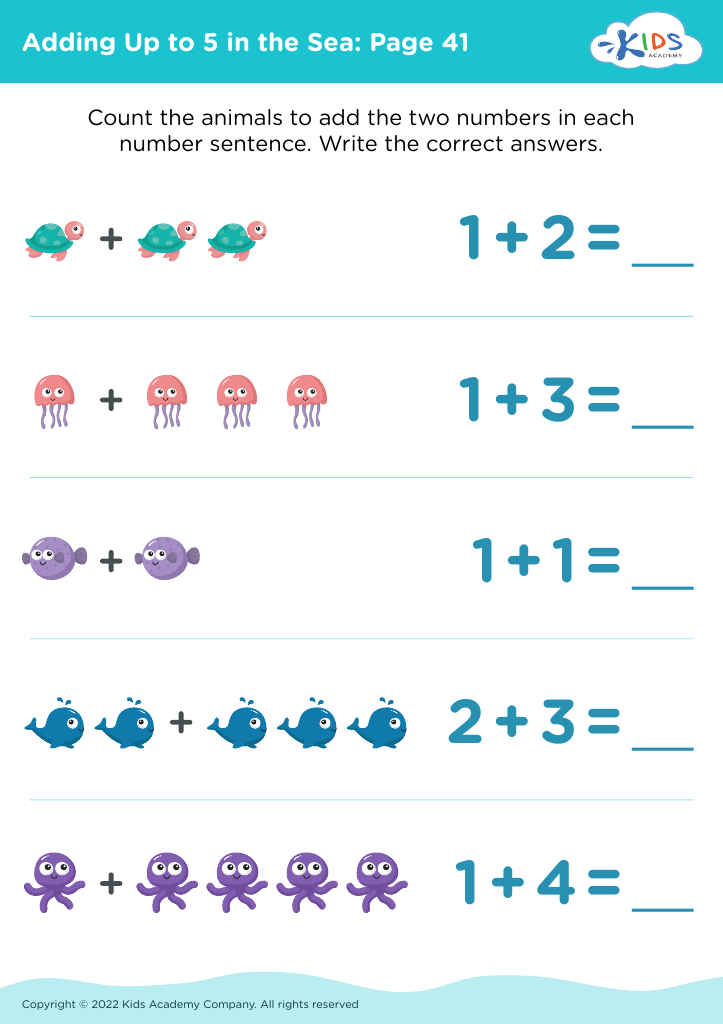
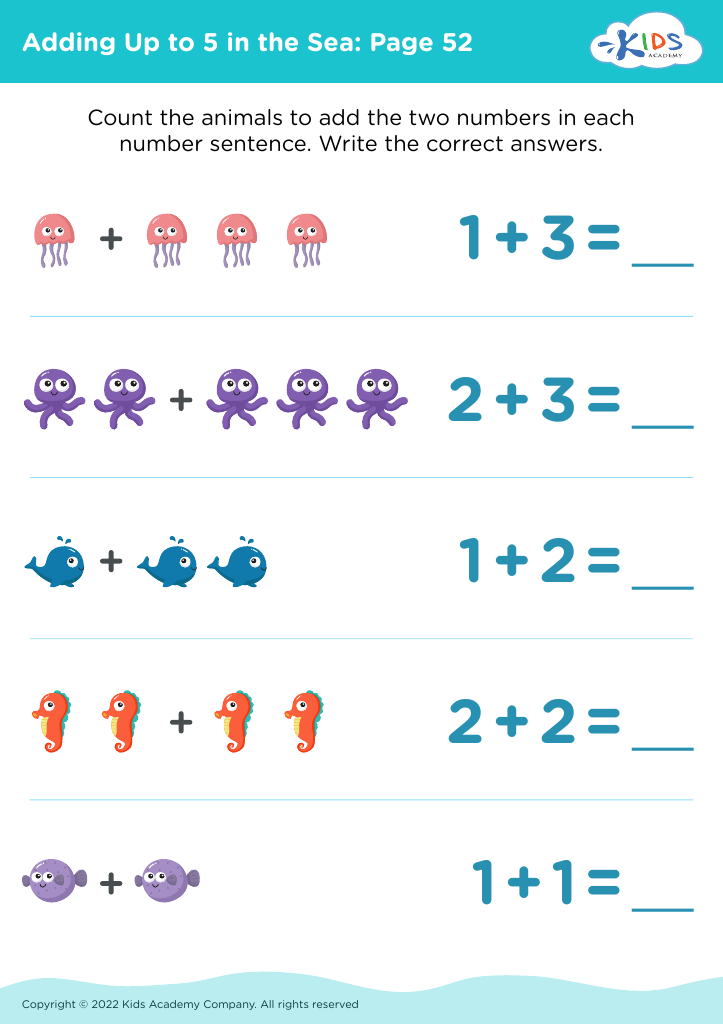
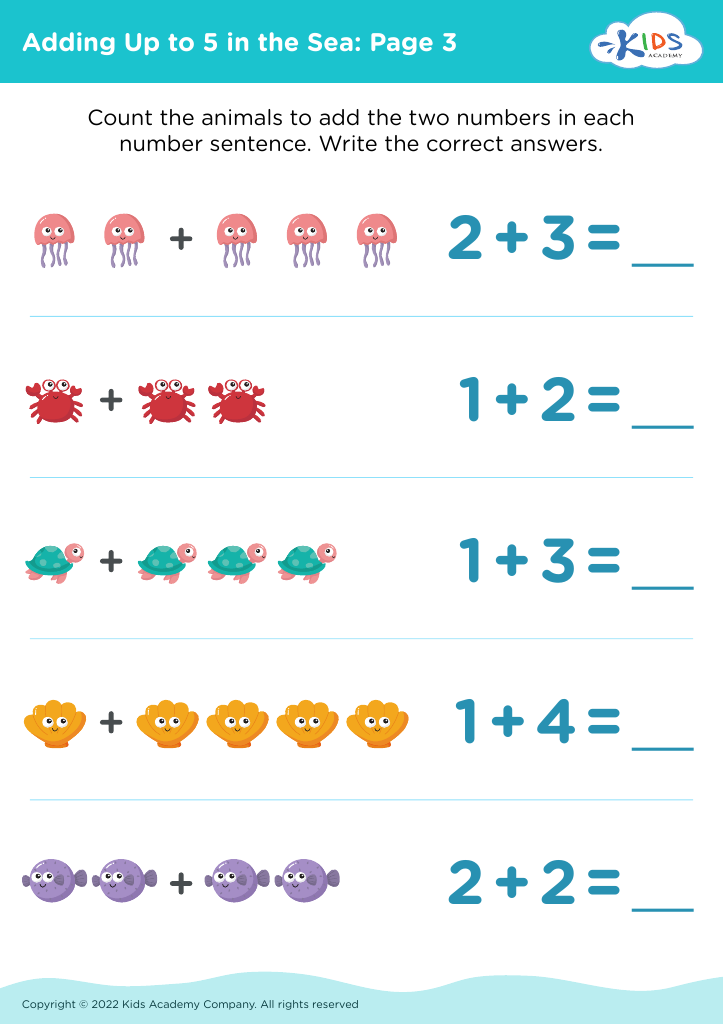








Parents and teachers should prioritize Underwater Animal Identification and Addition & Subtraction for children aged 3-8 for several compelling reasons. Engaging with underwater animals fosters curiosity about nature and biodiversity. This early exposure helps children develop observational skills, enhance vocabulary, and ignite a passion for science and the environment from a young age.
Simultaneously, incorporating math concepts like addition and subtraction through the lens of underwater themes makes learning interactive and enjoyable. Using whimsical images of dolphins and octopuses, for example, makes abstract concepts tangible. By linking mathematics to relatable and fun subjects, children are more likely to grasp foundational skills, improving their overall numeracy.
Furthermore, this interdisciplinary approach nurtures problem-solving and critical thinking. Children can learn how to classify animals while practicing addition and subtraction tasks, such as counting the number of fins or calculating the total number of fish in their imagination. Playing games or engaging in activities that combine these themes encourages collaboration among peers, promoting social skills.
Ultimately, addressing these educational themes caters to a comprehensive and holistic learning experience, preparing children for future academic success while fostering an appreciation and responsibility for marine life. Encouraging curiosity and functional skills simultaneously empowers children both now and as they grow.








