
Visual perception improvement Addition & Subtraction Worksheets for Ages 3-8
9 filtered results
Difficulty Level
Grade
Age
-
From - To
Subject
Activity
Standards
Boost your child’s math and observational skills with our Visual Perception Improvement Addition & Subtraction Worksheets designed for ages 3-8. These engaging, colorful worksheets seamlessly combine fundamental math practice with visual perception exercises. Children will enhance their ability to recognize numbers, spot differences, and solve math problems efficiently. Ideal for early learners, these printable resources foster cognitive development while making learning fun. Download today to give your child a head start in both mathematics and essential visual skills, helping them gain confidence and excel in their educational journey. Unlock their potential now with Kids Academy's expert-crafted worksheets!
Favorites
With answer key
Interactive
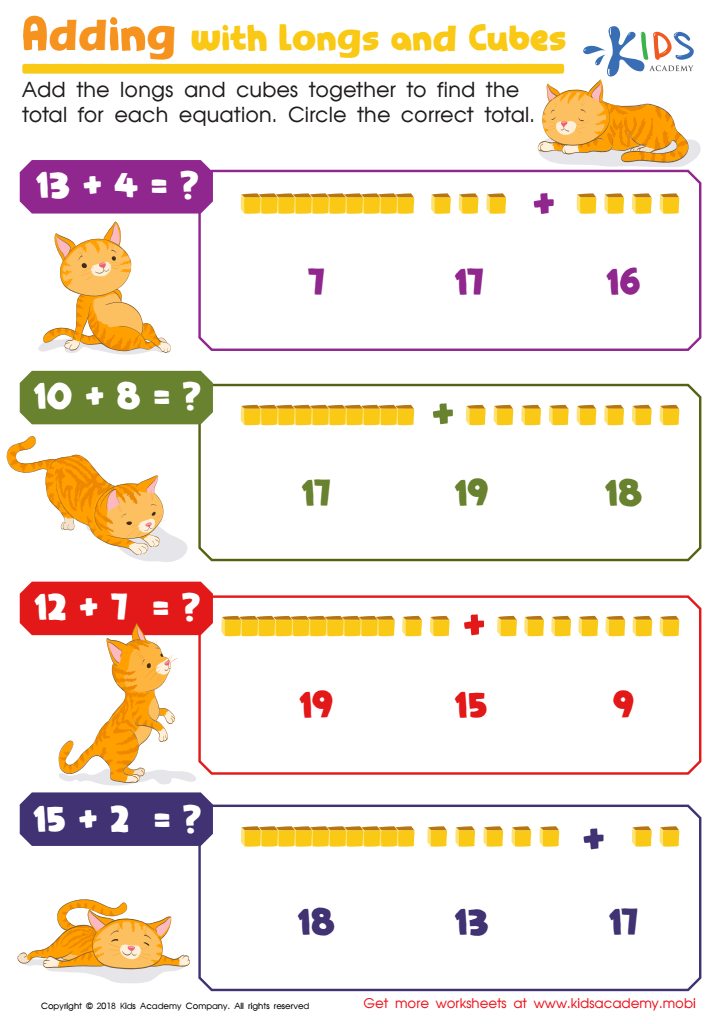
Adding With Longs and Cubes Worksheet
Math might not be your child's favorite, but they must master it to advance. If they're having difficulties or don't like it, use this worksheet to make it easier. Have them add longs and cubes together to find the total for each question, then circle the correct answer. This exercise can help make math experiences better.
 Assign to My Students
Adding With Longs and Cubes Worksheet
Worksheet
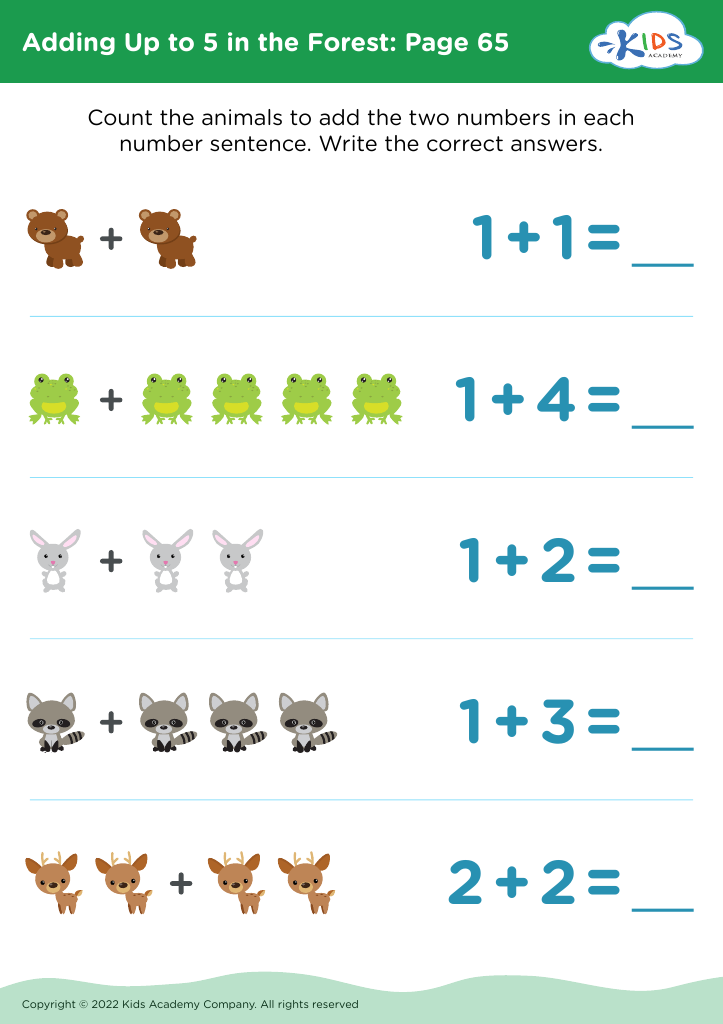
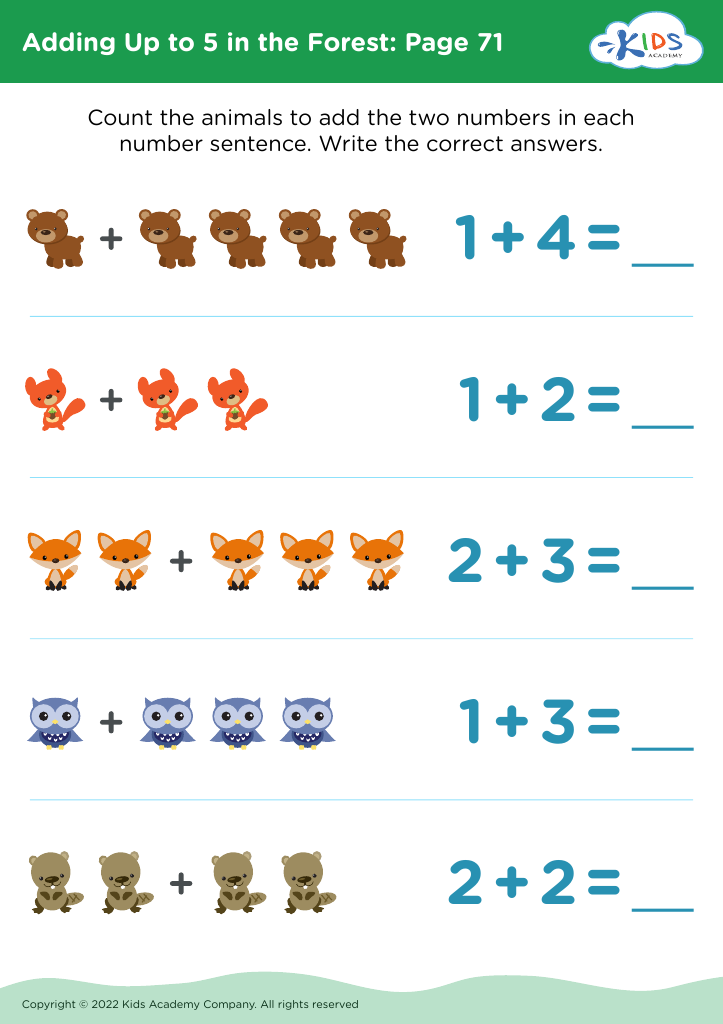
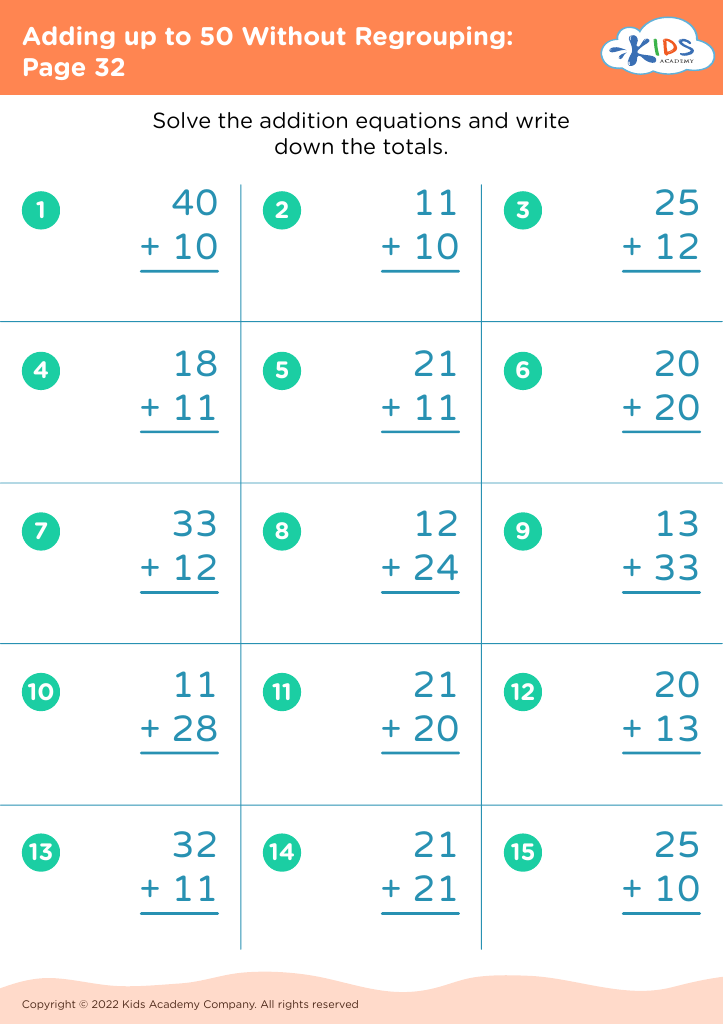
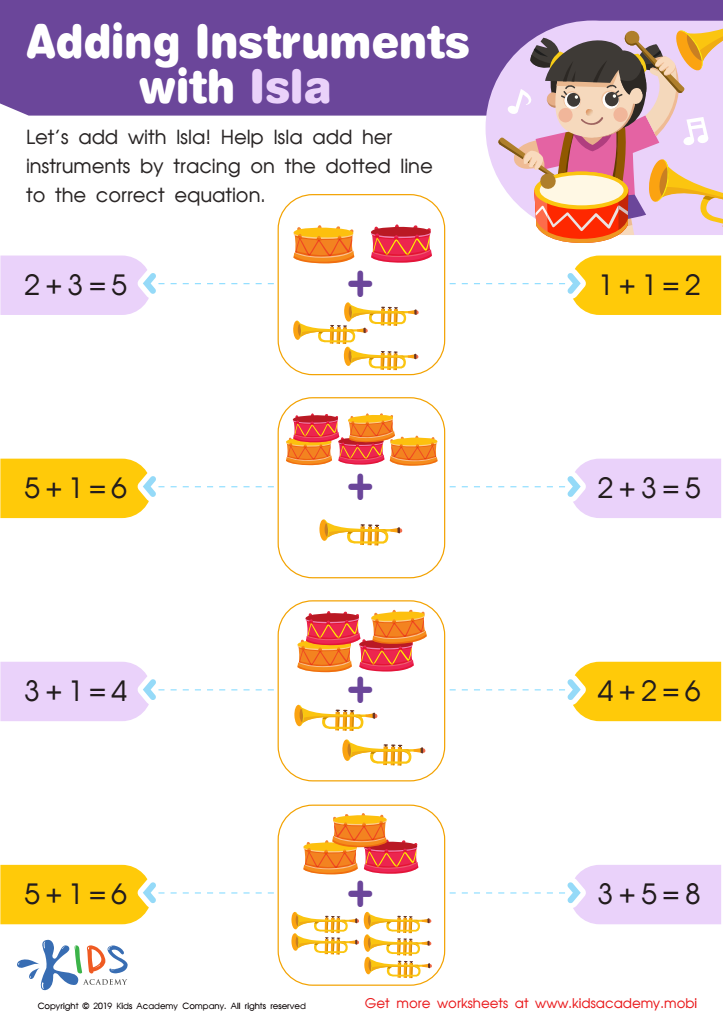
Adding Instruments with Isla Worksheet
Your kids can have fun helping Isla add her musical instruments. With colorful pics and one-to-one representation, they can pick the correct addition sentence. They can connect each pic with traceable lines and get to the right sum up to 10.
Adding Instruments with Isla Worksheet
Worksheet
Join Kids Academy for Free
Who is primarily going to use this learning content?








Visual perception is a crucial developmental skill for young children, especially when it comes to understanding and mastering addition and subtraction. For children aged 3-8, enhancing visual perception means developing the ability to interpret and make sense of visual information. This includes skills like recognizing shapes, sizes, patterns, and spatial relationships, all of which are fundamental for mathematical reasoning.
When parents and teachers invest in improving a child's visual perception, they're laying the foundation for mathematical concepts in a way that's engaging and intuitive. For instance, being able to visualize the number of apples in two baskets can help a child understand basic addition. Likewise, seeing one basket empty to show subtraction aids the development of subtraction skills. These visual approaches make abstract concepts more concrete, fostering a deeper understanding.
Moreover, boosting visual perception isn't just beneficial for math. It also enhances reading, handwriting, and problem-solving skills, contributing to overall academic success. Children with strong visual perception can better follow sequences in stories, differentiate between letters, and navigate fine motor tasks required for writing. Therefore, parents and teachers should care about this aspect of development as it supports cognitive growth in a multifaceted way, ensuring children build a solid academic foundation, boosting their confidence and enthusiasm for learning.








